

5 Warning Signs of Low Quality Creatine: A 2026 Buyer’s Guide
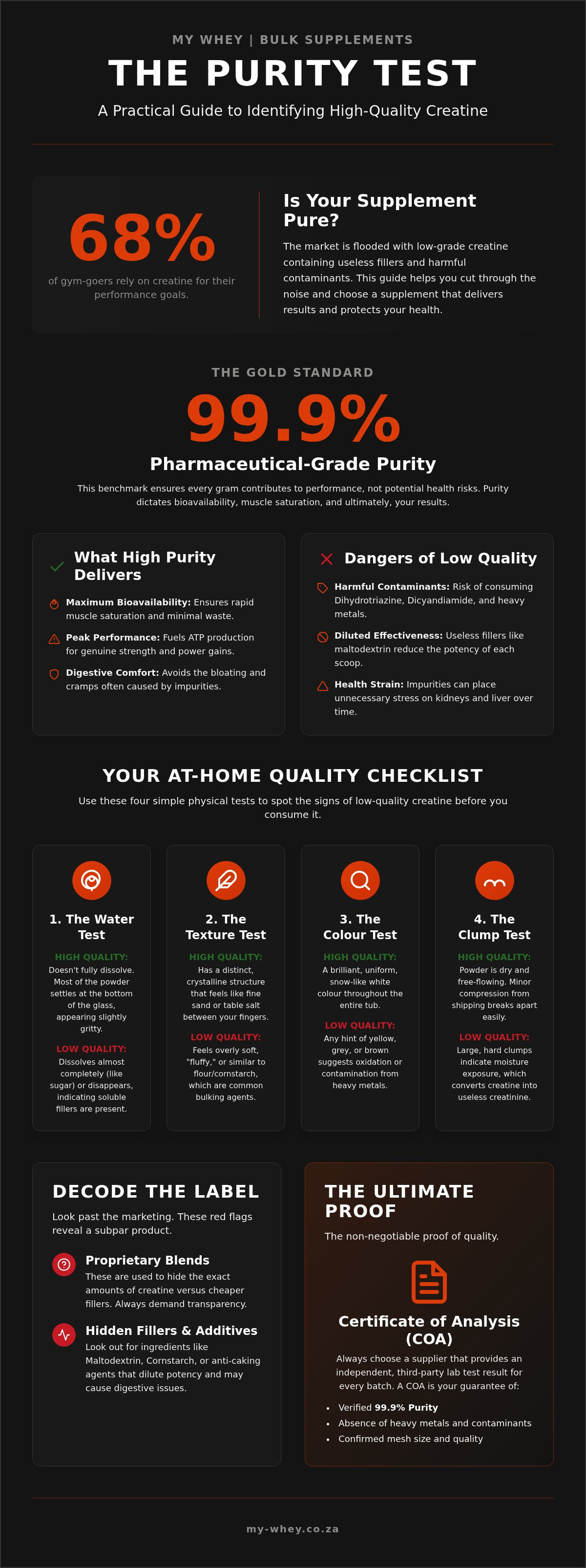
With 68% of gym-goers now relying on creatine to reach their performance goals, the global market has become a magnet for cut-price fillers and sub-standard manufacturing. Identifying the signs of low quality creatine is no longer just about saving a few pounds; it's about protecting your health and ensuring your hard work in the gym actually pays off. You've likely felt the frustration of staring at two identical-looking white powders with vastly different price tags, wondering if the cheaper option is a bargain or a genuine risk. It's exhausting to navigate a sea of marketing hype whilst worrying about whether you're consuming heavy metals or useless additives.
We're here to cut through the noise and provide the clarity you need to choose with confidence. You'll learn how to identify impure supplements and ensure you're getting the pharmaceutical-grade creatine your body deserves. This 2026 guide provides a practical checklist to verify product quality at home, explains exactly what to look for on a label, and helps you secure a reliable supplement source. It's time to stop guessing and start investing in purity that delivers results.
Key Takeaways
- Learn why 99.9% purity is the essential benchmark for performance and how to avoid the health risks associated with heavy metal contaminants.
- Master simple physical checks, such as the solubility and clump tests, to identify the signs of low quality creatine at home.
- Identify common label red flags, including proprietary blends and hidden fillers like maltodextrin, that dilute your supplement's effectiveness.
- Understand the importance of a Certificate of Analysis (COA) and how to verify the mesh size and pharmaceutical-grade purity of every batch you buy.
- Discover how choosing bulk, lab-tested monohydrate ensures you're paying for premium raw ingredients rather than retail markups and expensive packaging.
Why Creatine Quality is Non-Negotiable for Performance
Selecting a supplement is a decision that directly impacts your physical output and long-term health. High-quality creatine monohydrate is defined by a strict 99.9% purity benchmark, ensuring that every gram you consume contributes to ATP production rather than introducing unwanted toxins. For a comprehensive overview of creatine and its metabolic role, it is clear that purity dictates how effectively the substance saturates muscle tissue. When you overlook the signs of low quality creatine, you aren't just buying a less effective powder; you are potentially compromising your body's internal environment.
Price discrepancies between brands often lead consumers toward budget options, but these 'deals' are frequently a false economy. Low-grade manufacturing often results in a product with high moisture content or significant levels of creatinine, a waste product. This means you must consume larger servings to reach an effective dose, making the cheaper tub more expensive per usable gram. True value lies in raw ingredient integrity, where bioavailability is maximised and your body can actually utilise what you swallow.
The Danger of Contaminants in Low-Grade Supplements
Substandard chemical synthesis is the primary cause of impurities amongst budget-tier brands. During the production of low-grade creatine, harmful by-products like Dihydrotriazine and Dicyandiamide can remain in the final powder. These contaminants are clear signs of low quality creatine and indicate a lack of rigorous filtration and testing. Consuming these substances over a long period can lead to unnecessary strain on the kidneys and liver. We prioritising lab-tested purity because your wellness journey should never be derailed by 'dirty' manufacturing processes.
Performance Impact: Why Purity Equals Results
Purity is the engine of performance. When a supplement is packed with fillers like maltodextrin or anti-caking agents, these additives can interfere with the uptake of creatine into your muscle cells. This reduced bioavailability prevents you from reaching the muscle saturation levels required for increased strength and power. Furthermore, the digestive distress many athletes associate with creatine, such as bloating and cramps, is almost always a result of these impurities rather than the creatine itself. Pharmaceutical grade is the gold standard for 2026, representing a product that is verified to be 99.9% pure and free from detectable contaminants.
- 99.9% Purity: The essential benchmark for pharmaceutical-grade monohydrate.
- Bioavailability: High-purity powder ensures rapid muscle saturation and minimal waste.
- Contaminant Free: Independent testing eliminates risks from Dihydrotriazine and heavy metals.
Physical Indicators: Texture, Colour, and Solubility
Pure creatine monohydrate should resemble fine, white sand or table salt rather than flour. It is a crystalline structure that feels distinct between your fingers. If the powder feels excessively soft or "fluffy", it might contain fillers like cornstarch or maltodextrin. These additives are common signs of low quality creatine used by manufacturers to bulk out a product and reduce production costs. High-purity powder should be dry and free from any moisture-induced clumping.
The "Clump Test" is an immediate indicator of ingredient integrity. Whilst some minor compression from shipping is normal, large, hard clumps that don't break apart easily suggest moisture has entered the tub. Moisture triggers the conversion of creatine into creatinine, a useless waste product that provides zero performance benefit. High-purity sources maintain a free-flowing consistency that ensures the product remains stable on your shelf for its entire lifespan.
Colour is equally revealing. Your powder should be a brilliant, snow-like white. Any hint of yellow, grey, or brown suggests oxidation or the presence of heavy metals during the synthesis process. This is where The Gold Standard: Lab Testing becomes vital, as it confirms that the visual purity matches the chemical reality. If you notice discoloration, the batch has likely been compromised during manufacturing or storage and should be avoided.
The Water Test: A DIY Quality Check
You can perform a reliable solubility check at home using a glass of room-temperature water. Stir one five-gram scoop into the water for thirty seconds. Pure monohydrate won't dissolve instantly like sugar, but it shouldn't disappear entirely either. It should settle at the bottom of the glass within a minute or two. If the water remains cloudy or if large particles float on the surface, you're likely dealing with a sub-standard product. Micronised versions, ground to the industry-standard 200 mesh size, will stay suspended longer and feel less "gritty" when consumed, which significantly aids digestion and absorption.
Odour and Taste: The Senses Don't Lie
Pure creatine monohydrate is virtually tasteless and completely odourless. If you open a new tub and encounter a chemical, sour, or "fishy" scent, do not consume it. A fishy smell specifically indicates the presence of methylamine, which is a byproduct of degraded precursors from a botched manufacturing process. Many retail brands use heavy flavouring systems and sweeteners to mask these unpleasant traits and hide the signs of low quality creatine. By choosing unflavoured creatine monohydrate, you can easily verify the raw quality of the ingredient without artificial distractions. If the raw powder tastes bitter or metallic, it's a clear signal to find a better source.
Decoding the Label: Fillers, Additives, and Proprietary Blends
Supplement labels are frequently designed to distract rather than inform. One of the most common signs of low quality creatine is the use of "Proprietary Blends." These allow manufacturers to group several ingredients together under a single weight. By doing this, they can hide the fact that the actual creatine content is minimal whilst the majority of the scoop is composed of cheap fillers. Transparency is the only way to ensure you are receiving a therapeutic dose. Always look for a label that explicitly states "Creatine Monohydrate: 5g" per serving.
Fillers such as maltodextrin, silica, and unnecessary anti-caking agents serve no purpose for your performance. Maltodextrin is a high-glycemic carbohydrate often used to add weight to a product, making a tub feel like a better value than it truly is. Silica and magnesium stearate are manufacturing aids that prevent powder from sticking to machines; however, in high quantities, they simply dilute the purity of your supplement. Why Creatine Quality is Non-Negotiable becomes clear when you realise how easily these additives can compromise your daily intake. You are paying for creatine, not corn-derived sugars or industrial lubricants.
Hidden Ingredients to Avoid
Watch out for excessive sodium or added sugars. Some brands use these to increase the total weight of the product, a tactic similar to protein spiking in the whey industry. Artificial colours and flavours are also prevalent. Whilst they might make a drink look more appealing, they add zero nutritional value and can sometimes trigger sensitivities. A clean label should be short. If the ingredient list is longer than three or four items, you are likely looking at a compromised product that prioritises shelf appeal over substance.
Monohydrate vs. The Rest: The 2026 Verdict
Marketing departments often push "Creatine HCL" or "Buffered Creatine" as superior alternatives. They claim better absorption or less bloating, but the scientific consensus remains unchanged. Simple, micronised monohydrate is the most researched and reliable form available. You can find more efficacy data in The Definitive Guide to Creatine Monohydrate. Be particularly wary of "liquid creatine." Creatine is notoriously unstable in water and quickly breaks down into creatinine, rendering the product useless before it even reaches the shelf. Stick to pure powder for guaranteed stability and results.
The final trap is the "Servings per Container" calculation. A tub that looks cheap might have a large scoop size filled with flavourings and fillers. To find the true value, divide the total price by the total grams of actual creatine monohydrate. This simple bit of maths often reveals that the "premium" retail brand is significantly more expensive than high-purity bulk options. Focus on the cost per gram of the active ingredient to avoid the retail markup trap.
The Gold Standard: Lab Testing and Certificates of Analysis (COA)
A Certificate of Analysis (COA) is the only definitive way to bridge the gap between a brand's marketing claims and the chemical reality of what is inside the tub. It is a detailed laboratory report that confirms the results of testing for a specific batch. Relying on a brand's reputation is no longer enough in 2026. You must verify the data yourself. One of the primary signs of low quality creatine is a supplier's refusal to produce these documents, suggesting a lack of oversight in their production chain.
Reading a COA might seem daunting, but you only need to focus on three key metrics. First, check the purity percentage; it should be 99.9% or higher. Second, look for the mesh size. A 200-mesh specification indicates a finely micronised powder that ensures optimal solubility. Finally, examine the heavy metal counts. A trustworthy COA will list specific values for arsenic, cadmium, mercury, and lead, proving they are well within safe, pharmaceutical-grade limits. Transparency in these numbers is the ultimate hallmark of a reliable supplier who prioritises substance over style.
Requesting Transparency from Your Supplier
Don't be afraid to hold brands accountable. If test results aren't readily available on a website, send a quick message to their support team. A simple script works best: "Could you please share the latest Certificate of Analysis for batch [number] of your Creatine Monohydrate?" If a brand claims their results are "trade secrets" or refuses to share them, take your business elsewhere. A COA is a legal guarantee of a product's chemical makeup. Any entity hiding this data is likely masking impurities or substandard manufacturing processes.
Standardised Manufacturing: GMP and ISO
Beyond individual batch tests, look for facilities that adhere to Good Manufacturing Practice (GMP). This certification ensures that products are consistently produced and controlled according to strict quality standards. Similarly, ISO certification signals that a laboratory follows international protocols for accuracy and reliability. These standards are vital for maintaining consistency across different batches, so you get the same high-quality results every time you order. High-purity standards also protect your digestive system, as "dirty" powders are often the culprit behind stomach issues. You can learn more about maintaining a healthy internal environment in our guide on Gut Health Supplements South Africa.
We believe that every athlete deserves to know exactly what they are putting into their body. By insisting on third-party testing from independent labs, you eliminate the guesswork and protect your performance. If you are ready to stop gambling with your supplements, view our lab-tested creatine monohydrate and experience the difference that pharmaceutical-grade purity makes.
Sourcing Pure Creatine: Why Bulk Doesn't Mean Low Quality
The supplement industry often relies on the psychological assumption that a higher price tag equates to a superior product. This is a misconception that fuels the retail markup, where a significant portion of your money pays for glossy labels, expensive plastic tubs, and prime shelf space in shopping centres. These aesthetic choices do nothing for your muscular recovery or power output. High-purity raw materials often originate from the same pharmaceutical-grade factories regardless of whether they end up in a flashy retail bottle or a simple bulk bag. Choosing bulk is a strategic decision to pay for the active ingredient rather than the marketing budget of a global corporation.
Our philosophy at My Whey is built on this transparency. By prioritising premium raw ingredients and utilising minimalist packaging, we maintain the highest quality standards whilst keeping the product accessible. Buying in bulk actually allows for more frequent batch testing because the resources saved on packaging are redirected into quality control. When you remove the distractions of branding, you can focus on the technical specifications that actually matter: purity, mesh size, and the absence of contaminants. This approach ensures that you receive the same 99.9% pure monohydrate used by elite athletes without the unnecessary retail inflation.
The Benefits of Raw, Unflavoured Powder
Opting for unflavoured powder is one of the most effective ways to avoid the signs of low quality creatine. Flavouring systems require sweeteners, acids, and anti-caking agents that can dilute the purity of the scoop and occasionally cause digestive upset. Raw powder gives you total control over your nutrition. You can easily customise your supplement stack by mixing your creatine with other pure ingredients like Branched Chain Amino Acids to support your specific training goals. Additionally, reduced packaging is better for the environment and significantly lowers the cost per serving, allowing you to invest more in your health and less in waste.
Your Next Steps for Performance
As you evaluate your next purchase, keep the five warning signs in mind to ensure you aren't wasting money on an inferior product. Avoid any powder that shows these red flags:
- Excessive Clumping: A clear sign of moisture ingress and degradation.
- Gritty Texture: Indicates a poor mesh size and lower solubility.
- Chemical Odour: A warning of residual solvents or botched manufacturing.
- Hidden Fillers: Proprietary blends used to mask low active dosages.
- Lack of COA: A refusal to provide batch-specific lab results.
Prioritise lab-tested purity over marketing hype every time you restock. Your body deserves pharmaceutical-grade fuel that is free from contaminants and fillers. If you are ready to experience the results that come from uncompromising quality, shop lab-tested bulk creatine monohydrate today and take the guesswork out of your supplementation. Focus on the facts, verify the purity, and let your performance in the gym speak for itself.
Elevate Your Performance with Verified Purity
You now possess the practical framework to distinguish between pharmaceutical-grade monohydrate and compromised budget powders. By prioritising 99.9% purity and insisting on batch-specific lab results, you ensure your body receives the raw fuel it needs without the risk of contaminants or useless fillers. Recognising the physical and chemical signs of low quality creatine is the final step in moving from a passive consumer to an empowered athlete.
We understand that your goals require consistency and integrity. As South Africa's leading bulk supplement specialist, we strip away the marketing hype to deliver independent lab-tested purity with no unnecessary additives. This commitment to transparency allows you to focus on your training whilst we handle the complexities of quality control. It's time to stop paying for flashy tubs and start investing in the raw ingredients that deliver tangible results.
Maximise your gains with pure, lab-tested Creatine Monohydrate from My Whey. Take charge of your supplement source and train with the unwavering confidence that only true purity provides.
Frequently Asked Questions
Why does my creatine not dissolve completely in water?
Creatine monohydrate is naturally resistant to dissolving in room-temperature water due to its crystalline structure. It is perfectly normal for some powder to settle at the bottom of your glass after stirring. If a powder disappears instantly, it may actually contain high levels of sugar or soluble fillers. Micronised versions stay suspended for longer, but they still won't "vanish" like salt or sugar.
Is it normal for creatine to have a slightly bitter taste?
No, pure creatine monohydrate should be virtually tasteless and odourless. A bitter or metallic tang is often amongst the signs of low quality creatine, suggesting the presence of residual chemical precursors or contaminants. If your unflavoured powder has a noticeably sharp or unpleasant flavour, it likely indicates poor filtration during the manufacturing process or the presence of unwanted by-products.
Can low-quality creatine cause more side effects like bloating?
Yes, digestive distress and excessive bloating are frequently caused by impurities and fillers rather than the creatine itself. Low-grade supplements often contain sodium or creatinine by-products that trigger water retention and stomach cramps. By choosing a pharmaceutical-grade, 99.9% pure monohydrate, you significantly reduce the risk of these common side effects whilst ensuring better muscle saturation.
How can I tell if my creatine has expired or gone bad?
Look for a distinct yellowish colour, a pungent chemical odour, or hard clumps that don't break apart when pressed. Whilst the powder has a stable shelf life, moisture exposure causes it to degrade into creatinine, which is useless for performance. If your supplement smells "fishy" or has changed texture significantly, it has likely expired and should be replaced to ensure safety.
What does 'micronised' mean and is it better quality?
Micronised refers to the particle size of the powder, which is ground much finer than standard versions to reach a 200-mesh specification. Whilst the chemical purity remains the same as standard monohydrate, the smaller particles offer better solubility and are gentler on the digestive system. This makes the supplement easier to mix and less likely to cause the "gritty" mouthfeel associated with coarser powders.
Does a higher price always mean better quality creatine?
Price is frequently a reflection of a brand's marketing budget and retail overheads rather than the quality of the raw ingredients. Many expensive retail brands source their materials from the same high-end factories as bulk suppliers but add significant markups for flashy packaging. Always prioritise the purity percentage and the availability of a Certificate of Analysis over a premium price tag.
Are flavoured creatines less pure than unflavoured ones?
Flavoured creatines are technically less pure because a portion of every scoop is dedicated to sweeteners, flavourings, and anti-caking agents. These additives can sometimes mask signs of low quality creatine, such as off-putting scents or bitter notes. Unflavoured powder remains the gold standard for purity, as it contains zero fillers and allows you to verify the raw quality of the product easily.
What should I do if my creatine arrives in a large solid block?
Request a replacement from your supplier if the powder has fused into a hard, solid mass that cannot be easily crumbled. This indicates that the packaging seal was compromised during transit or storage, allowing moisture to enter and degrade the product. Moisture-damaged creatine is less effective and suggests a failure in quality control or environmental protection during the distribution process.