

7 Signs of Low-Quality Creatine: How to Spot Impure Supplements in 2026
What if the very supplement you rely on for peak performance is actually introducing heavy metals and useless fillers into your body? It's a valid concern in a market where self-regulation often takes precedence over consumer safety, leaving you to wonder if you're getting what you paid for. You shouldn't have to guess whether your powder is pure or just cheap rubbish. Understanding the physical and chemical signs of low quality creatine is the first step toward protecting your health and your hard-earned results.
We believe in total transparency and handling the heavy lifting of quality control so you don't have to. Purity is the priority. In this guide, you'll learn how to identify substandard supplements through simple physical tests, detailed label analysis, and third-party lab reports. We provide a clear checklist for vetting your stack; this ensures you have the confidence to choose ingredients that are genuinely effective. From spotting poor solubility to decoding vague ingredient lists, you'll gain the expertise needed to ensure your creatine is micronised, 99.9% pure, and free from contamination.
Key Takeaways
- Learn why purity is the only metric that matters for ATP production and how to avoid the hidden risks of heavy metal contamination.
- Master simple at-home tests for solubility and texture to identify the physical signs of low quality creatine before you waste money on ineffective powders.
- Understand how to request and interpret a Certificate of Analysis (COA) to verify that your supplement meets the international 99.9% purity standard.
- Identify common fillers like maltodextrin and avoid the "proprietary blend" trap that manufacturers use to hide substandard ingredient ratios.
- Discover why sourcing high-purity raw ingredients in bulk is the most efficient way to ensure quality whilst eliminating unnecessary packaging costs.
The Hidden Risks of Substandard Creatine
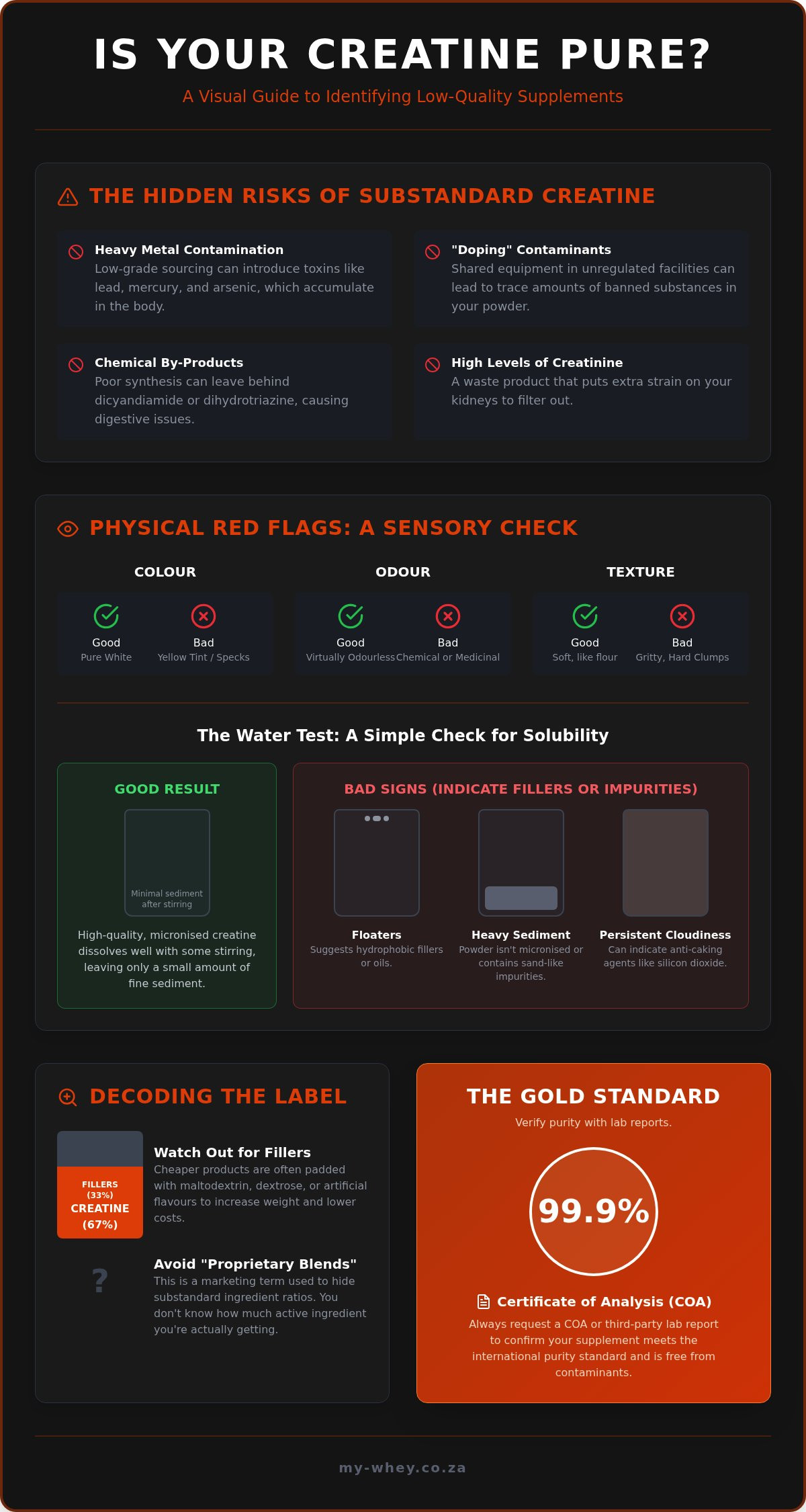
Creatine is one of the most researched supplements available, but its efficacy depends entirely on its purity. For muscle saturation to occur effectively, your body requires high-purity monohydrate that can be converted into phosphocreatine for ATP production. When you consume a substandard product, you aren't just missing out on performance gains; you're potentially introducing harmful substances into your system. Unregulated facilities often share equipment between different product lines, creating a risk of "doping" contaminants where trace amounts of banned substances end up in your powder. Beyond performance-enhancing drugs, low-grade sourcing can lead to the presence of heavy metals like lead, mercury, and arsenic. Identifying the signs of low quality creatine is essential because these toxins accumulate in the body over time, turning a health-conscious decision into a long-term liability.
Impurities vs. Side Effects
Many users attribute bloating or digestive distress to the supplement itself, but these are often reactions to additives or chemical by-products. During the synthesis of low-quality powder, substances like dicyandiamide or dihydrotriazine can remain in the final product. High-purity synthesis ensures these are removed, leaving a 99.9% pure result. Poor manufacturing also leads to high levels of creatinine, which is a waste product that your kidneys must work harder to filter. Recognising the signs of low quality creatine helps you distinguish between normal physiological responses and adverse reactions caused by impurities. True purity means better absorption and fewer gastric issues, allowing you to reach muscle saturation without the discomfort associated with inferior brands.
The Economics of Low-Grade Supplements
Adulteration in sports nutrition refers to the intentional addition of inferior or prohibited substances to a product to increase its weight or perceived potency whilst lowering production costs. Retailers often use "filler" ingredients like maltodextrin, dextrose, or artificial flavours to pad out tubs, making them look like a better deal. Whilst saving a small amount on a retail tub might seem savvy, you're often paying for sugar rather than active ingredients. This "cheap" manufacturing approach compromises your results and your health. We believe in a different model. By focusing on bulk, lab-tested raw ingredients, you can access premium quality without the unnecessary costs of retail packaging and marketing. Sourcing and quality control should be handled by experts, ensuring that every gram you consume contributes directly to your goals.
Physical Red Flags: Texture, Solubility, and Odour
High-quality creatine monohydrate should be a pure white, crystalline powder. It shouldn't have a yellowish tint or grey specks. One of the most immediate signs of low quality creatine is a distinct chemical odour. Pure monohydrate is virtually odourless. If you open a tub and are met with a sharp, medicinal, or bleach-like scent, it suggests residual solvents from the manufacturing process. According to the International Society of Sports Nutrition, safety and efficacy are tied directly to the quality of the synthesis. Residual chemicals aren't just unpleasant; they indicate a failure in the purification stages that could compromise your health.
The Water Test for Purity
You can perform a simple solubility test at home using room-temperature water. Mix 5g of your powder into a clear glass. Pure creatine monohydrate won't dissolve instantly like sugar; it requires stirring. However, after a minute of agitation, the behaviour of the powder reveals its quality. Persistent "floaters" on the surface often indicate the presence of hydrophobic fillers or oils. Conversely, a thick, gritty layer of sediment at the bottom that refuses to move suggests the powder isn't micronised or contains sand-like impurities. Persistent cloudiness can also signal anti-caking agents like silicon dioxide, which are often used to mask moisture issues in inferior batches.
Texture and Consistency
Texture provides a direct clue to the processing level and particle size. Standard monohydrate feels slightly gritty, similar to fine table salt. Micronised versions, however, have a particle size up to 20 times smaller and feel as soft as fine flour. This smaller particle size is preferred because it increases the surface area, improving solubility and reducing the gastric discomfort often associated with coarser powders.
Watch for hard clumps that don't break apart with a light touch. Whilst minor clumping can occur due to humidity, "rocks" in your powder are signs of low quality creatine resulting from poor storage or compromised seals. If your powder feels damp or sticky, moisture ingress has likely triggered the degradation of creatine into creatinine before it even reaches your shaker. For those seeking the gold standard in consistency, sourcing lab-tested creatine monohydrate ensures you receive a product that has been handled with professional care from synthesis to delivery. Purity should be visible the moment you scoop it.
Beyond the Naked Eye: Lab Reports and COAs
The most reliable way to verify what is actually inside your supplement tub is through a Certificate of Analysis (COA). This document is a batch-specific lab report that confirms the product meets its stated specifications. Whilst physical tests for texture and smell are useful, they cannot detect microscopic contaminants or precise purity levels. If a supplier is hesitant to provide a COA upon request, it is one of the most significant signs of low quality creatine and a clear lack of transparency. High-quality brands handle the vetting process proactively, ensuring that every batch is lab-tested before it reaches the consumer.
Deciphering a Lab Report
When you review a COA, look for the "Assay" section first. This indicates the actual percentage of creatine monohydrate in the sample. For premium supplements, you should aim for a purity level of 99.9%. Anything lower suggests the presence of by-products or fillers. You should also examine the microbial limits; a clean report will show negative results for pathogens like E. coli and Salmonella, whilst keeping yeast and mould counts within strict safety thresholds. These invisible markers are the only way to ensure your supplement is safe for long-term daily use.
Third-Party Certifications
Internal testing is a good start, but third-party validation provides an extra layer of security. Look for certifications from bodies like Informed Sport, which test specifically for substances banned in professional athletics. Additionally, ensure the product is manufactured in a "GMP Certified" facility. Good Manufacturing Practice (GMP) standards ensure that the facility follows rigorous protocols to prevent cross-contamination and maintain ingredient integrity. You can learn more about how these manufacturing standards apply to other supplements in The Definitive Guide to Whey Protein, which details the importance of selection and science in a high-quality supplement stack.
Requesting these reports shouldn't feel like a chore. A trustworthy partner in your wellness journey will have this data ready to share. By demanding data over marketing claims, you move beyond guesswork and secure better results from pure ingredients. Identifying the signs of low quality creatine through data empowers you to invest only in products that support your performance without compromising your health.
Reading the Label: Fillers and Proprietary Blends
The supplement label is your first line of defence against inferior products. Many brands use "Proprietary Blends" to obscure the actual ratios of their ingredients. This lack of transparency is one of the most common signs of low quality creatine, as it allows manufacturers to hide cheap fillers whilst marketing a supposedly premium formula. If you can't see the exact milligram count of each ingredient, you're likely paying for marketing rather than performance. Always check the "Other Ingredients" section at the bottom of the label. This is where additives like maltodextrin, dextrose, and silicon dioxide often hide, serving no purpose other than to pad out the weight of the tub.
The Pure Monohydrate Standard
Creatine monohydrate remains the gold standard because it's backed by decades of clinical research. Some brands attempt to differentiate themselves by creating "creatine blends" that combine monohydrate with nitrate or HCl. Often, this is just a strategy to charge a higher price for a product that performs no better than pure monohydrate. Watch out for "fairy dusting", where a brand adds a tiny, ineffective amount of an expensive ingredient just to list it on the front of the tub. Choosing unflavoured, raw ingredients is the simplest way to ensure you're getting 100% active compound without the fluff. My Whey handles the sourcing and quality control of these raw materials, ensuring you receive only what your body needs for recovery and growth.
Additives and Performance
Artificial sweeteners and flavours might make a supplement more palatable, but they can negatively impact your training. Some sweeteners are known to disrupt the microbiome, which is why understanding Gut Health Supplements is vital for maximising nutrient absorption. If your digestive system is struggling to process artificial additives, it won't absorb the creatine efficiently. A clean label with fewer ingredients indicates that the manufacturer has prioritised active compound purity over marketing fluff. A minimalist approach to ingredient lists ensures that the product contains only what is necessary for performance, reducing the risk of hidden signs of low quality creatine. Secure your progress by choosing premium creatine monohydrate that prioritises substance over style.
Fillers like maltodextrin and dextrose are simple sugars that increase the calorie count without providing the ergogenic benefits of creatine. They are frequently used to pad out the weight of a retail tub, making it appear as though you're getting more value for money. In reality, you're just consuming unnecessary carbohydrates. By opting for a bulk supplier that prioritises raw ingredients, you bypass these retail tricks and ensure your supplement stack remains as efficient as your workout routine.
Sourcing High-Purity Creatine in South Africa
Finding a reliable supplier in South Africa shouldn't be a game of chance. Whilst the market is flooded with retail brands, the most efficient way to secure purity is to look at the raw ingredients. Retail packaging often masks the signs of low quality creatine by using vibrant labels and celebrity endorsements to distract from the actual contents. By choosing bulk, you ensure that your investment goes directly into the lab-tested compound rather than plastic tubs and expensive marketing campaigns. This approach allows for a more focused supplement stack, where you can combine your creatine with Branched Chain Amino Acids and pure proteins to maximise your recovery. National reach is essential; you need a partner who can deliver consistent quality to every corner of the country without compromise.
The My Whey Quality Guarantee
We prioritise transparency and integrity in everything we do. We handle the complexities of sourcing and quality control so you don't have to worry about the hidden signs of low quality creatine. Every batch of our Creatine Monohydrate is lab-tested to ensure it meets international standards for purity, typically reaching the 99.9% benchmark. We organise our sourcing to provide these premium raw ingredients at bulk rates, allowing South African athletes to access professional-grade nutrition. Our commitment to value-based messaging means we focus on what's inside the bag, providing a no-nonsense partner for your wellness journey.
Making the Switch to Pure Ingredients
Transitioning from retail brands to bulk raw ingredients is a logical step for any serious athlete. It simplifies your routine and gives you total control over your dosages without the interference of hidden fillers. There is also a significant environmental benefit; reduced packaging means less waste entering our ecosystems. This shift represents a move from a consumer mindset to a performance mindset, where you value substance over style. It's time to stop paying for fillers and start investing in results. Shop our Pure Creatine Monohydrate today and experience the difference that laboratory-verified purity makes to your training. We've done the heavy lifting of vetting and curation, so you can focus entirely on your goals with a steady and reliable ally by your side.
Secure Your Performance with Laboratory-Verified Purity
Protecting your health whilst chasing your fitness goals requires more than just hard work; it demands total transparency from your supplements. We have explored how physical tests for solubility and odour, combined with a rigorous analysis of lab reports, help you identify the signs of low quality creatine. By moving away from retail marketing hype and towards bulk, unflavoured raw ingredients, you take control of exactly what enters your body. Purity is the foundation of effective muscle saturation and long-term wellness.
Our commitment to your journey is backed by 99.9% pure Creatine Monohydrate that is lab-tested for heavy metals and purity. We handle the complexities of sourcing and quality control so you don't have to. With national delivery across South Africa, access to professional-grade nutrition is simple and efficient. Invest in your performance with lab-tested Creatine Monohydrate from My Whey. You've done the hard work; now give your body the high-standard fuel it needs to excel.
Frequently Asked Questions
How can I tell if my creatine has gone bad?
Creatine monohydrate is highly stable, but it can degrade if exposed to moisture or extreme heat. You'll know it's past its best if the powder develops a yellowish tint or a sharp, medicinal odour. These changes indicate that the creatine is breaking down into creatinine, which is less effective for muscle saturation. Whilst it's unlikely to be harmful, it won't provide the performance benefits you're paying for.
Is clumping a sign of low-quality creatine?
Small, soft clumps that break apart easily are usually just a result of humidity and aren't necessarily a cause for alarm. However, if you find hard "rocks" that require force to crush, it is one of the physical signs of low quality creatine. This suggests poor storage conditions or a compromised seal, allowing moisture to trigger degradation before you even open the tub and start your cycle.
What should pure creatine monohydrate taste like?
High-purity creatine monohydrate is virtually tasteless and odourless. If you notice a bitter, metallic, or chemical aftertaste, it's a sign that the product contains unreacted precursors from the synthesis process or unnecessary additives. Pure, lab-tested powder should be easy to mix into water or a shake without altering the flavour profile, ensuring you get the performance benefits without an unpleasant or lingering sensory experience.
Does the colour of the powder indicate its quality?
Yes, the visual appearance is a primary indicator of purity. Pure creatine should be a consistent, bright white powder with a fine crystalline structure. Any variation, such as greyish specks or a distinct yellow hue, suggests the presence of impurities or potential heavy metal contamination. We prioritise sourcing raw ingredients that meet strict visual and chemical standards, ensuring every batch is as pure as the lab reports claim.
Why does some creatine cause more bloating than others?
Bloating is often caused by the impurities found in lower-grade powders rather than the creatine itself. Substandard manufacturing can leave behind by-products like dicyandiamide, which irritate the digestive system. Additionally, coarser, non-micronised powders don't dissolve as well in the gut, leading to water retention in the intestines. Choosing a 99.9% pure, micronised monohydrate typically eliminates these common digestive issues for the vast majority of South African athletes.
Is expensive creatine always better than the cheaper options?
Price is rarely a reliable indicator of quality in the supplement industry. Many expensive retail brands spend their budget on celebrity endorsements and flashy packaging rather than rigorous ingredient testing. You can often find superior quality by purchasing bulk raw ingredients from transparent suppliers. This model eliminates unnecessary retail markups, allowing you to invest in lab-verified purity rather than a brand name's extensive and costly marketing budget.
How do I check if a supplement brand is third-party tested?
The most transparent brands will proactively share their testing data with their customers. You should look for certifications like Informed Sport on the packaging or, more importantly, request a Certificate of Analysis (COA) for the specific batch you've purchased. A reputable supplier will have no issue providing this document, which verifies the purity percentage and confirms that the product is free from harmful heavy metals and microbial contaminants.
Can I mix creatine with other supplements like Omega 3?
You can safely combine creatine with other staples in your supplement stack, including Omega 3 softgels and amino acids. These products don't interact negatively; in fact, they support different aspects of your recovery and performance. Mixing your creatine into a protein shake or taking it alongside your daily vitamins is a practical way to ensure consistency, which is the most important factor for achieving long-term results.