

Avoiding Fillers in Protein Powder: The Expert Guide to Pure Nutrition
That premium tub of whey might cost you R700 at a local retailer, but what exactly are you paying for? If you're struggling with bloating or digestive distress after your workout, you're likely a victim of the industrial "flavour-and-filler" complex designed to pad profit margins rather than muscles. Mastering the art of avoiding fillers in protein powder is the only way to ensure your investment translates into performance instead of expensive, deceptive bulking agents.
It's frustrating to feel cheated by complex ingredient lists that read more like a chemistry experiment than a nutritional supplement. You deserve to know exactly what's entering your body without the confusion of hidden thickeners or amino spiking. This guide empowers you to identify clean, high-purity protein at a glance and avoid the ingredients that trigger gut health issues. We'll examine the specific red flags on South African labels, including how upcoming Draft R3337 regulations affect your choices, so you can stop paying for fluff and start getting the results you've earned.
Key Takeaways
- Understand how the "Retail Margin Trap" forces commercial brands to use low-value bulking agents to offset expensive packaging and marketing costs.
- Learn to spot deceptive nitrogen testing loopholes and amino spiking to master the skill of avoiding fillers in protein powder.
- Discover why choosing a high-purity base like Whey Protein Concentrate 80% ensures you pay for actual nutrition rather than industrial fluff.
- Identify the benefits of using separate flavour systems to maintain total control over your chemical intake and digestive health.
- Apply a practical checklist to any supplement label to confirm that the protein source is the dominant ingredient at a glance.
What are Fillers in Protein Powder and Why are They Used?
Fillers are non-functional or low-value ingredients added to a formula to increase volume whilst reducing manufacturing costs. While the primary goal of any Protein supplement overview is to provide concentrated amino acids, many commercial brands dilute their products with "fluff" to pad their margins. True purity is often sacrificed for texture, shelf-life, or simply to fill a large plastic tub more cheaply. Avoiding fillers in protein powder requires a shift in perspective; you must view every ingredient that isn't a protein source as a potential dilution of your results.
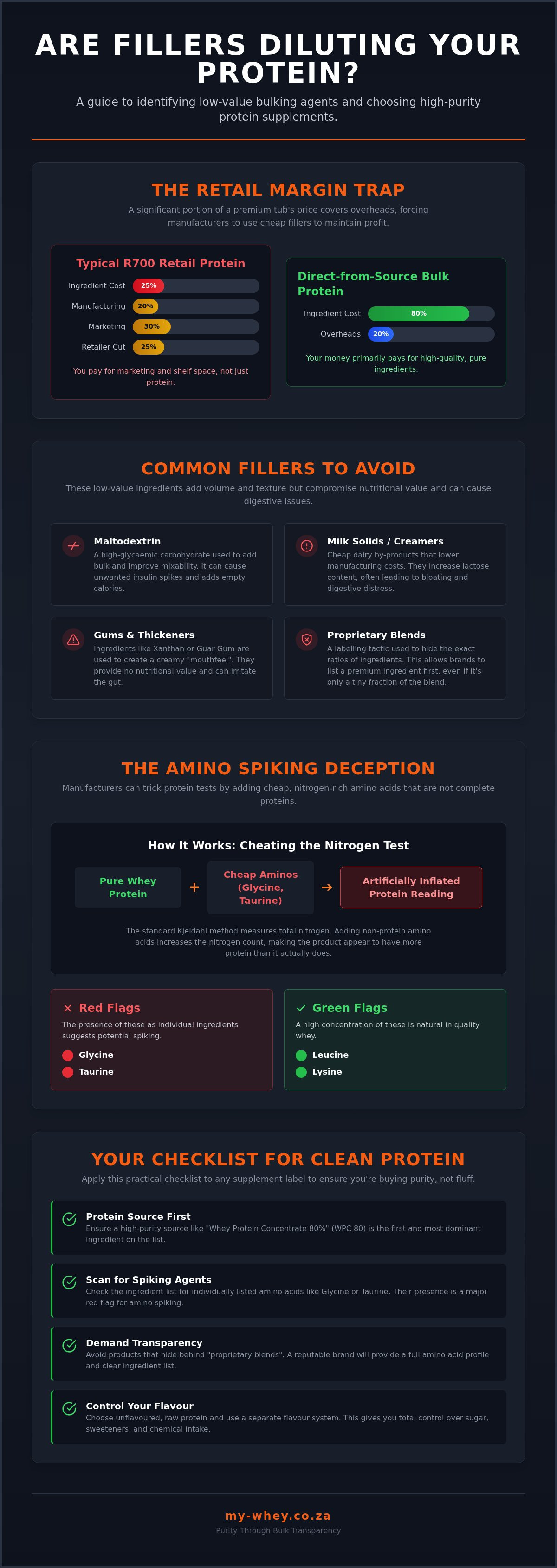
The "Retail Margin Trap" is the primary reason these additives exist. When you buy a tub from a major South African retailer for R500 or R700, a significant portion of that price covers distributor fees, shelf space, and expensive marketing campaigns. To keep the retail price competitive whilst paying for these overheads, manufacturers often swap high-quality protein for cheap bulking agents. It's a trade-off where the consumer loses nutritional density to fund the brand's advertising budget. Choosing bulk-sourced, raw ingredients bypasses this cycle entirely, offering a more environmentally friendly and cost-effective solution.
The Economics of the Supplement Industry
Manufacturers often use "milk solids" or "creamers" to drastically lower the cost per gram of their powder. These ingredients are significantly cheaper than pure Whey Protein Concentrate 80%. Many brands hide these ratios behind "proprietary blends," a labelling tactic that allows them to list high-quality ingredients first without disclosing how little of them the product actually contains. This lack of transparency makes it difficult to know if you're getting a premium product or a tub of over-priced dairy by-products. Shifting toward unflavoured, raw ingredients is the industry benchmark for those who value total transparency and purity.
Common Physical Fillers: From Maltodextrin to Milk Solids
Maltodextrin is perhaps the most common filler. It's a high-glycaemic carbohydrate used to "bulk out" a tub and improve mixability, but it can cause unwanted insulin spikes. Milk solids and skim milk powders are also frequently used; these are cheap dairy fillers that increase the lactose content. For many South Africans, this leads to the bloating and digestive distress often wrongly blamed on the protein itself. Finally, vegetable oils and non-dairy creamers are added to improve "mouthfeel." While they make a shake taste like a dessert, they add unnecessary fats and chemicals that move you further away from your goal of pure nutrition. Avoiding fillers in protein powder means looking past the creamy texture and demanding substance over style.
Decoding the Label: Identifying Thickeners and Amino Spiking
Labels are designed to sell, not necessarily to inform. To effectively master avoiding fillers in protein powder, you need to understand how laboratories actually verify protein content. Most testing facilities use the Kjeldahl method, which measures total nitrogen. Because protein is the primary source of nitrogen in food, labs use this figure to calculate the final protein percentage. However, this creates a massive loophole. Manufacturers can add cheap, nitrogen-rich amino acids like Taurine or Glycine to the mix. These aren't complete proteins, but they trick the test into recording a higher protein count than what is actually present.
Amino Spiking is the deceptive practice of adding non-proteinogenic amino acids to artificially inflate nitrogen readings. When you see these specific ingredients on a label, you're looking at a product that likely contains far less actual whey than the nutritional table suggests. It is a cost-cutting measure that directly robs you of the muscle-building potential you're paying for.
Spotting Deceptive Amino Acid Profiles
A legitimate Whey Protein supplement should rely on its natural amino acid profile without external padding. If you check the ingredient list and find Glycine or Taurine listed as individual components, it's a significant red flag. These are often used because they're significantly cheaper than what the official definition of whey protein concentrate requires for a pure product. Instead, look for a high concentration of Leucine and Lysine. These occur naturally in high-quality dairy protein. If a brand refuses to provide a full amino acid breakdown, they might be hiding a spiked formula.
Gums and Thickeners: The Gut Health Connection
Many commercial powders use Xanthan, Guar, or Cellulose gums to create a thick, creamy texture. While these are safe in small doses, they're often used to mask a thin, low-protein base. These gums can cause significant flatulence and bloating in sensitive individuals, often creating a secondary need for gut health supplements South Africa. Raw, unadulterated protein has a naturally thinner consistency. It might not feel like a thick milkshake, but it offers far better bioavailability and digestive comfort. Avoiding fillers in protein powder means prioritising how your body feels over how the shake feels in your mouth.
Choosing a lab-tested, unflavoured base is the simplest way of ensuring you get the nitrogen you're actually paying for. You can always source pure ingredients to customise your own shake without the chemical load or deceptive additives found in retail tubs.
Sweeteners and Flavour Systems: The Hidden Calorie Source
When you purchase a standard 1kg tub of chocolate-flavoured protein, you aren't actually getting 1,000 grams of protein. Most consumers don't realise they're paying a "Flavour Tax." In many commercial products, flavouring agents and sweeteners account for 15% to 20% of the total weight. This means roughly 200g of your expensive supplement is just industrial seasoning rather than the nutrition you need. Mastering the skill of avoiding fillers in protein powder requires looking past the taste and calculating the actual protein yield per scoop.
The type of sweetener used also dictates the chemical load on your body. Sucralose is the industry standard for artificial sweetness, but it doesn't suit everyone's digestive system. Natural alternatives like Stevia or Thaumatin offer a cleaner profile, yet pre-mixed powders lock you into whatever the manufacturer chose. By opting for unflavoured bases, you regain total control over your ingredient purity and can adjust the sweetness level to your exact preference without being forced to ingest unnecessary bulking agents.
The Problem with Pre-Flavoured Powders
Heavy flavouring isn't just about palatability; it's often a tactical choice. Strong synthetic flavours and aromas can mask the taste of low-quality or even slightly rancid raw materials. Brands also frequently use synthetic azo dyes to achieve a "perfect" colour, whereas natural products rely on beetroot red or curcumin. This chemical accumulation can lead to lingering aftertastes and metabolic stress. This issue isn't limited to protein; even when sourcing supplements like branched chain amino acids, using them in their raw, unflavoured state ensures you aren't consuming hidden dyes or unnecessary acids used to balance artificial flavours.
Building Your Own Flavour Profile
Creating a clean shake is simpler than the industry wants you to believe. You can use pantry staples like organic cocoa powder, cinnamon, or real fruit extracts to flavour a raw base. These provide antioxidants and natural micronutrients without the glycaemic load of maltodextrin-based flavour carriers. If you prefer the convenience of traditional flavours, My Whey flavour systems allow you to customise your shake with precision. You add the flavour separately, ensuring your primary tub remains 100% pure protein. This methodical approach is the most efficient way of avoiding fillers in protein powder whilst still enjoying a shake that tastes exactly how you want it to.
Practical Checklist: How to Buy Clean Protein in South Africa
The South African supplement market is crowded with international imports and local brands, making it difficult to distinguish between marketing hype and actual nutritional value. To cut through the noise, you need a systematic approach to evaluating what's inside the tub. Mastering the art of avoiding fillers in protein powder starts with a simple, five-step checklist that you can apply to any label in seconds.
- Step 1: Examine the length of the ingredient list. A high-purity product usually contains fewer than five ingredients. If the list reads like a paragraph, it's likely padded with non-functional additives.
- Step 2: Verify the primary ingredient. The first item listed should be a high-quality source like Whey Protein Concentrate 80%. If it's a "proprietary blend" or starts with "milk solids," put it back.
- Step 3: Scan for spiking agents. Look for "Glycine," "Taurine," or "Creatine" listed within the protein section. As discussed previously, these are often used to artificially inflate nitrogen readings.
- Step 4: Identify industrial bulking agents. Avoid products that feature "Creamers," "Corn Syrup Solids," or "Maltodextrin" near the top of the list. These provide volume but zero muscle-building benefit.
- Step 5: Prioritise unflavoured bulk options. Choosing a raw, unflavoured base is the only way to guarantee 100% transparency and avoid the "Flavour Tax" entirely.
The "Ingredients in Descending Order" Rule
South African labelling laws, specifically Regulation R146 and the upcoming Draft R3337, mandate that ingredients must be listed in descending order by weight. This is your most powerful tool for avoiding fillers in protein powder. If you see "Flavour" or "Cocoa Powder" appearing before the protein source, you're buying a product that is mostly seasoning. If a sweetener appears before the protein, the product is fundamentally a confectionary item, not a supplement. Always look for the protein source to be the undisputed leader of the list to ensure you're getting the value you paid for.
The Value of Lab-Tested Raw Materials
Sourcing from a dedicated bulk supplier significantly reduces the risk of third-party contamination and hidden additives. When you buy raw ingredients, you can often request a Certificate of Analysis (COA) to verify the exact purity of that specific batch. This level of scrutiny is standard for professional athletes but should be the baseline for anyone serious about their wellness journey. This philosophy of purity should extend across your entire stack, from your protein to your omega 3 and amino acids. By focusing on lab-tested raw materials, you eliminate the guesswork and the digestive distress associated with retail fillers.
To start building a cleaner, more effective supplement routine, you can browse our range of high-purity raw ingredients that prioritise performance over packaging.
The My Whey Solution: Purity Through Bulk Transparency
Purity is achieved through subtraction. By sourcing raw, bulk ingredients, you bypass the industrial "flavour-and-filler" complex entirely. My Whey was established to bridge the gap between high-level industry standards and your practical nutritional needs. We provide the same high-grade raw materials used by major manufacturers, but without the deceptive bulking agents and retail markups that compromise your progress. Avoiding fillers in protein powder becomes effortless when you start with a base that contains nothing but the essential nutrients your body requires.
This "No-Nonsense" philosophy prioritises substance over style. In the South African market, where retail tubs are often padded with expensive packaging and marketing "tax," bulk buying represents the smartest path to efficiency. When you separate your protein from your flavour systems and carbohydrates, you gain total control. You stop paying for industrial fluff and start investing in lab-tested wellness products that deliver tangible results.
Our Pure Whey Protein Concentrate 80%
Our flagship Whey Protein Concentrate 80% is the antithesis of the over-processed retail tub. It contains no gums, no added sugars, and no soy lecithin unless specifically stated for mixability. This level of purity ensures a high-impact supplement that respects your digestive health. Because it's an unflavoured base, it offers incredible versatility. You can customise it for post-workout shakes, blend it into smoothies, or use it in high-protein baking without the chemical aftertaste of synthetic sweeteners. Our bulk pricing model allows us to supply a higher grade of raw material than what is typically found in standard retail outlets, ensuring you get better value for every gram of protein.
Creating a Professional-Grade Supplement Stack
The most effective way of avoiding fillers in protein powder is to build your own formula. Professionals rarely rely on "All-in-One" products because these are often the worst offenders for hidden fillers and amino spiking. Instead, you can combine our pure Whey with Creatine Monohydrate and specific Amino Acids to create a custom stack tailored to your goals. This methodical approach ensures that every milligram in your shaker serves a purpose. It eliminates the guesswork and prevents the bloating associated with the thickeners found in pre-mixed formulas. Empower your fitness journey by choosing the transparency of raw ingredients. It's time to stop settling for what's convenient and start demanding what's pure.
Take Control of Your Performance Nutrition
Achieving your fitness goals requires more than just hard work in the gym; it demands uncompromising quality in your recovery. You've learned that the secret to avoiding fillers in protein powder lies in looking past the glossy retail packaging and scrutinising the raw ingredient list. By applying the descending order rule and identifying deceptive spiking agents like glycine, you can protect both your digestive health and your wallet from the industrial "flavour tax."
True purity isn't found in a complex, pre-mixed tub; it's found in the simplicity of premium, lab-tested raw ingredients. As a trusted South African supplier for professional athletes, we eliminate the retail markups and unnecessary fluff that hold you back. You deserve a supplement stack that works as hard as you do, without the bloating or hidden chemicals. Take the next step toward a cleaner, more efficient wellness journey today.
Shop our range of pure, filler-free Bulk Supplements at My Whey
Your body is an investment. Treat it with the respect it deserves by choosing nutrition that values substance over style.
Frequently Asked Questions
What is the most common filler found in cheap protein powders?
Maltodextrin is the most prevalent filler used by commercial manufacturers. It's a cheap, starch-derived carbohydrate used to increase volume whilst significantly lowering production costs per gram. Because it's highly processed and has a high glycaemic index, it can cause unwanted insulin spikes. Brands favour it because it's virtually flavourless and mixes easily, helping them pad the tub without affecting the taste profile of their synthetic flavour systems.
Is Xanthan Gum dangerous to consume in a daily protein shake?
Xanthan Gum is not inherently dangerous, but it is a common trigger for digestive distress in many people. It's a polysaccharide used as a thickener to give low-quality, thin shakes a creamy mouthfeel. For sensitive individuals, daily consumption can lead to bloating, gas, and altered gut motility. Avoiding fillers in protein powder often means choosing a thinner, raw product to spare your digestive system from these industrial gums.
How can I tell if my protein has been amino spiked without a lab test?
You can identify amino spiking by scanning the ingredient list for specific "padding" amino acids. Look for Taurine, Glycine, or Creatine listed as individual components within the protein blend rather than occurring naturally. These are often added to artificially inflate the nitrogen content during lab tests. If a brand lists these specific aminos but refuses to provide a full, natural amino acid breakdown, they're likely faking their total protein percentage.
Why does unflavoured protein powder sometimes have a thin consistency?
Unflavoured protein is naturally thin because it contains no industrial thickeners or creamers. Commercial brands add gums and vegetable oils to mimic the texture of a thick milkshake, which often masks the watery consistency of a diluted product. A thin consistency is actually a hallmark of purity. It indicates that you're consuming concentrated whey rather than a chemically-altered emulsion designed solely for "mouthfeel."
Do natural sweeteners like Stevia count as fillers?
Natural sweeteners like Stevia or Thaumatin are not considered fillers because they're used in minute quantities to provide sweetness. However, you should check what they are blended with on the label. Some brands use maltodextrin as a "carrier" for these high-intensity sweeteners to make them easier to measure during manufacturing. In these specific cases, the sweetener itself is fine, but the carrier becomes an unwanted bulking agent in your shake.
Is soy lecithin a filler or a functional ingredient?
Soy lecithin is a functional ingredient, not a filler. It is an emulsifier added in very small amounts to help the powder dissolve in water without clumping together. While it serves a practical purpose for mixability, some purity-focused athletes prefer to avoid it due to soy sensitivities. If you want a 100% raw experience, look for powders that are "un-instantiated" or use sunflower lecithin as a cleaner alternative.
Can I add my own flavouring to unflavoured bulk protein powder?
You can easily customise unflavoured bulk protein with natural ingredients from your own pantry. Cocoa powder, Ceylon cinnamon, or even a shot of espresso are excellent ways of avoiding fillers in protein powder whilst maintaining a great taste profile. This approach gives you total control over the sweetness level and chemical load, allowing you to bypass synthetic azo dyes and artificial flavourings entirely.
Why is bulk protein powder usually cheaper if it has fewer fillers?
Bulk protein is more affordable because it eliminates the "Retail Margin Trap" and expensive overheads. You aren't paying for multi-colour tubs, distributor fees, or the high-budget marketing campaigns common in South African retail stores. By stripping away the industrial fluff and unnecessary packaging, you're paying for the actual raw material rather than the brand's advertising budget and retail shelf space.