

Avoiding Fillers in Protein Powder: The Insider’s Guide to Pure Nutrition
Your expensive tub of "premium" protein might actually be a clever cocktail of thickened water and cheap chemical additives. It's incredibly frustrating to invest your hard-earned money into supplements, only to be met with digestive discomfort and persistent bloating. You deserve to know exactly what you're putting into your body, yet the industry often hides behind complex chemical names and marketing hype. We understand that you want results, not a list of ingredients you can't pronounce.
Mastering the art of avoiding fillers in protein powder is the only way to ensure you're getting maximum muscle protein synthesis per gram without the unnecessary bulk. This guide provides the tools to spot hidden additives and identify the deceptive practice of amino spiking. We'll explore why choosing high-purity options like Whey Protein Concentrate 80% and using independent flavour systems can save you money whilst delivering better results. You'll learn to decode labels with confidence, allowing you to prioritise substance over style for a leaner, more efficient supplement routine.
Key Takeaways
- Identify common thickeners and hydrogenated fats that add unnecessary bulk and texture without providing real nutritional benefit.
- Uncover technical scams like amino spiking that manufacturers use to artificially boost protein readings on their labels.
- Master the "first three ingredients" rule as a practical strategy for avoiding fillers in protein powder and ensuring transparency.
- Learn why raw ingredients like Whey Protein Concentrate 80% offer superior purity and significant cost savings over retail brands.
- Take charge of your digestion and results by using independent flavour systems to customise your supplements without hidden additives.
The Hidden Cost of Convenience: What are Protein Fillers?
Fillers are the silent partners of the supplement industry. These non-nutritive additives are primarily used to increase product volume, stabilise texture, or enhance mouthfeel. Whilst they might make a shake taste like a dessert, they often displace the actual nutrients you're paying for. This "padding the tub" phenomenon is a strategic manufacturing choice. Brands use inexpensive ingredients to reduce their cost per gram, ensuring their margins remain high even when raw protein prices fluctuate.
There's a critical distinction between functional additives and bulking agents. Functional additions, such as specific digestive enzymes, serve a purpose in helping your body process nutrients. True fillers, however, are purely cosmetic or economic. Avoiding fillers in protein powder requires a keen eye for ingredients that offer no benefit to your muscle recovery or overall health. When a label is cluttered with chemical names, the actual protein content is usually the first thing to suffer.
The Economic Incentive Behind Additives
Retail brands operate in a crowded market where marketing budgets often dwarf the cost of the actual ingredients. To fund expensive sponsorships and prime shelf space, manufacturers must find ways to cut costs. Fillers allow them to use a lower percentage of actual protein whilst maintaining the weight of the tub. This creates an illusion of value that doesn't exist. By contrast, bulk suppliers skip the fancy packaging and retail markups. This allows for a focus on high-purity raw ingredients, like Whey Protein Concentrate 80%, where the value is in the powder rather than the marketing campaign.
The Impact on Your Digestive System
The "convenience" of a thick, creamy shake often comes at a physical price. Many people mistake the side effects of fillers for a protein intolerance. If you experience discomfort after your workout, your powder's additive profile might be the culprit. Common symptoms of filler-heavy protein include:
- Persistent bloating: Often caused by gums and thickeners that ferment in the gut.
- Digestive lethargy: Complex additives can slow down the speed of digestion and leave you feeling heavy.
- Unexpected gas: A frequent reaction to sugar alcohols and bulking agents used to improve flavour.
Artificial thickeners can coat the digestive tract, which may interfere with the absorption of the very amino acids you need for recovery. Complex ingredient lists increase the likelihood of encountering a food sensitivity. Avoiding fillers in protein powder isn't just about saving money; it's about prioritising your gut health and ensuring your body can actually use the nutrients you consume.
Identifying the "Naughty List": Common Fillers to Avoid
Scanning a supplement label shouldn't feel like deciphering ancient code. Many commercial brands rely on a standard roster of additives to hide the thin texture of low-grade protein. Identifying these red flags is the first step in avoiding fillers in protein powder. When you see terms like "non-dairy creamer" or "hydrogenated vegetable oil" on a tub, you're looking at hidden trans fats. These are added purely to provide a smooth mouthfeel, but they introduce unnecessary calories that work against your fitness goals.
Anti-caking agents like Silicon Dioxide are another common inclusion. This substance is essentially a form of sand used to keep powder flowing through high-speed industrial packaging machines. Whilst it's effective for mass production, it offers zero nutritional value. Similarly, artificial sweeteners like Sucralose, Acesulfame Potassium (Ace-K), and Aspartame are often used to mask the metallic taste of poor-quality raw ingredients. For many, these sweeteners are a primary trigger for lingering digestive upset and headaches.
Thickeners: The Illusion of Quality
Manufacturers use gums such as Xanthan, Guar, and Cellulose gum to perform a texture trick. These additives make a watery, low-protein shake feel "rich" and "creamy" in your mouth. It's a clever way to make a cheap product feel premium. However, excessive gum consumption is a well-known cause of gastrointestinal distress. You can perform a simple water solubility check at home to test your current brand. Pure protein should dissolve relatively cleanly. Filler-heavy powders often turn into a thick, gelatinous sludge that clings to the sides of your shaker bottle.
Sweeteners and Flavouring Agents
Maltodextrin is perhaps the most deceptive filler found in retail tubs. It's a cheap carbohydrate with a high glycaemic index that can spike insulin levels just as quickly as table sugar. Brands often use it to improve the mixability and sweetness of their "flavour systems" rather than using real cocoa or natural extracts. Choosing unflavoured protein is the ultimate litmus test for quality. If a company's raw powder tastes rancid or overly chalky without heavy masking, the underlying protein quality is likely poor. Opting for pure Whey Protein Concentrate 80% allows you to control your nutrition whilst avoiding the chemical baggage of retail flavouring.
Beyond the Label: Understanding Amino Spiking and Purity Scams
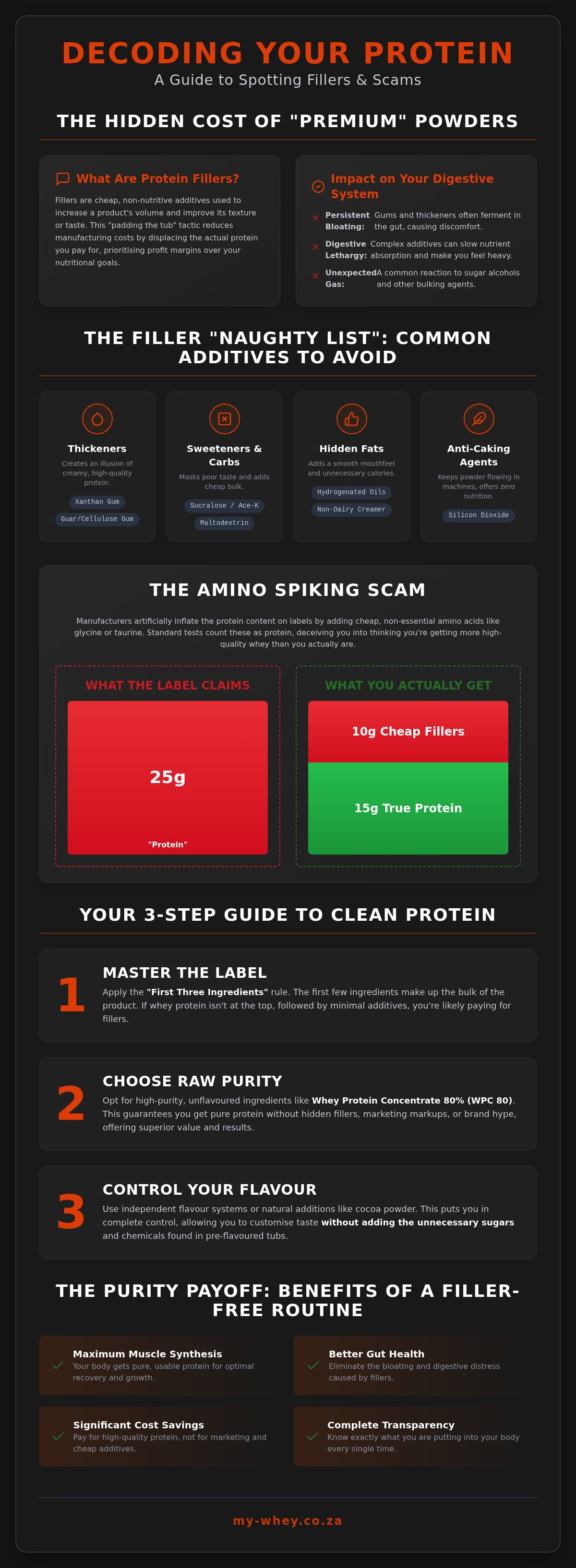
Whilst physical additives like gums are easy to spot once you know what to look for, some manufacturers use more sophisticated methods to pad their numbers. This is where chemical deception enters the frame. Avoiding fillers in protein powder also means protecting yourself against "amino spiking," a practice that allows brands to claim higher protein content than what is actually in the tub. It's a technical loophole that exploits how labs measure nutritional value, and it's more common than most consumers realise.
The Nitrogen Testing Loophole
Nitrogen spiking is the practice of adding non-protein nitrogen sources to fool lab tests. Most industrial laboratories use the Kjeldahl method, which doesn't measure protein directly but instead detects nitrogen levels to estimate protein content. Because specific free-form amino acids are high in nitrogen but very cheap to produce, brands add them to their blends to artificially inflate the readings.
This creates a significant discrepancy in actual nutritional value. A tub claiming 25g of protein per serving might actually only contain 18g of actual whey, with the remaining 7g coming from these cheap aminos. To protect yourself, you must look for the following ingredients listed within the "protein blend" rather than as separate additions:
- Glycine: A cheap amino acid often used to boost nitrogen counts.
- Taurine: Frequently added under the guise of "performance," but often just a nitrogen filler.
- Arginine: Another nitrogen-rich compound used to exploit testing methods.
The Role of Creatine and Taurine
Creatine and Taurine are valuable supplements in their own right, but they have no business being part of your protein's total gram count. When a brand includes these inside a "proprietary protein blend," they are often using them to bypass quality standards whilst keeping their manufacturing costs low. You should always buy your Creatine Monohydrate separately to ensure you're getting a precise dose without sacrificing your actual protein intake.
Understanding the molecular makeup of your supplements is key to The Definitive Guide to Whey Protein and how it supports muscle growth. To truly verify what's inside, demand a Certificate of Analysis (CoA) or third-party lab testing results. These documents provide an unbiased breakdown of the purity and actual protein percentage. Applying these standards is the most effective way of avoiding fillers in protein powder whilst ensuring your hard-earned money buys results rather than cheap nitrogen sources.
The Practical Guide to Reading Supplement Labels
The ingredient list is the only place where marketing hype meets reality. To master the art of avoiding fillers in protein powder, you must look past the colourful tubs and focus on the fine print. Ingredients are listed in descending order by weight. This means the first three items on the list tell the true story of what you're consuming. If the top of the list contains maltodextrin, "non-dairy creamer," or a proprietary blend, the product is likely padded with inexpensive volume-boosters.
Transparency is non-negotiable for serious athletes. Be wary of "proprietary blends" that don't disclose the specific dosage of each component. Manufacturers often use these blends to hide the fact that they've used a tiny amount of high-quality protein and a large amount of cheap filler. You should also scan for hidden allergens. Many retail brands use soy lecithin as an emulsifier or gluten-based thickeners to improve texture, both of which can trigger inflammation in sensitive individuals.
Calculating Protein Efficiency
The most reliable way to spot fillers is to perform a simple calculation. Take the total grams of protein per serving, divide it by the total serving size, and multiply by 100. This gives you the protein-by-weight percentage. If a serving is 40g but only provides 20g of protein, the other 50% of that scoop is composed of flavourings, dyes, and bulking agents. You should generally question any product that falls below a 75% protein-by-weight threshold. Pure Whey Protein Concentrate 80% provides exactly what the name suggests, ensuring that the vast majority of every scoop contributes directly to your recovery.
Red Flags in Product Branding
Loud, aggressive branding often compensates for quiet quality. If a label "shouts" about being "extreme" or "hardcore" whilst burying the ingredient list in tiny font, it's a red flag. Be equally cautious of the word "Natural." In the supplement industry, this term isn't legally protected or strictly regulated. A product can be labelled natural whilst still containing heavily processed sweeteners and thickeners. Reliable suppliers are proud of their sources. Look for brands that clearly state where their raw materials are manufactured. When you choose high-purity ingredients, you eliminate the need for the "Natural" trap and focus on tangible standards instead.
The Case for Purity: Why Bulk Raw Ingredients Win
Choosing raw ingredients is the final step in mastering your nutrition. When you opt for bulk, unflavoured protein, you gain total control over your intake. You can add your favourite fruits, natural sweeteners, or spices without contending with pre-mixed chemical additives. This versatility extends beyond the shaker bottle. Raw whey integrates seamlessly into morning oats, home-made protein bars, or baking recipes without the clashing artificial flavours found in retail tubs. It's a clean slate for your kitchen and your recovery.
Avoiding fillers in protein powder also delivers significant economic and environmental benefits. By eliminating fancy plastic tubs and the massive marketing budgets of retail brands, you pay only for the nutrients. Bulk packaging uses less plastic per gram of protein, reducing your environmental footprint whilst keeping your pantry organised. It's a pragmatic choice for those who value substance over style. You're no longer paying for a brand's sponsorship deals; you're investing in your own performance.
Building Your Own Performance Stack
Precision is the hallmark of a professional approach to supplementation. Instead of relying on a "one size fits all" retail blend, you can combine pure whey with specific branched chain amino acids to target recovery. If you struggle with digestion, integrating gut health supplements South Africa allows you to support your microbiome without the interference of artificial thickeners. Using separate flavour systems is also a strategic move. It prevents "flavour fatigue" by allowing you to change the taste of your shake daily without buying multiple expensive tubs of protein. This modular approach ensures every gram you consume serves a specific purpose.
The My Whey Commitment to Purity
We believe that transparency shouldn't be a luxury. Our Whey Protein Concentrate 80% is the cornerstone of our range, setting a high standard for raw quality and efficiency. Every batch is lab-tested for purity, ensuring that you receive the exact protein yield stated on the label. We've done the heavy lifting of sourcing and quality control so you can focus on your training goals with absolute confidence. Our bulk model isn't just about saving money; it's about providing a reliable partnership in your wellness journey. Browse our range of pure, bulk supplements today and experience the difference that high-purity nutrition makes to your performance.
Take Charge of Your Nutritional Standards
Navigating the supplement industry requires more than just enthusiasm; it demands a critical eye for detail. By mastering the art of avoiding fillers in protein powder, you ensure that every gram you consume contributes directly to your fitness goals rather than padding a manufacturer's bottom line. You now have the tools to spot deceptive amino spiking and look past the "natural" marketing traps that clutter retail shelves. Transparency remains the ultimate indicator of quality in a market often dominated by style over substance.
Choosing high-purity, raw ingredients provides the efficiency your body deserves whilst eliminating the digestive discomfort caused by unnecessary thickeners and gums. It's time to stop paying for fancy tubs and start investing in tangible results. At My Whey, we provide a reliable partnership in your wellness journey through direct-to-consumer bulk pricing and lab-tested products. Our Whey Protein Concentrate 80% contains no hidden proprietary blends, ensuring you receive a precise, high-concentration yield in every scoop. Shop Pure, Lab-Tested Bulk Protein at My Whey today and experience the clarity of pure nutrition. Your body and your budget will thank you for the upgrade.
Frequently Asked Questions
What is the most common filler in protein powder?
Thickeners and gums are the most frequent additions used to pad out commercial supplements. Xanthan, guar, and cellulose gum create a creamy texture in low-protein mixes, whilst maltodextrin is a common bulking agent. These ingredients increase the volume of the product without adding any real muscle-building value. Avoiding fillers in protein powder starts with identifying these texture-enhancing chemicals that often displace the actual whey you're paying for.
Does unflavoured protein powder have fillers?
Most unflavoured powders are significantly purer than their flavoured counterparts because they omit sweeteners, dyes, and complex flavour systems. However, some brands still include anti-caking agents like silicon dioxide or emulsifiers like soy lecithin. Choosing raw, lab-tested ingredients like Whey Protein Concentrate 80% ensures you're getting a high-purity product. This approach allows you to control exactly what goes into your shaker without hidden additives or chemical baggage.
How can I tell if my protein powder is spiked with aminos?
You can identify amino spiking by checking the ingredient list for specific free-form amino acids. Look for glycine, taurine, or arginine listed within the main protein blend rather than as separate additions. If these appear alongside a high protein claim but no detailed amino acid profile is provided, the product is likely spiked. Manufacturers use these cheap nitrogen sources to fool laboratory tests and artificially inflate the recorded protein content.
Are thickeners like Xanthan Gum bad for you?
Xanthan gum isn't necessarily dangerous for most people, but it is a frequent cause of digestive issues. As a complex carbohydrate, it can ferment in the gut, leading to significant gas and persistent bloating. Whilst it's effective for creating a thick mouthfeel, it provides zero nutritional benefits. If you have a sensitive stomach, avoiding fillers in protein powder that rely on these gums is a logical step toward better digestion.
Why does my protein powder cause bloating?
Your bloating is often caused by the secondary ingredients rather than the protein itself. Artificial sweeteners like sucralose and thickeners like guar gum are notorious for causing gastrointestinal distress during digestion. Additionally, low-quality protein concentrates may contain higher levels of lactose, which can be difficult for many individuals to process. Switching to a high-purity, raw protein often resolves these issues by eliminating the chemical triggers found in standard retail tubs.
Is Maltodextrin considered a filler in protein?
Maltodextrin is definitely a filler when found in a product marketed as pure protein. It's a cheap carbohydrate derived from starch that manufacturers use to improve mixability and add weight to the tub. Because it has a high glycaemic index, it can cause rapid insulin spikes that may interfere with your goals. If you prioritise lean muscle growth or weight management, you should avoid powders where maltodextrin appears near the top of the ingredient list.
Can I buy pure whey protein without any additives in South Africa?
You can source pure, additive-free protein nationally through specialist bulk suppliers. My Whey provides lab-tested Whey Protein Concentrate 80% that contains no hidden proprietary blends or unnecessary thickeners. By focusing on raw ingredients and direct-to-consumer bulk pricing, it's possible to maintain a high-quality supplement routine without the retail markups. This model ensures South African athletes have access to international standards of purity and performance without chemical padding.
How do I calculate the actual protein percentage in my powder?
To find the actual protein yield, divide the grams of protein per serving by the total serving size and multiply by 100. For example, if a 40g scoop provides 20g of protein, the product is only 50% protein-by-weight. The remaining 50% consists of flavourings, sweeteners, and bulking agents. A high-quality concentrate should ideally sit at 75% or higher. This simple calculation exposes how much filler you're actually purchasing in every tub.