

Best Omega 3 for Inflammation: Science-Backed 2026 Guide
Did you know that the triglyceride form of fish oil is roughly 70% more bioavailable than the cheaper ethyl ester forms found in many retail shops? If you've been taking a supplement and seeing zero results, you aren't alone. Finding the best omega 3 supplement for inflammation requires looking past the marketing jargon on the front of the bottle and scrutinising the actual lab data. Most people focus on the total oil weight; however, the secret to soothing joint pain and supporting heart health lies in the specific EPA and DHA concentrations. High-purity ingredients are essential for real physiological change.
It's frustrating to invest in your health only to be met with fishy aftertastes and no noticeable change in your systemic inflammation. You deserve a pure, high-potency source that delivers on its promises without the worry of heavy metal contamination. This guide will help you identify the most effective Omega 3 ratios and forms to manage inflammation and support your long-term wellness. We'll explore the latest 2026 clinical data on dosages, explain why the triglyceride form is superior, and show you how to choose a lab-tested supplement that actually works.
Key Takeaways
- Learn why the triglyceride form of Omega 3 Softgels offers up to 70% better absorption compared to common ethyl ester alternatives.
- Discover why a higher concentration of EPA is the critical factor when choosing the best omega 3 supplement for inflammation and joint stiffness.
- Understand how to optimise your results by following a therapeutic dosing protocol of 2-4g daily, always taken alongside a fat-containing meal.
- Gain insight into how omega-3 fatty acids regulate the inflammatory response by managing prostaglandins and leukotrienes at a cellular level.
- Identify how to source high-purity, lab-tested supplements through bulk models that prioritise ingredient quality over expensive retail packaging.
The Biological Link Between Omega-3 Fatty Acids and Inflammation
Inflammation is your body's natural response to injury, but when it becomes systemic, it turns into a liability. This persistent, low-grade state undermines long-term health and halts athletic progress. It’s a silent drain on your energy. To manage this effectively, you must target the chemical messengers responsible for the flare-ups. Prostaglandins and leukotrienes are lipids that either promote or suppress inflammation. Omega-3 fatty acids, specifically EPA and DHA, compete with Omega-6 fats for the same enzymes. Because the modern diet is often overloaded with Omega-6 from processed oils, your body is biologically pushed toward a pro-inflammatory state. Balancing this ratio is the first step in reclaiming your physical health.
To understand why specific fats matter, you can look at a comprehensive overview of omega-3s. EPA and DHA are the primary drivers for cellular repair. They act as direct precursors to signalling molecules that resolve inflammation rather than prolonging it. Without an adequate supply, your body struggles to complete the healing cycle, leading to chronic discomfort and reduced mobility. Finding the best omega 3 supplement for inflammation isn't just about general wellness; it's about providing the specific raw materials your cells need to function correctly.
How Omega-3 Modulates the Inflammatory Response
Omega-3 fatty acids don't just passively sit in your system. They actively inhibit the production of pro-inflammatory cytokines like TNF-alpha and IL-6. These proteins are the primary drivers of systemic swelling and joint discomfort. Beyond simple inhibition, these fats produce specialised pro-resolving mediators known as resolvins and protectins. These molecules act as a biological "kill switch" for inflammation. Relying on plant-based ALA from seeds is usually ineffective for this purpose. The human body is notoriously poor at converting ALA into the active forms of EPA and DHA required for these complex anti-inflammatory pathways.
Signs You May Need More Anti-Inflammatory Fats
Identifying a deficiency is straightforward if you know what to look for. Persistent joint stiffness, skin flare-ups, and a noticeable slowdown in muscle recovery are common indicators. For many active people amongst the South African population, the physical toll of training requires a higher intake of anti-inflammatory fats. A C-reactive protein (CRP) test is a reliable way to measure systemic inflammation levels. If your markers are high, using high-purity Omega 3 Softgels becomes a priority for restoring your health. It’s about efficiency. Don't let chronic inflammation dictate your performance levels when the solution is rooted in basic biological sourcing.
EPA vs DHA: Decoding the Optimal Ratio for Inflammatory Support
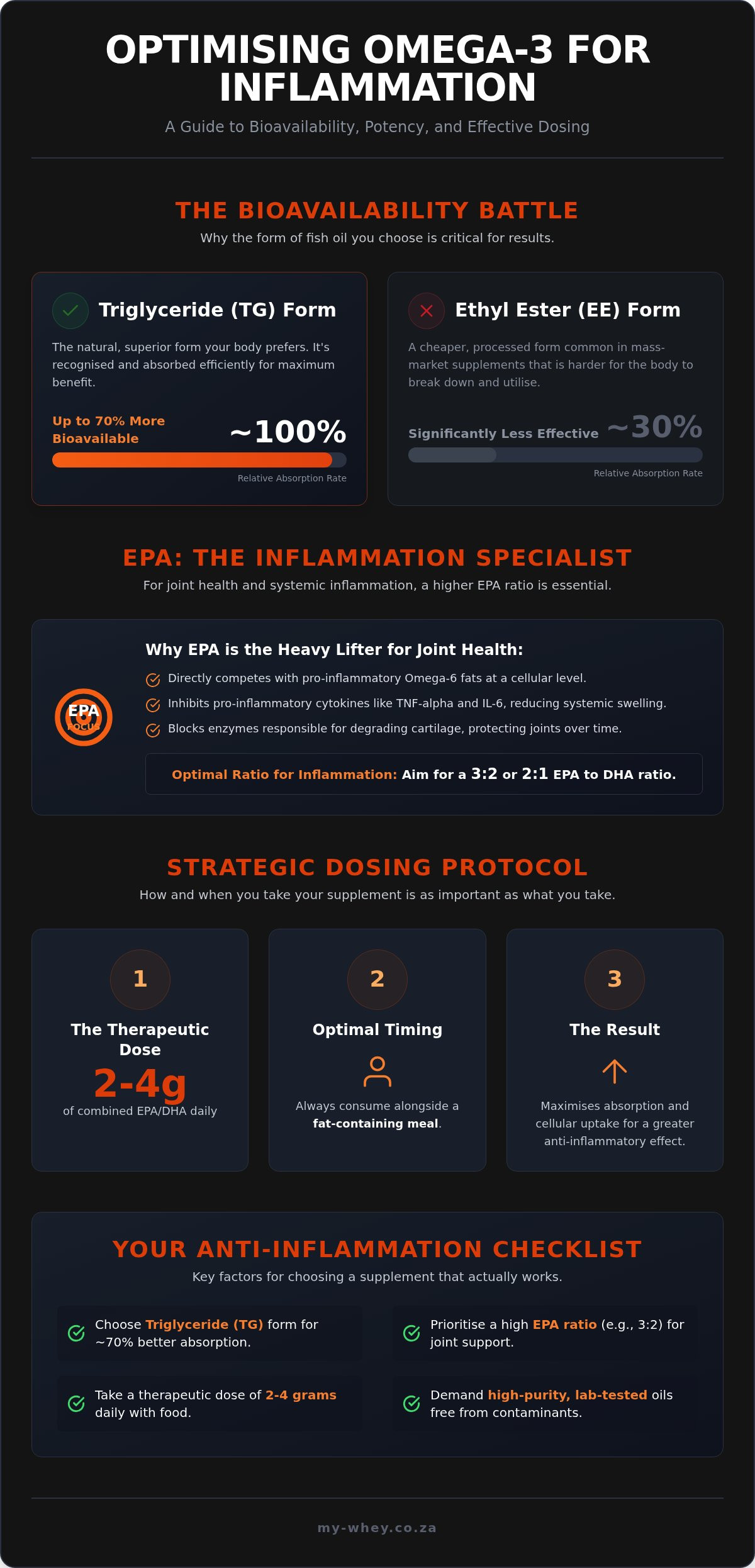
Not all fish oils are created equal. Whilst both Eicosapentaenoic acid (EPA) and Docosahexaenoic acid (DHA) are essential, they serve very different biological functions. If your goal is to manage systemic swelling or joint discomfort, the ratio of these two fatty acids is your most important metric. Clinical consensus suggests that for those seeking the best omega 3 supplement for inflammation, a ratio that favours EPA is the gold standard. Most high-performance protocols utilise a 3:2 or 2:1 EPA to DHA ratio to maximise the anti-inflammatory signal without neglecting structural health.
The science behind this preference is clear. EPA is more efficient at competing with pro-inflammatory fats within your cell membranes. By studying the mechanisms of omega-3s and inflammation, we see that EPA acts as a direct inhibitor of the pathways that lead to chronic pain. It isn't just about taking "fish oil" generally; it's about the precision of the dose. High-concentration EPA ensures that the biological "brakes" are applied to the inflammatory process before it causes tissue damage.
Why EPA is the Heavy Lifter for Joint Health
EPA is the primary antagonist to joint-related inflammation. In clinical trials focusing on Rheumatoid Arthritis, patients using high-dose EPA reported significant reductions in morning stiffness and a decreased reliance on traditional painkillers. This occurs because EPA specifically inhibits the production of matrix metalloproteinases, which are the enzymes responsible for degrading cartilage over time. To achieve a therapeutic effect, you need potency. Therapeutic joint support is defined by an EPA concentration that significantly outweighs DHA, typically exceeding 500mg per single softgel. This concentration ensures that the best omega 3 supplement for inflammation actually reaches the affected tissues in a meaningful way.
The Role of DHA in Long-term Wellness
DHA remains the structural backbone of your brain and retina. It is vital for maintaining cell membrane fluidity, which allows nutrients to enter your cells and waste products to exit efficiently. Whilst EPA handles the "firefighting" of acute inflammation, DHA provides the long-term structural integrity your body needs to recover. Balancing these two is simple: don't dilute the EPA. Look for a product that maintains a high total yield of both fats. Choosing high-quality Omega 3 Softgels ensures you receive this balanced support without the unnecessary fillers found in budget retail brands.
Purity and Bioavailability: Evaluating Triglyceride vs Ethyl Ester Forms
The chemical form of your fish oil is just as critical as the concentration of its active ingredients. Most commercial oils exist in one of two forms: natural triglycerides or synthetic ethyl esters. Natural triglycerides are the form found in wild fish, whilst ethyl esters are created by reacting fish oil with ethanol to concentrate the EPA and DHA. Research highlighted by Harvard Health on fish oil supplements and inflammation suggests that the body recognises and processes natural forms more efficiently. If you want the best omega 3 supplement for inflammation, you should prioritise bioavailability to ensure the fats actually reach your cells.
Bioavailability isn't just a technicality; it's the difference between results and wasted money. Studies indicate that the triglyceride form offers up to 70% better absorption than the ethyl ester alternative. When you consume ethyl esters, your body must first convert them back into triglycerides before they can be utilised. This extra step slows down the anti-inflammatory response. High-quality Omega 3 Softgels use molecular distillation to achieve high potency whilst maintaining a stable structure. This process strips away heavy metals, PCBs, and other contaminants, leaving behind a pure, highly absorbable product that doesn't rely on synthetic shortcuts.
The Problem with Processed Ethyl Esters
Ethyl esters are popular amongst mass-market manufacturers because they are cheaper to produce in high concentrations. However, this semi-synthetic form is inherently less stable. It is significantly more prone to oxidation, which leads to rancidity. If you experience "fishy burps" after supplementation, it's often a sign that the oil has already begun to oxidise or that your body is struggling to break down the ethanol-bound fats. These processed oils lack the natural backbone required for long-term stability, making them a poor choice for therapeutic use.
Ensuring Stability in the South African Climate
The South African climate presents a unique challenge for supplement storage. Heat and light are the primary enemies of polyunsaturated fats. An oxidised oil doesn't just lose its potency; it can actually become pro-inflammatory, defeating the purpose of your supplementation. To ensure you are getting a fresh product, follow this simple quality checklist:
- Smell: Fresh oil should have a neutral or slightly salty scent, never a harsh fishy odour.
- Colour: Look for a clear, golden hue without any cloudiness.
- Lab Reports: Only trust brands that provide transparent, third-party testing for oxidation levels (TOTOX).
For a deeper look at how to maintain the integrity of your supplements, consult The Definitive Guide to Omega 3. Choosing a lab-tested source is the only way to guarantee that your best omega 3 supplement for inflammation remains effective from the first softgel to the last.
Strategic Supplementation: Dosing, Timing, and Safety Protocols
Finding the best omega 3 supplement for inflammation is only half the battle. You must also master the delivery. To see a measurable reduction in systemic markers, therapeutic dosing is essential. For most individuals dealing with chronic joint pain or intense training schedules, a daily intake of 2g to 4g of combined EPA and DHA is the standard range. Lower doses often fail to move the needle on cellular inflammation. Consistency is your greatest ally here. It takes time for these fatty acids to integrate into your cell membranes and begin modulating the inflammatory response.
Timing is just as critical as the dose itself. Taking your Omega 3 Softgels with a fat-containing meal is non-negotiable for proper absorption. Because these are fat-soluble nutrients, they require the presence of other dietary fats to trigger the release of digestive enzymes. Without this, much of the active ingredient may simply pass through your system unutilised. If you're using a loading phase to address acute flare-ups, you might start at the higher end of the 4g range for the first few weeks before settling into a long-term maintenance dose.
Calculating Your Daily Requirement
Your specific needs depend on your body weight and activity levels. A general guideline is to aim for 40mg of combined EPA/DHA per kilogram of body weight if you're highly active or managing chronic stiffness. Don't be misled by the "1000mg Fish Oil" label on many retail products. Often, that 1000mg only contains a fraction of active EPA and DHA. Always check the supplement facts panel for the actual concentration. You should expect to maintain this protocol for 8 to 12 weeks before expecting significant physiological changes. This duration allows the fats to displace pro-inflammatory Omega-6s within your tissues.
Optimising Absorption and Minimising Side Effects
Splitting your daily dose between breakfast and dinner can improve tolerance and maintain steady blood levels. This approach also reduces the likelihood of digestive upset. High-quality supplements include Vitamin E (tocopherols) to act as a natural antioxidant, preventing the delicate oils from oxidising within the softgel. If you do experience mild nausea, try taking your dose mid-meal rather than on an empty stomach. Always consult a healthcare professional if you're on blood-thinning medications, as high-dose omega-3s can have a mild anticoagulant effect. For those ready to start a science-backed protocol, you can order lab-tested Omega 3 Softgels to ensure you're getting the potency required for real results.
Sourcing Premium Omega-3 in South Africa: Purity Without the Retail Markup
Finding the best omega 3 supplement for inflammation shouldn't be a search for the most expensive brand. In the South African market, retail prices are often inflated by heavy marketing budgets and elaborate packaging. By switching to a bulk supplement model, you prioritise the raw ingredient over the presentation. This approach ensures that your investment goes directly into the high-potency EPA and DHA concentrations required for therapeutic results. My Whey acts as a bridge between high-level industry standards and your daily wellness needs, offering a no-nonsense path to joint and cardiovascular health.
You're paying for the active ingredient, not the glossy label or the retail shelf space. We source directly from high-purity producers to ensure that the quality remains consistent across every batch. This direct model allows us to offer professional-grade nutrition at a fraction of the price of international retail brands. It’s an insider secret amongst performance athletes and health-conscious individuals who value substance over style. By focusing on efficiency, we provide the tools you need to manage systemic inflammation without the unnecessary financial burden.
Why Lab-Testing is Non-Negotiable
The health supplement industry in South Africa can be a complex environment to navigate. Without strict oversight, the risk of consuming oils contaminated with heavy metals or PCBs is a genuine concern. We handle the complexities of quality control by ensuring every batch of Omega 3 Softgels undergoes rigorous lab-testing for purity and potency. This transparency builds a foundation of trust that generic retail brands often lack. For a deeper look at how we maintain these standards, read The 2026 Guide to Purity and Performance. It explains our commitment to delivering only the cleanest raw materials to our customers.
The Economic Advantage of Bulk Sourcing
When you calculate the cost per gram of active EPA and DHA, the value of bulk sourcing becomes undeniable. Most retail products charge a premium for small quantities and fancy bottles, which ultimately adds nothing to your health outcomes. By eliminating these unnecessary costs, we provide a reliable source of high-purity fats that is sustainable for long-term use. This model also reduces environmental waste by minimising the volume of single-use plastic packaging. Managing chronic inflammation requires consistency over months and years; therefore, affordability is a functional part of your success.
You deserve a partner that prioritises your results over marketing hype. We offer national delivery across South Africa, ensuring that premium nutrition is accessible regardless of your location. If you are ready to move past low-potency alternatives and secure the best omega 3 supplement for inflammation, now is the time to choose a transparent source. Explore high-purity Omega 3 Softgels at My Whey and experience the difference that professional-grade sourcing makes to your recovery and long-term vitality.
Take Control of Your Inflammatory Health
Choosing the best omega 3 supplement for inflammation is a decision that directly impacts your daily mobility and long-term vitality. You now understand that a high concentration of EPA, delivered in the superior triglyceride form, is the most effective way to modulate systemic swelling. Consistency is your most powerful tool; however, you shouldn't have to pay a retail premium for pharmaceutical-grade purity. By prioritising lab-tested ingredients over fancy packaging, you ensure your body receives exactly what it needs to thrive.
Ready to optimise your recovery and support your cardiovascular health? You can Order Lab-Tested Omega 3 Softgels at Bulk Rates today. Every batch is independently verified for heavy metals and contaminants, ensuring you receive high-concentration EPA and DHA with every dose. We provide national shipping across South Africa, making it easier than ever to maintain your wellness protocol. Start your journey toward a more resilient, pain-free body today.
Frequently Asked Questions
How long does it take for Omega 3 to reduce inflammation?
It typically takes between 8 and 12 weeks of consistent daily use to see a measurable reduction in systemic inflammation. This duration is necessary because the fatty acids must be incorporated into your cell membranes to displace pro-inflammatory fats. Finding the best omega 3 supplement for inflammation requires patience and a steady dosing protocol. If you stop too early, your tissues won't reach the saturation levels required to trigger a significant anti-inflammatory response.
Can I take Omega 3 if I already eat fatty fish twice a week?
You can certainly supplement even if you consume fatty fish twice a week. Whilst whole fish is an excellent source of nutrition, it rarely provides the therapeutic concentration of EPA and DHA needed to manage chronic inflammatory conditions. Most clinical trials for joint pain utilise doses between 2g and 4g of active ingredients daily. Reaching these levels through diet alone would require eating large portions of oily fish every day, which might increase your exposure to toxins.
Is krill oil better than fish oil for inflammation?
Krill oil is often marketed as superior due to its phospholipid form, but it usually contains much lower concentrations of EPA and DHA per capsule. To reach the 2g to 4g daily target required for inflammatory support, you would need to consume a high volume of expensive krill capsules. High-purity Omega 3 Softgels derived from fish oil remain the most cost-effective way to achieve the necessary potency without the excessive retail markup found in niche products.
What are the signs of a rancid Omega 3 supplement?
The most obvious signs of a rancid supplement are a strong, unpleasant fishy odour and frequent "fishy burps" after consumption. Fresh Omega 3 Softgels should have a neutral scent and a clear, golden appearance. If the oil is cloudy or smells like rotting fish, it has likely oxidised. Oxidised oil is not only less effective but can also be pro-inflammatory, which is why checking for third-party lab reports on oxidation levels is essential for safety.
Does Omega 3 help with muscle soreness after exercise?
Yes, omega-3 fatty acids are highly effective for reducing delayed-onset muscle soreness (DOMS) after intense exercise. They work by inhibiting the production of pro-inflammatory cytokines that cause tissue swelling and pain. Athletes who maintain a high Omega-3 Index often report faster recovery times and less stiffness between training sessions. Using the best omega 3 supplement for inflammation can be a strategic way to improve your overall athletic performance and support long-term joint health during heavy training cycles.
Can children take high-dose Omega 3 for inflammation?
Children can take omega-3, but you must consult a paediatrician before starting any high-dose protocol. Dosing for children is typically weight-dependent and focuses more on cognitive development than systemic inflammation. Whilst these fats are safe, the therapeutic ranges discussed for adults may be too high for a child's smaller frame. Always ensure the product is independently lab-tested for heavy metals like mercury and lead to protect their developing nervous systems from environmental contaminants found in low-quality oils.
What is the difference between Omega 3, 6, and 9?
Omega 3 and 6 are essential polyunsaturated fats that your body cannot produce on its own. Omega 9 is a non-essential monounsaturated fat that the body can synthesise. The primary issue in modern diets is an overabundance of Omega 6, which is pro-inflammatory when not balanced by Omega 3. By increasing your intake of EPA and DHA, you correct this ratio and help your body move toward an anti-inflammatory state, supporting better heart and joint health.
Should I take Omega 3 in the morning or at night?
The time of day you take your supplement is less important than what you take it with. You must consume your softgels alongside a meal that contains dietary fats to trigger proper absorption. Whether you choose breakfast or dinner doesn't change the biological efficacy, provided there is fat present to activate the necessary digestive enzymes. Some people prefer splitting their dose between two meals to minimise the chance of digestive upset and maintain steady fatty acid levels.