

Best Recovery Supplements for Runners: A Buying Guide
The most expensive recovery supplement on the shelf is often the one doing the least for your actual physiological repair. It's a common frustration for athletes who find themselves staring at complex ingredient lists whilst their legs still throb with persistent muscle soreness days after a hard session. Finding the right recovery supplements for runners shouldn't feel like a chemistry experiment or a drain on your monthly budget. You likely already know that consistency in training is impossible when you're constantly fighting fatigue and slow bounce-back times, yet the supplement market often prioritises flashy branding over raw efficacy.
This guide cuts through the marketing noise to show you how to choose high-purity supplements that focus on muscle repair and systemic inflammation. You'll learn to identify the core ingredients, such as whey protein concentrate and creatine monohydrate, that deliver tangible results without the unnecessary fillers or premium retail markups. We will explore how a streamlined, lab-tested routine can help you recover faster and maintain your training momentum. By the end of this article, you'll have a clear framework for building a cost-effective supplement strategy that prioritises substance over style, ensuring you spend more time on the road and less time on the sofa.
Key Takeaways
- Understand how high-mileage training triggers muscle micro-tears and cortisol spikes, necessitating a structured approach to physiological repair.
- Identify the most effective recovery supplements for runners, focusing on high-purity whey protein concentrate 80%, creatine monohydrate, and omega 3 softgels.
- Learn to avoid the "retail tax" by choosing lab-tested bulk ingredients over branded products that often contain unnecessary fillers and sweeteners.
- Organise your recovery protocol with a focus on nutrient timing to ensure your body can bounce back faster after intense training sessions.
- Gain clarity on how to source transparent, high-purity supplements in a market often crowded with low-grade imports and complex ingredient lists.
The Science of Post-Run Recovery: Why Runners Need Targeted Support
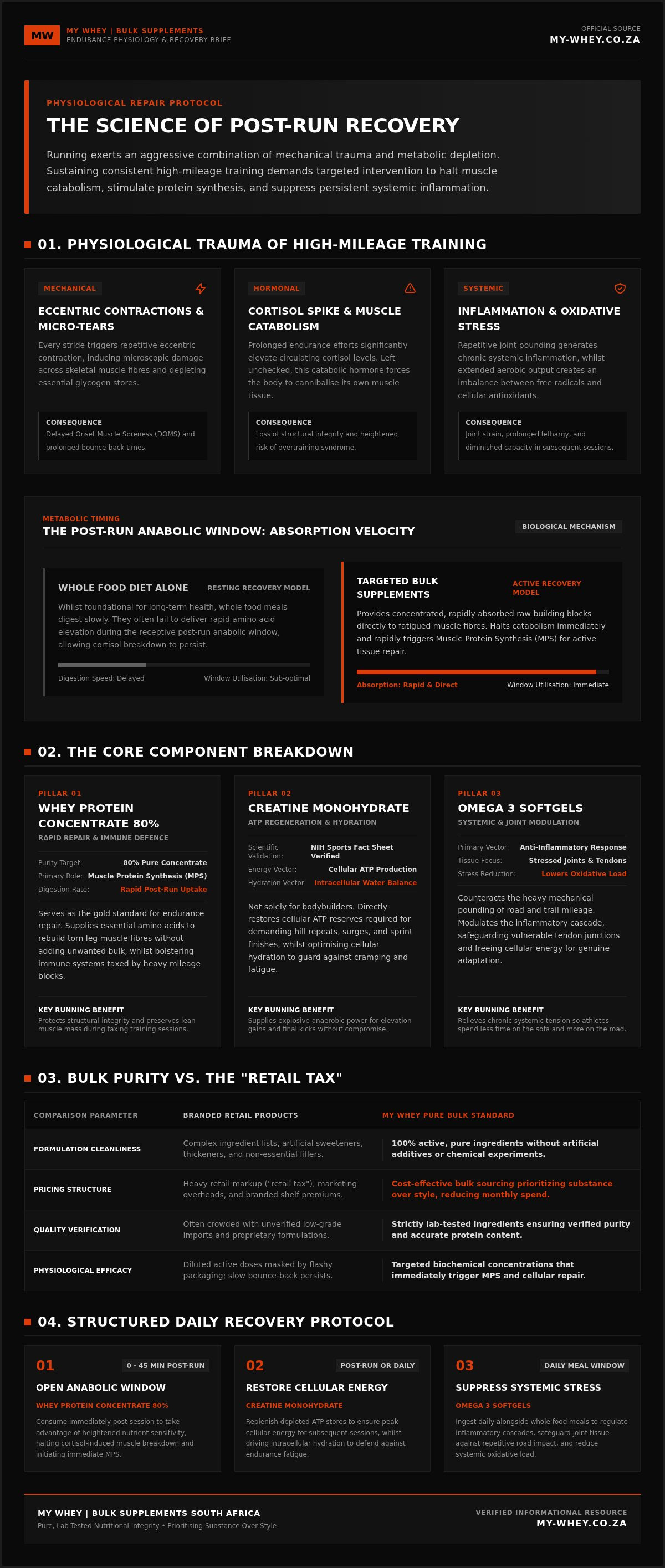
Running exerts a unique combination of mechanical and metabolic stress on the body. Every stride involves an eccentric contraction that creates microscopic tears in your muscle fibres. This structural damage, combined with the depletion of glycogen stores, triggers a cascade of physiological responses that can either lead to adaptation or injury. Without the right intervention, this trauma often results in delayed onset muscle soreness (DOMS), which can derail your training schedule for days.
Hormonal shifts also play a significant role in your ability to bounce back. Prolonged running elevates cortisol levels, a catabolic hormone that breaks down muscle tissue if left unchecked. Whilst whole foods provide a foundation for health, they often digest too slowly to capitalise on the post-run "anabolic window" when your body is most receptive to nutrients. High-purity recovery supplements for runners offer a concentrated, rapidly absorbed solution to halt muscle breakdown and initiate repair immediately. Prioritising this tissue repair is the most effective way to prevent overtraining syndrome and maintain long-term training consistency.
Muscle Protein Synthesis and Tissue Repair
Muscle protein synthesis (MPS) is the biological process where your body repairs and builds new muscle protein to replace what was damaged during your run. For endurance athletes, this isn't about building bulk; it's about structural integrity and resilience. Amino acids serve as the essential building blocks for this repair. When you consume recovery supplements for runners shortly after a session, you provide the raw materials needed to patch damaged leg muscles. Active recovery nutrition focuses on providing these materials quickly to stimulate MPS, whereas resting recovery relies on slower, general dietary intake that may not meet the immediate demand of high-mileage training.
Managing Systemic Inflammation and Oxidative Stress
The repetitive, high-impact nature of running places immense strain on your joints and tendons. This physical pounding leads to systemic inflammation that can become chronic if you don't manage it proactively. Long-duration cardio also generates significant oxidative stress, which contributes to prolonged fatigue and reduced performance in subsequent sessions. Oxidative stress is the imbalance between free radicals and antioxidants in the body. Using targeted supplements helps modulate this inflammatory response. By reducing the oxidative load, you allow your body to focus its energy on performance gains rather than just surviving the damage of the previous day.
Essential Recovery Supplements for Runners: The Core Components
Effective training isn't just about the miles logged; it's about how well your body handles the stress of those miles. Many athletes avoid recovery supplements for runners because they fear gaining bulky muscle mass that might slow them down. In reality, targeted supplementation focuses on lean muscle maintenance and joint integrity. The core components, comprising Whey Protein, Creatine, and Omega 3, form a results-oriented routine. Additionally, using amino acids can prevent muscle catabolism, a state where the body consumes its own muscle tissue for energy during taxing endurance sessions.
Whey Protein: The Building Block for Muscle Repair
Whey protein remains the gold standard for post-run nutrition due to its rapid absorption rate. My Whey's Whey Protein Concentrate 80% provides a clean source of protein that aids in repairing micro-tears without unnecessary additives. Beyond muscle repair, consistent protein intake supports the immune system, which often becomes suppressed during heavy training blocks. Maintaining a lean physique whilst ensuring your body has the materials to rebuild is essential for long-term progress.
Creatine Monohydrate: Not Just for Bodybuilders
Creatine is one of the most researched ingredients in sports science, as noted in this NIH fact sheet on athletic performance supplements. For runners, its primary value lies in ATP production, providing the explosive energy needed for hill repeats and sprint finishes. A secondary, often overlooked benefit is improved cellular hydration. This helps runners manage heat tolerance during long sessions in warmer climates. Contrary to the water weight myth, the slight increase in intracellular fluid is actually a performance advantage that protects against dehydration.
Omega 3 Softgels: Natural Anti-inflammatory Support
The high-impact nature of running often leads to persistent joint soreness. Omega 3 fatty acids, specifically EPA and DHA, act as potent natural anti-inflammatories that support joint health and cardiovascular blood flow. Because many retail fish oils can contain heavy metal contaminants, sourcing high-purity softgels is non-negotiable for the health-conscious athlete. You can browse high-purity recovery supplements for runners to find lab-tested options that prioritise your health over flashy marketing.
Bulk vs. Branded: Why Pure Ingredients Win for High-Mileage Athletes
When you buy a tub of recovery supplements for runners at a retail store, you aren't just paying for the ingredients. You're paying for the "retail tax"—the massive overhead costs of flashy labels, celebrity endorsements, and expensive marketing campaigns. Choosing bulk ingredients shifts the focus back to performance. It provides the transparency needed to know exactly what enters your system, which is vital for high-mileage athletes who can't afford a missed session due to poor-quality sourcing.
This preference for substance over style aligns with the Harvard T.H. Chan School of Public Health workout supplements overview, which cautions athletes against proprietary blends that hide specific dosages. Buying in bulk is also the most economical and environmentally friendly choice for year-round training. It ensures you have a steady supply of high-purity nutrients without the constant waste of plastic tubs and individual sachets.
The Hidden Cost of Fillers and Flavour Systems
Branded supplements often rely on complex flavour systems and fillers like maltodextrin to improve taste and texture. Whilst these might seem harmless, they frequently cause gut distress or "runner’s trot" during intense sessions. Pure bulk supplements often contain 20-30% more active ingredients per gram than flavoured retail alternatives. By using raw, unflavoured ingredients, you eliminate these irritants and gain the freedom to add your own natural flavourings, like cocoa or fruit, if you prefer a specific taste.
Customising Your Recovery Stack for Specific Goals
Every run has a different physiological cost. A 5km recovery jog requires a different nutritional response than a 30km long run or a marathon. Choosing the right recovery supplements for runners means having the flexibility to scale your intake based on your training load rather than relying on a one-size-fits-all pre-mix. You can adjust your protein-to-carb ratio with precision to match the intensity of your session.
- Add branched chain amino acids to your hydration pack during ultra-endurance events to protect muscle tissue from catabolism.
- Integrate gut health supplements if you have a sensitive stomach to improve nutrient absorption and overall resilience.
- Increase your dosage of Whey 80% after heavy strength-training blocks to support the structural adaptation of your leg muscles.
How to Organise Your Recovery Routine for Maximum Efficacy
The effectiveness of your recovery supplements for runners depends largely on how you organise their delivery. Consistency is the primary driver of adaptation. If you only supplement sporadically, your body misses out on the cumulative benefits of ingredients like creatine and omega 3. A structured protocol ensures that nutrients are bioavailable exactly when your metabolic rate is highest and your muscle cells are most receptive to repair. Establishing this routine transforms your recovery from a reactive task into a proactive training tool.
The Golden Hour: Optimal Timing for Nutrient Intake
The first 30 to 60 minutes after you stop your watch is often called the "Golden Hour". During this window, blood flow to the muscles remains elevated and insulin sensitivity is peaked, making it the critical period for glycogen and protein uptake. Consuming a fast-digesting whey protein concentrate 80% immediately post-run halts muscle protein breakdown and initiates synthesis. Whilst timing is vital for protein, other ingredients require a different approach. Creatine and Omega 3 softgels rely on long-term tissue saturation rather than immediate timing. Take these consistently at the same time each day, perhaps with a meal, to maintain optimal levels.
Calculating Dosages Based on Training Load
Precision in dosing prevents waste and ensures performance. A reliable baseline for protein intake is 0.4g per kg of body weight immediately following a session. For a 70kg runner, this equates to roughly 28g of protein. As your weekly mileage increases, your requirement for amino acids grows to combat the higher volume of muscle catabolism. During peak training weeks, you might find that a more robust approach is necessary to keep fatigue at bay. Conversely, during a taper week, you can scale back your protein intake to match the reduced physical demand, allowing your body to fully absorb the previous weeks' gains.
Integrating these supplements into a balanced, whole-food diet is the most sustainable strategy. Supplements are designed to bridge the gap during high-intensity blocks, not to replace nutrient-dense meals. Monitor how you feel after different combinations. If you notice a reduction in persistent soreness or improved energy on back-to-back training days, your protocol is working. You can optimise your training results by selecting the pure, lab-tested ingredients needed for a customised recovery routine.
Sourcing High-Purity Recovery Supplements in South Africa
Sourcing recovery supplements for runners in the South African market requires a discerning eye. The local landscape is frequently flooded with low-grade imports that lack transparency regarding their origins or purity levels. My Whey addresses this gap by focusing exclusively on high-purity ingredients like Whey Protein Concentrate 80% and Creatine Monohydrate. This no-nonsense approach to athletic nutrition ensures that you aren't paying for a brand's expensive advertising budget or flashy retail packaging. Instead, your investment goes directly into the actual physiological benefits that drive your performance on the road.
The My Whey Philosophy: Purity Over Packaging
Our commitment is to deliver substance over style. We've eliminated the unnecessary fluff and marketing hype that typically inflates the cost of traditional retail supplements. By prioritising bulk sourcing, we provide premium-quality ingredients at price points that remain accessible for all South African runners, from casual parkrunners to elite marathoners. This results-oriented model respects both your training goals and your personal budget. It empowers you to build a sustainable, long-term recovery strategy rather than a one-off retail purchase that prioritises a logo over lab results. Choosing the right recovery supplements for runners is about finding a partner that values your health as much as your performance.
Ensuring Quality and Transparency
Maintaining transparency serves as the cornerstone of our operations. Every batch of our supplements undergoes rigorous lab testing to verify potency and ensure the absence of heavy metals or hidden contaminants. Choosing a local South African supplier provides a level of freshness and accountability that international imports simply cannot match. Transitioning from expensive retail brands to an efficient bulk system is a logical step for any athlete who values integrity. It simplifies your routine and guarantees that every gram of powder in your shaker contributes to your physiological bounce-back. You shouldn't have to guess what's in your supplements whilst you're pushing your body to its limits.
Moving to a bulk system allows for a more organised and cost-effective training year. You can purchase larger quantities of the essentials, ensuring you never run out during a peak training block. This shift also reduces the environmental impact of your supplementation by cutting down on single-use plastic tubs. By focusing on pure ingredients, you gain full control over your nutrition, allowing you to tailor your intake to the specific demands of your training schedule. Organise your runner's recovery stack with My Whey.
Optimise Your Performance with Pure Recovery
Achieving training consistency requires more than just grit; it demands a strategic approach to physiological repair. You've seen how prioritising lab-tested, raw ingredients like whey protein concentrate 80% and creatine monohydrate can halt muscle catabolism and manage systemic inflammation. By moving away from over-complicated retail brands and focusing on nutrient timing, you ensure your body has exactly what it needs to bounce back after every mile. Your goals are within reach when you support your body with the right structural building blocks.
Choosing the right recovery supplements for runners is about stripping away the fillers and focusing on what truly drives results. Premium bulk ingredients provide the transparency and dosage control necessary for high-mileage athletes to stay on the road. This no-nonsense system is trusted by South African athletes who value integrity and efficiency in their wellness journey. It's time to stop paying for marketing hype and start investing in your metabolic resilience.
Maximise your recovery with pure, lab-tested bulk supplements from My Whey. Your training progress is built on how well you recover, so give your body the high-purity support it deserves to keep moving forward.
Frequently Asked Questions
Will recovery supplements for runners make me put on too much muscle?
No, targeted recovery supplements for runners won't cause excessive muscle gain without a significant caloric surplus and heavy resistance training. Instead, products like whey protein concentrate 80% focus on repairing micro-tears in muscle fibres caused by high-impact running. This process preserves lean muscle mass and improves structural integrity. You'll likely experience faster bounce-back times rather than unwanted bulk, allowing you to maintain a lean, efficient runner's physique throughout your training block.
Can I take creatine if I am training for a marathon?
Yes, creatine monohydrate is highly beneficial for marathon training. It aids in ATP production, which provides the explosive energy needed for interval sessions and hill repeats. Additionally, it improves cellular hydration, helping your body manage heat more effectively during long-duration runs. Whilst some athletes worry about weight gain, the slight increase in intracellular fluid is actually a performance advantage that protects against dehydration during taxing endurance events across South Africa.
What is the best way to mix unflavoured bulk whey protein?
The most efficient way to mix unflavoured bulk whey protein is using a dedicated shaker bottle with a mixing ball to ensure a smooth consistency. Since it lacks artificial sweeteners, you can customise the taste by adding natural ingredients like cocoa powder, honey, or frozen fruit. Alternatively, stir it into your post-run oats or blend it into a smoothie. This flexibility allows you to avoid the chemical aftertaste often found in heavily processed retail alternatives.
How many omega 3 softgels should a runner take daily for joint health?
Most runners find that taking one to two high-purity omega 3 softgels daily provides sufficient EPA and DHA to manage joint inflammation. The exact dosage depends on the concentration of your specific supplement and your overall training volume. Consistency is more important than a high single dose; daily intake allows these fatty acids to saturate your tissues over time. This steady approach supports cardiovascular health and reduces the persistent joint stiffness associated with high-mileage training.
Are bulk supplements as safe as the branded ones found in retail stores?
Bulk supplements are often safer than retail brands because they lack the complex fillers, thickeners, and artificial dyes used to improve shelf appeal. My Whey ensures safety by providing lab-tested ingredients that are verified for purity and potency. By stripping away the unnecessary fluff of branded packaging, you receive a transparent product where you know exactly what's in your shaker. This focus on raw quality is essential for athletes who prioritise long-term health and performance.
Should I take recovery supplements on my rest days?
Yes, you should continue taking your recovery supplements for runners on rest days to maintain the repair process. Your body does most of its actual tissue adaptation and muscle synthesis whilst you aren't running. Keeping your protein intake consistent ensures a steady supply of amino acids for ongoing repair. Likewise, supplements like creatine and omega 3 require daily use to keep your cellular stores saturated, ensuring you're fully prepared for your next hard session.
Can amino acids replace a protein shake after a run?
Amino acids shouldn't fully replace a post-run protein shake because whey protein concentrate 80% provides a more complete profile of all essential building blocks. Whilst specific amino acid blends are excellent for preventing muscle breakdown during a run, a full protein source is superior for stimulating muscle protein synthesis afterwards. Use amino acids as a targeted tool during ultra-endurance sessions, but rely on a high-quality protein shake to kickstart the structural repair of your leg muscles.
What happens if I miss the 'golden hour' for post-run nutrition?
Missing the golden hour won't ruin your training, but it might slightly slow down your initial recovery rate. Your body remains receptive to nutrients for several hours after exercise, though the peak efficiency for glycogen and protein uptake occurs in that first 60-minute window. If you miss it, simply prioritise a high-protein meal or shake as soon as possible. The most important factor for long-term progress is your total daily nutrient intake rather than a single missed timing window.