

Beta-Alanine Tingles: Why They Happen and What to Do
What if the prickling after a pre-workout isn’t proof that the supplement is working? The sensation can feel unsettling, especially when it’s new. With beta-alanine tingles explained clearly, the key point is that this is usually a temporary sensory effect linked to how quickly beta-alanine enters your system, not a measure of workout effectiveness.
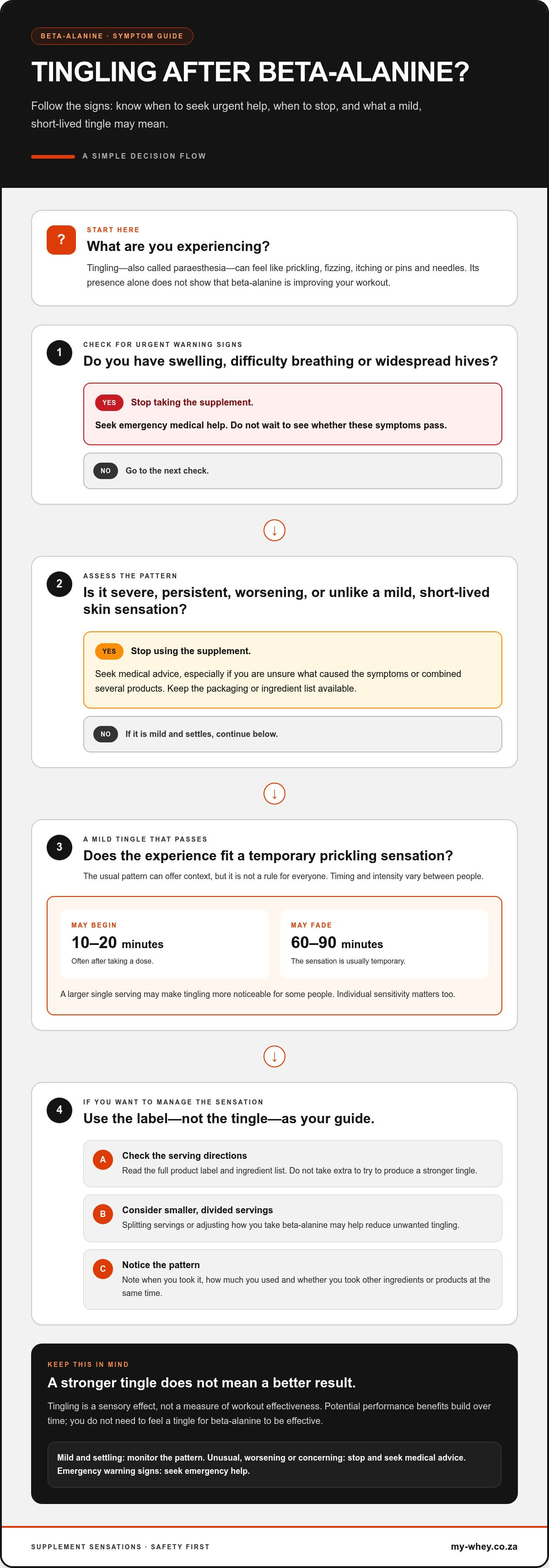
The tingling, known as paraesthesia, often begins 10 to 20 minutes after a dose and fades within 60 to 90 minutes. It’s commonly associated with a larger single dose, but that doesn’t mean every unusual sensation should be ignored. Beta-alanine’s potential performance benefits build over time, so you don’t need to feel a tingle for it to be effective.
This guide explains why the sensation happens, what its typical pattern looks like and how splitting servings or adjusting how you take beta-alanine may help reduce it. You’ll also learn which symptoms are less typical, when to stop taking a supplement and when to seek medical advice. The aim is to help you respond calmly, make informed choices and recognise when a symptom deserves attention.
Key Takeaways
- Get beta-alanine tingles explained, including why the sensation can vary between people and what may make it more noticeable.
- Learn why tingling isn’t proof of improved performance, and what to look at instead when assessing results.
- Check the label and serving directions, then consider smaller divided servings to help manage unwanted tingling.
- Recognise when a sensation seems unusual and it may be safer to stop taking the supplement and seek medical advice.
- Use a practical label-reading checklist to make informed supplement choices and look beyond dramatic claims.
Beta-alanine tingles explained: what the sensation feels like
Beta-alanine tingles are temporary prickling or tingling sensations that some people notice after using a supplement containing beta-alanine. The feeling is commonly called paraesthesia, a term for an unusual skin sensation such as pins and needles. It describes what you feel; it isn’t a diagnosis, and by itself it doesn’t show that a supplement is improving your workout performance.
The sensation can be surprising, particularly if you weren’t expecting it. Knowing what it may feel like, and what would be less typical, can help you respond calmly without assuming every tingle has the same cause.
What do beta-alanine tingles feel like?
People may describe the feeling as light prickling, fizzing, itching or pins and needles. It can be mild or more noticeable, and not everyone experiences it. Some notice it on the face or neck; others report it on their hands or upper body. These are commonly described areas, not a fixed pattern everyone should expect.
Intensity and location can differ between people, and even from one occasion to another. Brief, mild prickling is different from pain, marked numbness or a symptom that keeps spreading. Don’t use the presence, strength or location of tingling as a test of whether beta-alanine is working. For a broader overview of the supplement and its reported side effect, see Beta-alanine.
In brief: Paraesthesia is an altered skin sensation, often described as tingling or pins and needles. It can occur after using beta-alanine, but it is a sensory effect, not evidence of exercise benefit.
Is paraesthesia the same as an allergic reaction?
No. Paraesthesia names a sensation; it doesn’t establish why it’s happening or diagnose an allergy. Tingling alone shouldn’t be treated as proof of an allergic reaction, but it also can’t guarantee that everything is harmless. A supplement may contain other ingredients, so read the full label and consider what else you took if symptoms occur.
Act urgently if you have swelling, difficulty breathing or widespread hives. These can be warning signs of a serious allergic reaction. Stop taking the supplement and seek emergency medical help. Don’t wait to see whether the symptoms pass.
For symptoms that are severe, persistent, worsening or unlike a mild, short-lived skin sensation, stop using the supplement and seek medical advice. This is especially sensible if you’re unsure what caused the symptoms or they began after combining several products. Keep the packaging or ingredient list available, as it can help a health professional understand what you took. This section offers general information, not a diagnosis; if you’re concerned, prioritise professional medical advice.
Why beta-alanine causes tingling: the mechanism and timing
The leading explanation for beta-alanine tingling involves sensory nerves in the skin. Beta-alanine can activate a receptor called MRGPRD on some sensory neurons, triggering signals the nervous system may interpret as prickling, itching or tingling. This is a sensory response, separate from beta-alanine’s proposed role in supporting exercise performance.
How sensory receptors are involved
In a 2012 study in the Journal of Neuroscience, Liu and colleagues investigated how beta-alanine can produce itch-related responses through MRGPRD. The work helps explain a possible pathway, but it doesn’t prove that everyone experiences the same sensation or that the receptor explains every unusual symptom.
Beta-alanine also has a separate role in the body: it combines with histidine to form carnosine, a compound found in skeletal muscle. With consistent intake over time, muscle carnosine levels can rise. That longer-term process is distinct from the short-lived sensory response after a serving. One pathway concerns what you feel at the skin; the other concerns changes in muscle carnosine.
Tingling intensity is not a reliable measure of benefit. A stronger sensation doesn’t demonstrate that more carnosine is being stored or that exercise performance is improving. Because the tingle is associated with sensory nerve activity, its presence or intensity isn’t a dependable progress marker.
When can the tingling start and how long can it last?
The sensation is commonly reported after taking a serving, sometimes within the first part of the hour. It generally passes, but when it starts, how strong it feels and how long it lasts can vary. A larger single serving may make the sensation more noticeable for some people, although there isn’t one response that applies to everyone. The amount taken is only one factor; individual sensitivity matters too.
Pay attention to the pattern rather than treating a specific timing as a rule. Note when you took the supplement, how much you used and whether you took other ingredients or products at the same time. This can help you describe the experience clearly if you need advice. Follow the product label, and don’t take extra to try to produce a stronger tingle.
A mild sensation that settles is different from symptoms that are severe, persistent or unusual for you. Stop taking the supplement and seek medical advice if symptoms don’t ease, worsen or concern you. Swelling, difficulty breathing or widespread hives require urgent medical attention. Tingling alone doesn’t diagnose an allergy, but other warning signs shouldn’t be dismissed.
For a considered approach to supplements, read ingredient information and directions carefully. You can also explore My Whey’s amino acid supplements as part of a broader look at nutritional products, without treating a dramatic skin sensation as evidence of results.
Does tingling mean beta-alanine is working? Separate sensation from results
No. Tingling is a sensory effect, not proof that beta-alanine is improving your performance. It reflects how your body responds to a dose, not whether your muscles have accumulated carnosine or whether your training results will change. That distinction is central to having beta-alanine tingles explained accurately: a noticeable sensation isn’t a success signal, and no tingling doesn’t mean a supplement has failed.
Research on beta-alanine generally examines regular intake over time and measures changes such as muscle carnosine or performance on specific exercise tests. A single workout, or the sensation you feel during one, can’t establish an individual benefit. The International Society of Sports Nutrition’s position stand by Trexler and colleagues describes beta-alanine as a supplement that works through sustained use; the review by Hobson and colleagues found potential benefits were dependent on exercise type and duration. Neither makes tingling a measure of effectiveness.
What tingling can and cannot tell you
A tingle can tell you that you noticed a sensory response after taking something. It can’t establish the product’s quality, purity or effectiveness, or show that your training adaptation is improving. Performance depends on multiple factors, including the activity and how it’s measured, so assess outcomes over time rather than judging a supplement by an immediate sensation.
| What you’re assessing | What it means | What it doesn’t prove |
|---|---|---|
| Immediate sensation | A temporary sensory response, which may or may not be noticeable | That the supplement is producing a performance benefit |
| Muscle carnosine | A longer-term change studied with consistent beta-alanine use | That you’ll feel a tingle after each serving |
| Exercise outcomes | Results measured in a particular training or testing context | That every person or activity will respond in the same way |
Use the product label and directions as your guide, and keep your expectations realistic. A sensation is not a substitute for evidence or a reason to increase a serving.
Why beta-alanine is different from BCAAs
Beta-alanine is an amino acid, but it isn’t a branched-chain amino acid, or BCAA. The BCAAs are leucine, isoleucine and valine. These are different amino acids, and their roles aren’t interchangeable simply because they share the broader amino-acid category. Check the ingredient list to see what a product contains, rather than relying on a broad label or a tingling response to identify its contents.
Keep the measures separate: sensation is immediate and variable; muscle carnosine changes are studied over time; exercise outcomes depend on the activity and the individual. This is a more reliable way to interpret what beta-alanine may be doing than using tingling as a verdict.
How to reduce beta-alanine tingles and use supplements thoughtfully
If the sensation is uncomfortable, start with the basics: check the label, identify how much beta-alanine is in each serving and follow the stated directions. Pre-workout products may contain beta-alanine alongside other ingredients, so include all relevant products when considering your total intake. Don’t take a larger serving to chase a stronger tingle or exceed the label directions.
Some people find that dividing a daily amount into smaller servings makes each individual intake less likely to trigger a noticeable peak sensation. The International Society of Sports Nutrition’s position stand discusses splitting beta-alanine intake into smaller doses, commonly no more than 1.6 g at a time, to reduce paraesthesia. This is a general strategy, not an individual prescription: follow your product’s directions and seek qualified health advice if you’re unsure what amount is appropriate for you.
Compare smaller servings and sustained-release options
Smaller divided servings mean less beta-alanine is taken at once. Sustained-release formulations are designed to change how quickly it is released and absorbed, which may reduce tingling for some users. Neither approach guarantees that the sensation will disappear, and a product’s format doesn’t prove it will suit everyone. Read the full label, including directions and other active ingredients, before making changes.
- Check the serving: Look for beta-alanine per serving, not just the total weight of a scoop or blend.
- Check the day’s total: Account for beta-alanine in any other supplements you use.
- Follow directions: Don’t split, crush or alter a product unless its label permits it.
- Ask for individual guidance: A doctor or pharmacist can advise on supplement use alongside your health circumstances and medicines.
Keeping a simple note of the product, serving size and when symptoms occur may help you describe the pattern to a health professional. Avoid adding several new supplements at once, as that can make it harder to identify what may be contributing to a reaction.
When should you stop and seek medical advice?
A mild, temporary tingle is different from a severe, worsening or prolonged reaction. Stop taking the supplement and seek medical advice if symptoms are intense, unusual for you, don’t settle or keep returning. Don’t try to manage concerning symptoms simply by changing the serving.
Breathing difficulty, facial swelling or widespread hives need urgent medical attention. If these occur, stop taking the product and seek emergency help. If you have a medical condition, take medicines or have questions about using supplements during pregnancy or breastfeeding, speak with a clinician before use. Individual advice matters, particularly when the label contains several active ingredients.
Use the same careful approach with any nutritional supplement: check what’s in it, follow the directions and prioritise clear ingredient information over dramatic claims about tingling. Explore My Whey’s supplement range to review nutritional products with informed label-reading in mind.
Make an informed supplement choice with My Whey
Understanding beta-alanine tingles explained is useful, but a sensible supplement choice depends on more than how a product feels after you take it. Read the label before use and base your decision on clear ingredient information, directions and evidence, not claims that a dramatic tingle proves effectiveness. A sensation can’t verify what’s in a product or predict your results.
What to check on a supplement label
Take a moment to review the full label, particularly if you use a blend or more than one supplement. Look for the details that help you understand what you’re taking and how the product is intended to be used.
- Named ingredients: Check whether beta-alanine is listed and note any other active ingredients in a blend.
- Serving information: Look for the amount per serving and the serving size, so you can interpret the directions accurately.
- Directions and cautions: Follow the stated use, read relevant warnings and don’t exceed the recommended amount.
- Clear product information: Prefer specific ingredient and use details over dramatic promises or suggestions that tingling confirms results.
- Personal suitability: If you have a health condition, take medicines, are pregnant or breastfeeding, or feel unsure about a supplement, ask a doctor or pharmacist for individual advice.
Compare the label with what you already use. For example, a pre-workout blend may contain several ingredients, so check the full ingredient list rather than relying on the product name or a sensation after taking it. Keep the packaging details available if you need to discuss a reaction or your supplement routine with a health professional.
Evidence and transparent information are more useful decision tools than a strong tingle. No sensation doesn’t establish that a product is ineffective, just as tingling doesn’t demonstrate its quality, purity or benefit. Consider what the ingredient is intended to do, how the product is directed to be used and whether it suits your circumstances. If those points aren’t clear to you, pause and seek qualified advice rather than guessing.
Explore supplement information and options
My Whey is a South African bulk supplement supplier focused on quality and value. Its range includes amino acids and other nutritional supplements. Reviewing product information can help you compare options and consider your needs, without treating a tingling sensation as a performance claim or assuming every supplement is suitable for every person.
Choose with care: read the label, follow directions and put reliable information ahead of hype. Explore My Whey’s supplement range as you consider informed options for your nutrition routine.
Choose your next step with confidence
Use what you’ve learnt to make your next supplement decision deliberately. Before adding anything to your routine, be clear about what you want it to support, review the ingredient information and directions, and consider how it fits alongside products you already take. If personal health factors leave you uncertain, get advice from a qualified health professional first.
That’s the practical value of having beta-alanine tingles explained: it helps you look past a sensation and focus on informed choices. A product’s claims should never replace clear information or a realistic understanding of what it can do. My Whey describes its products as premium and lab-tested, and supplies bulk nutritional supplements and amino acids for people comparing options with care.
Take the same thoughtful approach to your wider nutrition routine. Explore My Whey’s supplement range and review the options that align with your goals. Choose with confidence, and let clear information guide your next step.
Frequently Asked Questions
How long do beta-alanine tingles usually last?
They commonly fade within 60 to 90 minutes, although the timing can vary. The sensation may start around 10 to 20 minutes after a serving, but don’t treat those timings as a guarantee. If it lasts longer than expected, becomes more intense or keeps returning, stop taking the supplement and seek medical advice. Note the product, amount and time taken so you can describe what happened clearly.
Can beta-alanine tingles happen without taking a supplement?
Yes, tingling can happen for reasons unrelated to beta-alanine. If you haven’t knowingly taken it, check whether it appears in a pre-workout blend or another product you used, since ingredients can be combined. Tingling that recurs without an obvious connection, affects one area persistently or comes with other symptoms shouldn’t automatically be blamed on a supplement. A health professional can help assess possible causes.
Is beta-alanine tingling a sign of an allergy?
Tingling alone doesn’t establish that you’re having an allergic reaction. Check the product’s full ingredient list, especially if you’ve recently started a blend or changed products. Stop taking it and seek medical advice if you’re concerned or symptoms worsen. Breathing difficulty, facial swelling or widespread hives are urgent warning signs: seek emergency medical help rather than waiting to see whether they pass.
Does beta-alanine still work if I do not feel tingles?
Yes. Not feeling tingling doesn’t show that beta-alanine has failed. Sensory responses differ, and the absence of a sensation isn’t a way to judge whether the product is suitable or whether your training is adapting. The key point in having beta-alanine tingles explained is that a tingle isn’t required for a potential benefit. Assess progress through appropriate training measures over time, not by trying to trigger a skin sensation.
Can you take beta-alanine before a workout to make it work faster?
Taking it just before exercise shouldn’t be expected to produce an immediate performance effect. Research generally looks at regular use over time, rather than a single pre-workout serving. Follow the product’s directions instead of taking extra before training to chase a faster result or a stronger sensation. If you’re considering beta-alanine for a specific sport or training goal, a qualified health professional can help you weigh whether it’s appropriate.
Should you stop taking beta-alanine if it makes your skin tingle?
Not necessarily if the sensation is mild and passes, but you don’t have to continue if it’s uncomfortable. Check the label and serving directions, and stop use if symptoms are severe, worsening, persistent or unusual for you. Seek urgent help for breathing difficulty, facial swelling or widespread hives. If you take medicines, have a health condition or are pregnant or breastfeeding, ask a clinician about suitability before use.
Can splitting beta-alanine servings reduce tingling?
It may help. Dividing a daily amount into smaller servings can reduce the amount taken at once, which may make the sensation less noticeable for some people. Follow the specific product directions, and don’t split or alter a serving if its label advises against it. If you’re unsure how to adjust your intake, ask a doctor or pharmacist rather than experimenting with larger amounts or combining multiple products.