

Cheapest Protein for Muscle Building: 2026 Budget Guide
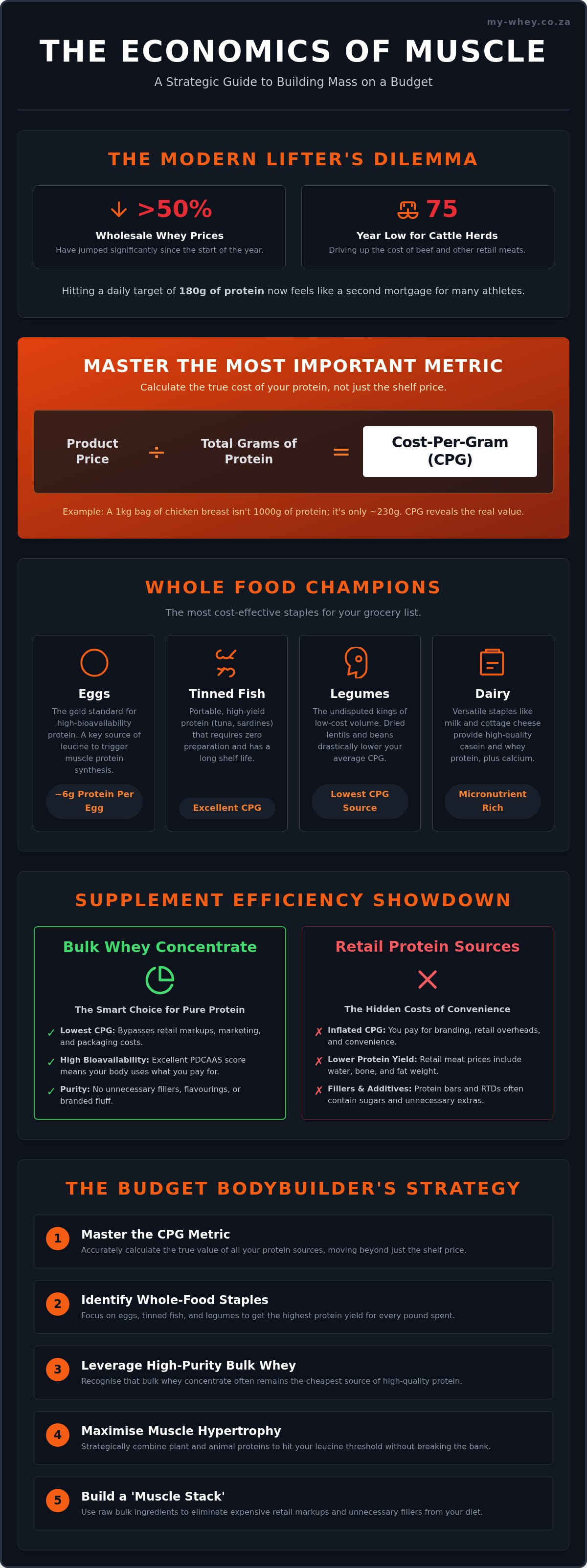
Your favourite protein powder might actually be more expensive per gram than a steak in 2026. With wholesale whey prices jumping more than 50 per cent since the start of the year, many lifters feel priced out of their own progress. You likely agree that hitting a daily target of 180 grams of protein feels like a second mortgage, especially with the cattle herd at its lowest level in 75 years. Finding the cheapest source of protein for muscle building is no longer about grabbing the first bag you see. It requires a calculated look at cost-per-gram and bioavailability.
We've handled the complexities of market research to help you reclaim your training budget. This guide promises to show you how to hit your hypertrophy targets whilst significantly reducing your monthly spend. You will get a clear list of the most cost-effective whole foods and a strategy to use high-purity bulk supplements to your advantage. We will break down the current market volatility and give you the confidence to make nutritional choices that prioritise both your muscles and your bank balance.
Key Takeaways
- Master the Cost-per-Gram (CPG) metric to accurately calculate the true value of your protein sources beyond the initial shelf price.
- Identify which whole-food staples, such as eggs and tinned fish, offer the highest protein yield for every pound spent at the supermarket.
- Discover why high-purity bulk whey concentrate often remains the cheapest source of protein for muscle building when compared directly to retail meat.
- Learn how to maximise muscle hypertrophy by strategically combining plant proteins with animal sources to hit your leucine threshold on a budget.
- Build a streamlined 'Muscle Stack' using raw bulk ingredients to eliminate expensive retail markups and unnecessary fillers.
The Economics of Hypertrophy: Calculating Protein Efficiency
Building muscle isn't just a physical challenge; it's a financial one. If you want to achieve muscle hypertrophy, your bank account needs to be as disciplined as your training split. Most lifters look at the price tag on a carton of eggs or a bag of chicken and assume that's the final cost. They're wrong. In 2026, where food prices remain volatile, a protein-first mindset is essential. You aren't just buying groceries; you're investing in the delivery of specific amino acids to your muscle tissue. To do this effectively, you have to stop thinking in kilogrammes of food and start thinking in grammes of protein.
To find the cheapest source of protein for muscle building, you must calculate the Cost-per-Gram (CPG). This simple metric involves dividing the price of the product by the actual grammes of protein it contains. For example, a 1kg bag of chicken breast isn't 1kg of protein. It's largely water and connective tissue, yielding roughly 230g of actual protein. When you apply this maths, you'll see that many so-called budget foods are actually quite expensive. Setting a realistic daily budget for 2026 requires looking past the total weight of the food and focusing solely on the protein yield.
Why Bioavailability Matters for Your Wallet
Not all protein is created equal. The Protein Digestibility Corrected Amino Acid Score (PDCAAS) measures how well a protein source provides the essential amino acids your body needs. If you buy a cheap bag of wheat gluten, you might get a high amount of protein on paper, but your body can't utilise it as effectively as whey. You end up wasting money on "dead" grammes that don't contribute to growth. Choosing high-quality sources like Whey Protein Concentrate 80% ensures that every penny spent translates into actual recovery. Don't let a low shelf price trick you into buying a source that your body simply cannot use.
The Hidden Costs of Retail Packaging
Convenience is the primary enemy of a tight budget. Protein bars and ready-to-drink shakes often triple your CPG because you're paying for the wrapper, the marketing, and the distribution. Branded tubs at retail shops are similarly inflated to cover the shop's overheads. Bulk sourcing is the primary method for reducing supplement overheads, allowing you to bypass the retail tax and focus on raw ingredient quality. By opting for unflavoured, raw ingredients, you stop paying for fillers and start paying for results. It's a transparent way to ensure your money goes toward your muscles rather than a fancy label.
Whole Food Champions: The Cheapest Groceries for Muscle Growth
Moving from the theory of Cost-per-Gram to the reality of the supermarket aisle requires a ruthless focus on high-yield staples. Whilst meat prices remain elevated due to the smallest cattle herd in 75 years, other sectors are seeing a recovery. Identifying the cheapest source of protein for muscle building involves selecting whole foods that provide a complete amino acid profile without the retail tax associated with premium cuts. With 70 per cent of people now actively trying to boost their protein intake, demand is high, but smart sourcing still allows for significant savings.
The Power of Eggs and Liquid Egg Whites
Eggs remain the gold standard for budget lifters. As of August 2026, wholesale prices have stabilised around $1.04 per dozen. The USDA predicts a 30.7 per cent decrease in retail egg prices throughout the year, making them an essential foundation for any muscle-building diet. Each large egg provides roughly 6g of high-bioavailability protein and a significant hit of leucine to trigger protein synthesis. For those managing a strict calorie budget, mixing whole eggs with liquid egg whites allows you to increase protein volume without overshooting your fat macros. It is a simple, effective way to keep your CPG low whilst maintaining high nutritional standards.
Tinned fish and dairy provide excellent secondary support. Sardines and tuna are often overlooked, yet they offer a portable, high-yield protein source that requires zero preparation. Similarly, milk and cottage cheese remain versatile staples. These foods are excellent budget-friendly protein-rich foods that bridge the gap between expensive meats and plant-based volume. They provide the calcium and micronutrients necessary for overall health, ensuring your budget doesn't come at the cost of your wellbeing.
Legumes: Maximising Volume for Minimum Spend
If you want to drive down your average CPG, legumes are the undisputed kings. Dried lentils are currently priced at approximately $0.33 per pound, whilst common dry beans sit at roughly $0.39 per pound. Preparing these from scratch rather than buying canned versions can save you up to 50 per cent on your grocery bill. Whilst plant proteins are often incomplete, combining them with small amounts of animal protein or specific grains creates a full amino acid profile. This strategy allows you to use legumes as a high-volume filler that supports your total daily intake without breaking the bank.
Relying solely on whole foods can be time-consuming and occasionally heavy on the digestion. To balance your intake, you can supplement these whole-food champions with a high-purity Whey Protein Concentrate 80% to ensure you hit your targets efficiently. This combination of bulk-sourced powder and smart grocery shopping is the most sustainable way to build muscle without overspending. It allows you to maintain the necessary protein density for growth whilst keeping your weekly food shop manageable.
The Supplement Efficiency: Why Bulk Whey Beats Retail Meat
Many athletes assume that meat is the only viable path to a significant physique. This is a costly misconception in 2026. With boneless chicken breast averaging $4.18 per pound in June 2026, the financial burden of a high-protein diet is heavier than ever. When you factor in the water weight lost during cooking and the fat that must be trimmed, the price per gramme of actual protein rises further. Bulk supplementation offers a leaner financial path. It allows you to hit your targets without the overheads associated with the meat industry's supply chain issues.
When you calculate the yield, bulk whey protein often emerges as the cheapest source of protein for muscle building. A single scoop of 80 per cent concentrate provides approximately 24g of high-quality protein with zero waste. Unlike a steak or a chicken breast, there is no preparation required. You aren't paying for bone, skin, or gristle. You are paying for pure, lab-tested amino acids that are ready for immediate absorption. This efficiency is why smart lifters are shifting their budget away from the butcher and toward bulk raw ingredients.
Whey Protein vs. Whole Foods: A Cost Comparison
A direct comparison reveals the hidden value in powders. To get 25g of protein from beef, you must navigate high retail markups and the reality of the lowest cattle herd levels in 75 years. Perishable meats also carry the risk of spoilage, which is essentially throwing money in the bin. Bulk powders remain shelf-stable for months. Whilst you should still utilise complete plant-based proteins to add variety to your diet, whey remains the most efficient post-workout source due to its rapid digestion rate. It provides the necessary leucine spike for recovery at a fraction of the time and cost of a cooked meal.
Sourcing Raw Ingredients to Slash Costs
The secret to supplement savings lies in avoiding the "branding tax." Traditional retail tubs are priced to cover expensive marketing campaigns and colourful packaging. By choosing Whey Protein Concentrate 80% in its raw, unflavoured form, you only pay for the protein itself. You can then use branched chain amino acids to supplement lower-quality protein meals throughout the day. This modular approach to nutrition ensures you aren't paying for fillers or sweeteners you don't need. It puts you in control of your intake whilst keeping your monthly overheads as low as possible.
Maximising Bioavailability: Strategies for Budget Athletes
Identifying the cheapest source of protein for muscle building is only half the battle. If your body cannot efficiently process the amino acids you consume, even the most budget-friendly grocery list becomes a waste of money. Bioavailability, specifically the Protein Digestibility Corrected Amino Acid Score (PDCAAS) mentioned earlier, determines how much of that protein actually reaches your muscle tissue. To maximise your return on investment, you must follow a strategic approach to meal composition and timing. This ensures that every gramme you pay for contributes to your recovery and growth.
Focus on the 'Leucine Threshold' first. This specific amino acid acts as the primary signal for growth. Secondly, use small amounts of high-quality animal protein to 'unlock' plant-based sources. For example, adding a few eggs to a large bowl of lentils significantly improves the overall amino acid profile. Thirdly, time your fastest-absorbing proteins, like whey, around your training window when your muscles are most receptive. Finally, supplement with Creatine Monohydrate to enhance the energy availability required for protein efficiency. This modular approach allows you to maintain high standards whilst keeping your monthly spend low.
The Leucine Hack for Cheap Meals
Muscle protein synthesis requires approximately 2.5g of leucine per meal. This threshold is difficult to hit with plant-based "filler" proteins alone, which often leads to wasted calories and stalled progress. A simple hack involves adding a small scoop of bulk whey to an oat-based meal. This ensures you trigger the growth signal without needing to consume excessive calories or expensive meat. By using unflavoured bulk options, you maintain the purity of your intake whilst keeping costs at a minimum. It is an efficient way to turn a low-cost breakfast into a potent muscle-building tool.
Optimising Digestion for Better Absorption
A high-protein diet can be taxing on your system. To ensure you aren't wasting the nutrients you pay for, prioritising your internal environment is essential. This is why gut health supplements South Africa are a worthy investment for budget eaters. They help maintain the integrity of your digestive tract, allowing for better absorption of every gramme. Don't forget the role of fibre from your legumes; it keeps your system moving and prevents the sluggishness often associated with high-protein intake. Proper digestion ensures that your budget-friendly choices actually translate into physical results.
Ready to optimise your results? Source your high-purity bulk ingredients directly from My Whey to ensure you're getting maximum bioavailability at the lowest possible price.
The Budget Bodybuilder’s Strategy: Sourcing with My Whey
Achieving a high-performance physique requires a departure from traditional retail habits. The My Whey philosophy is built on the belief that purity and bulk savings should be the standard, not a luxury. By eliminating fancy labels, expensive marketing campaigns, and retail markups, we ensure your investment goes directly into the raw ingredients that drive growth. This transparency allows you to build a comprehensive 'Muscle Stack' for a predictable daily rate. When you stop paying for a brand's overheads, you can finally afford the volume of protein your training demands.
Our commitment to lab-tested, raw ingredients means you don't have to guess what's in your shaker. Every batch of Whey Protein Concentrate 80% is vetted for quality, providing a reliable foundation for your recovery. This no-nonsense approach positions bulk supplementation as the cheapest source of protein for muscle building when compared to the fluctuating costs of the meat aisle. By focusing on substance over style, we act as a bridge between high-level industry standards and your personal gym goals.
Why Bulk is the Only Way to Buy in 2026
The maths behind bulk purchasing is undeniable. Opting for a 5kg bag over a 1kg tub significantly reduces the cost per serving, shielding you from the price spikes seen in the broader protein market. My Whey organises its supply chain to favour the athlete, shipping directly from the source to your door. This efficiency also has environmental benefits. Buying in larger quantities reduces plastic waste and shipping frequency, making it a more sustainable choice for your lifestyle. It is a pragmatic decision that rewards long-term consistency over impulsive, small-scale purchases.
Your Action Plan for Affordable Gains
Success on a budget requires a 'Base and Boost' strategy. Your 'Base' is a high-purity bulk powder that provides a consistent amino acid profile every day. Your 'Boost' comes from the seasonal whole foods we discussed earlier, such as eggs and lentils, which add variety and micronutrients. To support your recovery further, use omega 3 softgels to manage inflammation without the high cost of fresh fatty fish. This combination ensures your body has everything it needs to repair tissue without exhausting your bank account.
Consistency will always outperform complexity. You don't need the most expensive, branded 'all-in-one' formula to see results. You need a steady supply of high-quality protein and the discipline to hit your targets daily. By sourcing the cheapest source of protein for muscle building through bulk raw ingredients, you remove the financial stress from your fitness journey. Focus on the fundamentals, keep your sourcing simple, and let the cumulative effect of proper nutrition transform your physique over time.
Take Control of Your Muscle-Building Budget
Navigating the volatile protein market of 2026 requires a shift from impulsive shopping to calculated sourcing. You've seen that the cheapest source of protein for muscle building isn't found on a retail shelf; it's built through a strategic combination of high-yield whole foods and bulk raw ingredients. By focusing on the Cost-per-Gram metric and prioritising bioavailability, you ensure that every penny spent translates into physical progress. You no longer need to choose between your bank balance and your hypertrophy goals.
Efficiency is the cornerstone of long-term success. Our Whey Protein Concentrate 80% is lab-tested for purity and delivered at wholesale pricing direct to your door. We provide pure nutrition with no fillers and no fluff, allowing you to bypass the retail markups that stall your progress. It's time to stop paying for marketing hype and start investing in results. We've handled the complexities of quality control so you can focus on your training.
Ready to transform your approach? Maximise your gains with bulk savings at My Whey and build the physique you've worked for without the financial strain. Your goals are within reach; stay consistent, keep your nutrition simple, and let your hard work pay off.
Frequently Asked Questions
What is the absolute cheapest protein source per gramme?
Dried lentils and beans are the absolute cheapest source of protein for muscle building when calculated by weight. Buying these staples in large, dry bags rather than tinned versions can reduce your cost by approximately 50 per cent. Whilst they are incomplete proteins on their own, they provide the essential volume needed to hit your daily targets for a fraction of the cost of animal products.
Is whey protein cheaper than chicken in 2026?
Bulk whey protein often costs less than retail chicken breast when you calculate the price per gramme of actual protein. In 2026, boneless chicken prices remain high due to production costs, whereas bulk raw whey avoids the retail markups found in supermarkets. You also save on the energy costs of cooking and the "opportunity cost" of lengthy meal preparation.
Can I build muscle using only plant-based protein sources?
You can certainly build muscle on a plant-based diet by strategically pairing different sources. To trigger muscle protein synthesis, you must ensure you hit the leucine threshold in every meal. Combining grains with legumes or adding a small amount of bulk amino acids can help you achieve a complete amino acid profile for much less than the cost of beef or poultry.
Is cheap protein powder safe to use?
Safety is determined by lab-tested purity rather than the price on the label. High-purity bulk supplements are safe because they eliminate expensive branding and retail overheads rather than compromising on the raw ingredient. Always choose a supplier that provides transparent testing results to ensure you are getting a clean, effective product without hidden fillers.
How much protein do I actually need to build muscle on a budget?
Most lifters require between 1.6g and 2.2g of protein per kilogramme of body weight to maximise growth. If you are training on a strict budget, staying at the 1.6g mark is often sufficient for significant progress. Focus on the quality and timing of your intake to ensure your body utilises every gramme effectively without needing to overspend on excessive volume.
Does unflavoured protein powder taste bad?
Unflavoured protein has a mild, milky taste that is neutral rather than unpleasant. It is more versatile than flavoured versions because you can add it to porridge, smoothies, or even savoury dishes without clashing flavours. By choosing raw powder, you avoid paying for artificial sweeteners and flavouring systems that add cost without improving your results.
Is it better to buy protein in bulk or wait for retail sales?
Buying in bulk is consistently more cost-effective than waiting for retail sales at the chemist or supermarket. Retail discounts rarely match the everyday wholesale rates offered by direct-to-consumer bulk suppliers. Bulk sourcing also protects you from the price volatility often seen in the 2026 food market, allowing you to maintain a steady nutritional plan.
What are the best high-protein foods that don't require cooking?
Tinned fish, cottage cheese, and bulk whey powder are the best high-protein options that require zero preparation. These staples allow you to hit your targets during busy periods without the time cost of cooking. They are shelf-stable or have a long fridge life, which reduces waste and ensures you always have the cheapest source of protein for muscle building ready to consume.