

Cheapest Protein for Muscle Building: 2026 Budget Guide
You are likely overpaying for your gains by at least 40% simply by following traditional bodybuilding grocery lists. With 48% of adults actively seeking to increase their protein intake in 2026, the market is flooded with "premium" products that offer nothing but a higher price tag. Finding the cheapest source of protein for muscle building does not mean you have to settle for poor quality. It means being smarter about how you source your fuel and ignoring the noise of retail markups.
We understand the frustration of watching your grocery bill climb whilst trying to decipher confusing supplement labels filled with hidden fillers. It is exhausting to waste money on flashy brands that prioritise marketing over actual muscle recovery. This guide provides a clear, data-driven strategy to hit your protein targets for significantly less. We will break down the latest cost-per-gram rankings for whole foods and show you how to secure pure, lab-tested supplements at bulk rates. You can finally stop overspending on luxury cuts and start investing in the raw ingredients that actually drive progress without the unnecessary retail bloat.
Key Takeaways
- Shift your focus from price-per-kilogram to "Protein Efficiency" to accurately measure the cost of every 20g of usable protein you consume.
- Identify the cheapest source of protein for muscle building amongst whole foods by prioritising high-bioavailability staples like eggs and legumes.
- Account for the hidden costs of whole-food preparation, such as cooking time and electricity, to see where bulk supplements offer better value.
- Organise your nutrition strategy by anchoring meals with low-cost staples before filling protein gaps with lab-tested, raw ingredients.
- Reduce your supplement spend by sourcing bulk Whey Protein Concentrate 80% directly, avoiding the unnecessary expense of retail branding and fillers.
Calculating the Real Cost of Muscle Growth
Most people judge the affordability of their diet by the price per kilogram of the items in their trolley. This is a fundamental mistake. When you buy a steak, you aren't just paying for protein. You're paying for water weight, intramuscular fat, and connective tissue. To find the cheapest source of protein for muscle building, you must calculate the protein yield of each food item rather than the gross weight on the packaging.
In 2026, inflation has significantly disrupted the traditional hierarchy of affordable nutrition. Private label brands now account for 22% of the market share, reflecting a widespread search for value amongst consumers. To stay ahead, you need to measure 'Protein Efficiency'. This metric identifies the actual cost of delivering 20g of usable protein to your muscle fibres. It's the only way to ensure your budget is building tissue rather than just filling your cupboard with expensive calories.
Why Cost-Per-Gram is the Only Metric That Matters
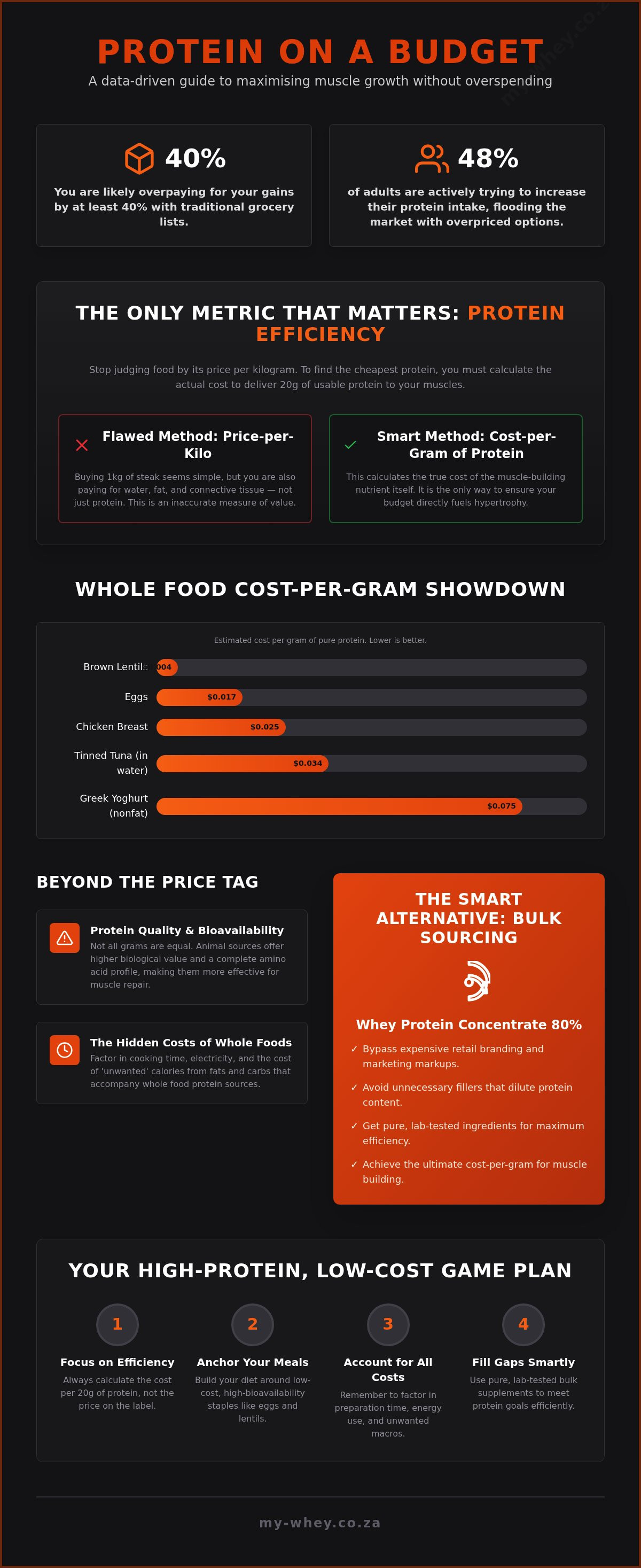
Calculating your protein yield requires looking past the raw product weight. A 1kg cut of beef might only yield 200g of actual protein whilst carrying a heavy price tag. Conversely, plant-based options like lentils offer incredible value at approximately $0.004 per gram of protein. However, these sources often come with a high carbohydrate load that might not fit your specific macros. You must balance the cost of the protein against the 'hidden' calories from fats and carbs. Efficiency isn't just about the lowest price. It's about the lowest price for the specific nutrient that drives hypertrophy.
The Role of Protein Quality in Hypertrophy
Not all grams are created equal. Muscle growth depends heavily on the presence of essential amino acids and high concentrations of leucine. This biological requirement means that some of the Dietary Sources of Protein you find in the supermarket are far more effective for growth than others. Bioavailability determines how much of that protein actually reaches your system for repair.
Animal-based sources generally offer higher bioavailability and a complete amino acid profile. This makes them easier for the body to utilise than many plant alternatives. If you're struggling with recovery on a restricted budget, supplementing with branched chain amino acids can be a cost-effective tool. It ensures your body has the specific building blocks needed for repair without the cost of a full meal. Finding the cheapest source of protein for muscle building requires this balance between raw cost and biological utility. Pure, lab-tested ingredients often outperform retail blends because they eliminate the fillers that dilute your protein yield.
Top Whole-Food Contenders for Budget-Conscious Lifters
Animal-Based Staples: Eggs and Tinned Fish
Eggs are non-negotiable for anyone building muscle on a budget. At approximately $0.017 per gram of protein, they offer the highest biological value of any whole food. Your body absorbs and utilises these amino acids more effectively than almost any other source. Whilst prices vary, a dozen large white eggs at $1.47 remains a powerhouse for recovery. For those seeking the Cheapest Whole-Food Protein Sources, tinned fish is another essential. Canned light tuna, priced at roughly $0.034 per gram of protein, provides a lean, convenient hit of muscle-building fuel. Opt for tuna in water to keep calories low and minimise mercury exposure.
When comparing poultry, chicken breast remains more efficient than ground turkey. At $0.025 per gram of protein, fresh chicken breast provides a higher protein density per pound. It's a reliable staple that anchors most bodybuilding diets for good reason. If you're looking to slow down digestion before bed, Greek yogurt and cottage cheese serve as excellent casein alternatives. They provide a steady release of amino acids whilst you sleep. Whilst nonfat plain Greek yogurt costs about $0.075 per gram of protein, its convenience and probiotic benefits justify the occasional inclusion in a balanced budget.
Plant-Based Efficiency: Lentils, Beans, and Oats
Brown lentils are the absolute winner in terms of raw cost at roughly $0.004 per gram of protein. They are the cheapest source of protein for muscle building for anyone eating in a calorie surplus. You must account for the carbohydrate content, though. Unlike lean meats, lentils bring significant starch. This makes them better as "extenders" rather than your sole source. Combining beans with rice or oats ensures a complete amino acid profile, providing the essential building blocks for hypertrophy. This strategy allows you to hit high protein targets without the heavy price tag of premium steak cuts.
Oats are often overlooked as a protein source. Whilst primarily a carbohydrate, they contribute significantly to your daily totals when used as a base for shakes or breakfast. The fibre in legumes and oats also aids gut health. This is vital when you're consuming the high volumes of food required for growth. If you find it difficult to hit your targets through whole foods alone without overshooting your calories, consider adding high-purity ingredients to your routine. It's a smart way to bridge the gap without the digestive load of eating another bowl of beans.
Supplements vs. Whole Foods: The Cost-Per-Gram Showdown
Deciding between a kilogram of chicken breast and a kilogram of bulk powder requires looking beyond the shelf price. Whilst chicken breast at $0.025 per gram of protein seems like the cheapest source of protein for muscle building, it carries hidden liabilities. You must account for the electricity required for cooking, the labour of meal preparation, and the inevitable waste from spoilage. Bulk supplements offer a shelf-life advantage that fresh meat simply cannot match. A bag of high-purity concentrate remains stable for months; this ensures that every penny you spend actually contributes to your muscle-building goals rather than ending up in the bin.
Retail-packaged supplements are often two to three times more expensive than bulk raw ingredients. This markup pays for flashy labels, plastic tubs, and expensive marketing campaigns. By choosing bulk sourcing, you bypass these unnecessary costs. You focus entirely on the raw material that drives hypertrophy. This approach transforms a supplement from an expensive luxury into a strategic, cost-effective staple that rivals whole foods in efficiency.
The Bulk Advantage: Why Raw Ingredients Win
Branded powders often hide behind proprietary blends and complex flavour systems. These additions drive up the price per serving without adding any biological value to your recovery. Choosing pure whey protein concentrate allows you to see exactly what you are consuming. Lab-tested bulk products provide a level of transparency that retail brands rarely offer. You avoid the hidden fillers and "amino spiking" that can plague cheaper retail options. This results in a higher protein yield for every pound spent, making raw ingredients the smarter choice for the disciplined lifter.
Efficiency in Performance: Creatine and Aminos
Performance isn't just about total protein intake. It's about using specific tools to maximise your results on a budget. Pure creatine monohydrate is the most cost-effective performance-enhancing tool available, costing only pence per dose. It provides a reliable boost to strength and power without the need for expensive pre-workout cocktails. Similarly, using amino acids can protect your hard-earned muscle during periods of calorie restriction. This prevents tissue breakdown whilst you manage your grocery spend. Whey concentrate remains the most cost-effective dairy-based protein for 2026.
How to Organise Your High-Protein Meal Plan on a Budget
Structuring your diet for growth doesn't require a complex spreadsheet; it requires a logical sequence of decisions. Start by determining your daily protein target based on lean body mass rather than total weight. This prevents you from overspending on protein your body won't actually use for repair. Once you have your number, anchor your main meals with the staples we’ve identified as the cheapest source of protein for muscle building, such as eggs and legumes.
Fill the protein gap between these whole-food anchors with bulk powder. This ensures you hit your threshold without the digestive fatigue of eating six solid meals. Batch cooking is your final efficiency tool. By preparing four days of meals at once, you slash your electricity usage and remove the temptation of expensive convenience foods. It's about creating a system that makes progress the path of least resistance.
A Sample 180g Protein Day for Under R100
Hitting high targets on a restricted budget is possible if you prioritise protein yield over variety. This sample plan focuses on the most efficient ingredients available in 2026:
- Breakfast: Four large eggs and a bowl of oats. This provides a high-leucine start to trigger muscle protein synthesis early in the day.
- Lunch: A salad of tinned tuna and mixed beans. This is a portable, shelf-stable hit of protein efficiency that requires zero cooking time.
- Dinner: 200g of chicken breast extended with a side of brown lentils. This combination provides a complete amino acid profile whilst keeping the cost per serving low.
- Snacks: A single scoop of bulk whey concentrate mixed with water to reach the final 180g target safely.
Smart Shopping Strategies for Lifters
Stop buying small, retail-sized containers. The real savings happen when you buy by the kilogram. Purchasing 5kg or 10kg bags of staples significantly reduces the unit price. Combine these with frozen vegetables, which offer the same nutritional value as fresh produce at a fraction of the cost. Avoid any product with a "high protein" label on the front that doesn't list a clear, high-purity source on the back. These "health halo" products often charge a 30% premium for branding alone. To keep your costs down and your results high, buy your raw ingredients in bulk and ignore the marketing hype of retail brands.
Maximising Efficiency with Bulk Sourcing and Pure Ingredients
Transitioning from a standard grocery shopper to a strategic bulk sourcer is the final step in mastering your physique on a budget. Whilst supermarket staples provide the foundation, your ability to secure high-purity ingredients at scale determines your long-term success. The retail market is designed to sell you branding and convenience. By stripping away the fancy tubs and complex marketing, you can access the cheapest source of protein for muscle building without compromising on the biological quality of your fuel.
At My Whey, we prioritise transparency and efficiency. We focus on raw, lab-tested ingredients like Whey Protein Concentrate 80% because they deliver the highest protein yield per pound. This approach eliminates the "middleman" costs of retail distribution and proprietary blends. You aren't just buying powder; you're investing in a streamlined sourcing model that treats your nutrition as a professional requirement rather than a luxury purchase.
The Importance of Lab-Tested Purity
Cheap supplements often come with a hidden cost to your digestive system. Many retail brands use thickeners, creamers, and artificial fillers to mask low-quality raw materials. These additives can lead to bloating and poor nutrient absorption. Purity isn't just a buzzword; it's a prerequisite for performance. If your body cannot efficiently process the nutrients you consume, your cost-per-gram calculation becomes irrelevant.
Referencing our guide to gut health can help you understand how to maximise absorption through better ingredient selection. Always look for a Certificate of Analysis (COA). This document verifies that what is on the label is exactly what is in the bag. It ensures your bulk sourcing remains a smart, results-oriented decision rather than a gamble on quality.
Building Your Custom Supplement Stack
Building a foundation with unflavoured bulk ingredients offers a significant financial advantage. When you buy unflavoured Whey Protein Concentrate 80%, you avoid the premium prices charged for flavour systems. You can customise your own shakes using bulk sweeteners or our specific flavour systems at a fraction of the retail cost. This flexibility allows you to maintain variety in your diet whilst keeping your daily spend at an absolute minimum.
A complete muscle-building foundation consists of high-purity whey, creatine monohydrate, and essential amino acids. By sourcing these as raw materials, you can create a high-performance stack that outperforms expensive "all-in-one" retail tubs. This methodical approach ensures that every gram of powder you consume is dedicated to hypertrophy. If you are ready to stop overpaying for marketing and start investing in results, Explore our bulk protein range and start saving today.
Take Control of Your Muscle-Building Budget
Building a physique in 2026 doesn't require a premium budget; it requires a shift in strategy. By prioritising "Protein Efficiency" over gross weight, you've learned to look past flashy branding to find the actual fuel your muscles need. Identifying the cheapest source of protein for muscle building involves a calculated balance between whole-food staples like eggs and the efficiency of raw ingredients. This methodical approach ensures your hard-earned money is spent on tissue repair rather than marketing budgets.
Eliminating retail markups and unnecessary fillers is the most direct path to hitting your daily targets without overspending. Focus on anchoring your meal plan with high-bioavailability staples and using bulk sourcing to bridge the gaps. At My Whey, we provide the tools for this transition. Our lab-tested Whey Protein Concentrate 80% offers high purity with no fillers or unnecessary markups. With national delivery across South Africa, you can secure professional-grade nutrition directly. Build more muscle for less; shop our bulk protein range at My Whey. You have the knowledge to outsmart the retail market. Now, it's time to start your next phase of growth with precision and purpose.
Frequently Asked Questions
Is whey protein actually cheaper than eating chicken or beef?
Bulk whey protein concentrate often serves as the cheapest source of protein for muscle building when you calculate the price per gram of actual protein. You don't pay for the water weight, bone, or fat found in whole meat cuts. Using high-purity supplements allows you to hit your daily requirements without the high grocery bills associated with luxury meat cuts. It is a strategic way to fuel recovery whilst keeping your budget under control.
What is the cheapest plant-based protein for muscle building?
Lentils and dried beans are the most affordable plant-based options available amongst common staples in 2026. Brown lentils are widely considered a top contender for the cheapest source of protein for muscle building, costing significantly less than animal products per serving. To ensure you receive all essential amino acids, combine these legumes with grains like oats or brown rice. This creates a complete protein profile that is ideal for supporting hypertrophy on a tight budget.
Are cheap protein powders safe to use for long periods?
Safety is determined by the purity of the ingredients rather than the price tag. Pure, lab-tested concentrates are perfectly safe for long-term use because they lack the hidden fillers and artificial thickeners found in many retail brands. Always check for a Certificate of Analysis to verify the quality of your supplements. Sourcing raw ingredients directly ensures you aren't consuming proprietary blends that could negatively impact your gut health or performance over time.
How much protein do I really need to build muscle on a budget?
Most lifters require between 1.6g and 2.2g of protein per kilogram of lean body mass to maximise growth. Calculating your needs based on lean mass rather than total weight prevents you from overspending on unnecessary calories. This targeted approach allows you to allocate your budget more effectively. You can focus your spend on high-quality whole foods and bulk supplements that specifically drive muscle protein synthesis without wasting money on excess intake.
Can I build muscle using only eggs and milk?
You can build muscle with eggs and milk, but it isn't always the most efficient method. These foods are excellent sources of complete protein, yet they also contain high amounts of fats and lactose. Relying solely on them might make it difficult to hit high protein targets without overshooting your daily calorie limit. Integrating a pure whey concentrate helps you reach your goals whilst maintaining a leaner, more cost-effective macronutrient profile for your training.
Why is bulk protein so much cheaper than retail brands?
Bulk suppliers eliminate the unnecessary costs of retail distribution and flashy marketing. When you buy from My Whey, you aren't paying for expensive plastic tubs, retail shelf space, or celebrity sponsorships. We prioritise raw ingredient quality and high-purity standards over aesthetic packaging. This streamlined model allows us to offer professional-grade nutrition at a fraction of the price charged by traditional retail brands that rely on heavy advertising and complex supply chains.
Does 'unflavoured' protein taste bad, and how can I fix it?
Unflavoured protein has a mild, neutral taste that many people find easy to consume. It is highly versatile and can be mixed into smoothies, oats, or coffee without clashing with other ingredients. If you prefer a specific taste, you can customise your shakes using bulk flavour systems or simple sweeteners. This approach is significantly cheaper than buying pre-flavoured retail tubs, as you only pay for the protein yield you actually need whilst controlling the flavour.
How can I store bulk supplements to ensure they stay fresh?
Proper storage is essential to maintain the stability and shelf life of bulk powders. Keep your supplements in a cool, dark, and dry environment to prevent moisture from causing clumps or spoilage. Ensure the original bags are tightly sealed after every use or transfer the contents to airtight containers for extra protection. This simple habit keeps your ingredients fresh for several months, ensuring you get the full value and performance from your bulk purchase.