

Creatine for Brain Health in South Africa: 2026 Guide
What if the most effective "brain booster" on the market isn't a trendy R1,500 nootropic stack, but the same pure powder athletes have used for decades? You've likely experienced that mid-afternoon "brain fog" during a long work day or study session, where your focus simply evaporates despite the extra coffee. It's exhausting to battle mental fatigue whilst wondering if expensive, complex supplements are actually worth the investment. Many locals are now turning to creatine for cognitive function South Africa as a more reliable, science-backed alternative to overpriced stimulants.
This guide reveals how creatine monohydrate acts as a powerful energy buffer for your brain, enhancing focus, memory, and mental clarity for South Africans seeking a natural edge. You'll discover why this "gym supplement" is actually a fundamental cerebral fuel that's both safe and cost-effective for general wellness. We will preview the latest 2026 research, clarify current SAHPRA regulations, and provide clear guidance on how to dose for the brain versus the body. It's time to cut through the marketing hype and use a proven tool to sustain your mental stamina from morning until night.
Key Takeaways
- Redefine your understanding of creatine as a fundamental cerebral fuel that recycles energy within your neurons to combat mental fatigue.
- Discover how students and high-performance professionals can use creatine to manage heavy cognitive loads and sustain mental stamina during demanding tasks.
- Understand why consistency is more important than 'on-demand' dosing when using creatine for cognitive function South Africa.
- Gain clarity on the specific dosage protocols and whether a loading phase is necessary for achieving long-term brain health benefits.
- Identify why sourcing high-purity, bulk monohydrate is the most cost-effective strategy for maintaining a daily cognitive wellness habit.
Beyond the Gym: How Creatine Fuels Cognitive Performance
For decades, creatine has been pigeonholed as a tool for the weights room. It's time to reframe that narrative. While it's famously effective for building muscle, this nitrogenous organic acid is just as vital for your grey matter. In the fast-paced South African professional landscape, the demand for mental stamina is higher than ever. Whether you're navigating complex corporate structures or tackling intense academic research, your brain requires a constant, reliable energy supply. Creatine provides exactly that, acting as a buffer for your neurons when they are under strain.
The journey of creatine research has been fascinating. It began on the Olympic track, where it was used to improve explosive physical power. However, scientists soon noticed that the same energy pathways utilised by muscles are also critical for the brain. This led to a shift from the gym to the neurology lab. Today, creatine for cognitive function south africa is becoming a priority for those who value mental clarity as much as physical strength. The link is simple: when your brain has better access to energy, you can maintain focus for longer without the dreaded mid-afternoon slump.
What is Creatine's Role in the Brain?
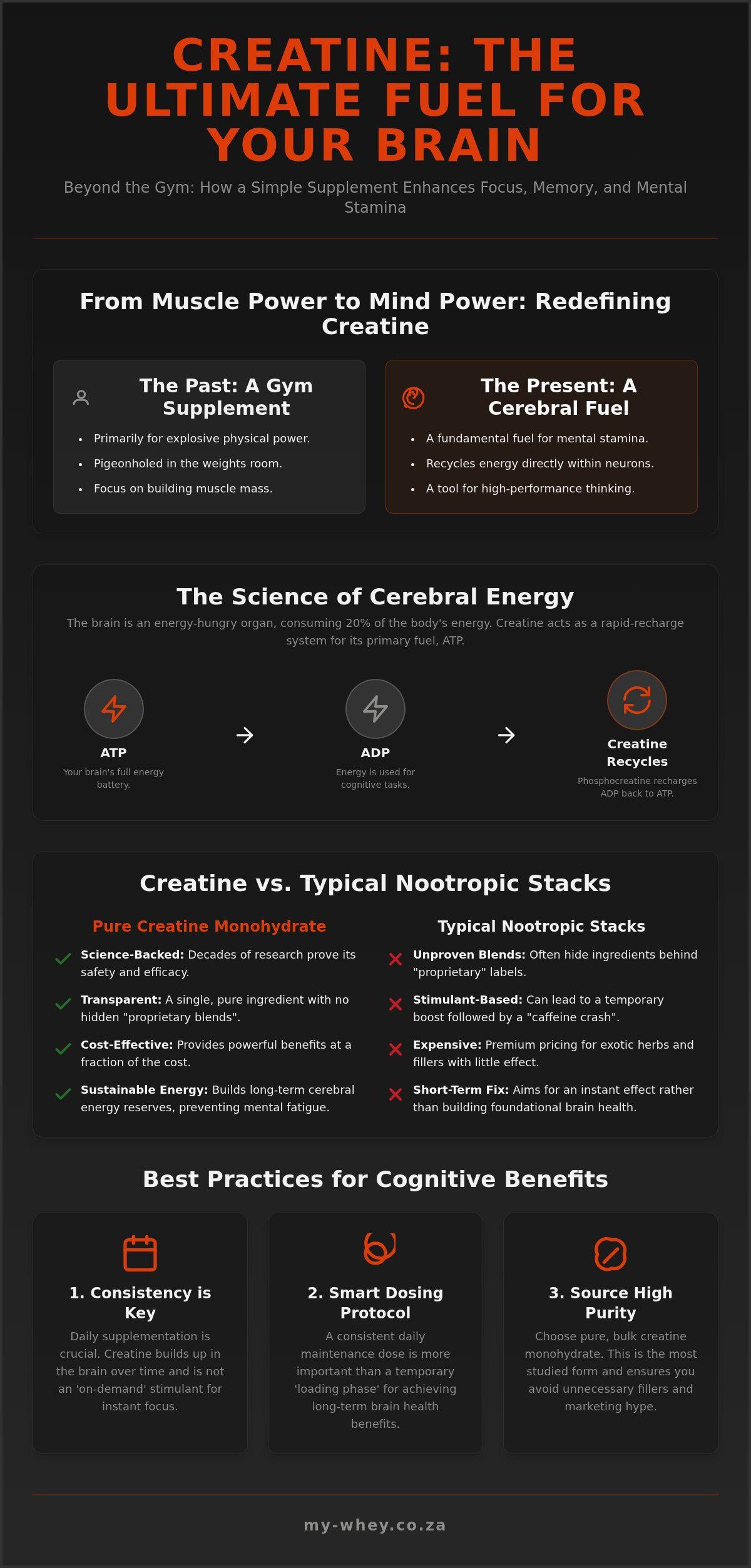
The human brain is an energy-intensive organ. Despite making up only 2% of your body weight, it consumes roughly 20% of your total energy. To maintain this high metabolic rate, your neurons rely on a steady supply of Adenosine Triphosphate (ATP). Research into Creatine's role in cognitive function suggests it acts as a secondary energy battery, helping to replenish ATP during periods of high mental demand. Because creatine must cross the blood-brain barrier to be effective, consistent supplementation is key to maintaining these cerebral levels. It isn't an instant fix; it's a long-term investment in your brain's metabolic health.
Creatine vs. Standard Nootropics
The South African market is flooded with expensive "nootropic" stacks that promise instant genius but often deliver little more than a caffeine crash. Creatine is different. It boasts a decades-long track record of safety and efficacy amongst researchers. Unlike many retail cognitive supplements that hide behind "proprietary blends" and unnecessary fillers, pure monohydrate offers a transparent, science-backed solution. You don't need exotic herbs or unproven stimulants when you have a compound that your body already produces and understands. For those seeking foundational knowledge on the supplement's history and safety, The Definitive Guide to Creatine Monohydrate provides a thorough breakdown. By choosing a pure source, you ensure that you're only paying for what actually works.
The Science of Cerebral Energy: How Creatine Supports Your Neurons
To understand how creatine for cognitive function south africa works, we must look at the cellular level. Your brain doesn't just "process" information; it physically burns fuel to do so. Every thought, memory, and calculation requires Adenosine Triphosphate (ATP), the universal energy currency of life. When mental tasks become demanding, your neurons use ATP faster than they can regenerate it. This is where creatine steps in. It acts as a rapid-response energy reservoir, ensuring that your brain doesn't run out of "cash" mid-transaction.
The Energy Buffer Mechanism
Think of creatine as a high-capacity energy battery. It stores high-energy phosphate groups in the form of phosphocreatine. When your brain is under heavy cognitive load, it breaks down ATP into Adenosine Diphosphate (ADP). Creatine immediately "loans" its phosphate group back to the ADP, instantly recycling it into fresh ATP. This process allows your neurons to maintain a high firing rate even during intense sessions of problem-solving or strategic planning. The phosphocreatine shuttle is the metabolic transport system that moves these high-energy phosphate groups from the mitochondria to the specific parts of the neuron where energy is most needed, effectively preventing mental fatigue.
Beyond simple recycling, creatine also influences how the brain uses oxygen. Studies indicate that improved creatine levels can enhance oxygen utilisation within the prefrontal cortex. This is the region responsible for executive function, focus, and emotional regulation. By optimising this oxygen use, creatine helps prevent the physiological burnout that occurs when cerebral energy stores are depleted.
Neuroprotection and Long-term Brain Health
The benefits extend beyond immediate focus. Creatine serves as a neuroprotective agent, shielding cells from oxidative stress and cellular fatigue. This is particularly relevant for ageing populations or those in high-stress environments. Research into Creatine's impact on brain health suggests it may play a role in defending against age-related cognitive decline by maintaining mitochondrial integrity. It's also a powerful tool for those dealing with sleep deprivation, as it helps the brain maintain performance when rest is scarce.
For a comprehensive approach to neuro-wellness, many South Africans combine their daily monohydrate with high-quality Omega 3. Whilst creatine handles the energy supply, Omega 3 supports the structural health of neuronal membranes. This synergy creates a robust foundation for long-term mental clarity. To begin building this foundation, you can buy lab-tested creatine monohydrate that prioritises purity over marketing hype.
Who Benefits Most? Creatine for Focus, Memory, and Mental Clarity
While metabolic support is universal, certain individuals find that creatine for cognitive function south africa provides a more noticeable shift in their daily performance. It's not just about raw power; it's about the ability to sustain complex thought processes when the pressure is on. For many, this supplement acts as a safety net that prevents the mental "crash" associated with high-stakes environments.
High-performance professionals often hit a wall during the mid-afternoon slump. This isn't just a lack of caffeine; it's often a sign of cerebral energy depletion. Students facing the heavy cognitive load of exam season or intense research projects face similar hurdles. According to The Science of Cerebral Energy, oral creatine administration can significantly improve short-term memory and reasoning in healthy individuals. This makes it an invaluable tool for anyone whose career or studies depend on sharp, consistent logic.
As we age, supporting executive function becomes a priority for maintaining independence. The elderly can benefit from creatine's ability to bolster memory and processing speed, which naturally tend to decline over time. By providing the brain with a more robust energy buffer, it helps maintain the "processing power" required for daily tasks and social engagement.
The Vegan/Vegetarian Advantage
Those following a plant-based lifestyle typically have lower baseline levels of creatine because the primary dietary sources are red meat and fish. Consequently, vegetarians and vegans often experience the most dramatic cognitive gains when they begin supplementing. Lower baseline levels are frequently linked to slower processing speeds during complex tasks. For the plant-based South African community, pure monohydrate bridges this nutritional gap efficiently. It's a simple way to ensure your brain has the same energy resources as those with meat-heavy diets.
Creatine for Stressful Environments
Stress is a metabolic drain. During periods of high pressure or even mild sleep deprivation, the brain's creatine consumption spikes. It plays a quiet but vital role in supporting emotional regulation by ensuring the brain has the fuel to process stressors without becoming overwhelmed. To further support this resilience, many users look at the gut-brain axis, integrating their routine with Gut Health Supplements. A healthy gut environment ensures better nutrient absorption, allowing your cognitive support protocol to work exactly as intended whilst you navigate a demanding lifestyle.
How to Use Creatine for Brain Health: Dosage and Best Practices
Using creatine for cognitive function south africa requires a shift in mindset compared to traditional gym-based usage. You aren't chasing a "pump" or immediate physical energy. Instead, you're looking to saturate the cerebral tissue with a steady supply of phosphocreatine. This process is cumulative. Taking a double dose on a Monday because you have a big meeting won't provide an instant boost. Success depends entirely on your ability to maintain a daily habit over several weeks.
Many people ask if they need a "loading phase" of 20g per day. Whilst this approach saturates the muscles quickly, it's often unnecessary for cognitive goals and can lead to minor digestive upset. A steady maintenance dose of 3 to 5 grams per day is the more pragmatic choice for long-term wellness when using creatine for cognitive function south africa. It might take 2 to 4 weeks to reach full cerebral saturation, but this methodical approach ensures you avoid the "bloating" myth often associated with high-dose loading protocols. For the brain, the timing of your dose relative to your work schedule doesn't matter. What matters is that you don't skip days.
The Cognitive Dosing Framework
A daily intake of 3 to 5 grams is the established sweet spot for most adults. This amount is sufficient to maintain high levels of brain creatine without overloading your system. When selecting your supplement, stick to pure Creatine Monohydrate. It's the most researched form in the world and lacks the unnecessary sugars or "flavour systems" that can complicate your daily intake. Consistency is your priority. If you miss a day, don't panic; just resume your normal dose the following morning. Over time, this habit creates a stable energy buffer that supports your mental stamina during high-pressure tasks.
Maximising Absorption
To get the most out of your routine, take your creatine with a meal or a protein shake. The slight insulin response from food can help "drive" the creatine into your cells more efficiently. Hydration is equally critical. Creatine draws water into the cells, so ensure you're drinking enough water throughout the day to avoid mild headaches or cramping. During your first month, consider keeping a simple "focus log." Note down your mental clarity and afternoon energy levels. Most users report a subtle but distinct improvement in their ability to stay on task as they reach the 3-week mark.
Ready to start your routine? You can buy pure creatine monohydrate directly for reliable national delivery across South Africa.
Sourcing Pure Creatine Monohydrate in South Africa
In the South African retail market, shelves are often crowded with "creatine boost" products featuring neon labels and aggressive marketing claims. For the discerning consumer, these flashy containers are usually a distraction. Many of these retail options include unnecessary sugars, artificial dyes, and "flavour systems" that add nothing to your mental clarity. When your goal is creatine for cognitive function south africa, you need substance over style. Pure monohydrate is a tool for long-term health, not a sugary stimulant.
Choosing unflavoured bulk supplements is the most pragmatic way to avoid the "marketing tax" found in high-end pharmacies and gym shops. Because cognitive benefits rely on daily, consistent use, the cost per serving becomes a critical factor in your wellness budget. Buying in bulk allows you to maintain this essential habit without the retail markup. It also gives you complete control over your intake, ensuring you aren't consuming hidden additives that could interfere with your broader nutritional goals.
The Purity Factor
Purity isn't just a buzzword; it's a requirement for safety and efficacy. My Whey prioritises lab-tested quality for every batch, ensuring that what you put into your body is exactly what is listed on the label. This transparency is vital for those using creatine for cognitive function south africa, as it guarantees the absence of contaminants that could undermine your progress. By focusing on unflavoured, high-purity monohydrate, you're choosing a product that has been vetted for excellence. This methodical approach to sourcing allows you to feel secure whilst you focus on your mental performance.
Your Cognitive Stack Starts Here
Whilst monohydrate provides the energy buffer your neurons need, many South Africans look to expand their performance protocol. You might consider combining your daily dose with Branched Chain Amino Acids to support total body recovery alongside your mental efforts. This holistic view of performance ensures that both your brain and body have the raw materials required to excel in high-pressure environments. With national delivery across South Africa, maintaining your supply is simple and efficient.
Take the next step in your personal wellness journey and cut out the middlemen. Organise your bulk Creatine Monohydrate for cognitive support today at My Whey and experience the difference that lab-tested purity makes.
Invest in Your Long-Term Mental Clarity
Transitioning your perspective on creatine from a physical supplement to a fundamental cognitive fuel is a powerful step towards sustainable mental stamina. We've explored how this organic acid recycles ATP to keep your neurons firing during intense tasks and why consistency beats "on-demand" dosing every time. By establishing a daily routine, you're building a reliable energy reservoir that protects against burnout and sharpens focus. Using creatine for cognitive function south africa is a practical, science-backed strategy for anyone navigating a high-pressure lifestyle.
Success in this journey depends on the quality of your source. Avoid the fillers and retail markups that complicate your wellness goals. My Whey offers unflavoured, lab-tested monohydrate that prioritises purity above all else. Our bulk pricing model ensures your daily habit remains cost-effective, whilst our national South African delivery makes maintaining your supply effortless. Shop Lab-Tested Bulk Creatine Monohydrate today and take control of your cerebral energy. You have the tools to stay sharp; it's time to put them to work.
Frequently Asked Questions
Is creatine for cognitive function safe for daily use?
Daily supplementation is considered safe for healthy adults based on over thirty years of clinical research. In South Africa, creatine is regulated as a Category D complementary medicine, ensuring products meet specific safety standards. Using creatine for cognitive function south africa at a steady maintenance dose of 3 to 5 grams daily is well tolerated. It's a natural compound your body already produces, so you're simply optimising your existing metabolic pathways.
Will taking creatine for my brain make me gain weight or muscle?
You won't suddenly gain bulky muscle just by taking creatine. Muscle growth requires the specific stimulus of resistance training and a calorie surplus. You might experience a slight increase in water weight as the compound draws moisture into your cells. This is a sign that the supplement is working. For non-athletes, this weight shift is usually minimal and doesn't affect your physical appearance in a significant way.
How long does it take to feel the mental benefits of creatine?
Full cerebral saturation typically takes between 2 to 4 weeks of daily, consistent use. Unlike caffeine, which provides an immediate but temporary spike, creatine builds up in your system over time. You should expect a gradual improvement in your ability to handle complex tasks and a reduction in mental fatigue. Skipping days will slow down this process, so keep your container in a visible place to remind you.
Can I take creatine with my morning coffee for better focus?
You can certainly mix unflavoured monohydrate into your morning coffee. Creatine is stable in hot liquids, so the temperature won't degrade the quality of the supplement. Some users find that the combination of caffeine and creatine provides a dual approach to focus. However, ensure you drink an extra glass of water afterwards. Caffeine is a mild diuretic, and creatine requires adequate hydration to work effectively within your neurons.
Is creatine monohydrate better than other types for brain health?
Creatine monohydrate is widely regarded as the superior choice for brain health. It's the most studied form of the supplement, with hundreds of peer-reviewed trials confirming its safety and efficacy. Trendy alternatives like creatine HCL or buffered versions often come with a higher price tag but lack the long-term data to justify the cost. For South Africans seeking reliable results, pure monohydrate remains the most cost-effective and evidence-backed option available.
Do I need to load creatine if I am only taking it for my brain?
A loading phase is not required if your primary goal is mental clarity. Whilst athletes sometimes take 20 grams daily for a week to saturate muscles quickly, a standard dose of 3 to 5 grams will achieve the same results for your brain within a month. This slower approach is often better for non-athletes as it significantly reduces the risk of stomach cramps or bloating whilst still providing full cognitive support.
Are there any side effects of creatine for non-athletes in South Africa?
Most non-athletes experience no side effects at all when sticking to the recommended daily dose. The most common issues, such as mild headaches or thirst, are almost always linked to dehydration. Because creatine changes how your body manages water, you must increase your fluid intake. In our local climate, this is especially important. If you have pre-existing kidney conditions, you should always speak with your doctor before starting any new supplement.
Can children or teenagers take creatine for school performance?
You should consult a medical professional before starting a creatine routine for children or teenagers. Whilst some studies suggest benefits for younger individuals, the vast majority of safety data is based on adult populations. For South African students, focus should first be placed on sleep, hydration, and a diet rich in whole foods. A doctor can help determine if creatine for cognitive function south africa is appropriate for their specific developmental needs.