

Creatine Loading Phase vs Maintenance: Which Strategy Is Best for You?
You don't need to swallow 20 grams of powder a day to see a change in the mirror, yet the "loading phase" remains the most fiercely debated topic in South African gyms. It's frustrating to sift through "bro science" whilst trying to avoid the bloating and digestive issues that often plague new users. One of the most common mistakes when taking creatine is blindly following high-dose protocols without understanding how your skeletal muscle actually stores the compound. You want results, but you also want to avoid wasting your hard-earned Rands on supplements that end up being wasted due to poor absorption.
This guide clears the confusion by comparing the science of loading versus maintenance. We promise to show you how to achieve full muscle saturation and faster strength gains without the unnecessary side effects. We will break down the physiological differences between these two strategies, helping you optimise your performance and get the best possible value from your bulk Creatine Monohydrate purchase. Whether you're looking for an immediate boost or a steady, sustainable approach, you'll find the clarity needed to make the right choice for your fitness journey.
Key Takeaways
- Understand that muscle saturation is the ultimate goal, whether you achieve it in seven days via loading or 28 days through a steady maintenance approach.
- Learn how to fast-track your strength gains and psychological motivation by using a short-term loading protocol for immediate physiological impact.
- Avoid common mistakes when taking creatine by prioritising high-purity Creatine Monohydrate and following a precise hydration strategy to prevent bloating.
- Discover why a simple maintenance dose is often the superior choice for those with sensitive digestion or a preference for long-term habit consistency.
- Use our decision matrix to select the most cost-effective strategy for your specific performance goals and supplement budget in South Africa.
Creatine Loading Phase vs Maintenance: The Fundamentals of Muscle Saturation
Understanding how your body processes supplements is the first step toward better performance. Many South African athletes jump into a routine without knowing why they're taking specific doses. One of the common mistakes when taking creatine involves misunderstanding the concept of saturation, which leads to either wasted product or delayed results. By grasping the mechanics of how your muscles store this compound, you can choose a strategy that aligns with your timeline and your budget.
What Is Muscle Creatine Saturation?
Your muscles rely on phosphocreatine to rapidly produce Adenosine Triphosphate (ATP), the primary energy source for high-intensity movement. Without supplementation, most people maintain muscle stores at roughly 60% to 80% of their total capacity. Bridging this gap requires a consistent external source to top up these reserves. Muscle creatine saturation is the physiological ceiling where your muscle cells have reached their maximum storage capacity and cannot hold any additional creatine. Once you hit this limit, any excess powder you consume is simply excreted by the body.
Loading vs Maintenance: A Bird’s-Eye View
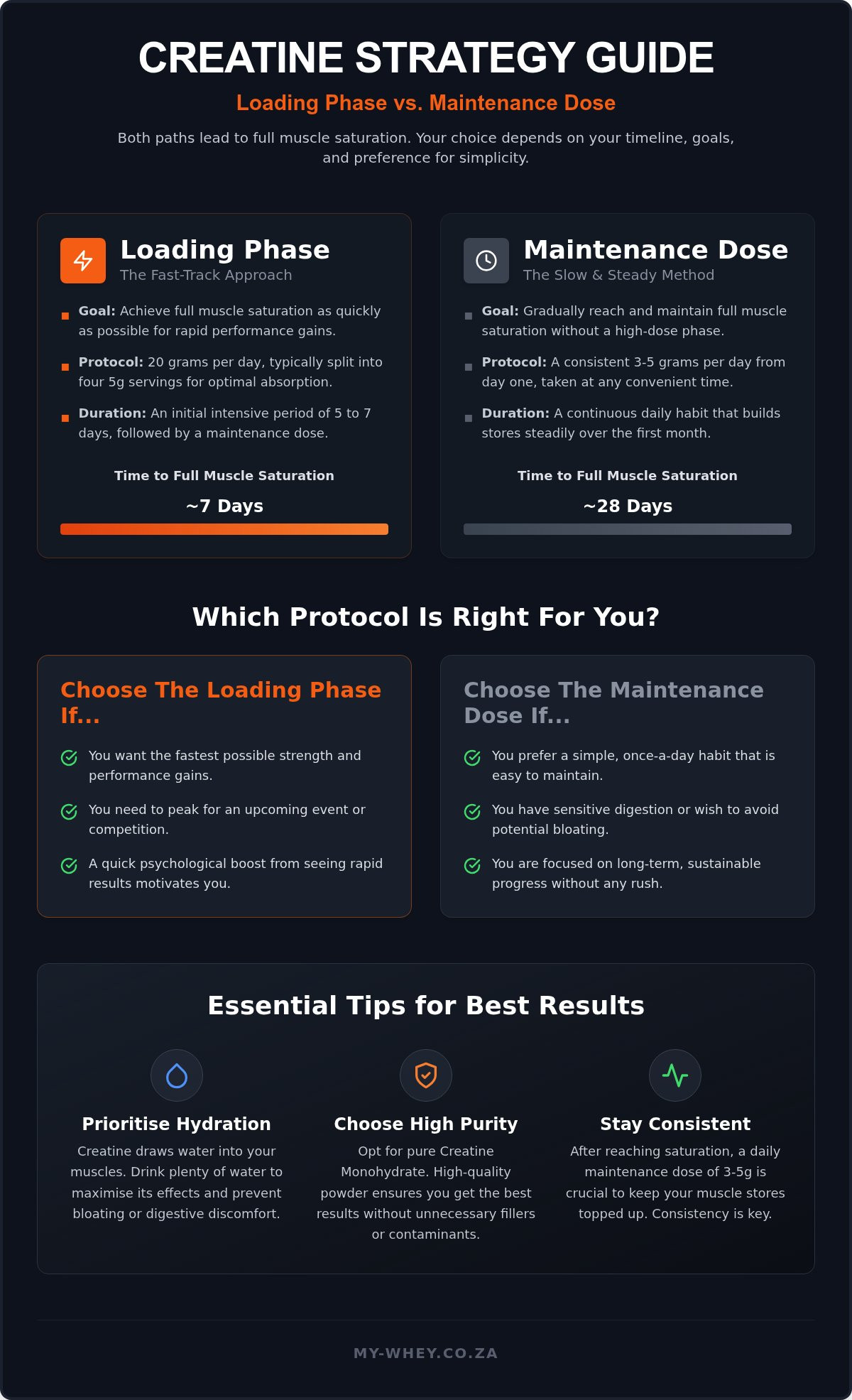
Choosing a protocol is essentially a choice between speed and simplicity. A loading phase involves taking high doses, typically 20 grams split into four daily servings, for five to seven days. This aggressive approach saturates the muscles in about a week. Conversely, the maintenance-only approach starts with a standard dose of 3 to 5 grams daily from the first day. Whilst it takes roughly 28 days to reach the same level of saturation, the end result is identical. Avoiding common mistakes when taking creatine can lead to more consistent progress regardless of which path you take.
Understanding these Creatine fundamentals helps you decide if you prefer the "fast-track" results of loading or the "steady-state" ease of maintenance. Many lifters pair their chosen strategy with high-quality whey protein to ensure their total nutritional profile supports muscle growth. Because My Whey offers pure Creatine Monohydrate at bulk rates, the higher initial cost of a loading phase becomes much more manageable for the average South African budget. You get the same pharmaceutical-grade purity without the inflated retail price tag, allowing you to focus entirely on your training goals.
The Scientific Case for Loading: Is Faster Saturation Worth the Effort?
Athletes often choose the loading phase because they want to bypass the four-week wait associated with lower daily doses. By rapidly increasing muscle stores, you experience a swift rise in body mass and explosive power. This immediate feedback serves as a powerful psychological motivator. Seeing a three-kilogram increase in weight and an extra rep on your heavy sets within a single week can transform your mental approach to a new training block. It provides a tangible sense of progress that keeps you committed to your gym sessions.
To execute this correctly, you take 20 grams of powder per day for approximately five to seven days. Research into common creatine questions and misconceptions confirms that this protocol is safe for healthy individuals and remains the fastest way to reach peak performance levels. This rapid "shock" to the system is particularly beneficial for South African lifters preparing for an upcoming rugby match, powerlifting meet, or a high-intensity training camp where every percentage of power output counts.
The 7-Day Performance Boost
Splitting your daily intake into four 5g doses throughout the day is the gold standard for maximum absorption. This method ensures your system is constantly supplied with the raw materials needed for phosphocreatine synthesis. Studies show that this intensive week leads to immediate improvements in high-intensity exercise output and faster recovery between sets. If you have a competition on the horizon, the loading phase ensures your muscles are fully primed exactly when you need them to be.
When consuming 20 grams of a supplement daily, the quality of your source becomes paramount. One of the common mistakes when taking creatine is using low-grade powders that contain fillers or impurities, which become magnified at higher dosages. Choosing a lab-tested Creatine Monohydrate ensures that your loading phase is efficient and free from unnecessary additives. Because we offer bulk pricing, the higher volume of powder required for a loading week doesn't have to break your budget.
Potential Drawbacks of the High-Dose Approach
Some users fear the "bloat," but scientific data clarifies this as intramuscular water retention rather than subcutaneous fat gain. Your muscles look fuller because they are holding more hydration to support energy production. However, taking the full 20g in a single sitting is a recipe for stomach upset. You can easily mitigate digestive sensitivity by spreading your doses across the day. This simple adjustment prevents the gastric discomfort that occasionally occurs during the first few days of a high-dose protocol.
The Maintenance-Only Approach: Why Slow and Steady Often Wins
Whilst the allure of rapid results is strong, the maintenance-only approach offers a level of simplicity that often leads to better long-term results. One of the common mistakes when taking creatine is assuming that if you don't load, the supplement won't work. This is simply not true. By taking a consistent daily dose of 3 to 5 grams, your muscles will reach full saturation in approximately 28 days. The end result is exactly the same as the loading protocol, just achieved with a steadier trajectory.
Choosing this method eliminates the sudden weight spike that often accompanies the 20-gram loading phase. For those who are sensitive to changes in scale weight or who prefer a more gradual transition in their physique, maintenance is the logical choice. It is also significantly more cost-effective for the average South African consumer. By using a single scoop of My Whey Creatine Monohydrate from day one, you stretch your bulk purchase further whilst still achieving peak performance capacity within a month. This strategy prioritises sustainability over immediate gratification.
Convenience and Consistency
Maintaining a 20-gram daily schedule split into four separate doses requires significant planning and mental effort. It's easy to forget a mid-afternoon serving, leading to "loading anxiety" and the feeling that you've ruined your cycle. A single daily scoop is much easier to integrate into a morning routine. This mirrors the approach many take with other daily essentials like omega 3, where the focus is on long-term health and consistent tissue levels rather than immediate saturation. Consistency is the foundation of any successful supplement stack.
Gentle on the Digestive System
High-dose protocols can be taxing on the gut, especially amongst users with pre-existing sensitivities or conditions like IBS. Flooding the digestive tract with 20 grams of powder in a short window can lead to cramping or loose stools. Sticking to a lower daily dose is far gentler and reduces the risk of gastric distress. Because My Whey focuses on high-purity Creatine Monohydrate without fillers, the risk of unwanted reactions is already minimised. However, for those with a sensitive stomach, the slow and steady approach ensures you get the performance benefits without the discomfort. It's a reliable way to avoid common mistakes when taking creatine that might otherwise discourage you from continuing your supplementation.
Common Mistakes When Taking Creatine: Side Effects and Practical Considerations
One of the most persistent myths in South African fitness circles is that creatine causes kidney damage. For healthy individuals, this claim is entirely unsupported by science. Over 600 clinical trials have confirmed that long-term supplementation is safe for the renal system. The confusion often arises because creatine increases creatinine levels, a marker used to measure kidney function, but this increase is a harmless byproduct of the supplement rather than a sign of organ stress. Understanding the difference between a laboratory marker and actual health is vital for any serious athlete.
A significant gap in typical advice is how to handle the transition from loading to maintenance. You don't need a "taper" or a complex step-down protocol. On day eight, you simply drop from 20 grams to your standard 5-gram daily dose. This shift ensures your muscle stores remain topped up without the digestive load of the initial week. To keep your system running efficiently, aim to drink an additional 500ml to 1 litre of water daily whilst loading. This simple hydration adjustment prevents the cramping that many people incorrectly attribute to the supplement itself.
Avoiding the Most Common Mistakes When Taking Creatine
Inconsistency is the silent killer of progress. Common mistakes when taking creatine often involve skipping doses once the initial loading phase is over. Because your body naturally excretes a small amount of creatine every day, missing your daily scoop eventually leads to a slow decline in muscle saturation. Another outdated practice is "cycling" off the supplement every eight weeks. Modern research shows that you don't need to stop taking it; your body does not build a tolerance, and there is no benefit to letting your saturation levels drop back to baseline.
Managing the Loading Bloat and Absorption
The "creatine bloat" is frequently misunderstood as fat gain or subcutaneous water retention. In reality, creatine is osmotic, meaning it pulls water directly into the muscle cell. This intracellular hydration is a positive performance sign, making your muscles look fuller and providing the hydration necessary for protein synthesis. To maximise this effect and improve absorption, take your dose with a carbohydrate source or as part of your post-workout meal when your muscles are most receptive to nutrient uptake.
For those looking to build a comprehensive recovery stack, branched chain amino acids can be a valuable addition to your routine. They work alongside your creatine to support muscle endurance during those final, heavy sets. If you want to avoid the fillers and additives that often lead to gastric distress, invest in high-purity Creatine Monohydrate that has been lab-tested for quality. This ensures you are getting exactly what you pay for without the common mistakes when taking creatine that lead to wasted powder and poor results.
Choosing Your Protocol: Maximising Performance and Bulk Value in South Africa
Deciding between these two protocols is a calculation of your immediate goals versus your daily lifestyle. One of the common mistakes when taking creatine is choosing a strategy that you cannot realistically maintain. If you have a rugby tournament or a powerlifting meet in ten days, the loading phase is your best tool. However, if you are simply looking for long-term health and strength gains, the maintenance approach is far more sustainable. Both paths lead to the same peak performance; the only variable is the speed at which you arrive.
A Decision Matrix for Your Fitness Goals
To make an informed choice, evaluate your current situation against these criteria:
- Choose Loading if: You need to see strength and weight increases within a week, have no history of digestive sensitivity, and can manage four separate doses daily.
- Choose Maintenance if: You prefer a simple "one-and-done" morning habit, have a sensitive stomach, or are not in a rush to hit peak saturation.
Regardless of the protocol you select, stay committed to the process for at least three months. Stopping too early is another of the common mistakes when taking creatine that prevents users from seeing the full physiological benefits of topped-up phosphocreatine stores.
Maximising Value with Bulk Creatine Monohydrate
The cost-per-serving of your supplement strategy is directly impacted by how you purchase. A standard loading week requires 140 grams of powder. If you buy small retail tubs from a pharmacy, this initial week can feel expensive. For example, a 150g tub of NPL Creatine Monohydrate costs approximately R159.99, meaning a loading phase would consume almost the entire container in just seven days. By purchasing in bulk from My Whey, the cost of a loading phase becomes negligible, allowing you to prioritise performance over price.
The quality and purity of your supplement matter more than the phase you choose. Our no-filler promise ensures that every gram you consume is high-purity Creatine Monohydrate, which is essential for both absorption and avoiding the gastric distress often caused by impurities. For South African athletes, investing in lab-tested bulk ingredients is the smartest way to ensure you are getting maximum value without the retail markups. Start your journey with a single 5g scoop daily for simplicity, or dive into a loading week for speed; either way, our pure nutrition supports your progress every step of the way.
Start Your High-Performance Journey Today
Choosing between a loading phase and maintenance is ultimately about aligning your supplementation with your specific timeline. Both strategies successfully reach the same physiological ceiling of muscle saturation; the difference lies simply in how quickly you wish to see those explosive strength gains. By avoiding common mistakes when taking creatine, such as inconsistent dosing or poor hydration, you ensure that every gram of powder contributes to your performance goals rather than your waste.
Success in the gym requires high-purity ingredients that support your body without unnecessary fillers. My Whey provides the results-driven nutrition serious athletes need, offering lab-tested quality at the best value bulk pricing in South Africa. Whether you're prepping for a competition or building a sustainable long-term habit, our pure Creatine Monohydrate is designed to help you break through plateaus. Don't let poor quality hold you back. Optimise your performance with pure, bulk Creatine Monohydrate from My Whey and take the next step in your fitness journey with absolute confidence.
Frequently Asked Questions
Is a creatine loading phase necessary for muscle growth?
No, a loading phase isn't mandatory for muscle growth, but it significantly accelerates the process. By taking higher doses initially, you reach full muscle saturation in about a week rather than a month. Whilst muscle growth depends on your total training and protein intake, having fully saturated phosphocreatine stores allows you to train at a higher intensity sooner. It's a choice between immediate performance benefits and a more gradual approach to saturation.
How much creatine should I take during the loading phase?
The standard protocol for loading is 20 grams of Creatine Monohydrate daily for five to seven days. To ensure maximum absorption and minimise digestive discomfort, you should split this into four separate 5-gram servings taken throughout the day. Taking the entire 20-gram dose at once is one of the common mistakes when taking creatine that often leads to stomach upset. Spreading the doses maintains a steady supply for your muscle cells to absorb.
Can I skip the loading phase and just take 5g a day?
You can absolutely skip the loading phase and begin with a standard maintenance dose of 3 to 5 grams daily. This approach is often preferred by those with sensitive stomachs or those who aren't in a rush to see immediate weight increases. Your muscles will still reach maximum storage capacity, but the process will take approximately 28 days of consistent daily use rather than the one week achieved through loading.
Does creatine loading cause stomach pain or bloating?
Stomach pain and bloating are typically caused by taking too much powder at once or using low-purity supplements with added fillers. To avoid these issues, ensure you're using a high-purity Creatine Monohydrate and split your loading doses into smaller servings. Intramuscular water retention is normal and actually beneficial for muscle fullness; however, subcutaneous bloating is often a result of poor diet or low-quality ingredients rather than the creatine itself.
How long does it take for creatine to start working without loading?
Without a loading phase, it typically takes three to four weeks for your muscle creatine levels to reach full saturation. You might notice subtle improvements in recovery and strength after the first two weeks, but the peak performance benefits generally manifest around day 28. Consistency is vital during this period. One of the common mistakes when taking creatine is stopping the protocol early because you don't see the immediate weight jump associated with loading.
Do I need to cycle off creatine after the maintenance phase?
You don't need to cycle off creatine. Older advice suggested an eight-week cycle to reset your body's natural production, but modern research has debunked this. Your body continues to produce its own creatine once you stop supplementing, and there's no evidence that long-term use downregulates your natural transporters. Continuous use ensures your muscle stores remain at 100% saturation, providing a permanent foundation for your strength and power output.
Should I take creatine on rest days during the loading phase?
Yes, you must take creatine on rest days during the loading phase to maintain the saturation process. Creatine works through accumulation in the muscle tissue rather than as a temporary stimulant. Skipping rest days prevents your stores from reaching the necessary threshold, effectively extending the time it takes to see results. Treat your daily dose as a non-negotiable part of your routine, much like your daily protein or vitamin intake.
What happens if I stop taking creatine after the loading phase?
If you stop taking creatine after the loading phase, your muscle stores will slowly return to their baseline levels over a period of four to six weeks. You'll likely notice a slight decrease in muscle fullness and a minor drop in scale weight as the extra intracellular water is released. Your strength levels won't vanish overnight, but you'll lose the extra edge in high-intensity performance and recovery that full saturation provides.