

Creatine Side Effects: Myth vs Fact (The Ultimate 2026 Guide)
What if the "dangers" you have heard about the world's most researched supplement are actually echoes of flawed data and social media hearsay? You have likely seen alarming posts claiming that creatine leads to hair loss, kidney damage, or permanent bloating. It is completely understandable to feel cautious when your long-term health is the priority. This comprehensive guide on creatine side effects myth vs fact cuts through the noise to provide the scientific reassurance you need.
We promise to show you why this performance tool remains a gold standard for safety amongst South African athletes. You will learn how to distinguish between genuine physiological responses and the reactions often caused by cheap fillers found in low-grade retail products. We will explore the latest 2026 research, provide clear instructions on avoiding minor digestive issues, and help you build a regime that supports your goals with total confidence. By the end, you will understand exactly how to use high-purity monohydrate to get results whilst maintaining total peace of mind.
Key Takeaways
- Understand that many reported issues stem from low-grade fillers rather than the active ingredient. Pure monohydrate remains the safest choice for performance.
- Separate fiction from reality by reviewing the latest evidence on creatine side effects myth vs fact, specifically regarding kidney health and hair loss.
- Learn why "creatine bloat" is often misunderstood as fat gain when it's actually beneficial intracellular hydration.
- Discover how creatine supports diverse goals, from hormonal balance in women to cognitive health and muscle retention in older adults.
- Optimise your results by choosing the right protocol to eliminate digestive discomfort whilst ensuring maximum muscle saturation.
Understanding Creatine: Why the Myths Persist amongst Athletes
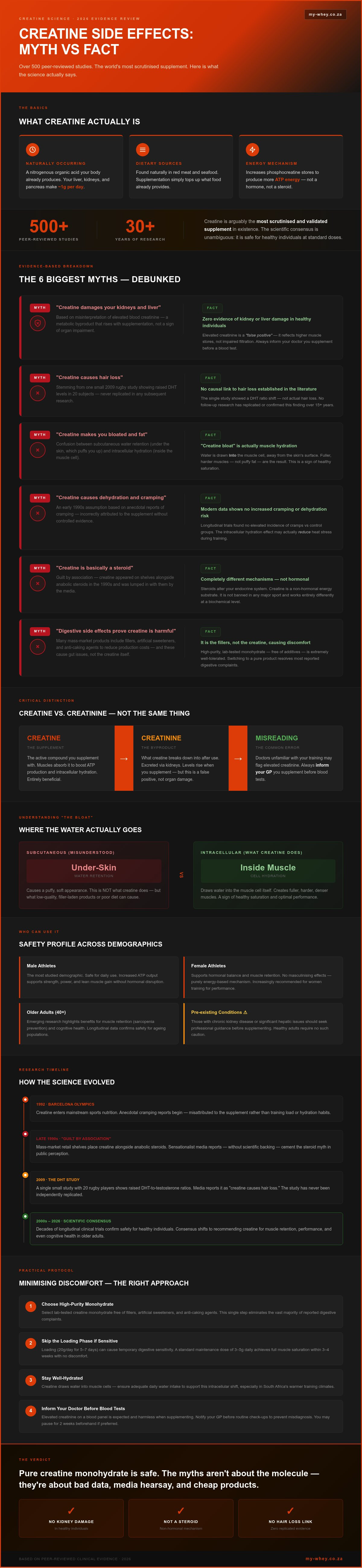
Creatine isn't a synthetic drug or a laboratory mystery. It is a nitrogenous organic acid that occurs naturally in your body; your liver, kidneys, and pancreas produce about one gram every day. You also consume it through your diet, primarily via red meat and seafood. Despite this biological familiarity, the supplement remains shrouded in controversy. Understanding the nuances of creatine side effects myth vs fact begins with a clear definition: it is a fuel source, not a hormonal disruptor.
The stigma surrounding its use largely stems from the 1990s. During this era, creatine became the breakout star of the sports nutrition world, appearing on retail shelves alongside much more aggressive, often unregulated substances. This "guilt by association" led many to believe that creatine operated like an anabolic steroid. Public perception was further skewed by sensationalist media reports that lacked scientific backing. Today, the landscape is different. With over 500 peer-reviewed studies documenting its efficacy and safety, creatine is arguably the most scrutinised and validated supplement in existence.
Much of the confusion regarding adverse reactions actually points towards product quality rather than the molecule itself. When we examine the creatine side effects myth vs fact, we find that many mass-market retail brands include fillers, artificial sweeteners, or anti-caking agents to lower production costs. These additives, not the creatine, are frequently the culprits behind digestive upset or discomfort. Choosing a high-purity, lab-tested Creatine Monohydrate, such as those offered by My Whey, ensures you are getting the active ingredient without the unnecessary baggage that fuels these common myths.
The Evolution of Creatine Research
The journey from the 1992 Barcelona Olympics to 2026 has been defined by rigorous data. Early adoption relied on anecdotal evidence where individual instances of cramping were incorrectly blamed on the supplement. Modern clinical trials have corrected these assumptions. We now have decades of longitudinal data showing that daily use is safe for healthy individuals. The consensus has shifted towards using it for muscle retention and brain health.
Creatine vs. Steroids: Clearing the Confusion
The biological mechanisms are worlds apart. Anabolic steroids are synthetic hormones that alter your endocrine system. Creatine simply increases your stores of phosphocreatine to produce more ATP energy. The "bulk" look is actually intracellular hydration, drawing water into the muscle cell whilst keeping it away from the skin's surface. This is a sign of healthy saturation, not the hormonal side effects seen with illegal drugs. It remains a safe, non-hormonal tool for all athletes.
Fact Check: Does Creatine Damage Your Kidneys or Liver?
The most persistent anxiety surrounding the creatine side effects myth vs fact involves the health of your kidneys and liver. For decades, critics have suggested that the extra strain of processing this supplement could lead to long-term organ damage. This fear is largely based on a misunderstanding of how the body filters waste. Extensive clinical trials confirm that daily creatine monohydrate supplementation does not adversely affect kidney or liver function in healthy individuals. It is one of the most rigorously tested compounds in the history of sports nutrition.
To understand the safety profile, we must distinguish between creatine (the supplement) and creatinine (the metabolic byproduct). When you take a supplement, your muscles use what they need and the rest breaks down into creatinine. Doctors use blood creatinine levels as a standard marker for kidney function. If your creatinine is high, it usually suggests your kidneys aren't filtering well. However, when you supplement, your creatinine levels rise simply because you have a higher intake. It is a "false positive" for damage. Understanding this distinction is vital for anyone reviewing the creatine side effects myth vs fact landscape.
Interpreting Blood Tests whilst Supplementing
If you are scheduled for a routine medical check-up in South Africa, always inform your doctor about your supplement regime. A standard blood panel might show elevated creatinine, which could alarm a GP who isn't familiar with your training habits. This elevation doesn't indicate functional impairment. It is merely a reflection of your increased muscle stores. To get an accurate baseline, some athletes choose to stop supplementing for two weeks before a test, though this isn't strictly necessary if your doctor is informed.
Pre-existing Conditions and Professional Guidance
Whilst the evidence for healthy adults is clear, caution is warranted for those with pre-existing chronic kidney disease or significant hepatic issues. If your organ function is already compromised, adding any concentrated supplement requires professional medical supervision. For the vast majority, the real risk comes from low-quality products. Using a high-purity creatine monohydrate eliminates the risk of taxing your liver with heavy metals or unlisted fillers. Choosing pure monohydrate ensures that your body processes only the active ingredient it actually requires for performance.
Debunking Aesthetic Concerns: Hair Loss, Bloating, and Dehydration
Whilst organ health is a primary concern, aesthetic side effects often dominate gym-floor conversations in South Africa. Many potential users hesitate because they fear losing their hair or waking up with a "puffy" face. When we look at the creatine side effects myth vs fact, it becomes clear that these cosmetic fears are largely based on misinterpretations of physiological processes. Understanding the difference between intracellular hydration and subcutaneous water retention is the first step toward clarity.
The Truth About Creatine and Hair Loss
The myth that creatine causes baldness stems almost entirely from a single 2009 study involving college-aged rugby players. This study found that a loading dose of creatine increased levels of dihydrotestosterone (DHT), a hormone linked to hair loss in those already genetically predisposed to male pattern baldness. However, it's vital to understand that the DHT levels remained well within the normal physiological range. Most importantly, no actual hair loss was observed or reported amongst any of the participants.
Since then, no peer-reviewed research has ever directly linked creatine to baldness. Modern dermatological consensus suggests that if you aren't already genetically prone to hair loss, creatine won't trigger it. Even for those with a family history of thinning, there's no evidence that the supplement accelerates the process. It's a classic case of a single data point being blown out of proportion by social media circles without looking at the broader clinical context.
Managing Water Retention and Digestion
"Creatine bloat" is another common complaint that requires context. Creatine is osmotically active, meaning it draws water into the muscle cells. This is intracellular water retention, which is actually a positive outcome. It leads to muscle volumisation, making your muscles look fuller and harder. It doesn't cause the soft, subcutaneous "puffiness" associated with high sodium intake from processed foods or hormonal imbalances. If you feel bloated, your diet or sodium balance is a more likely culprit than the creatine itself.
If you experience genuine gastric upset, it's usually down to your protocol rather than the supplement. Consider these tips for better comfort:
- Avoid massive loading doses: Taking 20g in a single sitting can overwhelm your gut. Split it into four 5g doses or skip the loading phase entirely to allow for gradual saturation.
- Don't take it on an empty stomach: Mixing your powder with a meal or a protein shake can buffer the digestive process and improve tolerance.
- Choose micronised powders: These are ground into smaller particles, which improves solubility and reduces the chance of undissolved powder sitting in your stomach.
Perceived side effects like cramping and dehydration are also misunderstood. Research shows that creatine can actually reduce the risk of heat illness and cramping by enhancing cellular hydration. If you feel dehydrated, it's likely because you haven't adjusted your water intake to account for the water being pulled into your muscles. Simply staying consistent with your fluids is usually the only fix required to maintain peak performance.
The Safety Profile Across Different Demographics
Creatine isn't just for young men in the gym. Whilst many associate the supplement with high-level bodybuilding, the safety profile extends to women, adolescents, and the elderly. When examining the creatine side effects myth vs fact for various age groups, the data reveals that the benefits often far outweigh the perceived risks. Broadening our perspective allows us to see how this compound supports human health across a lifetime.
Creatine for Women: Performance without the "Bulk"
Many South African women avoid creatine because they fear gaining excessive muscle mass or "bulking up." This is a fundamental misunderstanding of female physiology. Women typically have lower natural creatine stores than men, often possessing only 70% to 80% of the levels found in their male counterparts. Supplementing helps bridge this gap, leading to improved strength and better recovery without hormonal disruption. The weight gain often reported is simply water being pulled into the muscle cells, which actually creates a more toned and defined appearance.
For those looking to build a comprehensive supplement stack, combining high-purity monohydrate with quality protein is a proven strategy. You can learn more about balancing these tools in our whey protein guide. Focus on the quality of your ingredients to ensure you aren't consuming hidden sugars that lead to genuine fat gain.
Ageing and Cognitive Support
As we age, muscle loss (sarcopenia) and cognitive decline become significant health priorities. Creatine has emerged as a powerful neuroprotective agent. It supports brain energy metabolism, which is particularly vital during periods of mental fatigue or sleep deprivation. For older adults, daily low-dose supplementation is remarkably safe and can help maintain the physical strength required for independence. It isn't just about the muscles; it's about providing the brain with the fuel it needs to function efficiently.
Adolescent athletes also benefit from its use, provided they are under the supervision of a coach or healthcare professional. Studies in high-school athletes have shown no adverse effects on health markers when used correctly. The focus should always be on purity. Many "side effects" in younger users are actually reactions to the stimulants and artificial additives found in pre-workout blends rather than the creatine itself. By choosing a raw, unflavoured product, you eliminate these variables entirely.
Ready to experience the benefits of a lab-tested, filler-free regime? Start your journey with our pure creatine monohydrate and see the results for yourself.
Maximising Benefits Whilst Minimising Discomfort
Achieving peak performance shouldn't come at the cost of digestive comfort. Whilst the scientific literature confirms safety, the practical application of your regime determines your daily experience. Navigating the creatine side effects myth vs fact often comes down to how you manage your intake and the quality of the product you choose. By refining your protocol, you can enjoy the strength gains without the common pitfalls often discussed in fitness forums.
Hydration is the most critical variable. Creatine pulls water into the muscle cells, so your baseline fluid requirement increases. Aim for at least 3 to 4 litres of water daily to support this cellular shift. If you feel thirsty or experience mild headaches, you're likely behind on your fluid intake rather than reacting to the supplement itself. Proper hydration ensures the compound works with your body, not against it.
Many athletes mistakenly blame creatine for the jitters or nausea caused by complex pre-workout blends. These products often contain high doses of caffeine and artificial sweeteners that irritate the gut. Pure bulk monohydrate allows you to control the variables and avoid unnecessary additives that fuel myths about intolerance. It remains the most cost-effective and reliable way to supplement without unwanted reactions.
The Optimal Dosing Strategy
- Step 1: Skip the loading phase if you have a sensitive stomach. Taking 3 to 5 grams daily will still lead to full muscle saturation within three to four weeks without overwhelming your digestive system.
- Step 2: Ensure the powder is fully dissolved in at least 250ml of liquid. Undissolved crystals can cause osmotic diarrhoea by drawing water into the intestines.
- Step 3: Take your dose with a meal. Combining it with carbohydrates or protein can enhance absorption and significantly reduce any potential for nausea.
Why Purity Matters: Avoiding Contaminants
Poorly manufactured creatine can contain dicyandiamide or heavy metal contaminants that pose long-term health risks. In the South African market, it's essential to look for products that are lab-tested for purity. Choosing a raw ingredient without fillers ensures you're only paying for what your body needs. When shopping, use this checklist to ensure quality:
- Verify that the product is lab-tested for purity.
- Ensure there are zero fillers or unlisted additives.
- Look for a fine, micronised powder for better solubility.
By prioritising quality and following a sensible dosing protocol, you eliminate the factors that lead to discomfort. You deserve a supplement that works as hard as you do. Secure your pure Creatine Monohydrate today and build your regime on a foundation of scientific truth.
Empower Your Performance with Scientific Certainty
Navigating the creatine side effects myth vs fact landscape confirms one reality: this supplement remains a cornerstone of safe, effective performance. You have seen how decades of research debunk fears regarding organ health and hair loss, proving that the molecule itself is remarkably benign. Most "side effects" are merely manageable physiological responses or reactions to poor-quality additives found in mass-market brands.
Success depends on two factors: protocol and purity. By prioritising high-purity monohydrate and maintaining consistent hydration, you can bypass discomfort and focus entirely on your results. It is time to move past the social media noise and embrace a tool that supports everything from muscle retention to cognitive health. You don't need to fear the process when you have the right data and the right ingredients.
Our lab-tested formula ensures maximum purity with no hidden fillers or artificial sweeteners. We offer bulk rates for sustainable performance, allowing you to invest in your fitness goals without compromise. Empower your journey with a partner that values transparency as much as you do.
Shop Pure Bulk Creatine Monohydrate and start your regime with total confidence today. Your best performance is within reach.
Frequently Asked Questions
Can creatine cause kidney stones in healthy individuals?
No clinical evidence suggests that creatine causes kidney stones in healthy individuals. Stones typically form from high levels of calcium oxalate or uric acid, and creatine supplementation does not increase these substances in the body. However, because creatine draws water into your muscles, you must maintain a high fluid intake. Dehydration is a primary risk factor for stone formation, so staying hydrated whilst reviewing the creatine side effects myth vs fact is essential for safety.
Is it necessary to cycle off creatine to protect the liver?
It is not necessary to cycle off creatine to protect your liver. Your body produces creatine naturally every day, and clinical studies have monitored athletes using the supplement for several years without observing any hepatic damage. Continuous use is actually more effective for maintaining muscle saturation and performance. For those prioritising safety, using a lab-tested product ensures you aren't consuming unlisted contaminants that could unnecessarily tax your liver's natural detoxification pathways.
Does creatine cause acne or skin breakouts?
Creatine does not directly cause acne or skin breakouts. Unlike anabolic steroids, creatine does not alter the hormones that trigger excess sebum production in your pores. If you notice skin issues after starting a regime, they are likely caused by increased sweat during intense training or artificial sweeteners found in low-quality retail blends. Switching to a pure monohydrate without hidden fillers often resolves these concerns whilst supporting your muscle-building goals without compromising your complexion.
Can I take creatine if I have high blood pressure?
Most healthy individuals with managed high blood pressure can safely supplement with creatine, but you should consult your healthcare professional first. Creatine itself does not raise blood pressure, though some poorly formulated all-in-one supplements contain high levels of sodium or stimulants that can affect heart rate. Choosing a raw, unflavoured monohydrate allows you to avoid these additives whilst benefiting from the strength and cognitive support that high-purity supplementation provides for South African athletes.
What happens if I stop taking creatine suddenly?
Stopping creatine suddenly does not result in any dangerous withdrawal symptoms or health risks. Your muscle creatine stores will gradually return to their baseline levels over a period of three to four weeks. You might notice a slight decrease in muscle fullness as the intracellular water weight dissipates, and your high-intensity power output could dip slightly during training. Your body will continue to produce its own natural supply regardless of whether you choose to supplement.
Is creatine safe to take with caffeine or pre-workouts?
Combining creatine with caffeine or pre-workout supplements is generally considered safe and effective for performance. While an older theory suggested caffeine might interfere with creatine's ergogenic effects, modern research has largely debunked this concern. The primary risk is digestive discomfort if you take high doses of both on an empty stomach. Using a high-purity monohydrate alongside your favourite beverage ensures you get the benefits without the unnecessary gastric distress caused by complex chemical blends.
Does creatine affect heart health or cause palpitations?
Creatine does not cause heart palpitations or negatively affect heart health. In fact, your heart muscle relies on phosphocreatine for energy, and some studies suggest it may even support cardiovascular recovery. If you experience palpitations, they are almost certainly caused by high-stimulant ingredients like caffeine or synephrine found in many commercial pre-workout powders. Opting for a pure bulk monohydrate eliminates these stimulants whilst providing clean energy for your heart and skeletal muscles during exercise.
Can I take creatine whilst trying to lose body fat?
You can and should take creatine whilst trying to lose body fat. It is particularly beneficial during a calorie deficit because it helps you retain lean muscle mass and maintain training intensity. While you might see a slight increase in scale weight due to intracellular water retention, this is not fat gain. Retaining muscle is vital for keeping your metabolic rate high, making pure monohydrate an excellent tool for achieving a leaner and more defined physique.