

DIY Pre-Workout Supplement Recipe: Make Your Own in 2026
What if your DIY pre-workout supplement recipe started with water and a snack, rather than a scoop of stimulants? Choosing ingredients and serving sizes can feel confusing, especially when advice about caffeine and supplement blends conflicts. A practical recipe makes each ingredient’s role clear, with optional supplements added thoughtfully rather than by guesswork.
This guide explains how to build a straightforward starter recipe, adapt it to your workout and preferences, and decide when food alone may suit you better. You’ll also learn why accurate measuring matters and what to check on ingredient labels before buying powders in bulk.
We’ll start with hydration and fuel, then consider optional ingredients such as caffeine and creatine. Their roles differ, and neither is a complete formula on its own. The aim is a sensible plan you can adjust, whether you train in the morning, later in the day or prefer to skip stimulants.
Key Takeaways
- Build a DIY pre-workout supplement recipe around your session, usual meals and personal tolerance, not a promise of guaranteed performance.
- Choose ingredients by function: consider fluid and carbohydrate first, then decide whether flavour or an optional active ingredient has a place.
- Compare a drink, snack and dry mix to find a format that suits your preparation time, portability and ingredient-control preferences.
- Measure ingredients carefully and assess your tolerance rather than relying on guesswork or assuming one serving suits everyone.
- Before buying ingredients in bulk, check the label for ingredient identity, serving directions and allergen information.
DIY pre-workout supplement recipe: what should it do?
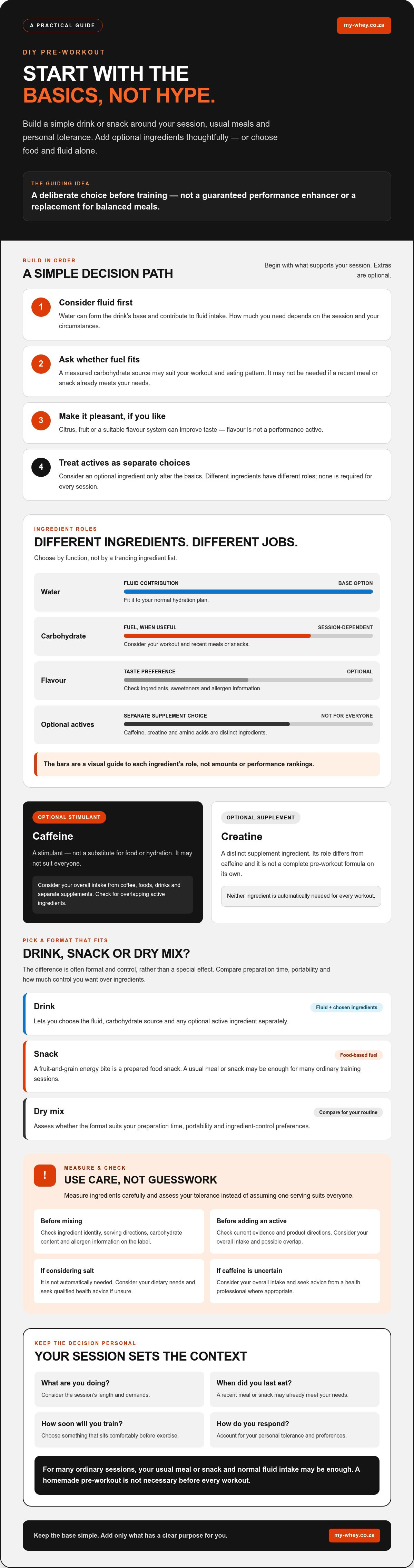
A DIY pre-workout is a planned drink or snack chosen to suit a particular training session. It may provide fluid, carbohydrate for fuel, flavour, or an optional supplement ingredient such as caffeine. It is not a guaranteed performance enhancer, a replacement for balanced meals or a complete diet. The point is to make a deliberate choice about what, if anything, you need before exercise.
The right choice depends on the session’s length and demands, when you last ate, how soon you’ll train and how you respond to particular ingredients. Pre-workout supplements commonly combine ingredients such as caffeine, creatine and beta-alanine. Their presence in a formula does not mean every person needs them for every workout.
Is a homemade pre-workout necessary before every workout?
No. For many ordinary training sessions, a usual meal or snack and your normal fluid intake may be enough. A homemade option can be convenient if there has been a long gap since you ate, or if you want something easy to prepare and take with you. Choose based on how you feel and what sits comfortably before exercise, rather than adding ingredients out of habit.
Food-based fuel and fluids are separate considerations from optional supplement actives. A snack can provide carbohydrate, while a drink can make fluid easier to take in. Caffeine is a stimulant, not a substitute for food or hydration, and may not suit everyone. If you are unsure about using it, consider your overall intake and seek advice from a health professional where appropriate.
What makes a DIY pre-workout recipe different from a snack?
The difference is often the format and level of control, rather than a special effect. A drink or measured mix lets you choose the fluid, carbohydrate source and any optional active ingredient separately. A fruit-and-grain energy bite, by contrast, is a prepared food snack made from combined ingredients. Either could be a pre-exercise choice, but neither is automatically a supplement formula.
Recipes can differ substantially in fluid, carbohydrate and stimulant content. A fruit-based snack, for example, will not have the same profile as a drink containing caffeine. Read labels and count active ingredients across your full routine, including coffee, foods, drinks and separate supplements. This helps you spot possible overlap, especially when more than one item contains a stimulant or another active ingredient.
Think of a DIY pre-workout supplement recipe as one adjustable part of your preparation. Start with the basics that fit your session, then assess whether anything extra is useful for you.
Choose DIY pre-workout ingredients by function, not hype
Build your recipe around a purpose, not a list of trending ingredients. Start with a liquid base, decide whether a carbohydrate source fits your session, then add flavour if you want it. Treat any active ingredient as a separate choice that needs its own evidence and careful label check. Ingredients do not have interchangeable effects: fluid contributes to hydration, carbohydrate provides fuel, and stimulants or other supplements have different roles.
| Category | Purpose | Practical limitation | What to verify |
|---|---|---|---|
| Fluid | Water can form the drink’s base and contribute to fluid intake. | How much you need varies with the session and your circumstances. | Whether the drink fits your normal hydration plan. |
| Carbohydrate | A measured source can provide fuel when it suits your workout and eating pattern. | It may be unnecessary if a recent meal or snack already meets your needs. | Serving directions and carbohydrate content on the label. |
| Flavour | Citrus, fruit or a suitable flavour system can make a drink more appealing. | Flavour improves taste, not the drink’s performance effect. | Ingredients, sweeteners and allergen information. |
| Optional active | Caffeine, creatine and amino acids are distinct supplement ingredients. | They are not required for every session and may not suit everyone. | Current evidence, ingredient identity and product directions. |
| Salt | Can add sodium to a recipe where there is a specific reason to include it. | Added salt is not automatically needed for every person or workout. | Your dietary needs and advice from a qualified health professional if unsure. |
Which ingredients can form a simple pre-workout base?
Keep the base straightforward: use water as the liquid, with a measured carbohydrate source only if it fits your needs. Add citrus, fruit or a suitable flavour system for taste, not as a claimed performance active. Salt is not a default ingredient. Whether extra sodium is appropriate depends on the person, diet and exercise context, so do not add it simply because a recipe includes it.
Should you add caffeine, creatine or amino acids?
Caffeine is a stimulant. Creatine and amino acids are different ingredient categories, not interchangeable alternatives. Do not assume that combining them makes a recipe more effective. Check current evidence and the directions on each product label, and consider your intake from other foods, drinks and supplements before using caffeine. For more context on amino acids, read this branched-chain amino acids guide.
If you are comparing ingredient options, browse nutritional ingredient categories and check each product’s identity, label and serving guidance. An individual ingredient is not a complete pre-workout formula.
How to make a DIY pre-workout supplement step by step
A reliable method is more useful than an improvised scoop of several powders. Keep the first version simple and prepare one serving. Leave optional active ingredients out until you have checked their individual directions and considered what else you consume.
- Choose a format. Decide whether a drink, snack or dry mix suits your session and preparation routine.
- Measure each ingredient separately. Use a suitable kitchen scale or the product’s stated serving guidance. Do not estimate concentrated powders by eye.
- Mix the base. Combine your chosen liquid with any measured carbohydrate ingredient, following its label directions.
- Add flavour. Try citrus, fruit or a suitable flavour system. Adjust the taste without adding extra stimulants or other actives.
- Taste and assess tolerance. Note how the format feels before exercise. Change one element at a time so you can identify what works for you.
How do you mix a simple pre-workout drink?
There is no verified universal quantity for a homemade drink. Fluid and carbohydrate amounts depend on the person, session and ingredients selected. Follow product labels for serving guidance. If a recipe includes specific quantities or nutritional claims, have them reviewed by a suitably qualified expert before relying on them. Avoid treating an arbitrary scoop or household measure as a safe standard.
For a basic preparation, add your chosen liquid to a clean bottle or shaker. Measure in the selected carbohydrate source if appropriate, then shake or stir until evenly mixed. Add flavour gradually and taste. Keep caffeine, creatine and amino acids separate until you have checked each ingredient’s identity, directions and suitability. Do not copy another brand’s scoop count.
Can you prepare DIY pre-workout in advance?
A freshly mixed drink is different from a batch-prepared snack or dry mix. For a drink, prepare what you plan to use and follow any storage instructions on ingredient labels. Store dry ingredients as directed, too. Do not assume a homemade mixture has a particular shelf life, and discard it if you are unsure how it was stored or whether it is still fresh.
Preparation summary: Make one freshly prepared serving. Select and measure ingredients according to their labels, mix with your chosen liquid, then taste and assess your tolerance. Exact quantities and yield depend on the ingredients selected, so do not treat a general template as a fixed serving recommendation.
Adapt the DIY pre-workout to your workout and preferences
Choose a format that fits your routine, then adjust taste and convenience without adding active ingredients by guesswork. A longer gap since your last meal, limited preparation time or difficulty carrying a drink may all affect what feels practical. Timing is not universal: it depends on the format, the individual and the workout. Use your own tolerance as a guide rather than relying on a fixed promise.
| Format | Preparation | Portability | Taste | Ingredient control |
|---|---|---|---|---|
| Drink | Mix shortly before use; powders may need shaking or stirring. | Easy to carry in a suitable bottle, but you’ll need access to fluid. | Adjust with fruit, citrus or flavouring. | Lets you choose the liquid and measured additions. |
| Snack | May be ready to eat or prepared ahead, depending on the food. | Often convenient to pack and eat on the move. | Familiar food flavours and textures. | Check the full ingredient list and portion size. |
| Dry mix | Measure and combine with liquid when needed. | Compact to carry, though you’ll need a bottle and water. | Depends on the ingredients and how well they mix. | Offers flexibility, but accurate measuring is your responsibility. |
What changes for early, long or high-intensity training?
Early sessions may leave less time to eat or prepare, and appetite varies from person to person. For a longer session, consider whether you will have access to fluids and food during or after exercise. A high-intensity workout does not automatically call for a stimulant or a more complex mix. Adjust the format to your circumstances, and seek qualified individual guidance if you have specific health needs, take medication or are unsure whether an ingredient is suitable.
How should you choose between DIY, food and a ready-made supplement?
A DIY mix gives you control over selected ingredients, but also means more measuring and label-checking. A ready-made supplement may be convenient, yet you still need to review its full ingredient list and serving directions. A familiar snack can be the simplest choice if you want food-based fuel without supplemental actives. For protein as part of your wider eating or recovery routine, see this whey protein guide.
Use your DIY pre-workout supplement recipe as a flexible plan, not a fixed formula. If you want to compare ingredient categories before choosing what to measure, explore nutritional ingredients and flavour options.
Source DIY pre-workout ingredients carefully and use them responsibly
Making your own blend gives you the flexibility to select ingredients and leave out those you do not want. It also makes measuring and checking your responsibility. A DIY pre-workout supplement recipe is only as clear as the ingredient information behind it. Do not treat a bulk powder as a finished formula or assume one ingredient covers every pre-workout need.
What should you check before buying bulk supplement ingredients?
Read the current label before purchase and again before use. Check the ingredient’s identity, any stated purity information, serving directions, allergen details and storage instructions. If you are considering bulk ingredient sourcing, this bulk supplement guide offers further context on quality checks.
- Confirm the ingredient: Make sure the label names the ingredient you intend to use.
- Check directions and allergens: Do not transfer serving instructions from another product, and review allergen information even if the ingredient seems familiar.
- Clarify testing claims: Ask what any lab-testing statement covers. Do not assume the same testing applies to every product or ingredient.
- Follow storage guidance: Keep ingredients as directed on their labels, and do not use them if their condition or identity is uncertain.
My Whey’s catalogue includes ingredient categories such as creatine monohydrate, amino acids, carbohydrates, fibre, sweeteners and flavour systems. These are options to investigate individually, not a ready-made pre-workout product. Review the label and serving guidance for each before deciding whether it belongs in your routine.
When should you avoid or reconsider a DIY pre-workout?
If you are sensitive to stimulants, take medication, are pregnant or have a relevant health condition, seek advice from a qualified health professional before using supplement actives. Depending on your circumstances, a simpler food or drink may be a more suitable choice.
Do not combine products if you cannot identify their active ingredients or understand their directions. This matters especially if several items may contain the same active ingredient. If the label is unclear, pause rather than estimating a serving or stacking products.
Choose ingredients with care, and keep the recipe as simple as your needs allow. For informed ingredient sourcing, explore My Whey’s supplement ingredients and check the current product information before purchasing.
Build a pre-workout routine that fits you
A useful DIY pre-workout supplement recipe starts with a clear purpose: consider fluid and food-based fuel first, then decide whether an optional supplement ingredient is relevant to your session. A drink, snack or dry mix can each be practical, but timing and tolerance differ from person to person. There is no need to add ingredients simply because they appear in other recipes.
Keep your choices measured and straightforward. Check ingredient identity, serving directions, allergens and current product labels, especially when combining ingredients or buying in bulk. If you have a health condition, take medication, are pregnant or are sensitive to stimulants, ask a qualified health professional before using supplement actives.
My Whey offers bulk nutritional supplements and raw ingredient categories, including carbohydrates, sweeteners, flavour systems, creatine monohydrate and amino acids. Explore them as individual options, not as a complete pre-workout formula, and check the product information before deciding what suits your needs. Explore My Whey’s supplement ingredients to make your next choice with care. Start simple, pay attention to how you respond, and build a routine that feels right for you.
Frequently Asked Questions
Is a DIY pre-workout supplement recipe effective?
It can be a practical way to plan fluid, food-based fuel and optional ingredients, but it cannot guarantee better performance. What is useful depends on the workout, when you last ate and your personal tolerance. A DIY pre-workout supplement recipe is not a complete diet or a replacement for balanced meals. Start with a simple option, check how it suits you, and do not add supplement ingredients just because they appear in other recipes.
How much caffeine should I put in a homemade pre-workout?
There is no one caffeine amount that is right for everyone, so do not guess or copy another recipe’s measure. Your response, health, medication use and caffeine from other sources, such as coffee or energy drinks, all matter. Check the current product label and speak to a qualified health professional if you are unsure whether caffeine is suitable. If you cannot measure an ingredient accurately or confirm its serving guidance, leave it out.
Can I make a pre-workout without caffeine?
Yes. A caffeine-free option can be as simple as water, or a drink or snack with a measured carbohydrate source if that suits your session and eating pattern. Caffeine is optional, not a requirement for a pre-workout routine. You can add fruit, citrus or a suitable flavouring for taste without introducing a stimulant. Keep the recipe straightforward and choose a format that feels comfortable before you exercise.
What happens if I mix creatine into my DIY pre-workout?
Adding creatine gives the drink a source of creatine, but it does not turn the mixture into a complete pre-workout formula or make its ingredients interchangeable. Follow the creatine product’s serving directions and consider your overall use rather than adding an estimated scoop. If you are uncertain about suitability, dosage or other supplements you take, ask a qualified health professional. Check the label, and do not assume the drink needs to be taken immediately before training.
Can I prepare a homemade pre-workout the night before?
A dry mix can be measured in advance and kept according to the ingredient labels, then combined with liquid when needed. For a mixed drink or food containing perishable ingredients, do not assume it will remain safe overnight or rely on an unverified shelf life. Follow storage instructions for each ingredient and use appropriate food-safety guidance. If you are unsure how it was stored or whether it is fresh, discard it.
Should I use a DIY pre-workout drink or eat a snack?
Choose the format that fits your appetite, timing and access to fluids. A drink can be convenient if you prefer sipping something, while a familiar snack may suit you if you would rather eat and do not want supplemental actives. Consider what you have already eaten and how each option feels before exercise. Neither format is automatically better, and a snack can be enough for an ordinary session.
Is it safe to combine several pre-workout ingredients?
It is not possible to judge a combination safely if you do not know each ingredient’s identity, serving directions or total amount. Check every label and count overlapping actives across supplements, foods and drinks, particularly stimulants such as caffeine. Avoid stacking products when the information is unclear. If you take medication, are pregnant, have a health condition or are sensitive to stimulants, seek advice from a qualified health professional before using supplement ingredients.