

Do I Need to Cycle Creatine? Science-Backed Truth for 2026
The traditional 'six weeks on, two weeks off' creatine cycle isn't just an outdated gym myth; it's a strategy that actively hinders your progress. If you've been asking yourself, 'do I need to cycle creatine' to protect your health or maintain its effectiveness, you're likely following advice rooted in 1990s bodybuilding culture rather than modern physiology. It's natural to feel cautious about long-term supplementation, especially with persistent rumours about kidney strain or your body's natural production shutting down. You want results, but you don't want to compromise your well-being or waste money on ineffective protocols.
In this guide, you'll discover why modern sports science has moved past the need for breaks, proving that consistent, daily intake is the only way to maintain peak performance. A 2026 meta-analysis of 143 randomised controlled trials confirms that continuous supplementation is the gold standard for fat-free mass gains. We'll dismantle the old-school myths and provide a clear, science-backed protocol that organises your routine for maximum efficiency. You will learn how a steady 3-5 gram daily dose ensures your muscles remain saturated, allowing you to focus on what really matters: your strength, recovery, and long-term health.
Key Takeaways
- Understand why the concept of cycling is a legacy myth and how continuous supplementation maintains the phosphocreatine stores necessary for ATP regeneration.
- Get a definitive answer to the question "do I need to cycle creatine" based on the latest 2026 clinical data regarding safety and long-term efficacy.
- Compare the benefits of a rapid loading phase versus a steady maintenance dose to find the protocol that best suits your training timeline.
- Discover how to minimise gastrointestinal discomfort and bloating whilst leveraging the muscle-fullness benefits of intracellular hydration.
- Maximise your investment by using pure, bulk Creatine Monohydrate to support a consistent daily routine without the unnecessary costs of flashy packaging.
What is Creatine Cycling and Where Did the Idea Originate?
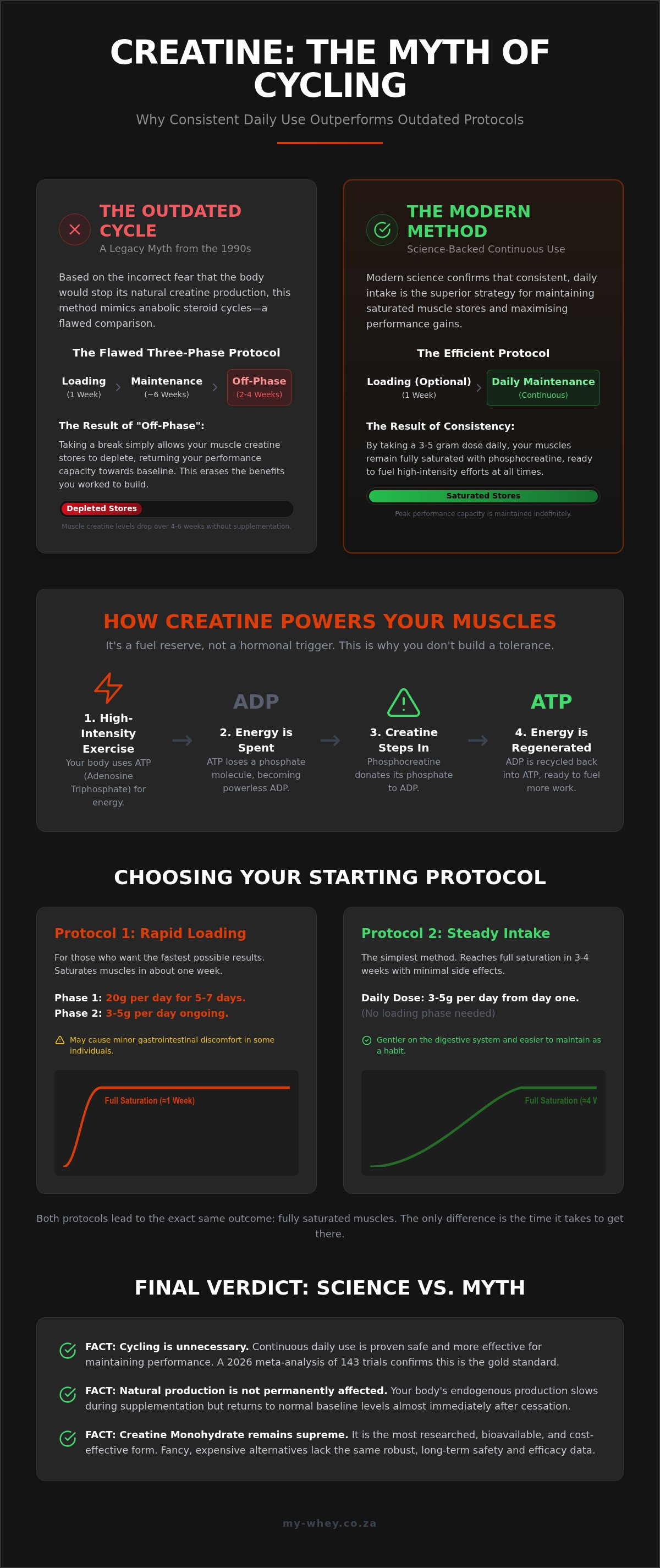
Creatine cycling is a legacy protocol that divides supplement use into distinct blocks of time. Historically, athletes followed this method to mimic the "on-off" patterns of anabolic steroids, fearing that continuous use might blunt the body's natural ability to produce its own creatine. For a comprehensive overview of creatine and its role in the body, it helps to understand that it is a nitrogenous organic acid, not a synthetic hormone. This distinction is vital. While hormonal systems often operate on feedback loops that require breaks to stay sensitive, creatine works through simple muscle saturation.
When people ask, "do I need to cycle creatine," they are often reacting to outdated advice from the early 1990s. During this era, the "natural production" myth took hold. The fear was that if you provided the body with external creatine, the liver and kidneys would permanently stop endogenous synthesis. Science has since proven this wrong. Your body's production does slow down whilst you supplement, but it returns to baseline levels almost immediately once you stop. There is no biological "shutdown" or permanent desensitisation involved in the process.
The Three Phases of a Traditional Cycle
A standard cycle traditionally follows a rigid structure. It begins with the Loading Phase, where you take roughly 20 grams daily for five to seven days to saturate the muscles quickly. This is followed by the Maintenance Phase, consisting of 3-5 grams per day to keep those stores topped up. Finally, the Off-Phase involves a total cessation of use for two to four weeks. The goal of this break was to "reset" the system, yet research shows this serves no practical purpose for performance or safety.
Why Modern Science Disagrees with the Off-Phase
The off-phase is arguably the weakest part of the old-school protocol. Muscles take roughly four to six weeks to fully deplete their creatine stores after you stop. By taking a break, you are simply allowing your performance capacity to drift back toward baseline. There is no clinical evidence suggesting that your creatine receptors become less sensitive over time. Consistency is the primary driver of ATP regeneration. Taking a break doesn't "re-prime" your muscles; it just leaves them under-fuelled during your most intense training sessions.
If you still wonder, "do I need to cycle creatine" for safety reasons, rest assured that long-term studies show no negative impact on healthy individuals. Opting for a lab-tested, bulk Creatine Monohydrate allows you to maintain this daily habit without the unnecessary expense of fancy retail branding. Consistency delivers the results, not the breaks.
The Biological Reality: Why Your Body Doesn’t Need a Break
Your body treats creatine like a fuel reserve rather than a chemical trigger. To understand why the question "do I need to cycle creatine" has a firm "no" for an answer, you have to look at cellular energy. Inside your muscles, creatine is stored as phosphocreatine. During high-intensity exercise, your body uses Adenosine Triphosphate (ATP) for energy. As ATP is spent, it loses a phosphate molecule and becomes ADP. Phosphocreatine steps in immediately, donating its phosphate to turn ADP back into ATP, allowing you to train harder for longer. It is a mechanical process of energy recycling, not a hormonal shift.
Once your muscle stores reach a saturation point, they cannot hold any more. If you continue taking a daily maintenance dose, you simply replace what is used during your workout. If you take significantly more than needed, your body excretes the excess through urine. There is no "tolerance" build-up because creatine doesn't rely on receptors that can become desensitised. Taking a break only serves to empty your energy reserves, forcing you to spend weeks refilling them later. This makes pure, lab-tested Creatine Monohydrate the most efficient choice for daily, uninterrupted use.
Creatine Monohydrate: The Gold Standard for Stability
While various "advanced" versions of creatine appear on the market claiming better absorption or no need for cycling, they rarely outperform the original. Creatine Monohydrate is the most bioavailable and stable form of the supplement. It has been the subject of over 30 years of clinical research, proving its efficacy time and again. Other forms often lack the long-term safety data required to support daily, multi-year use. Sticking to monohydrate ensures you are using the most researched and reliable tool available for muscle recovery and strength gains.
Organ Health and Daily Supplementation
The persistent myth that daily creatine causes kidney or liver strain has been thoroughly debunked by long-term studies in healthy individuals. Your kidneys filter creatine and its waste product, creatinine, as part of their normal function. Whilst a blood test might show slightly elevated creatinine levels, this is a harmless side effect of supplementation, not a sign of organ damage. To ensure optimal results and health, simply maintain proper hydration levels throughout the day. Pairing your creatine with a high-purity protein source, as detailed in The Definitive Guide to Whey Protein, creates a robust foundation for consistent muscle growth without the need for unnecessary breaks.
Loading vs. Maintenance: Choosing Your Protocol
Once you understand that the answer to "do I need to cycle creatine" is a definitive no, you must choose how to begin your long-term journey. The choice depends entirely on your timeline. If you require peak muscle saturation within seven days, a loading phase is necessary. This involves taking 20 grams of creatine daily, split into four 5-gram doses, for five to seven days. After this initial week, you transition immediately to a maintenance dose of 3–5 grams every day. This rapid approach fills your phosphocreatine stores quickly, allowing you to see strength gains in a shorter window.
Alternatively, you can skip the loading phase entirely. Simply taking 5 grams daily will achieve full muscle saturation in roughly 28 days. The primary benefit of this "slow and steady" approach is digestive comfort. High doses can sometimes cause temporary bloating or stomach upset; a single daily scoop bypasses these issues. Consistency is your priority. Whether you load or not, the end result after one month is identical. Your goal is to keep those stores full without interruption to maintain the performance benefits you've worked to build.
How to Organise Your Daily Dose
Success with creatine comes down to habit. Timing is less critical than the act of taking it, though some research suggests a slight advantage to taking it post-workout when blood flow to the muscles is high. To ensure it dissolves perfectly, mix your pure monohydrate in room-temperature water or a lukewarm beverage; cold water often leaves granules at the bottom. Make it a non-negotiable part of your routine. Attach the habit to an existing one, such as your morning coffee or your post-gym shake, to ensure you never miss a day.
The Role of Nutrition and Co-factors
You can optimise your results by pairing creatine with specific nutrients. Consuming carbohydrates alongside your dose triggers an insulin response, which helps drive creatine into the muscle cells more effectively. Many athletes also stack their daily dose with branched chain amino acids to support overall recovery and protein synthesis. Using a pure, unflavoured bulk powder makes this stacking process seamless. It allows you to add the supplement to any drink without clashing flavours, providing a clean and cost-effective way to support your long-term training goals.
Addressing Common Objections to Long-Term Use
Even when the data is clear, visceral fears often linger. Many athletes continue to ask, "do I need to cycle creatine" because they worry about side effects like hair loss, bloating, or permanent damage to their natural biology. These concerns are usually based on misunderstood mechanisms. For instance, the water retention associated with creatine is intracellular. This means water is drawn into the muscle cell itself, not held under the skin. This process is actually a primary driver of muscle protein synthesis and gives your physique a fuller, more hydrated appearance. It is a functional benefit, not a cosmetic flaw.
The fear of hair loss stems from a single 2009 study that observed increased DHT levels in rugby players. In the years since, no large-scale peer-reviewed research has replicated these findings. The current scientific consensus in 2026 remains that creatine does not cause hair loss or male pattern baldness. Similarly, your body's natural production is never "shut down" permanently. If you choose to stop supplementing, your liver and kidneys resume their normal production levels within weeks. You aren't breaking your metabolism; you're simply choosing to keep your fuel tanks topped up.
Managing Digestive Comfort
If you have experienced bloating in the past, it was likely a result of your protocol rather than the supplement itself. Taking 20 grams in a single serving is a common mistake that overwhelms the digestive tract. To avoid this, split your loading doses into four smaller servings throughout the day or skip the loading phase entirely. Using a high-purity, micronised powder also helps, as the smaller particles dissolve more easily and are gentler on the stomach. For those prioritising purity and results, choosing a lab-tested Creatine Monohydrate ensures you avoid the contaminants often found in lower-quality retail brands.
Who Should Actually Consider a Break?
Daily use is safe for the vast majority of people, but medical exceptions do exist. If you have a pre-existing kidney condition, always consult a healthcare professional before starting a long-term programme. Beyond medical needs, the only other reason to take a break is purely logistical. If you are travelling for a week and don't want to carry powders, your progress won't vanish. It takes roughly a month for muscle stores to fully deplete. Finally, ignore the "plateau" myth. You don't need to "reset" your system to feel the effects again. Creatine is a foundational tool that works silently in the background of every rep you perform.
The Bulk Advantage: Efficiency Through Consistency
Once you've resolved the question "do I need to cycle creatine," the conversation shifts from biology to logistics. A non-cycling protocol requires a permanent spot in your daily routine. Buying in bulk is the most logical way to support this habit. High-street retailers often charge a premium for flashy tubs and "advanced transport systems" that claim to enhance absorption with added sugars or electrolytes. In reality, these are often just expensive fillers. Pure Creatine Monohydrate remains the most effective form, and sourcing it in large quantities eliminates the recurring "marketing tax" found in smaller, branded containers.
My Whey specialises in providing high-purity, lab-tested Creatine Monohydrate designed specifically for the needs of South African athletes. By focusing on bulk supply and stripping away unnecessary packaging costs, we ensure that your maintenance phase is both affordable and effective. You receive the same pharmaceutical-grade quality used in clinical trials without the retail markup. This transparency allows you to invest in your results rather than a brand's advertising budget. It's about providing the exact tool you need for the job, without the fluff.
Building Your Permanent Supplement Stack
Consistency becomes easier when you integrate your dose into a broader wellness routine. Many athletes pair their daily creatine with omega 3 softgels to support joint health and cognitive function alongside muscle recovery. Using unflavoured bulk powders gives you the flexibility to use custom flavouring systems or simply mix it into your morning protein shake. To keep your supply fresh for months of daily use, store your creatine in a cool, dry place and ensure the bag is sealed tight after every serving. Moisture is the only real enemy of a bulk supply.
Results You Can Measure
What happens when you commit to a non-cycled approach? After roughly three months of uninterrupted use, the cumulative effects become undeniable. You'll notice a sustained increase in strength across your primary lifts and a visible improvement in muscle fullness due to consistent intracellular hydration. Unlike the erratic "peaks and valleys" of a cycling protocol, a daily habit provides a steady baseline of performance. You won't have to deal with the "wash-out" periods where strength levels dip. The final verdict is simple. Ditch the cycle, embrace the daily habit, and let the cumulative power of phosphocreatine drive your long-term progress.
Move Beyond the Cycle for Lasting Gains
The science of 2026 has firmly closed the book on creatine cycling. By prioritising muscle saturation through consistent daily dosing, you maintain the phosphocreatine levels necessary for explosive strength and faster recovery. The evidence is clear: when you ask "do I need to cycle creatine", the answer is a resounding no. Taking unnecessary breaks only forces your body to start the saturation process from scratch, delaying your progress and stalling your momentum. Consistency is the primary driver of success.
Embracing a permanent maintenance phase is the most efficient way to achieve your physique goals without the confusion of outdated protocols. To support this long-term habit, you need a supplement that matches your high standards for quality and value. Optimise your performance with pure, bulk Creatine Monohydrate today. Our products are lab-tested for maximum purity and offered at affordable bulk pricing across South Africa, containing no unnecessary fillers or artificial additives. You've done the research and cleared the confusion. Now, it's time to settle into a reliable routine and watch your consistency transform your results.
Frequently Asked Questions
Does creatine cause kidney damage if taken every day?
No, clinical research consistently shows that daily creatine use does not damage healthy kidneys. Long-term studies have monitored athletes for several years without finding adverse effects on renal function. Whilst your blood tests might show slightly elevated creatinine levels, this is a harmless byproduct of the supplement's metabolism rather than a sign of injury. Simply maintain adequate hydration to support your body’s natural filtration processes.
What happens if I forget to take my creatine for a few days?
Missing a few days won't ruin your progress or empty your muscle stores. It takes approximately four to six weeks for your phosphocreatine levels to return to their baseline. If you skip a dose, just resume your normal 3-5 gram daily schedule the following day. There is no need to double the dose or restart a loading phase to compensate for a brief lapse in your routine.
Is it better to load creatine or just start with a maintenance dose?
The best approach depends on how quickly you want to see results. Loading with 20 grams daily for one week saturates your muscles in seven days, whereas a steady 5-gram dose takes about 28 days to reach the same level. If you are debating "do I need to cycle creatine" or how to start, choose the maintenance dose if you want to avoid potential stomach upset or bloating.
Will I lose my muscle gains if I stop taking creatine?
You won't lose actual muscle tissue, but you will notice a decrease in muscle volume and strength. Creatine draws water into the muscle cells, creating a fuller appearance. When you stop, this intracellular water is lost, and your ability to rapidly regenerate ATP during heavy lifts may dip. However, the lean muscle mass you built through hard training remains as long as your nutrition and stimulus stay consistent.
Can I take creatine whilst trying to lose body fat?
Yes, creatine is an excellent tool during a fat-loss phase. It helps preserve lean muscle mass whilst you are in a calorie deficit, ensuring that the weight you lose comes primarily from fat. Any minor weight gain seen on the scale is simply water being held inside the muscle cells, which actually supports your metabolic rate and helps you maintain high training intensity during a cut.
Do I need to take creatine on rest days?
Yes, you must take creatine on rest days to keep your muscle stores fully saturated. Creatine doesn't work like a stimulant that you feel immediately; it functions by maintaining a permanent reserve of energy within your cells. Skipping rest days allows your stores to slowly decline. Taking your 3-5 gram dose every single day ensures your body is always ready for your next high-intensity session.
Does creatine affect my body’s natural ability to produce it?
Supplementation causes a temporary reduction in your body's endogenous production, but this isn't a permanent shutdown. As we've explored, the question "do I need to cycle creatine" often stems from a fear of metabolic suppression. Your liver and kidneys resume their natural production levels within weeks of stopping the supplement. There is no evidence of long-term desensitisation or damage to the organs responsible for creatine synthesis.
Is there a specific age when you should start or stop taking creatine?
There is no specific age requirement, though most clinical data focuses on adults. Research increasingly shows that creatine is highly beneficial for older adults to help combat age-related muscle loss and support cognitive health. Regardless of your age, it's wise to consult a healthcare professional before starting a long-term programme, especially if you have underlying health conditions or are taking specific medications.