

Does Protein Powder Expire if Unopened? A 2026 Guide to Shelf Life
Could that forgotten tub of whey in the back of your cupboard actually be a waste of money, or is the date on the bottom just a suggestion? We've all been there; you find a sealed container of expensive supplement and wonder, does protein powder expire if unopened? It's frustrating to think about throwing away high-purity nutrition, especially whilst wholesale whey prices have seen a significant 50% increase since the start of 2026. You want to reach your fitness goals without the fear of food poisoning or the concern that your shake has lost its muscle-building effectiveness.
The reality is that protein doesn't suddenly become toxic the moment it hits its "best before" date. Instead, it undergoes a slow process of nutritional degradation that you can manage with professional storage. This guide explains the scientific reality of shelf life and provides clear criteria to help you decide if your stash is still safe. You'll learn how to spot genuine signs of spoilage, understand how amino acid profiles change over time, and discover practical tips to extend the life of your bulk supplements.
Key Takeaways
- Distinguish between "Best Before" quality markers and hard safety deadlines to avoid prematurely discarding safe, low-moisture powders.
- Gain clarity on the common question, does protein powder expire if unopened, by understanding how the Maillard reaction reduces biological value over time.
- Identify the environmental triggers, such as humidity and heat, that can compromise a sealed bag's nutritional integrity and shelf life.
- Master a practical sensory evaluation technique to detect rancidity and spoilage before you blend your next protein shake.
- Discover the stability advantages of sourcing pure Whey Protein Concentrate 80% over complex, additive-heavy blends that may degrade faster.
Understanding the "Best Before" Date on Protein Powder
When you find a sealed bag of whey tucked away, your first thought is likely: does protein powder expire if unopened? The short answer is that whilst the powder doesn't suddenly become toxic, its quality starts to shift. Most manufacturers set a baseline shelf life of 12 to 24 months post-production. This isn't a random guess; it's based on stability data that ensures you get the full nutritional profile promised on the label. This stability is particularly evident in pure ingredients. When you opt for a product like Whey Protein Concentrate 80% that lacks complex fillers or unstable additives, the chemical profile remains consistent for much longer. Lab-tested purity means there are fewer "wild card" ingredients that might react with the protein or fats, keeping the product closer to its original state.
Protein powder is classified as a low-moisture food. Because bacteria and mould require water to thrive, the dry environment inside a sealed bag makes it remarkably resistant to microbial growth. Animal-based proteins, such as Whey Protein Concentrate 80%, tend to have very predictable shelf-life patterns. Plant-based alternatives like pea or soy are also durable, though their natural oils can sometimes lead to a slight change in aroma after the two-year mark. Understanding The Science of Protein Degradation helps clarify that the biggest risk isn't food poisoning, but rather a gradual loss of amino acid potency.
Best Before vs. Use By: The Legal Distinction
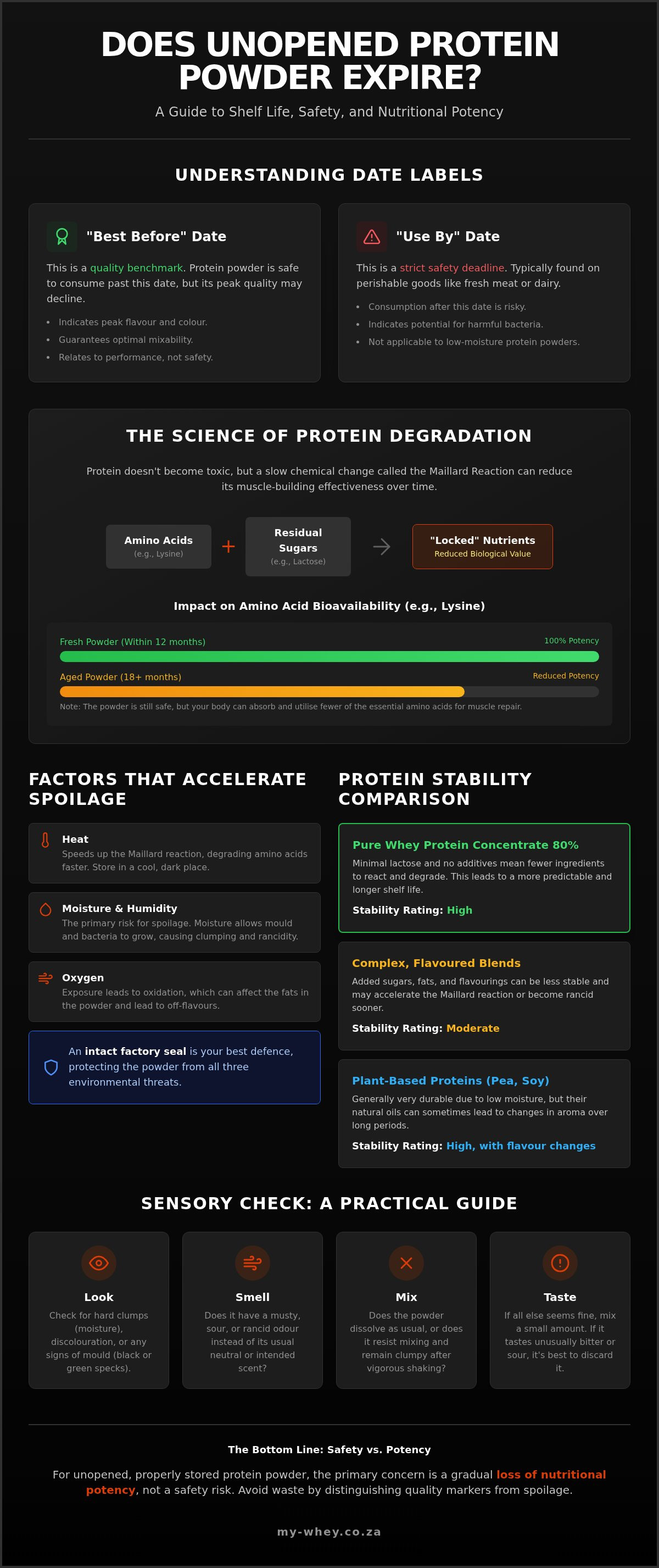
Unlike "Use By" dates, which indicate a strict safety deadline for perishable goods like fresh poultry, "Best Before" dates are quality benchmarks. For a shelf-stable product like protein, this date represents the manufacturer’s guarantee of peak flavour and effortless mixability. High-purity supplements are lab-tested to verify that the ingredients remain stable within this window. If you're past the date, the powder might just take a bit more shaking to dissolve, or the chocolate flavour might seem slightly muted. It's a question of performance rather than danger.
Why Unopened Bags Last Significantly Longer
The factory seal acts as a critical barrier against environmental damage. Oxidation is the enemy of freshness, and an unopened bag prevents oxygen from reacting with the delicate proteins and fats. Many high-end production facilities use nitrogen flushing to displace oxygen before sealing, creating an inert atmosphere that preserves the powder's integrity. Bulk bags with heavy-duty seals often maintain this protective environment better than plastic tubs with loose-fitting lids, which can allow microscopic amounts of air to seep in over long periods. As long as that seal is intact, the contents are shielded from the elements that accelerate spoilage.
The Science of Protein Degradation: What Actually Happens?
Whilst we established that safety is rarely the issue with sealed containers, the biological effectiveness is a different story. If you're asking does protein powder expire if unopened, you're likely more concerned with whether those scoops will still help you recover from a heavy leg session. Over time, a chemical process known as the Maillard reaction begins to take place. This isn't just something that happens when you're searing a steak; it's a slow-motion bonding between the amino acids in your protein and any residual sugars or lactose in the powder.
This reaction is problematic because it reduces the protein's "biological value." Essentially, the amino acids become chemically locked and are no longer available for your body to absorb. Research into Factors That Influence Shelf Life shows that even in unopened bags, the concentration of essential amino acids like Lysine can drop significantly over 12 to 18 months. Since Lysine is a primary driver of muscle protein synthesis, an older bag might technically contain 25g of protein on the label, but your body can only utilise a fraction of it. The powder remains safe to consume, but its ability to build muscle is fundamentally compromised.
The Maillard Reaction and Bioavailability
The Maillard reaction is a non-enzymatic browning that occurs between amino acids and reducing sugars. This process transforms the smooth, easy-to-digest powder into something more structurally complex and resistant to your digestive enzymes. Choosing high-purity Whey Protein with minimal lactose and zero added sugars can significantly slow this degradation. Pure concentrates are more chemically stable than their heavily flavoured counterparts, ensuring that the amino acid profile remains intact for longer. By reducing the number of reactive "partners" in the bag, you preserve the bioavailability of the protein itself.
The Role of Additives in Speeding Up Spoilage
Complex blends often introduce ingredients that compromise long-term stability. Mass gainers, for instance, frequently contain added fats and vitamins that are highly sensitive to oxidation. Whilst the protein itself is durable, these added lipids can go rancid, creating off-flavours and potentially harmful free radicals. Flavour systems and artificial sweeteners also introduce additional chemical variables that can accelerate the breakdown of the base protein. If you want a supplement that stays effective in the back of the pantry, sticking to raw, pure ingredients is the most logical choice. You can find high-purity options by browsing the My Whey range of bulk supplements, which focuses on raw purity over complex additives. When considering does protein powder expire if unopened, remember that the simpler the ingredient list, the longer the protein maintains its muscle-building power.
Factors That Influence the Shelf Life of Unopened Bags
While the manufacturing date provides a baseline, the environment in your home ultimately dictates the pace of degradation. If you're wondering does protein powder expire if unopened, the answer is less about the date and more about the climate inside your pantry. High temperatures act as a primary catalyst for the chemical bonding discussed earlier, effectively accelerating the Maillard reaction. Ideally, you should aim for a consistent environment below 25°C. When temperatures climb during summer months, the biological value of the protein can drop much faster than the label suggests, even if the factory seal remains intact.
Humidity presents another silent risk to your supplements. Even in a sealed container, moisture can eventually migrate through low-quality plastic or compromised seals. This moisture ingress doesn't just cause frustrating clumping; it provides the necessary medium for chemical reactions to thrive. Research into how long protein powder lasts indicates that whey protein remains stable for up to 19 months under optimal conditions, but this window shrinks rapidly in damp environments. Light exposure is equally detrimental. UV rays can penetrate translucent plastic tubs, causing photodegradation of certain amino acids and vitamins. This is why professional-grade supplements often utilise opaque, multi-layer foil packaging to create a total barrier against light and oxygen.
Managing Storage in the South African Climate
In high-temperature regions, supplement storage requires a proactive approach. Avoid keeping your stash in a garage or a kitchen cupboard directly above the oven, as these areas experience the most extreme heat fluctuations. A pantry located at the centre of the house, away from external walls, provides the most stable thermal mass for long-term storage. Always store your bags on a shelf rather than directly on a concrete floor. Concrete can wick moisture upward, potentially compromising the base of the bag over several months and leading to premature spoilage.
Packaging Integrity and Bulk Storage
For those who purchase bulk supplements, inspecting the packaging upon arrival is vital. Look for micro-tears or failures in the heat-seal that might have occurred during transit. High-quality foil bags offer superior protection compared to standard plastic tubs because they are completely opaque and less gas-permeable. When stocking up, implement a first-in, first-out (FIFO) organisation system. By placing the newest bags at the back, you ensure that you always consume the oldest stock first, keeping your overall inventory as fresh as possible. This methodical approach is the best way to ensure that when you finally open a bag, the contents are as effective as the day they were packed.
How to Tell if Your Unopened Protein Has Gone Bad
Once you decide to break the factory seal on an older container, you need a systematic way to verify its quality. While we’ve established the science behind why does protein powder expire if unopened, the practical reality happens in your kitchen. Start by inspecting the exterior for any signs of bloating or dampness on the packaging. If the bag looks compromised or feels unusually heavy, moisture has likely found its way inside. A bloated bag often suggests that gas-producing bacteria have begun to break down the contents, which is a definitive sign to discard the product immediately.
Upon opening, your nose is your most reliable diagnostic tool. Fresh whey should have a neutral, slightly milky aroma. If you are met with a sharp, sour, or "damp basement" smell, the product has likely been colonised by bacteria or mould. In flavoured varieties, the scent of sweeteners can sometimes mask early degradation, so you must look closer at the powder's physical state. Look for any dark spots or "webbing" in the powder, as these are clear indicators of fungal growth that can occur even in low-moisture environments if the seal was not perfect.
Smell, Sight, and Taste: The Three-Step Check
A significant shift in colour, specifically a distinct yellowing of the powder, indicates advanced Maillard degradation. This chemical change often results in a "cardboard" or unpleasantly bitter taste that lingers on the palate. Any "sour" or "damp" smell is an immediate sign to discard the product. You should also check the texture. "Soft" clumps that crumble under a spoon are usually just the result of natural settling during storage. However, "hard" clumps that require force to break are a clear indicator of moisture ingress. These hard clusters often lead to poor solubility, leaving gritty, unmixed residue in your shaker bottle regardless of how hard you shake it.
When Is It Dangerous to Consume?
While the risk is low for sealed goods, mould growth is a real possibility if the seal was compromised in a humid environment. Consuming spoiled protein can lead to unpleasant gastric distress, including nausea, bloating, and acute stomach cramps. This is particularly true for blends containing added fats or digestive enzymes, which can become toxic as they oxidise. The "When in Doubt, Throw it Out" rule is the only safe approach for nutritional supplements. If the powder fails any part of your sensory check, the potential muscle gains aren't worth the risk of food poisoning. If your current stash doesn't pass the test, invest in a fresh, lab-tested batch of Whey Protein Concentrate 80% to ensure your recovery stays on track.
Sourcing Fresh: The Benefits of Bulk Purity
The journey of your supplement begins long before it reaches your kitchen. When you ask does protein powder expire if unopened, you must consider the time it spent in a supply chain before you even purchased it. Retail products often sit in non-climate-controlled lorries or on bright shop shelves for months. By choosing a high-turnover bulk supplier, you are effectively bypassing these quality-draining middle steps. Sourcing directly ensures that the clock on the "best before" date starts closer to the moment you receive the product, giving you the maximum possible window of freshness and efficacy.
Pure Whey Protein Concentrate 80% offers a distinct advantage in terms of stability. Because it lacks the unstable fillers, thickeners, and complex flavour systems found in mass-market tubs, there are fewer chemical components to interact and degrade. My Whey maintains strict quality control by focusing on raw ingredients and rigorous lab-testing. This transparent approach ensures that every batch meets high standards for purity, which is your best insurance against the premature spoilage that often plagues additive-heavy blends. When the starting material is this clean, the shelf life becomes far more predictable and reliable for the consumer.
Why Direct Sourcing Matters for Shelf Life
Direct sourcing significantly shortens the time between manufacture and consumption. This efficiency preserves what we call "freshness time," the period during which the amino acid profile is at its peak. Professional warehouse environments are climate-controlled to prevent the heat-induced degradation discussed in earlier sections. This level of care ensures that the integrity of the factory seal isn't compromised by extreme temperature swings before the product even reaches your door. Lab-tested purity confirms that the powder is free from excess moisture or contaminants that could act as catalysts for spoilage during long-term storage. When considering does protein powder expire if unopened, starting with a professionally handled product is half the battle.
Organising Your Supplement Stack for Freshness
To maintain this quality, you must manage your stash with purpose. For daily use, decant a portion of your bulk bag into a smaller, airtight container to limit the number of times the main supply is exposed to air and humidity. This is particularly important for sensitive compounds like branched chain amino acids, which can be prone to clumping if moisture enters the container. Using specialised airtight buckets or glass jars with rubber seals can make a massive difference in longevity. By purchasing raw ingredients and adding your own flavour systems as needed, you eliminate the reactive sugars that drive the Maillard reaction. Prioritising purity and implementing these professional storage habits will help you maximise your investment and ensure every shake delivers the results you expect.
Maximise Your Results with Professional Nutrition Management
Understanding the science behind your supplements is the first step toward better results. We've seen that the question of does protein powder expire if unopened is less about immediate danger and more about biological value. Whilst a sealed bag remains safe for months past its date, the gradual loss of essential amino acids means your recovery might not be as efficient as it could be. By prioritising a cool, dry storage environment and choosing pure, raw ingredients, you can significantly slow this degradation and protect your investment.
The most effective way to ensure potency is to source your nutrition from a partner that values transparency and turnover. My Whey provides lab-tested supplements with high-turnover stock, ensuring you receive the freshest possible ingredients every time. You don't have to settle for retail products that have spent months on a shelf. Instead, take control of your wellness journey with supplements designed for maximum stability and performance.
Shop Pure, Lab-Tested Bulk Whey Protein at My Whey and benefit from direct-to-consumer pricing with no retail markups. Your hard work in the gym deserves the highest quality support. Stay consistent, stay informed, and keep pushing toward your goals with total confidence.
Frequently Asked Questions
Can I use protein powder that is 1 year out of date?
You can technically use protein powder that is one year past its "best before" date if it has remained sealed and stored in a cool environment. However, you should expect a noticeable decline in mixability and flavour. While the powder isn't toxic, the muscle-building effectiveness is diminished because essential amino acids degrade over time. Always perform a sensory check for off-smells before consuming your first shake.
Is unopened expired protein powder safe to drink?
Unopened expired protein powder is usually safe to drink because its low moisture content prevents bacterial growth. If you are wondering does protein powder expire if unopened in a way that causes illness, the answer is rarely, provided the factory seal is intact. The date is a quality guarantee rather than a safety deadline. If the bag is bloated or smells like damp cardboard, you should discard it immediately.
Does vegan protein powder expire faster than whey?
Vegan protein powders don't necessarily expire faster than whey, but they face different degradation challenges. Plant-based sources like hemp or pumpkin seeds contain natural oils that can turn rancid over time, leading to a bitter taste. Whilst whey is very stable, vegan blends often have more complex fibre profiles that can attract moisture. Pure, single-ingredient plant proteins generally last longer than multi-ingredient vegan meal replacements.
What happens if I drink expired protein powder?
Drinking protein powder that has simply passed its date usually results in a chalky texture or a weaker flavour profile. If the powder has actually spoiled due to moisture or heat, you might experience nausea, bloating, or stomach cramps. These symptoms occur because your body is reacting to oxidised fats or microbial activity. If the taste is uncharacteristically bitter or sour, stop drinking it to avoid gastric distress.
How long does protein powder last once the seal is broken?
Once the seal is broken, you should aim to finish the container within three to six months for optimal quality. Every time you open the bag, you introduce oxygen and ambient humidity, which accelerates the breakdown of the protein. Keep the scoop dry and ensure the zip-lock or lid is tightly fastened after every use. Storing the opened container in a dark, dry pantry helps maintain its integrity for longer.
Does the type of packaging affect how long protein lasts?
Packaging plays a vital role in longevity, with multi-layer foil bags offering the best protection. These bags provide a superior barrier against oxygen and light compared to standard plastic tubs. Translucent containers are particularly poor for long-term storage because UV rays can degrade amino acids. If your supplement comes in a thin plastic tub, consider moving it to an opaque, airtight container to extend its useful life.
Can I store protein powder in the fridge to make it last longer?
Storing protein powder in the fridge is not recommended because of the high risk of moisture contamination. When you take the container out of the cold environment, condensation can form inside the bag, leading to clumping and mould growth. A cool, dark cupboard at a consistent room temperature is the professional standard for storage. Stability is best maintained by avoiding the temperature fluctuations found in kitchen appliances.
Why does my old protein powder not mix as well as it used to?
Poor solubility in older powder is often caused by the chemical bonding of proteins and sugars. As the product ages, these bonds make the powder more resistant to water, resulting in stubborn clumps in your shaker. This change in physical properties is a sign that the biological value has decreased. If your shake feels gritty or leaves unmixed residue, the protein's structural integrity has likely been compromised by long-term storage.