

Does Protein Powder Expire if Unopened? The Science of Supplement Shelf Life
That sealed tub of whey sitting in the back of your cupboard isn't a ticking time bomb just because the date on the label has passed. Many athletes frequently worry about whether their supplements remain safe, asking: does protein powder expire if unopened? You've likely felt that hesitation, wondering if your next shake will support your muscle growth or lead to a nasty bout of stomach upset. It's frustrating to consider binning a premium, lab-tested product when you aren't sure if it has actually gone off.
We understand that you value both your health and your hard-earned money. This guide reveals the science behind supplement stability, helping you distinguish between a minor loss of potency and a genuine safety risk. You'll learn clear criteria to judge your powder's quality and discover how to identify the subtle signs of chemical degradation. We also provide professional tips to extend the life of your future bulk purchases, ensuring every scoop delivers the results you expect without any unnecessary waste or worry.
Key Takeaways
- Learn why the 'best before' date on your supplement is a measure of peak quality rather than a strict safety deadline.
- Understand how the Maillard reaction impacts the bioavailability of amino acids over time, even in sealed containers.
- Determine once and for all does protein powder expire if unopened and learn why the factory seal is your most effective barrier against degradation.
- Master a simple three-step freshness test to identify changes in colour or texture that signal your powder has truly gone off.
- Optimise your storage environment using specific protocols to maintain the long-term integrity and potency of your bulk supplements.
Understanding the Date: 'Best Before' vs 'Expiry' for Supplements
"Does protein powder expire if unopened?" is a question that often leads to unnecessary waste. Understanding the difference between a "best before" date and a strict "expiry" date is the first step in managing your supplement stack efficiently. For most dry supplements, the date on the tub represents a quality promise rather than a safety warning.
Protein powder is classified as a shelf-stable dry good. Its low moisture content is its greatest asset. Bacteria and mould require water to grow; without it, they simply cannot colonise the powder. Understanding shelf life basics helps clarify why a sealed tub can remain safe for months past its label date. At My Whey, we prioritise lab-tested purity for our Whey Protein Concentrate 80% and amino acids. By focusing on premium raw ingredients and eliminating fillers, we ensure our products start with the highest possible stability.
What 'Best Before' Really Means
The "best before" date is a manufacturer's guarantee of peak quality. It focuses on sensory factors like flavour, mixability, and aroma. When you consume a product within this window, you're getting the exact experience the brand intended. Once that date passes, the powder doesn't suddenly become toxic. Instead, you might find it clumping slightly more or having a muted taste.
Whilst the original factory seal is intact, the powder is shielded from oxidation. This protection is vital for maintaining the integrity of the proteins. When considering does protein powder expire if unopened, it's helpful to separate safety from efficacy. A product can be safe to drink but might have lost a small percentage of its nutritional potency over several years. For most users, this minor decline is negligible.
Why Expiry Dates Are Rare on Protein
You'll notice that "use by" or "expiry" dates are rarely found on supplement packaging in South Africa. This is because regulatory standards reserve those terms for highly perishable foods. Dehydrated powders are fundamentally different from fresh produce. The manufacturing process removes the moisture that microbes need to thrive, creating a hostile environment for spoilage.
The factory seal provides a robust barrier against microbial growth and environmental contaminants. As long as the tub remains unopened, it's effectively a time capsule of the day it was packed. This is why protein powder is so resilient. It isn't prone to the rapid bacterial decay seen in wet foods. Instead, it undergoes a very slow chemical shift that affects quality long before it affects safety.
The Science of Spoilage: What Happens to Protein Over Time?
When asking does protein powder expire if unopened, it's vital to shift your focus from biological rot to chemical degradation. Unlike fresh milk or meat, dry protein powder doesn't typically host colonies of harmful bacteria. Instead, it undergoes a slow, invisible transformation that alters its molecular structure and nutritional value. This process begins the moment the powder is processed and continues even whilst it sits undisturbed in a sealed tub.
The Maillard Reaction Explained
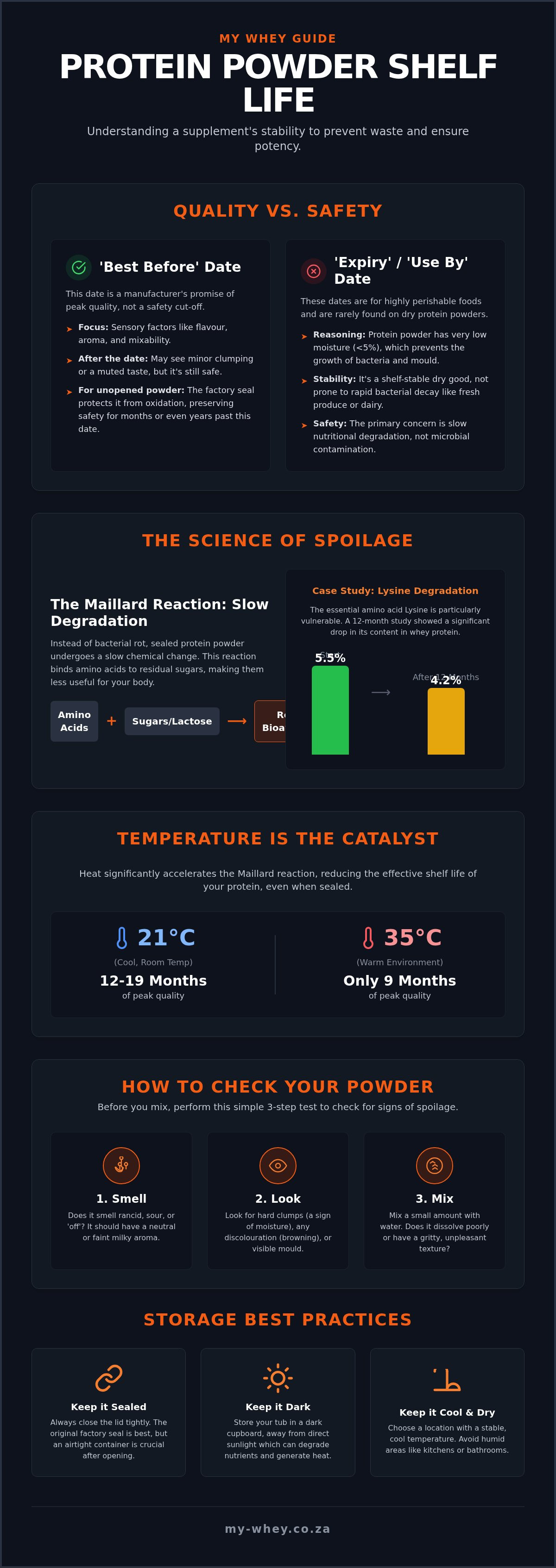
The primary driver of protein spoilage is the Maillard reaction. This is a chemical bond that forms between the amino acids in the protein and any residual sugars or lactose present in the powder. You might recognise this reaction as the process that browns toast or sears a steak, but in a supplement tub, it happens at a glacial pace. This reaction is the reason why very old powder might lose its "brightness" or develop a subtle brownish tint.
This isn't just a cosmetic issue. The Maillard reaction makes the protein less bioavailable, meaning your body struggles to use those amino acids for muscle repair. Research indicates that the essential amino acid Lysine is particularly vulnerable. In a 12-month study, Lysine content in whey protein was observed to drop from 5.5% to 4.2%. This decline represents a genuine loss in the anabolic potential of your shake, even if the powder remains safe to consume.
Temperature acts as the primary catalyst for these changes. While whey protein can maintain its integrity for 12 to 19 months at a steady 21°C, that window shrinks significantly in warmer environments. Storing your supplements at 35°C can reduce their effective shelf life to just 9 months. Choosing a high-purity option like our Whey Protein Concentrate 80% ensures you start with a stable base that lacks the excessive fillers and sugars that often accelerate these reactions.
Nutrient Degradation vs. Bacterial Growth
Bacteria require moisture to thrive, and most high-quality powders contain less than 5% moisture. This environment is too dry for microbial life to survive. This is why the USDA guidelines on product dating generally treat shelf-stable dry goods as a matter of quality rather than safety. You can learn more about how these factors influence your choice in The Definitive Guide to Whey Protein.
However, while the protein itself is resilient, other added nutrients fail much faster. If your blend contains added vitamins or healthy fats like Omega 3, these will likely oxidise and lose their potency long before the protein structure fails. Pure, lab-tested concentrates are typically more stable because they lack these sensitive secondary ingredients. This purity allows for a more predictable shelf life and more consistent results in your training journey.
Unopened vs. Opened: Shelf Life Comparisons
The original factory seal is your most effective defence against the elements. Once you crack that lid, you introduce a fresh supply of oxygen and moisture into the tub. This simple act fundamentally changes the internal environment, moving the product from a state of suspended animation into an active state of breakdown. Understanding how this transition affects your supplements is key to avoiding waste.
Does protein powder expire if unopened? Whilst we've seen that safety remains high for a long time, the duration of peak potency varies significantly across different supplement types. Research into how long protein powder lasts suggests that whey protein can remain viable for 12 to 19 months under optimal conditions. However, once opened, most experts recommend consuming the product within 6 to 9 months to ensure you're getting the full nutritional benefit.
Sealed Potency Durations
Whey Protein Concentrate 80% is particularly resilient when sealed. It can often maintain its structural integrity for 12 to 18 months beyond the "best before" date if kept in a stable environment. In contrast, plant proteins like pea or soy often contain higher levels of natural fats. These lipids can oxidise and turn rancid more quickly, even if the seal remains intact. This makes plant-based options slightly more sensitive to long-term storage.
Crystalline supplements like Creatine Monohydrate or amino acids are even more stable. Their chemical structure is less prone to the Maillard reaction, making them excellent candidates for long-term storage. These pure compounds lack the complex structures found in dairy proteins, allowing them to resist degradation for years. You can explore the specific stability of these nutrients in our guide to The Power of Branched Chain Amino Acids.
The Impact of South African Humidity
The South African climate presents unique challenges for supplement storage. High humidity levels, especially in coastal regions, can compromise the integrity of packaging over time. Plastic tubs are generally superior to cardboard containers or thin bulk bags, which are more susceptible to "pinhole" leaks. Even a microscopic tear allows moisture to seep in, leading to clumping and potential mould growth before you even open the product.
Finally, consider the risk of scoop contamination once the seal is broken. Every time you reach into an opened tub, you risk introducing moisture from your hands or environmental bacteria. A slightly damp scoop or a few drops of water can ruin an entire 2kg tub in weeks. Keeping the container tightly sealed and using a bone-dry scoop is essential for maintaining the purity and safety of your supplements.
How to Detect 'Bad' Protein Powder: The 3-Step Freshness Test
Checking the date on the label is only the first step in ensuring your supplements are still effective. Even if you've confirmed that the seal is intact, you might still wonder: does protein powder expire if unopened in a way that makes it unusable? Whilst the risk of food poisoning is low, the quality of the product can decline significantly. To protect your results and your digestive health, follow this systematic three-step freshness test before you mix your next shake.
Step 1: The Visual Scan
Start by pouring a small amount of powder into a clean bowl. In South Africa, many fitness enthusiasts prefer bulk 5kg bags for their value, but these large formats are more susceptible to environmental stress than hard plastic tubs. You are looking for a uniform, fine texture. It is normal for powder to settle over time, but this should easily break apart with a light touch from a spoon.
Hard, stubborn lumps are a different story. Clumping is a sign of moisture ingress. If the powder has absorbed water, the risk of microbial growth increases dramatically. Look closely for any dark flecks or fuzzy patches. Whilst mould is rare in dry concentrates, it is a non-negotiable red flag. If you see any discolouration that wasn't there when the product was new, it's time to discard the entire container.
Step 2: The Scent and Taste Profile
Your nose is a highly effective tool for detecting chemical spoilage. Fresh whey protein should have a neutral or slightly milky aroma. If you detect a sharp, sour, or "cardboard" scent, the fats within the powder have likely turned rancid. This oxidation of lipids creates a distinct odour that is hard to ignore. Even if the powder looks perfect, a foul smell indicates that the nutritional integrity has been compromised.
If the scent passes, taste a tiny amount of the dry powder. A bitter aftertaste is often a sign that the Maillard reaction has progressed to an advanced stage. As discussed earlier, this chemical shift binds amino acids to sugars, making them less useful for your muscles. If the flavour has lost its intensity or developed a chemical bitterness, you aren't getting the premium performance you paid for.
Step 3: Solubility and Texture
The final test happens in your shaker. High-quality protein should dissolve relatively easily in water or milk. As protein chains degrade and undergo chemical browning, they often become hydrophobic. This means the powder will resist mixing, leaving you with a gritty, sandy texture regardless of how hard you shake. This change in solubility is a clear indicator that the protein structure has denatured.
Consuming degraded protein isn't just a matter of poor taste; it can also lead to bloating or gas as your body struggles to process the altered molecules. If you find your digestion is consistently off after a shake, you might want to consult our guide on Gut Health Supplements South Africa to get your system back on track. Don't let a stale tub of protein hinder your progress. If your current supply fails these tests, invest in a fresh batch of lab-tested Whey Protein Concentrate 80% to ensure your hard work in the gym isn't wasted.
Maximising Shelf Life: Storage Protocols for Bulk Supplements
Understanding how to store your supplements is the final piece of the puzzle. You might still wonder, does protein powder expire if unopened if it's kept in a warm garage? The answer is yes; environmental stress can penetrate even factory-sealed containers over time. To protect your investment, you must adhere to the "Golden Trio" of storage: keep your powder cool, dark, and dry. Whilst the factory seal provides a robust initial barrier, your choice of storage location determines how long that protection actually lasts.
Consistency is key. Aim to maintain a storage temperature below 25°C. Storing your tub in the kitchen might seem convenient, but it's often the most volatile room in the house. Heat from the stove and steam from the kettle create a humid micro-climate that can cause "sweating" inside the container. This internal moisture leads to the clumping and spoilage we want to avoid. UV light is another silent threat. Sunlight can degrade the amino acid profile and weaken the plastic or foil packaging, so a dark pantry is always superior to a sunny countertop. Protecting the powder from light ensures the delicate chemical bonds in your protein remain intact for as long as possible.
Bulk 5kg bags offer excellent value, but they require a more disciplined approach than smaller tubs. We recommend the "Working Tub" method. Decant a week's worth of powder into a smaller, airtight container and keep the large bag sealed in a cool place. This strategy ensures you only open the main bulk supply once a week, significantly reducing its exposure to oxygen and humidity. Every time you open a large bag, you invite a fresh volume of air to begin the oxidation process. Minimising these interactions is the best way to preserve the "fresh-from-the-factory" quality of your supplements.
Before resealing the bag, ensure the zip-lock track is completely free from powder debris. Even a few grains can prevent a perfect airtight closure. For extra protection, especially in coastal areas, toss a food-grade silica gel packet into the bag to absorb any stray moisture. At My Whey, our focus on pure ingredients means our products don't rely on artificial preservatives for stability. This makes diligent storage even more important for maintaining the long-term integrity of your supplements. Shop our range of high-purity Bulk Supplements to start your next training block with the best possible foundations.
Protect Your Gains with Scientifically Stable Nutrition
Navigating the shelf life of your supplements doesn't have to be a guessing game. You now have the practical tools to distinguish between a manufacturer's quality guarantee and a genuine safety risk. Whilst the question "does protein powder expire if unopened" usually has a reassuring answer, your focus should always remain on the nutritional potency of your shake. Remember that the Maillard reaction and environmental heat are the primary enemies of your protein's effectiveness. By prioritising the "Golden Trio" of storage, you ensure that every scoop actively supports your muscle growth rather than just taking up space in your cupboard.
Choosing high-purity concentrates without unnecessary fillers or additives naturally provides a more stable shelf life. At My Whey, we specialise in premium raw ingredients that are lab-tested for purity and potency. We offer competitive bulk pricing for national delivery, allowing you to stock up with complete confidence in your supply. Secure your supply of lab-tested, high-purity protein from My Whey today and feel certain about the quality of your sports nutrition. Your hard work in the gym deserves the best possible support.
Frequently Asked Questions
Can expired protein powder cause diarrhoea or stomach cramps?
Consuming expired protein powder can cause digestive issues if the product has been exposed to moisture or heat. Whilst unopened powder is usually safe, any breach in the seal allows bacteria or mould to grow. These microbes are the primary cause of stomach cramps or diarrhoea. If you notice a sour smell or bitter taste, your body is likely reacting to rancid fats or bacterial by-products.
Is it safe to use protein powder 2 years past the expiration date?
Safety typically depends on storage conditions rather than the date alone. If you're asking does protein powder expire if unopened, it's usually safe if kept in a cool, dry place. However, the nutritional value will be significantly lower. The amino acid profile degrades over such a long period, making the powder less effective for muscle recovery. It's better to replace supplements that are several years past their best before date.
Does plant-based protein powder expire faster than whey?
Plant-based proteins often have a shorter shelf life than high-purity whey concentrates. This is because pea, soy, and hemp proteins contain higher levels of natural fats. These lipids are prone to oxidation, which leads to a rancid smell and taste over time. Whilst whey can remain stable for up to 19 months, plant alternatives usually show signs of sensory degradation much earlier, especially if the packaging isn't perfectly airtight.
What happens if I eat protein powder that has clumps in it?
Hard clumps that don't break apart easily are a clear sign of moisture ingress. When water enters the container, it creates an environment where mould and bacteria can thrive. If you consume powder from a moisture-damaged tub, you risk food poisoning or severe bloating. If the clumps are soft and crumble under a light touch, they're likely just a result of natural settling and are safe to consume.
Can I store my protein powder in the fridge to make it last longer?
Storing protein powder in the fridge isn't recommended. The frequent temperature changes every time you open the door can cause condensation to form inside the tub. This moisture is far more damaging than room-temperature air. Instead, keep your supplements in a dark pantry or cupboard away from the stove. This provides the stable, dry environment needed to maintain the integrity of the protein without risking moisture-related spoilage.
Does the protein content decrease after the 'best before' date?
The total protein count on the label doesn't change, but the bioavailability does. Chemical reactions like the Maillard reaction bind amino acids to sugars, making them harder for your body to absorb. Research shows that essential nutrients like Lysine can decrease by over 20% in a single year. So, while you're still drinking the same grams of powder, your muscles aren't receiving the same level of recovery support.
How can I tell if my bulk creatine has expired?
Creatine monohydrate is incredibly stable, but it's highly sensitive to humidity. You can tell it has expired or degraded if the fine white powder has turned into a solid block or contains hard, gritty yellow crystals. This indicates that the creatine has likely converted into creatinine, which is a waste product your body can't use for energy. Fresh creatine should always look like a dry, free-flowing white powder.
Is unopened protein powder safe if the seal is slightly bloated?
A bloated or swollen seal is a major red flag. If you wonder does protein powder expire if unopened, this is a clear exception where the answer is yes. This pressure is usually caused by gases released by active bacterial fermentation inside the container. It suggests that moisture was trapped during manufacturing or seeped through a pinhole leak. You should never consume powder from a bloated tub.