

Fish Oil vs Krill Oil vs Flaxseed Oil: Which Omega-3 Source Wins in 2026?
The most expensive supplement in your cupboard might be the one providing the least biological value. It's a common frustration for health-conscious South Africans who find themselves standing in a pharmacy aisle, puzzled by the conflicting marketing claims surrounding fish oil vs krill oil vs flaxseed oil. You likely want to optimise your health without the nagging worry that you're paying for premium marketing rather than actual EPA and DHA potency or purity from heavy metals.
This article provides the definitive scientific comparison you need to stop the guesswork and secure the best return on your supplement spend. We've analysed the latest 2026 clinical data to help you understand why the human body's conversion of ALA from flaxseed remains notoriously inefficient at less than 5 percent. We'll also examine how evolving international standards for marine oils impact your choices today. You'll learn how to identify high-yield softgels that prioritise absorption and purity, ensuring your wellness routine is built on transparency and results rather than hype.
Key Takeaways
- Distinguish between EPA, DHA, and ALA to select the specific fatty acids your body requires for targeted heart, brain, and joint support.
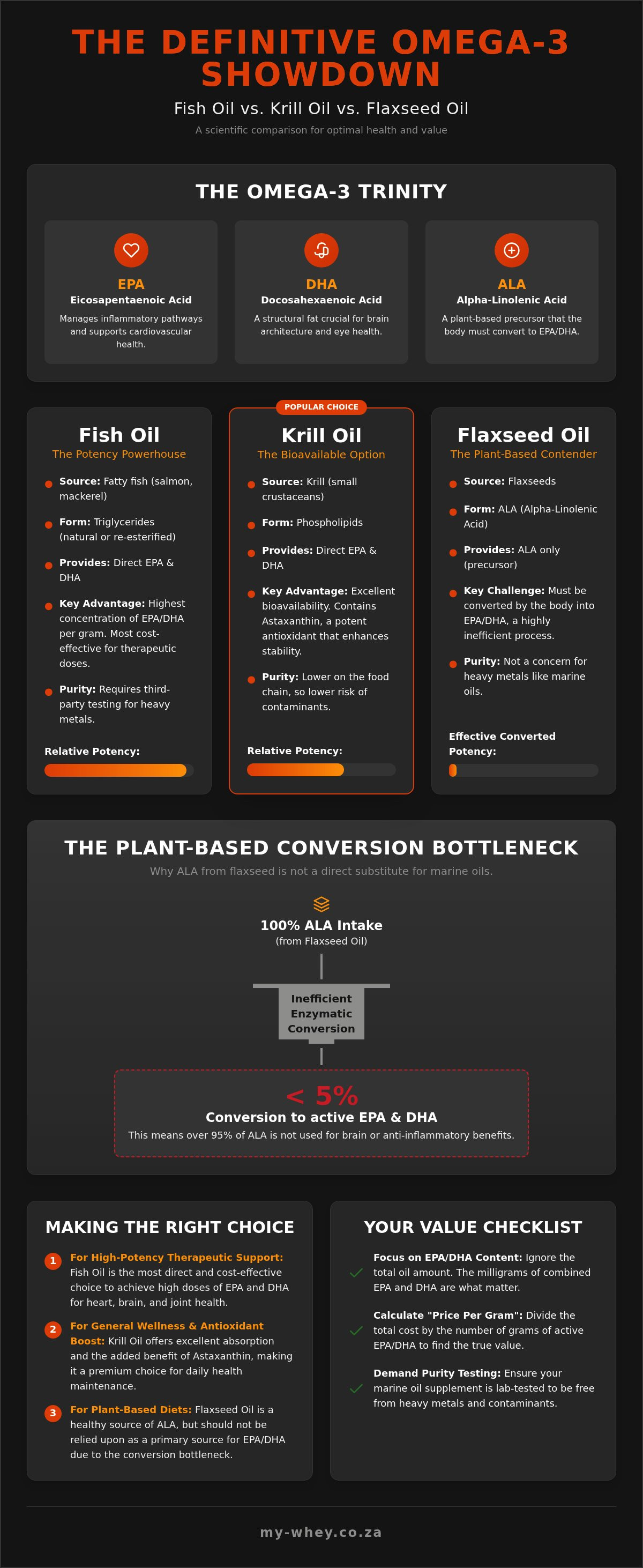
- Evaluate the definitive comparison of fish oil vs krill oil vs flaxseed oil to understand how molecular structure impacts your daily biological uptake.
- Master the "Price per Gram" metric to bypass retail marketing hype and secure the most potent EPA/DHA concentrations for your budget.
- Identify the "conversion bottleneck" that makes plant-based sources less effective for those seeking direct neurological or anti-inflammatory benefits.
- Recognise the importance of lab-tested purity to avoid heavy metal contamination and ensure a high-standard supplement profile for the South African market.
Understanding the Omega-3 Trinity: EPA, DHA, and ALA
Omega-3 fatty acids are polyunsaturated fats that are vital for your survival. They are classified as "essential" because your body cannot produce them amongst itself. You must source them from your diet or through supplementation to maintain basic health. When you evaluate fish oil vs krill oil vs flaxseed oil, you're essentially choosing between three distinct molecules: Eicosapentaenoic acid (EPA), Docosahexaenoic acid (DHA), and Alpha-linolenic acid (ALA). Each molecule plays a specific role in your physiology, ranging from structural support in the brain to managing systemic inflammation.
The primary distinction lies in the source and the complexity of the chain. Animal-derived oils provide EPA and DHA directly, whereas plant sources like flaxseed provide ALA. To gain the full spectrum of benefits, your body requires all three, yet it prioritises EPA and DHA for its most critical functions. Understanding the Omega-3 Trinity: EPA, DHA, and ALA is the first step in ensuring your supplement choices align with your actual biological needs rather than just following a trend.
The Biological Role of EPA and DHA
EPA and DHA are long-chain fatty acids found in marine life. Your body recognises these as "ready-to-use" nutrients. They don't require complex processing before they can start supporting your cells. EPA is primarily responsible for managing inflammatory pathways, helping your body maintain a healthy internal balance and supporting heart health. DHA is a structural fat. It builds the physical architecture of your brain and eyes, making up a significant portion of the grey matter in your cerebral cortex. Because it is so deeply integrated into your nervous system, DHA is the most critical fatty acid for long-term cognitive support and neurological integrity.
The Function of ALA in Plant Sources
ALA is a short-chain omega-3 found in flaxseeds, walnuts, and chia seeds. It serves as a foundational building block for other fats and provides a clean source of cellular energy. Whilst ALA is a healthy addition to any diet, it faces a significant biological hurdle in the human body. To provide the same neurological or cardiovascular benefits as marine oils, your body must transform ALA into EPA or DHA using specific enzymes.
This conversion process is notoriously inefficient. In most humans, the conversion rate of ALA to DHA is typically less than 5 percent. This means that whilst flaxseed oil is a valuable source of energy and basic fatty acids, it cannot efficiently replace the high-yield EPA and DHA concentrations found in marine supplements. When deciding on fish oil vs krill oil vs flaxseed oil, South African consumers must consider whether they need a general energy source or a direct, potent dose of brain-building fats.
Fish Oil vs Krill Oil: Comparing Animal-Based Sources
Choosing between these two marine sources requires looking closely at the molecular level. Fish oil typically stores its omega-3 fatty acids as triglycerides. In contrast, krill oil stores them as phospholipids. This structural distinction is the primary driver of the debate surrounding fish oil vs krill oil vs flaxseed oil. Krill oil also brings a unique advantage through astaxanthin, a potent natural antioxidant that gives the oil its distinct red colour and helps protect the delicate fats from oxidation during storage.
Whilst both sources provide direct access to EPA and DHA, fish oil usually wins on raw potency. A standard fish oil concentrate can deliver significantly higher milligrams of active omega-3s per softgel than its krill counterpart. If your goal is to reach specific therapeutic levels for heart health or joint support, fish oil remains the most direct route to high-volume intake.
Bioavailability: Phospholipids vs Triglycerides
Marketing often suggests that krill oil is superior because phospholipids are water-soluble, making them easier for the human gut to absorb. While there is some truth to this, the gap is narrower than it appears. Premium fish oil supplements often use a "re-esterified triglyceride" form. This advanced processing mimics the natural structure found in whole fish, ensuring high bioavailability. Clinical data suggests that whilst krill might enter the system slightly faster, high-quality fish oil achieves comparable blood saturation levels when the dosage is correctly managed. If you want a professional-grade option that prioritises high-yield EPA and DHA without unnecessary markup, consider exploring Omega 3 Softgels for your daily regime.
Purity and Environmental Impact
Purity is a significant concern for South African consumers. Lower-grade fish oils can sometimes carry a risk of heavy metal contamination, such as mercury or lead, because they are sourced from larger fish higher up the food chain. Krill are tiny crustaceans at the base of the food chain, meaning they naturally accumulate fewer toxins over their short lifespans.
Regardless of the source, you should always insist on lab-tested products. Modern molecular distillation in fish oil production is highly effective at removing impurities and eliminating the "fishy burps" often associated with cheap alternatives. Unlike plant sources where the conversion factor severely limits the amount of usable DHA you actually receive, both fish and krill provide the "ready-to-use" fats your body needs for cognitive and cardiovascular support. When evaluating fish oil vs krill oil vs flaxseed oil, the animal-based sources offer a level of efficiency that plant-based ALA simply cannot match.
Flaxseed Oil: The Plant-Based Contender and the Conversion Challenge
Flaxseed oil stands as the richest botanical source of alpha-linolenic acid (ALA). It's a popular choice for South Africans following plant-based diets or those who prefer to avoid the marine aftertaste of fish-derived products. However, the utility of flaxseed within the fish oil vs krill oil vs flaxseed oil comparison depends entirely on your specific health goals. If you're looking for general cellular health and a clean energy source, flaxseed is excellent. If you require the targeted anti-inflammatory or cognitive benefits associated with marine oils, you must account for the biological "conversion bottleneck" that limits its efficacy.
This bottleneck occurs because your body lacks the efficient enzymatic machinery to lengthen the short-chain ALA molecule into the long-chain EPA and DHA forms found in fish and krill. This process is hindered by several modern dietary factors. For instance, a high intake of omega-6 fatty acids, common in processed vegetable oils, competes for the same delta-6 desaturase enzymes needed for ALA conversion. If your diet is heavy in sunflower or seed oils, the pathway to usable omega-3s is effectively blocked. Nutrient deficiencies in zinc, magnesium, and vitamin B6 can further stall this process, leaving the body with plenty of ALA but very little usable EPA or DHA. When evaluating the efficacy of fish oil vs krill oil vs flaxseed oil, you must prioritise your health outcome over the source alone.
The 5% Rule: Why Conversion Matters
Clinical research indicates that less than 5 percent of ALA is typically converted to EPA in healthy adults, whilst the conversion to DHA is even more negligible, often falling below 0.5 percent. This data changes the "effective dose" calculation significantly. To get the same amount of DHA found in a single high-purity softgel, you would theoretically need to consume an impractical volume of flaxseed oil. This makes flaxseed a complementary fat rather than a direct replacement for those prioritising neurological health or intensive recovery.
When Flaxseed is the Favourite Choice
Despite the conversion challenges, flaxseed oil remains a favourite for vegans and vegetarians who choose to avoid marine life. It provides unique benefits that marine oils don't, such as lignans. These are plant compounds with antioxidant properties that support hormonal balance and cellular integrity. Many users also report improvements in skin hydration and texture when using flaxseed as a topical or dietary addition. To maximise the value of flaxseed, try stacking it with a balanced diet rich in minerals. This proactive approach helps support the enzymes responsible for fatty acid metabolism, ensuring you get the most out of your plant-based omegas whilst maintaining a sustainable and ethical supplement routine.
Bioavailability and Cost: Evaluating Real Value in Bulk Supplements
Most South African consumers make the mistake of comparing supplements based on the price per bottle. This is a flawed metric that ignores the actual concentration of active ingredients. To find the true value in the fish oil vs krill oil vs flaxseed oil debate, you must calculate the price per gram of EPA and DHA. Retail brands often use flashy packaging and "proprietary blends" to obscure the fact that their softgels contain low concentrations of these vital fatty acids. By shifting your focus to bulk-sourced, high-purity options, you eliminate the retail markup and ensure you're paying for biological impact rather than marketing hype.
Consistency is the foundation of any successful wellness journey. Buying in bulk allows you to maintain a steady daily intake without the interruption of frequent reordering. It also provides a lower cost-per-serving, which is essential when you're targeting the higher therapeutic doses often required for joint health or cognitive support. If you're serious about your results, you need a supply chain that prioritises transparency and laboratory-verified potency over retail convenience.
The Krill Premium: Is it Justified?
Krill oil often carries a significant price premium due to its phospholipid structure and astaxanthin content. Whilst these features offer slightly better absorption, you have to ask if the cost increase is proportional to the benefit. For the vast majority of users, simply increasing the dose of a high-quality fish oil concentrate achieves the same blood saturation levels for a fraction of the price. Data suggests that Omega 3 Softgels provide the most balanced ratio of potency and price. You can effectively bypass the "krill premium" by choosing a professional-grade fish oil that uses re-esterified triglycerides for enhanced uptake.
Ensuring Purity in Bulk Purchases
Purity shouldn't be a guessing game. When you buy bulk supplements, you should have access to a lab report or Certificate of Analysis (COA) that details heavy metal limits and oxidation levels. Look for "TOTOX" scores; this value measures the total oxidation of the oil. A low TOTOX score indicates the oil is fresh and hasn't been damaged by heat or light during processing.
Maintaining this freshness at home is straightforward. Store your bulk oils in a cool, dark place, such as a cupboard away from the stove or direct sunlight. This simple step preserves the biological activity of the fats and prevents the rancidity that causes unpleasant aftertastes. We prioritise transparent sourcing at every stage to ensure your Omega 3 Softgels remain as potent on day ninety as they were on day one. Choosing a partner that handles the heavy lifting of quality control allows you to focus on your health goals with absolute confidence.
Making the Choice: Tailoring Your Omega-3 Intake to Your Goals
The decision between fish oil vs krill oil vs flaxseed oil shouldn't be based on which bottle has the most attractive label. Instead, your choice should be driven by your specific physiological targets and your daily lifestyle. Whilst we have explored the molecular differences and conversion challenges, the final step is practical application. For the majority of South Africans, a high-purity fish oil remains the most versatile and cost-effective foundation for a wellness programme. It provides the direct EPA and DHA your body requires without the high markup of niche alternatives or the biological hurdles of plant-based conversion.
To get the most out of your chosen supplement, timing is everything. You should always consume your omega-3 softgels with a meal that contains healthy fats. This triggers the release of bile and lipase, the enzymes responsible for breaking down fats, which significantly improves the absorption of the oil. Taking these supplements on an empty stomach often leads to poor uptake and the unpleasant digestive feedback many people mistake for a quality issue.
Goal-Based Recommendations
Your specific health priorities dictate which source will provide the best return on your investment. Consider these frameworks for your selection:
- For Joint Health and Inflammation: Favour high-yield EPA fish oil. EPA is the primary driver of the anti-inflammatory response, making it the professional choice for managing exercise-induced soreness or chronic joint discomfort.
- For Cognitive Performance: Look for DHA-rich sources or consider the phospholipid benefits of krill oil if your budget allows. DHA is a structural component of brain tissue and is vital for maintaining focus and long-term neurological health.
- For General Wellness: Aim for a balanced intake of nutritional supplements that include both marine fats for direct EPA/DHA and plant fats like flaxseed for ALA and lignans.
Stacking with Whey and Creatine
For those focused on physical performance, omega-3s are a powerful addition to a broader supplement stack. Research indicates that these fatty acids can actually support muscle protein synthesis when combined with high-quality Whey Protein. This synergy helps your body utilise amino acids more efficiently for tissue repair.
Recovery is further enhanced when you combine your omega-3 intake with BCAAs. The anti-inflammatory properties of the oil work alongside the amino acids to reduce muscle breakdown and shorten the window between intense training sessions. By sourcing pure, bulk ingredients, you can simplify your routine and ensure that every milligram you consume is contributing directly to your performance goals. In the final analysis of fish oil vs krill oil vs flaxseed oil, the winner is the one that you can take consistently, at the right dose, and with the highest verified purity.
Secure Your Biological Advantage
Your journey toward optimal health doesn't have to be complicated by marketing hype or overpriced retail packaging. The definitive comparison of fish oil vs krill oil vs flaxseed oil reveals that success lies in potency and purity rather than flashy branding. You now understand that while plant sources offer general wellness benefits, the conversion bottleneck makes marine oils essential for targeted anti-inflammatory and cognitive results. By prioritising the price per gram of active EPA and DHA, you can build a sustainable supplement stack that yields tangible physical improvements.
We've handled the complexities of sourcing to ensure you receive a product that meets the highest international standards. Our formula focuses on high-yield concentrations while maintaining absolute transparency through rigorous lab testing for heavy metal purity. You don't need to overpay for effective nutrition when you have access to no-nonsense bulk pricing. This methodical approach to quality control allows you to invest in your future with complete security.
Optimise your health with pure, bulk-priced Omega 3 Softgels from My Whey and take command of your daily wellness routine with confidence.
Frequently Asked Questions
Is krill oil better than fish oil for high cholesterol?
Both krill and fish oil support healthy cholesterol levels, but neither is definitively superior for every individual. While krill oil's phospholipid structure may offer slightly higher bioavailability, fish oil provides a much higher concentration of EPA and DHA per gram. Most clinical outcomes for lipid management depend on the total dose of active fatty acids rather than the source itself. Choose the option that allows you to reach your target dose consistently and affordably.
Can I get enough omega-3 from flaxseed oil alone if I am vegan?
Relying on flaxseed oil alone is difficult for vegans due to the "conversion bottleneck." Your body converts less than 5 percent of ALA into EPA and often less than 0.5 percent into DHA. While flaxseed is a healthy fat, it doesn't provide the direct neurological benefits found in marine sources. Vegans should consider algae-based supplements to ensure they receive adequate levels of "ready-to-use" DHA and EPA for long-term cognitive health.
Does fish oil cause weight gain due to the fat content?
Fish oil does not cause weight gain when taken at standard dosages. A single 1,000 mg softgel typically contains only 9 to 10 calories, which is an insignificant portion of your daily caloric intake. In fact, some research suggests that omega-3 fatty acids may support metabolic health and improve insulin sensitivity. This makes them a helpful addition to a structured weight management programme rather than a hindrance to your goals.
How much fish oil should I take daily for joint pain?
For managing joint pain and inflammation, clinical research often points toward a daily dose of 2,000 mg to 3,000 mg of combined EPA and DHA. When comparing fish oil vs krill oil vs flaxseed oil, fish oil is usually the most practical choice for reaching these high therapeutic levels without consuming an excessive number of capsules. Always check the label for the actual EPA and DHA content per capsule rather than the total oil weight.
What is the difference between "omega-3" and "fish oil"?
Omega-3 is a specific family of essential polyunsaturated fatty acids, whereas fish oil is simply a source that contains them. Think of omega-3 as the active nutrient and fish oil as the delivery vehicle. Not all fish oils are created equal; a low-quality oil might contain very little active EPA and DHA, while a high-purity concentrate provides a much more potent dose of the specific nutrients your body requires for heart and brain support.
Can I take flaxseed oil and fish oil together?
You can certainly take these together as they provide different types of fatty acids that serve unique roles. Fish oil provides the long-chain EPA and DHA that support heart and brain health, while flaxseed oil offers the short-chain ALA and beneficial plant lignans. Combining them ensures a broad spectrum of omega-3s. This approach is often more effective than choosing just one when you are evaluating the total value of fish oil vs krill oil vs flaxseed oil.
How do I know if my fish oil supplement has gone rancid?
The most reliable way to detect rancidity is through smell and taste. Fresh oil should have a very mild, neutral scent. If your softgels have a strong, pungent, or "off" fishy odour, the fats have likely oxidised and lost their biological value. You can also check the lab report for the TOTOX score. A low score confirms the oil was processed and stored correctly to maintain its integrity and prevent digestive upset.
Is it safe to take omega-3 supplements before surgery?
It is standard medical advice in South Africa to stop taking omega-3 supplements at least 7 to 14 days before a scheduled surgery. Because these fatty acids have a mild blood-thinning effect, they can potentially increase the risk of bleeding during or after a procedure. Always inform your surgeon or anaesthetist about all the supplements you are currently taking to ensure your safety and a smooth recovery process.