

Getting Enough Protein as a Vegetarian Bodybuilder: The Complete 2026 Guide
Hitting an arbitrary macro target means nothing if your muscle tissue never receives the biological signal to grow. For years, advice on getting enough protein as a vegetarian bodybuilder has fixated purely on total daily grams. The result? Lifters choke down mounds of calorie-dense pulses, battling persistent digestive bloat whilst watching unwanted carbohydrates accumulate. If you feel like building lean mass on a plant-focused diet requires force-feeding yourself massive bowls of beans just to fall short of your targets, you aren't imagining it.
Real vegetarian hypertrophy depends on amino acid quality and protein density, not just gross volume. You can master your daily protein targets, optimise your amino acid profiles, and build lean muscle efficiently without overeating calories or wrecking your gut. In this guide, we break down how to calculate precise protein and leucine thresholds, select the most bioavailable whole-food staples, and build a targeted supplement routine that fuels recovery and steady gains.
Key Takeaways
- Target 1.6 to 2.2 grams of protein per kilogram of body weight daily, leaning towards the higher end to offset lower plant protein digestibility.
- Ensure every feeding hits the 2.5 to 3-gram leucine threshold to reliably stimulate muscle protein synthesis throughout the day.
- Prioritise high-density whole foods such as eggs, egg whites, and cottage cheese to avoid taking on surplus carbohydrates from unrefined legumes.
- Solve the challenge of getting enough protein as a vegetarian bodybuilder by structuring four to five meals spaced three to four hours apart.
- Close critical micronutrient and performance gaps by incorporating pure Creatine Monohydrate to restore muscle stores naturally depleted on meat-free diets.
Determining Your Daily Protein Target for Vegetarian Hypertrophy
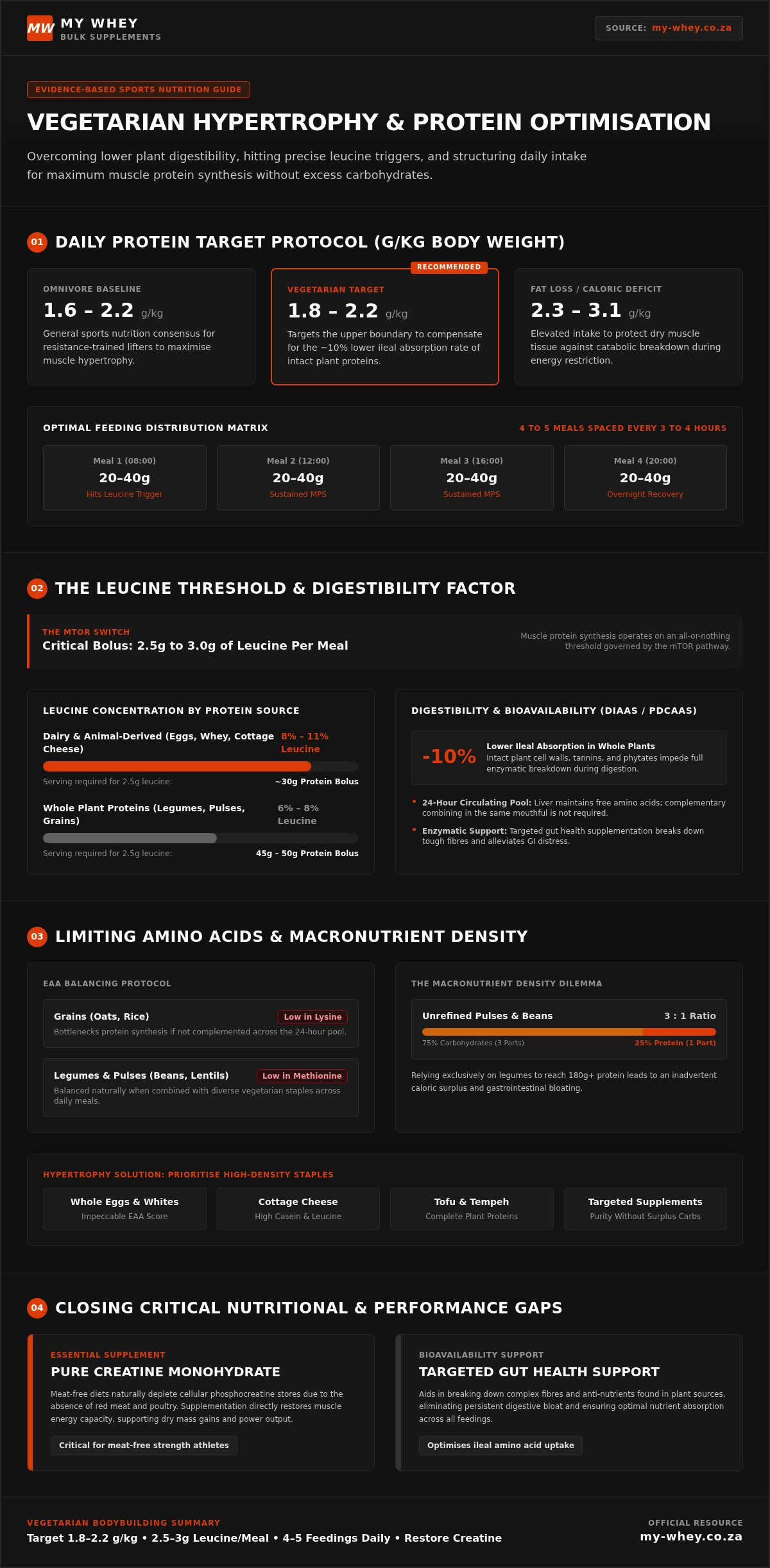
Chasing ambitious targets exclusively through lentils, chickpeas, and seeds invariably invites an unwanted volume of carbohydrates and fats. When your primary protein sources carry a three-to-one carbohydrate-to-protein ratio, hitting 180 grams of daily protein can inadvertently push you into a calorie surplus. Successfully getting enough protein as a vegetarian bodybuilder requires moving beyond generic omnivorous advice and tailoring your daily intake to biological realities.
To build lean mass without accumulating unwanted body fat, lifters must balance two non-negotiable variables:
- Target Volume: Securing sufficient amino acids across the entire 24-hour feeding window.
- Caloric Density: Choosing protein sources that preserve your target macronutrient splits.
The Science of Hypertrophy: How Much Protein Do You Actually Need?
Peer-reviewed sports nutrition consensus identifies 1.6 to 2.2 grams of protein per kilogram of body weight daily as the optimal hypertrophy range for resistance-trained lifters. During cutting phases, requirements climb to 2.3 to 3.1 g/kg to protect dry muscle tissue against catabolic breakdown. Omnivorous lifters often hit their goals near the lower threshold, but getting enough protein as a vegetarian bodybuilder requires targeting the upper boundary of 1.8 to 2.2 g/kg. Spacing this total across four distinct meals containing 20 to 40 grams of protein every three to four hours maintains continuous muscle protein synthesis far better than backloading protein into one large meal.
Accounting for Digestibility: The DIAAS and PDCAAS Factors
Protein quality depends on bioavailability, measured by the Protein Digestibility-Corrected Amino Acid Score (PDCAAS) and the Digestible Indispensable Amino Acid Score (DIAAS). As highlighted in any rigorous vegetarian nutrition overview, intact plant cell walls, tannins, and phytates can impede full enzymatic breakdown in the digestive tract. Consequently, the ileal absorption rate of whole plant sources sits roughly 10 per cent lower than animal-derived counterparts.
Lifters can offset this absorption gap by adjusting their gross intake upward and supporting digestion. Utilising targeted gut health supplements helps break down tough fibres, prevents gastrointestinal distress, and ensures that the nutrients you consume actually reach your muscle cells.
Mastering Amino Acid Profiles and the Leucine Threshold
Gross protein intake provides the raw materials, but the essential amino acid (EAA) composition dictating each meal decides whether your body actually synthesises new tissue. For years, outdated fitness lore insisted that plant-based lifters had to meticulously combine complementary proteins, like rice and beans, in the exact same mouthful. Physiology has thoroughly debunked this myth. Your liver maintains an circulating pool of free amino acids across a 24-hour window, drawing what it needs as long as your daily spectrum is complete.
The real obstacle in getting enough protein as a vegetarian bodybuilder lies in two distinct biochemical hurdles: overcoming limiting amino acids and reaching the critical leucine threshold.
Complete vs Incomplete Proteins: Navigating Limiting Amino Acids
Proteins qualify as complete when they deliver all nine EAAs in proportions suited to human physiology. Whole eggs, egg whites, and dairy products like cottage cheese deliver impeccable amino acid scores naturally. Plant proteins, however, usually feature one or two "limiting" amino acids that bottleneck protein synthesis. Grains like oats and rice are naturally low in lysine, whereas legumes and pulses lack adequate methionine. Rotating diverse staples such as tofu, tempeh, grains, and dairy across your daily feeding schedule ensures that these individual deficits cancel each other out over 24 hours.
Hitting the Leucine Trigger to Maximise Muscle Protein Synthesis
Muscle protein synthesis operates on an all-or-nothing threshold governed by the mammalian target of rapamycin (mTOR) pathway. Leucine serves as the primary biochemical key to turn this pathway on. Research demonstrates that initiating maximum muscle protein synthesis requires a bolus of 2.5 to 3 grams of leucine per meal. Animal and dairy proteins contain 8 to 11 per cent leucine by weight, making this target simple to reach with 30 grams of protein.
In contrast, plant proteins average only 6 to 8 per cent leucine. A plant-only meal often requires 45 to 50 grams of total protein, along with the accompanying surplus calories, just to flip the anabolic switch. Integrating lab-tested branched chain amino acids directly into lower-leucine plant meals bridges this gap instantly, triggering maximum growth without the excess volume. To streamline this process further, keeping pure unflavoured amino acids in your shaker allows you to elevate any standard vegetarian meal into an elite muscle-building feeding.
Ranking Vegetarian Protein Sources: Whole Foods vs Pure Supplements
Mainstream fitness advice frequently misleads lifters by labelling nuts, seeds, and nut butters as prime protein sources. Almonds and peanut butter are dense calorie reservoirs dominated by dietary fats; getting 30 grams of protein from peanut butter demands over 750 calories and 65 grams of fat. When getting enough protein as a vegetarian bodybuilder, relying on high-fat staples forces an inevitable caloric surplus. True dietary efficiency requires ranking protein options by their protein-to-calorie ratio.
To keep calories controlled whilst driving hypertrophy, categorise your staples into clear functional tiers:
- Primary Staples (Lean Yield): Liquid egg whites, fat-free cottage cheese, fat-free Greek yoghurt, and tempeh. These provide high protein purity with minimal fat and carbohydrate baggage.
- Secondary Staples (Carb Dense): Lentils, chickpeas, black beans, and quinoa. Valuable for micronutrients and dietary fibre, but carrying roughly three grams of carbohydrates for every gram of protein.
Top-Tier Whole Food Protein Staples for Lean Hypertrophy
Liquid egg whites remain an elite whole-food option, providing almost 100 per cent bioavailable protein devoid of carbohydrates and fats. Fat-free dairy, specifically cottage cheese and strained Greek yoghurt, delivers an exceptional concentration of slow-digesting micellar casein to curb daytime catabolism. Tempeh stands above standard tofu due to whole-bean fermentation. This process deactivates antinutrients, vastly improves gut tolerance, and yields roughly 19 grams of complete protein per 100-gram serving.
The Strategic Role of Bulk Whey and Clean Supplementation
Whole foods form your nutritional baseline, but reaching an optimal 1.8 to 2.2 g/kg intake solely through whole foods frequently strains the digestive tract. Concentrated dairy supplements eliminate this digestive load entirely. Incorporating an unflavoured Whey Protein Concentrate 80% offers unparalleled macro efficiency, delivering roughly 24 grams of protein in a lean 120-calorie serving. The biological value and leucine density explained in the definitive guide to whey protein confirm why it remains the gold standard for muscle recovery.
Sourcing lab-tested, raw ingredients without retail markups or proprietary fillers gives you direct control over your nutrition. For serious lifters, getting enough protein as a vegetarian bodybuilder becomes straightforward when combining high-yield whole foods with the macro precision of pure, bulk-sourced concentrates.
How to Structure a Vegetarian Bodybuilding Meal Plan: A Daily Framework
Planning meal distribution is just as crucial as hitting your total daily macro target. Dumping half your protein requirement into a single evening meal leaves muscle protein synthesis dormant for most of the day. Successfully getting enough protein as a vegetarian bodybuilder requires structuring your intake across four to five feedings spaced three to four hours apart. This rhythm sustains high intracellular EAA concentrations, continuously driving muscular adaptation.
A reliable daily distribution framework provides structure without overcomplicating your routine:
- Meal 1 (Morning Fast-Break): Whole eggs paired with liquid egg whites and oats to reverse overnight muscle catabolism.
- Meal 2 (Mid-Day Fuel): Marinated tempeh or firm tofu served alongside quinoa and leafy vegetables.
- Meal 3 (Peri-Workout): A rapid-acting liquid feed designed for swift gastric emptying and immediate recovery.
- Meal 4 (Post-Training Dinner): Strained Greek yoghurt or cottage cheese combined with berries, pumpkin seeds, and complex carbohydrates.
Meal Distribution: The 4-to-5 Feeding Window Strategy
Each dedicated feeding should supply between 30 and 45 grams of high-quality protein to reliably cross the anabolic threshold. On heavy training days, keep this framework rigid around your workout to maximise nutrient partitioning toward recovering muscle cells. On rest days, the same three-to-four-hour spacing applies. Your body repairs muscle tissue during recovery periods, meaning steady EAA delivery remains just as essential when you are away from the gym.
Peri-Workout Nutrition: Fueling and Repairing Muscle Tissue
Nutrient timing around the training window can make or break progressive overload. Approximately 60 to 90 minutes before lifting, consume a light meal containing easily digestible carbohydrates paired with a moderate protein source. Avoid heavy, high-fat whole foods immediately before your session, as they delay gastric emptying and divert blood flow from working muscles to your digestive tract.
Post-workout protocols demand pure, fast-absorbing protein combined with carbohydrates to halt catabolism and replenish depleted glycogen reserves. Sourcing raw, unflavoured ingredients ensures high gastric comfort right after intense exertion. If you want pure ingredients that digest cleanly without artificial gums, sweeteners, or fillers, you can explore bulk sports nutrition staples to lock in your daily post-workout recovery.
Closing Nutritional Gaps: Essential Supplements for Vegetarian Lifters
Whole-food meal planning forms your nutritional foundation, yet lifters avoiding meat face distinct physiological blind spots. Dietary absence of red meat and poultry directly depresses intramuscular stores of specific ergogenic compounds. While getting enough protein as a vegetarian bodybuilder remains the main priority, ignoring these baseline deficits compromises training power, recovery speeds, and overall output.
A focused supplement routine bridges these physiological gaps cleanly. Focus on three high-yield tools:
- Creatine Monohydrate: Restores low baseline cellular phosphocreatine reserves to boost explosive strength and power output.
- Whey Protein Concentrate 80%: Provides a high-leucine protein source with unmatched biological value and pure macro efficiency.
- Free-Form Amino Acids: Fortifies lower-density plant meals to guarantee maximum stimulation of muscle protein synthesis.
Why Creatine Monohydrate is Crucial for Vegetarian Athletes
Endogenous creatine production only covers basic cellular needs. Because dietary creatine resides almost exclusively in animal muscle, vegetarian athletes routinely record substantially lower baseline intramuscular phosphocreatine stores compared to omnivores. Clinical research demonstrates that vegetarian lifters experience greater relative surges in lean mass, strength, and work capacity once they saturate these reserves through supplementation.
High-purity creatine monohydrate is produced synthetically through chemical synthesis. It contains zero animal tissues or byproducts, making it entirely vegetarian friendly. Skip costly marketing gimmicks, complex buffer blends, and excessive loading phases. Supplementing three to five grams of pure unflavoured creatine monohydrate daily saturates skeletal muscle completely within three to four weeks.
Building Your Lean Vegetarian Performance Stack
Supplementation should remain simple, transparent, and driven by measurable return on investment. Relying on an unflavoured Whey Protein Concentrate 80% simplifies getting enough protein as a vegetarian bodybuilder, providing an efficient tool to reach your 1.8 to 2.2 g/kg target without digestive strain. Combining this bioavailable foundation with free-form amino acids eliminates amino acid deficiencies across your whole-food meals.
Eliminate proprietary retail blends filled with artificial additives and inflated margins. Exploring pure, lab-tested bulk ingredients through My Whey gives you direct access to pharmaceutical-grade Creatine Monohydrate, Whey Protein Concentrate 80%, and single amino acids formulated to maximise training output across South Africa.
Build Lean Muscle with Methodical Precision
Achieving progressive overload does not require compromising your dietary ethics or enduring constant gastrointestinal bloat. When you stop guessing and start measuring amino acid density, getting enough protein as a vegetarian bodybuilder transforms from a daily chore into a predictable science. Hitting your upper-end 1.8 to 2.2 g/kg targets, reaching the per-meal leucine threshold, and spacing feeds across four or five structured windows provides everything your physiology needs to grow.
Eliminate costly fillers and take complete ownership of your daily macros. Whether you need lab-tested Whey Protein Concentrate 80% to hit your daily targets cleanly or unadulterated Creatine Monohydrate to restore depleted cellular stores, purity matters. When you are ready to remove the guesswork and streamline your progress, upgrade your nutritional stack with pure bulk supplements from My Whey. Fuel your training with transparent, high-yield nutrition and let the results speak for themselves.
Frequently Asked Questions
Can you build serious muscle mass as a vegetarian bodybuilder?
Yes, you can build just as much lean muscle mass as an omnivore. Hypertrophy relies on progressive mechanical tension, sufficient total energy, and adequate essential amino acids, not the origin of your protein. As long as you hit your daily amino acid targets and meet the per-meal leucine threshold, your muscle protein synthesis rates match those of meat-eating athletes. Discipline and structured meal planning make equal gains entirely achievable.
How much protein should a vegetarian bodybuilder consume per day?
Aim for 1.8 to 2.2 grams of protein per kilogram of body weight daily. While omnivorous lifters often succeed at 1.6 g/kg, getting enough protein as a vegetarian bodybuilder requires targeting the higher end to compensate for the lower digestibility of plant fibres. If you are in an aggressive caloric deficit to drop body fat, increase your target up to 2.4 g/kg to protect lean muscle tissue from catabolism.
Do vegetarian lifters need to combine complementary proteins at every meal?
No, you do not need to combine complementary proteins within the same sitting. The body maintains a dynamic systemic pool of free amino acids, pulling required peptides as digestion proceeds throughout the day. Consuming a balanced mix of grains, dairy, legumes, and seeds across a 24-hour window ensures your body receives all essential amino acids. Focus instead on ensuring each meal reaches approximately 2.5 to 3 grams of leucine to trigger muscle protein synthesis.
Is whey protein powder suitable for a vegetarian diet?
Yes, whey protein powder is completely suitable for lacto-vegetarians. Whey is separated from milk during the cheesemaking process, meaning no animals are slaughtered in its production. Sourcing an unflavoured Whey Protein Concentrate 80% provides one of the highest biological value proteins available, packed with naturally occurring branched-chain amino acids and virtually zero carbohydrates or fats. It offers a clean, efficient way to hit daily targets without extra calories.
Why do vegetarian bodybuilders benefit significantly from creatine monohydrate?
Vegetarians experience greater relative strength and power gains from creatine supplementation because their baseline muscle stores are naturally lower. Dietary creatine exists almost exclusively in meat and fish, meaning plant-based athletes rely solely on internal synthesis. Taking 3 to 5 grams of pure, synthetically produced Creatine Monohydrate daily rapidly saturates intramuscular phosphocreatine reserves. This translates directly to increased muscular endurance, enhanced explosive lifting capacity, and faster between-set recovery in the gym.
How can I reach 150 grams of protein on a vegetarian diet without gaining fat?
Prioritise high-density protein sources with minimal carbohydrates and fats. Relying purely on lentils or beans to reach 150 grams introduces massive carbohydrate surpluses. Instead, anchor your diet around liquid egg whites, fat-free cottage cheese, tempeh, and pure Whey Protein Concentrate 80%. When getting enough protein as a vegetarian bodybuilder without accumulating unwanted calories, swapping calorie-dense nuts for concentrated protein sources keeps your macros lean and your caloric surplus strictly controlled.
What are the best high-protein vegetarian snacks for lifters on the go?
Strained low-fat Greek yoghurt, portioned cottage cheese tubs, and boiled whole eggs make practical whole-food snacks that require zero cooking. For peak convenience, a shaker cup with pure Whey Protein Concentrate 80% or free-form amino acids delivers rapid nutrition wherever you are. Pair these with a handful of raw almonds or pumpkin seeds if you need sustained energy, giving you immediate macronutrient control without relying on sugary commercial protein bars.