

How Much Water to Drink with Creatine: The 2026 Hydration Guide
What if the bloating and frequent bathroom trips you've been told are "part of the process" are actually signs of an inefficient hydration strategy? Many athletes in South Africa still struggle with the "gallon-a-day" myth, worrying that anything less might cause kidney strain or muscle cramps. It's a frustrating trade-off when you're simply trying to figure out exactly how much water to drink with creatine to achieve that elusive muscle fullness without the digestive distress.
We agree that your supplement routine should feel like an advantage, not a chore that keeps you tethered to the nearest tap. This 2026 guide cuts through the confusion to provide the exact water requirements needed to maximise your results whilst keeping your kidneys safe and your stomach settled. You'll discover the specific targets for both loading and maintenance phases, alongside practical tips to ensure your muscles stay hydrated at a cellular level. We'll show you how to balance your intake for peak performance, giving you the confidence to use creatine safely and effectively every single day.
Key Takeaways
- Understand how the osmotic nature of creatine draws water into muscle cells to fuel protein synthesis and increase volumisation.
- Discover the specific hydration targets for how much water to drink with creatine during both the high-dose loading phase and daily maintenance.
- Learn the "Front-Loading" method to optimise water absorption and reduce frequent bathroom trips throughout the day and night.
- Debunk common myths regarding kidney strain and learn how to manage bloating by choosing high-purity, unflavoured supplements.
- Find out why pure creatine monohydrate is the most efficient choice for South African athletes looking to avoid the "hidden water tax" of artificial additives.
Why Hydration is Non-Negotiable When Taking Creatine
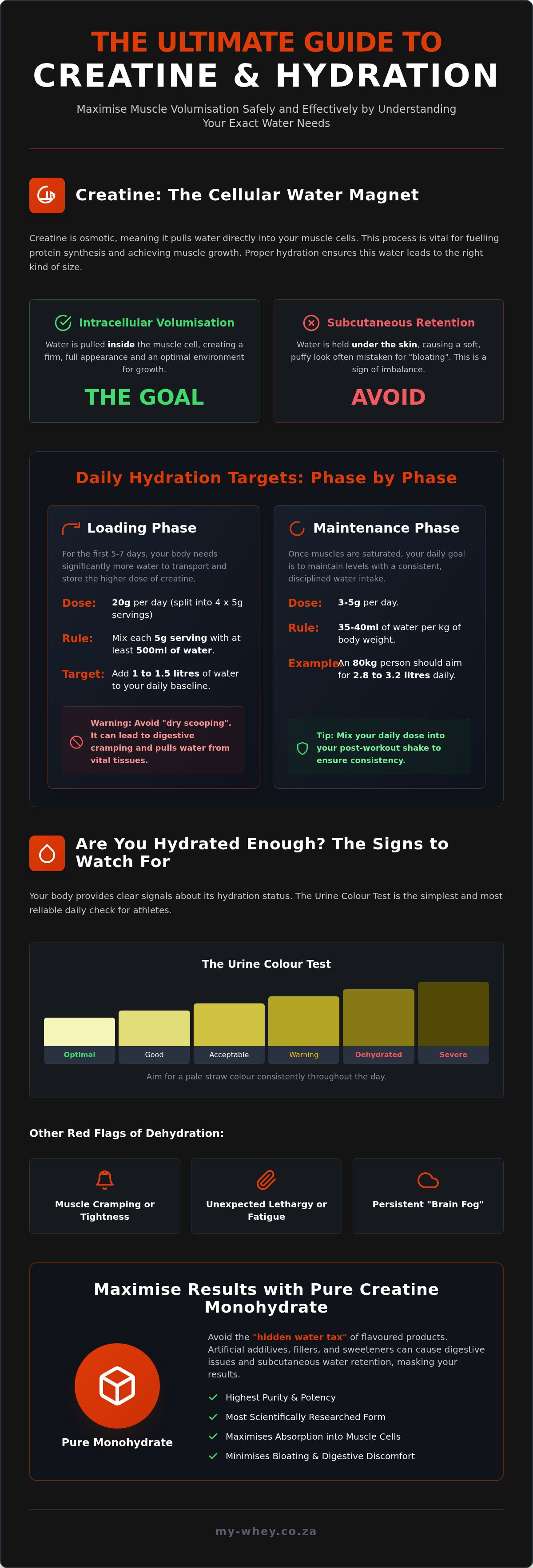
Creatine is naturally osmotic. This means it acts like a cellular magnet, pulling water directly into your muscle fibres to support protein synthesis. When athletes ask how much water to drink with creatine, they're often concerned about "bloating". However, there's a vital distinction between subcutaneous water retention, which causes softness under the skin, and intracellular muscle volumisation. Proper hydration ensures the water stays inside the muscle cell, creating a firm, full appearance rather than a puffy one.
Think of hydration as the essential fuel that allows the supplement to function. If you're creatine-saturated but dehydrated, your strength gains will inevitably stall. Without sufficient fluid, the muscle cells cannot maintain the pressure required for optimal contraction and growth. You're essentially running a high-performance engine whilst refusing to provide the coolant. This leads to a paradoxical state where you have the potential for power, but your body lacks the medium to execute it.
The Role of Water in ATP Production
During high-intensity training, your body relies on phosphocreatine to rapidly replenish Adenosine Triphosphate (ATP). Water serves as the critical medium for these chemical reactions. When you're lifting heavy or sprinting, these water-dependent transactions happen in milliseconds. If your system is dry, the recycling of energy slows down, and your power output drops significantly before the set is over. ATP is the body’s primary energy currency that requires hydration to function.
Signs You Are Not Drinking Enough Water
South African athletes training in high temperatures must be particularly vigilant. If you experience muscle cramping or an unusual sense of "tightness" during your sessions, your fluid levels are likely lagging behind your creatine intake. It's a common mistake to blame the supplement itself for these cramps, when the culprit is usually a lack of solvent for the solute. Other red flags include unexpected lethargy or a persistent "brain fog" whilst supplementing.
The "Urine Colour Test" remains the most practical tool for daily monitoring. Aim for a pale straw colour throughout the day. If your urine resembles dark apple juice, you haven't mastered how much water to drink with creatine for your specific body weight and activity level. Staying ahead of these physical cues prevents the diminished returns and digestive discomfort that come from "dry" supplementation. Consistency is the only way to ensure your muscles remain volumised and ready for work.
Calculating Your Daily Intake: Loading Phase vs Maintenance
Determining how much water to drink with creatine depends heavily on your current phase of supplementation. A 100kg rugby player will naturally require a significantly higher fluid volume than a 60kg recreational runner. This isn't just about thirst; it's about providing enough solvent for the creatine to move into the muscle without pulling water from your vital organs. If you don't adjust your intake, you risk systemic dehydration, where the supplement draws water into the muscle at the expense of your overall hydration levels.
The Loading Phase Hydration Strategy
During a typical loading phase, you consume approximately 20g of creatine daily for five to seven days. This sudden influx of solute quadruples your immediate water requirement because each gram of creatine needs a vehicle for transport. A reliable heuristic is the 100ml per gram rule: always mix each 5g serving with at least 500ml of water. To manage this effectively, consider the following targets:
- Split your doses: Break the 20g total into four 5g servings spaced throughout the day.
- Increase your baseline: Aim for an additional 1 to 1.5 litres of water above your usual daily intake.
- Avoid dry scooping: This practice forces the body to scavenge water from other tissues to process the powder, often leading to immediate digestive cramping.
Maintenance Phase: The Long-Term Baseline
Establishing how much water to drink with creatine during maintenance is simpler but requires daily discipline. Once your muscles are saturated, you move to a dose of 3 to 5g per day. For most individuals, a standard baseline is 35 to 40ml of water per kilogram of body weight. If you weigh 80kg, your daily target is roughly 2.8 to 3.2 litres. Much of the scientific evidence on creatine suggests that consistent, moderate intake is more effective for long-term health than sporadic high doses.
Integrating your dose into your post-workout whey protein shake is an efficient way to hit your targets whilst ensuring nutrient timing is on point. If you still notice "soft" bloating, it may be a sign of electrolyte imbalance rather than just water volume. Ensure you're consuming enough sodium and potassium to help the water enter the cells correctly. For those prioritising purity, using a high-grade Creatine Monohydrate without fillers reduces the digestive work your body must perform, making hydration much more straightforward.
Practical Strategies to Optimise Your Water Intake
Achieving the perfect balance isn't just about the total volume; it's about the timing. Your body can only process approximately 500-800ml of water per hour. If you attempt to "chug" your entire daily requirement in two sittings, you aren't hydrating your muscles. You're simply overloading your kidneys and increasing your trips to the bathroom. Instead, adopt the "Front-Loading" method. Aim to consume 50% of your calculated total before midday. This ensures you're already in a state of cellular readiness before your peak training hours and prevents sleep-disrupting bathroom visits at night.
Temperature also plays a subtle role in how effectively you absorb fluids. Whilst ice-cold water is refreshing during a Durban summer, room-temperature water often allows for faster gastric emptying. This means the fluid enters your bloodstream more efficiently. To truly maximise the ergogenic benefits discussed in research like Creatine for Exercise and Sports Performance, you must ensure the water actually makes it into the muscle cell rather than just sitting in your digestive tract.
The South African Climate Factor
South Africa’s diverse geography demands a flexible approach to how much water to drink with creatine. If you're training at altitude in Johannesburg or Pretoria, you lose significantly more water through respiration than your coastal counterparts in Cape Town. The air is drier, and every breath carries away moisture. In humid regions like KwaZulu-Natal, sweat doesn't evaporate as easily, which can lead to overheating if you aren't proactive. Remember that thirst is a lagging indicator. By the time you feel parched, your performance has already begun to dip. Adjust your intake upwards by 500ml on high-heat days to compensate for these environmental stressors.
Electrolytes: The Missing Piece of the Puzzle
Water alone isn't always enough to facilitate the "Sodium-Potassium Pump" that drives creatine into your cells. For the supplement to work, your mineral levels must be balanced. Sodium, potassium, and magnesium act as the gatekeepers for cellular hydration. You can use branched chain amino acids (BCAAs) to flavour your water, which often encourages more consistent sipping throughout a workout.
A simple "Home-Brew" electrolyte solution is often more effective than plain tap water. Mix 750ml of water with a pinch of high-quality sea salt and a squeeze of fresh lemon. This provides the necessary trace minerals to ensure the water you drink actually volumises your muscles. This methodical approach turns hydration from a chore into a precise tool for athletic success.
Common Myths: Creatine, Dehydration, and Kidney Health
Persistent misinformation often deters South Africans from using what is arguably the most researched supplement in sports nutrition. The most frequent concern involves kidney health. It's true that supplementing increases creatinine levels in blood tests. However, creatinine is simply a harmless byproduct of creatine metabolism. In individuals with healthy renal function, this elevation doesn't indicate damage. It merely reflects that your muscles are saturated and working efficiently.
Another common myth is that creatine "causes" bloating. If you experience digestive discomfort, the issue is rarely the creatine itself. It's usually a result of poor solubility or high caffeine intake. Caffeine is a diuretic that can compete with your hydration efforts. If you're wondering how much water to drink with creatine to avoid this, the answer often involves increasing your fluid intake whilst slightly reducing your coffee consumption. Choosing a pure, unflavoured powder also eliminates the artificial dyes and sweeteners found in retail "cocktails" that frequently trigger gut sensitivity.
Addressing the "Bloat" and Digestive Issues
It's essential to distinguish between intramuscular water retention and gastric upset. The former is what makes your muscles look fuller and perform better. The latter is often caused by undissolved powder sitting in the digestive tract. Using micronised powders significantly improves solubility, ensuring the supplement reaches your bloodstream faster. For those with sensitive systems, incorporating gut health supplements South Africa can further optimise absorption and reduce transit issues. A healthy gut environment is the foundation of effective supplementation.
Creatine and Hair Loss: The Hydration Connection?
The fear that creatine causes hair loss stems from a single, decade-old study involving DHT levels that has never been replicated. Current 2026 research summaries continue to show no causal link between the two. In many cases, athletes attribute thinning hair to supplements when the actual cause is systemic stress or chronic dehydration. Dehydration places immense strain on the body, which can eventually impact hair follicle health. No peer-reviewed study has directly linked creatine to male pattern baldness. To ensure you're supporting your body's overall health, prioritise purity and consistency by choosing a lab-tested Creatine Monohydrate that fits your daily performance goals.
Maximising Results with Pure Creatine Monohydrate
Serious athletes often overlook the impact of fillers on their hydration targets. Unflavoured bulk creatine is the gold standard because it eliminates what we call the "hidden water tax". Artificial dyes, thickeners, and sweeteners found in many retail brands can trigger low-level intestinal inflammation. This inflammation makes it harder to accurately gauge how much water to drink with creatine, as your body is forced to manage the stress of additives rather than simply shuttling nutrients to your muscle cells. By choosing a pure product, you ensure that every millilitre of fluid you consume is dedicated to performance and recovery.
The My Whey commitment focuses on providing lab-tested purity and no-nonsense bulk packaging. We believe that professional-grade nutrition should be accessible to every South African athlete without the burden of unnecessary marketing markups. When your supplement is free from fillers, your digestive system does less "work", allowing the creatine to reach your muscles faster and more efficiently. This direct path to saturation is the most reliable way to achieve the strength and volume gains you're training for.
Why Purity Matters for Hydration
Purity isn't just a label; it's a matter of intestinal osmotic balance. When you ingest a supplement loaded with fillers, your gut must draw extra fluid from your system to process these ingredients. This creates a competition for water between your digestive tract and your muscles. Pure monohydrate dissolves far more efficiently in water, ensuring the solute is fully bioavailable. This high solubility significantly reduces the risk of "creatine cramps", which are often caused by undissolved powder irritating the gut lining rather than the creatine itself.
To further support your cellular health, consider how your supplement stack works together. Stacking pure creatine with omega 3 helps maintain the integrity of your cell membranes. Healthy membranes allow for better water and nutrient transport, ensuring your hydration efforts translate into visible muscle fullness. It's a synergistic approach that prioritises long-term health alongside immediate performance.
The Economics of Bulk Supplementation
Consistency is the foundation of any successful supplement routine. If you skip doses because your expensive retail tub ran out, you lose the saturation levels required for peak power output. Bulk buying ensures you have a consistent supply for months, removing the stress of frequent reordering. My Whey eliminates the retail markup on basic ingredients, allowing you to invest in quality without compromise. By simplifying your intake, you can focus on the practical reality of your training. Shop Pure Creatine Monohydrate at My Whey to secure the consistency your goals demand. Understanding how much water to drink with creatine becomes much easier when the supplement you're using is as pure as the water you're mixing it with.
Master Your Hydration for Peak Performance
Mastering your hydration strategy is the final step in unlocking the full ergogenic potential of your supplement routine. By prioritising intracellular volumisation over simple thirst, you ensure your muscles have the necessary environment for growth and recovery. We've established that determining how much water to drink with creatine depends on your specific training phase and body mass; however, the foundation always remains consistency and purity.
Eliminating artificial fillers and dyes removes the unnecessary digestive load that often leads to bloating. Our commitment to South African athletes is clear. We provide bulk solutions that are independently lab-tested for 99.9% purity, ensuring you receive professional-grade nutrition at affordable rates. When you remove the retail markup and the additives, your body can focus entirely on performance.
Optimise your performance with pure, bulk Creatine Monohydrate from My Whey. With the right fluid intake and high-quality sourcing, you can train with total confidence. Stay hydrated, stay consistent, and watch your progress accelerate.
Frequently Asked Questions
Can I drink too much water whilst taking creatine?
Yes, you can over-hydrate, leading to a condition called hyponatraemia. This occurs when your blood sodium levels become dangerously diluted. Whilst it's rare, athletes who drink several litres in a single hour without electrolytes are at risk. Stick to the hourly absorption limits mentioned earlier. Your kidneys can generally process about 20 to 28 litres of water a day, but they can't handle more than one litre per hour.
Does coffee or tea count towards my daily water intake?
Coffee and tea do contribute to your daily fluid total, but they shouldn't be your primary source. Caffeine acts as a mild diuretic, which can slightly offset the hydration benefits. If you're a heavy coffee drinker, you'll need to be more precise about how much water to drink with creatine to ensure your muscle cells remain saturated. Aim for a one-to-one ratio of water to caffeinated beverages to maintain a healthy balance.
Should I drink water with creatine before or after my workout?
Daily consistency is far more important than specific timing. Most athletes find it easiest to mix their dose into a post-workout shake to aid recovery. Drinking a large volume of water immediately before a heavy leg session might cause stomach discomfort. Focus on hitting your daily targets rather than worrying about the exact minute you consume your supplement. Consistency ensures your phosphocreatine stores remain topped up for your next training session.
What happens if I forget to drink enough water for a day?
Forgetting your target for one day won't ruin your progress, but you might notice minor side effects. You could experience a slight drop in training intensity or minor muscle tightness. Don't try to "double up" on water the following day, as this can lead to digestive upset. Simply resume your calculated intake and monitor your urine colour to ensure you're back on track. Your body is resilient and will re-equilibrate quickly.
Does creatine cause stomach cramps if I do not drink enough?
Stomach cramps are a common side effect of "dry" supplementation or inadequate fluid intake. Because creatine is osmotic, it requires water to move through the gut wall. If there isn't enough fluid available, the undissolved powder can sit in your stomach, causing irritation and drawing water from surrounding tissues. This is why the 100ml per gram rule is a non-negotiable standard for preventing digestive distress during your loading and maintenance phases.
Can I mix my creatine with juice instead of water?
Mixing your powder with juice is a perfectly acceptable strategy. The simple carbohydrates in juice trigger an insulin spike, which can actually improve the transport of creatine into your muscle cells. This is a great option for those who find the taste of unflavoured powder plain. Just remember that the juice counts towards your daily fluid total. Ensure you're still drinking enough plain water throughout the day to avoid excessive sugar intake.
How do I know if my bloating is from water or fat?
Intracellular water retention from creatine makes your muscles feel firm, hard, and "pumped". This is very different from fat gain or subcutaneous bloating. If your muscles look larger but your definition remains sharp, it's water volumisation. Fat gain usually feels soft to the touch and covers muscle definition. If you feel "puffy" in your face or ankles, it's likely a sign of high sodium intake or systemic inflammation rather than the creatine itself.
Is it safe to take creatine in the South African summer heat?
It is entirely safe to supplement during the South African summer, provided you account for increased sweat loss. High temperatures and humidity levels in regions like the Lowveld or KwaZulu-Natal mean you'll need more fluid than an athlete in a cooler climate. Be proactive with your hydration and consider adding electrolytes to your water. This ensures you're covering both your baseline needs and the additional demands of training in the heat.