

How to Choose the Right Protein Powder for Me: A 2026 Comprehensive Buying Guide
What if the flashy, neon-coloured tub on your gym's retail shelf is actually the primary cause of your post-workout bloating and a thinning bank account? It's a common frustration for many South Africans who find themselves staring at rows of supplements, wondering how to choose the right protein powder for me amidst a sea of technical jargon and inflated prices. You've likely felt the sting of paying for premium branding only to end up with digestive discomfort or underwhelming results.
We agree that your nutrition should be straightforward and effective. This guide provides a clear framework for selecting a protein source based on your specific biological needs and dietary requirements, prioritising ingredient purity over marketing fluff. We will break down the functional differences between high-purity options like Whey Protein Concentrate 80% and other derivatives, identify the fillers you must avoid, and show you how to build a cost-effective supplement strategy that puts you back in control of your wellness journey.
Key Takeaways
- Align your protein choice with specific metabolic objectives, whether you're targeting muscle hypertrophy or general nutritional insurance.
- Learn how to choose the right protein powder for me by prioritising ingredient purity and avoiding common fillers like thickening agents.
- Understand why Biological Value matters and why high-purity Whey Protein Concentrate 80% remains the gold standard for amino acid absorption.
- Bypass the expensive "marketing tax" of retail brands by opting for lab-tested bulk supplements that offer superior value per gram.
- Optimise your digestive comfort by selecting clean ingredients that support gut health without unnecessary artificial sweeteners or dyes.
Defining Your Primary Objective: What Are You Training For?
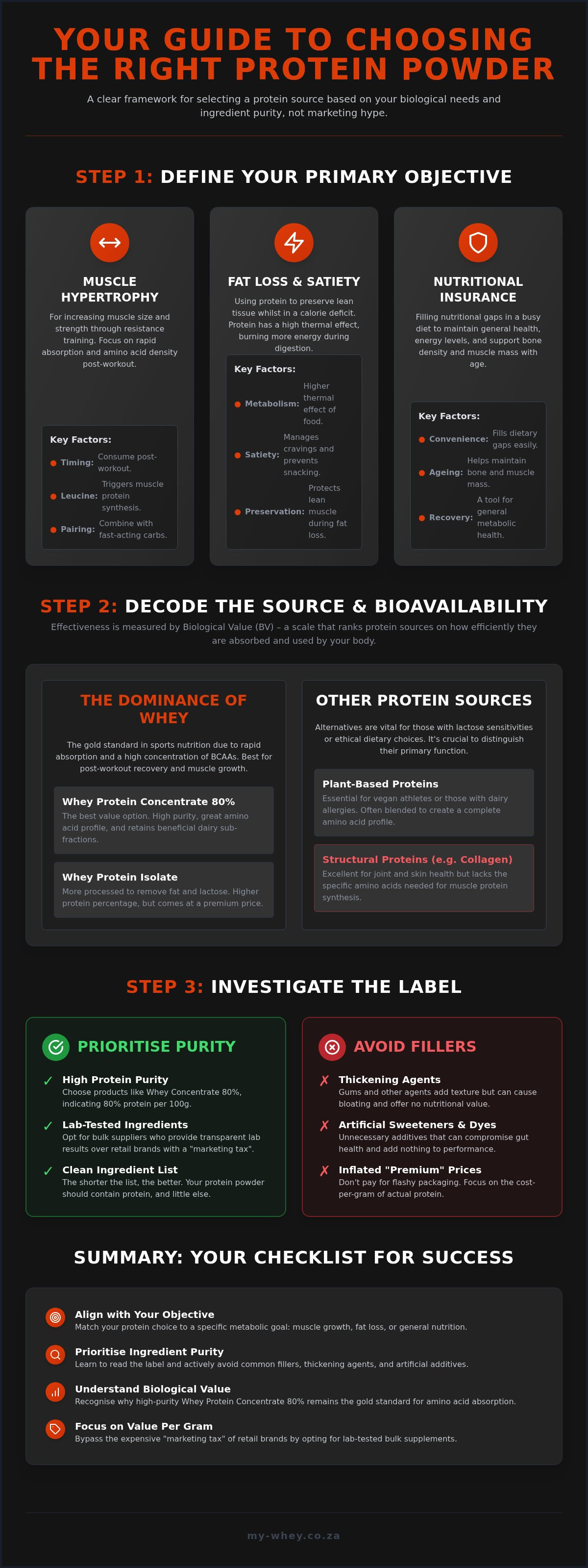
Before you start comparing tubs or scrutinising labels, you must define your "Why". Understanding how to choose the right protein powder for me begins with a clear, singular objective. Your biological needs and lifestyle dictate your daily requirements. A sedentary office worker requires significantly less protein than a marathon runner or someone lifting heavy weights four times a week. Most people fall into one of three categories:
- Muscle Hypertrophy: Focused on increasing muscle size and strength through resistance training.
- Fat Loss: Using protein to preserve lean tissue whilst reducing overall calorie intake.
- Nutritional Insurance: Filling gaps in a busy diet to maintain general health and energy levels.
Age also plays a vital role. As we get older, our bodies often become less efficient at processing protein. This makes high-purity supplementation a practical necessity for maintaining bone density and muscle mass. A common hurdle for casual users is the fear of "bulking up" unintentionally. This is a persistent myth. Building significant muscle mass requires a rigorous training stimulus combined with a consistent caloric surplus. For the majority of people, protein is simply a tool for recovery, satiety, and metabolic health. It helps you stay lean and functional without any risk of accidental bodybuilding proportions.
Muscle Building and Hypertrophy
If your goal is physical growth, timing and amino acid density are paramount. Post-workout, your muscles are primed for nutrient uptake. Rapid absorption is critical to kickstart the repair process. High-purity options like Whey Protein Concentrate 80% are the industry standard for a reason. They provide a robust profile of essential amino acids, specifically Leucine. This particular amino acid acts as a biological switch, triggering muscle protein synthesis. To maximise these results, consider pairing your protein with fast-acting carbohydrates. This combination creates an insulin response that helps shuttle those amino acids directly into the muscle tissue for optimal recovery.
Weight Loss and Satiety
Protein is your most valuable ally whilst operating in a calorie deficit. It possesses a higher thermal effect than fats or carbohydrates. This means your body naturally burns more energy just to digest and process it. Beyond the metabolic boost, protein is about staying power. Utilising a clean protein shake amongst meals can help manage cravings and prevent impulsive snacking. When you finally decide how to choose the right protein powder for me, ensure the source matches these specific metabolic demands. A high-protein intake ensures that weight loss comes from fat stores rather than lean muscle tissue, keeping your metabolic rate high over the long term.
Animal vs Plant: Decoding the Source and Bioavailability
When you ask how to choose the right protein powder for me, the answer often lies in how effectively your body can utilise the source. This efficiency is measured by Biological Value (BV), a scale that ranks protein sources based on how well they are absorbed and incorporated into your muscles. A high BV indicates a superior amino acid profile that closely matches human requirements. Whilst food sources like eggs and beef rank highly, certain supplements provide even greater efficiency for recovery and growth.
It is also essential to distinguish between functional proteins and structural ones. Functional proteins, like whey or pea, contain the full spectrum of amino acids required to build muscle tissue. Structural proteins, such as collagen, are excellent for joint health and skin elasticity but lack the specific amino acids needed to trigger muscle protein synthesis. Identifying your primary goal ensures you don't mistake a beauty supplement for a performance one.
The Dominance of Whey Protein
Whey remains the gold standard in sports nutrition due to its rapid absorption and high concentration of branched-chain amino acids (BCAAs). Most users face a choice between Whey Protein Isolate and Whey Protein Concentrate 80%. Whilst Isolate undergoes more processing to remove almost all fats and lactose, Concentrate 80% retains more of the beneficial sub-fractions found in dairy. For the majority of people, a high-purity concentrate offers the best value for money, providing significant protein density without the premium price tag of Isolate. For a deeper dive into the biochemistry, read The Definitive Guide to Whey Protein.
Plant-Based and Vegan Selections
Plant proteins are a vital alternative for those with lactose sensitivities or ethical preferences. A common concern is the "incomplete protein" problem, where a single plant source might lack one or more essential amino acids. You can solve this by choosing blends, such as pea and rice protein, which create a complete profile together. These combinations are often easier on the digestive system for those who experience bloating from dairy. To ensure you're getting enough BCAAs on a vegan diet, look for high-purity powders that prioritise transparent sourcing. If you are ready to upgrade your nutrition, you can browse high-purity supplements that skip the retail mark-up. Understanding these nuances is the final step in learning how to choose the right protein powder for me based on my biological tolerance.
The Label Investigation: Spotting Fillers and Prioritising Purity
Choosing a supplement involves more than just picking a brand you recognise from a social media advert. Flashy packaging often conceals what industry insiders call the "Marketing Tax". You pay a premium for the tub's design and the athlete's endorsement; however, the contents are frequently diluted with cheap fillers to maintain high retail margins. When considering how to choose the right protein powder for me, purity must be your non-negotiable standard. High-quality supplements should empower your health, not burden your digestion with unnecessary chemical additives.
Common additives like thickening agents (guar gum or xanthan gum) are often used to create a "creamy" mouthfeel in low-quality powders. Whilst they seem harmless, they can cause significant bloating amongst those with sensitive digestive systems. Similarly, artificial dyes and excessive sweeteners are added to mask the taste of inferior raw materials. Prioritising lab-tested, raw ingredients ensures your long-term health isn't compromised for the sake of a neon-coloured label. True performance comes from what is left out of the tub as much as what is put in.
Reading the Nutritional Information Panel
Don't just look at the "protein per serving" number. You must calculate the protein-to-weight ratio to find the true value of the product. Divide the grams of protein by the total serving size. If a 35g scoop only provides 20g of protein, the remaining 15g is likely hidden sugars, carbohydrates, or fillers. Amino spiking is a deceptive industry practice used to lower production costs by adding cheap, non-proteinogenic amino acids to a powder to artificially inflate the total protein count on the label. Always check for a short ingredient list that leads with a high-purity source like Whey Protein Concentrate 80%.
The Case for Unflavoured Bulk Protein
Opting for unflavoured bulk protein gives you total control over your nutritional intake. Pre-mixed retail powders often leave a lingering chemical aftertaste due to the heavy use of artificial flavourings and stabilisers. By starting with a pure base, you can adjust the sweetness and intensity to your exact preference. You can use separate flavour systems to keep your daily routine interesting without committing to a massive tub of a single flavour. This modular approach is often the most efficient way to solve the problem of how to choose the right protein powder for me whilst maintaining variety and ingredient transparency.
Practical Logistics: Digestibility, Taste, and Cost-per-Gram
Finding a supplement that fits your biology is only half the battle. You also need a product that integrates seamlessly into your lifestyle without causing physical distress or financial strain. When assessing how to choose the right protein powder for me, you must look past the initial price tag and the label's design. Practicality matters. A powder that doesn't mix well or tastes like chalk will eventually sit forgotten at the back of your cupboard. True value is found in a product you can actually use every day without hesitation.
Solubility is a primary indicator of quality. High-purity powders, such as Whey Protein Concentrate 80%, should dissolve easily in water or milk without leaving a gritty residue. If you find yourself chewing your shake, it's often a sign of excessive fillers or poor manufacturing standards. Beyond shakes, consider how the powder behaves in cooking. Pure, unflavoured bases are incredibly versatile; they can be added to oats, pancakes, or smoothies without clashing with other ingredients. This flexibility ensures you don't grow tired of the same flavour profile week after week.
Optimising for Gut Health
Your digestive system is the gateway to performance. If a supplement causes bloating or gas, your body isn't effectively absorbing the nutrients. This discomfort is often linked to low-quality processing or hidden additives amongst retail brands. You can learn more about managing these issues in our guide to Gut Health Supplements South Africa. For those with specific sensitivities, taking digestive enzymes alongside your protein can significantly improve comfort and nutrient uptake, ensuring your gut remains resilient whilst you train.
The Economics of Bulk Buying
Smart supplementation is a long-term commitment, not a one-off purchase. To find the true value, calculate the price per gram of actual protein rather than the cost of the tub. Retail brands often use oversized packaging to make a product look like better value whilst providing fewer actual servings. Moving to a bulk model with 2kg or 5kg bags significantly reduces your annual spend. This approach also minimises environmental impact by reducing the amount of plastic waste generated over time. Bulk suppliers maintain this lower price point by cutting out the middleman and retail mark-ups, ensuring you pay for the ingredient rather than the branding. Order your bulk supplements today to start saving on your monthly nutrition budget whilst securing the highest purity available.
The My Whey Advantage: Pure Bulk Nutrition for South Africans
The final piece of the puzzle in how to choose the right protein powder for me is finding a partner that values transparency as much as you do. Our direct-from-source philosophy ensures that every kilogram of supplement you purchase is free from the hidden retail mark-ups that plague traditional health shops. By eliminating the middleman and unnecessary marketing fluff, we provide a direct link between high-level manufacturing and your personal wellness goals. We cut the fluff. You get the results.
Every scoop you take is backed by lab-tested assurance. This commitment to quality control means you never have to guess what is entering your body. We prioritise purity above all else, sourcing only the cleanest raw materials to ensure your digestive health remains a priority. For those looking to fine-tune their performance, we encourage customising your stack. You can precisely control your nutrient intake by combining your protein with specific branched chain amino acids or creatine, rather than relying on a one-size-fits-all pre-mixed tub. We are here to guide you through how to choose the right protein powder for me without the confusion of retail hype.
Our Core Offering: Whey Protein Concentrate 80%
Our Whey Protein Concentrate 80% is the cornerstone of our range for a simple reason: it represents the "sweet spot" of performance and value. At 80% protein density, it provides the essential sub-fractions and amino acids needed for muscle repair whilst remaining highly cost-effective. Because it is unflavoured and free from thickening agents, it offers unmatched versatility. You can bake with it, stir it into breakfast bowls, or create your own signature shakes using our separate flavour systems. We've stripped away the fancy tubs and artificial dyes to ensure that every cent you spend goes toward actual nutrition.
Ready to Upgrade Your Nutrition?
Choosing the right supplement doesn't have to be a gamble. By following the framework we've laid out, you can now make a decision based on your specific goals, biological needs, and a demand for ingredient purity. Remember to prioritise high Biological Value, calculate the cost-per-gram of protein, and avoid the "Marketing Tax" of flashy retail brands. Your body deserves the highest standard of fuel available. If you're ready to take control of your recovery and performance, we invite you to explore our full selection of bulk ingredients. Shop high-purity protein at My Whey and experience the difference that transparent, lab-tested nutrition makes to your journey.
Take Control of Your Nutritional Purity
You now possess a definitive framework to stop guessing and start investing in your health with precision. Understanding how to choose the right protein powder for me is about more than just reading the front of a flashy tub; it's about verifying the source, calculating the cost per gram of actual protein, and demanding lab-tested transparency. By bypassing the "Marketing Tax" of retail-branded supplements, you ensure that every scoop contributes directly to your recovery and metabolic health rather than just lining a retailer's pockets.
Our commitment to lab-tested purity and bulk pricing ensures you get maximum value without the burden of unnecessary fillers or marketing hype. You've done the hard work in the gym; now it's time to support that effort with the cleanest fuel available. Browse our range of high-purity bulk protein powders today to streamline your supplement strategy and focus on what truly matters: your results. Your journey deserves a reliable partner that prioritises substance over style. Stay focused and keep pushing toward your next milestone.
Frequently Asked Questions
Is whey protein better than plant-based protein for muscle growth?
Whey protein is typically superior for rapid muscle repair because it has a higher Biological Value and a complete amino acid profile. It's particularly rich in leucine, the primary trigger for muscle protein synthesis. Whilst plant-based blends like pea and rice can be effective, you often need to consume a larger volume to achieve the same leucine threshold found in a single scoop of whey.
How much protein powder do I actually need to take per day?
Your daily intake depends on your total protein target, which usually ranges from 1.6g to 2.2g per kilogram of body weight for active adults. Protein powder should supplement your whole food intake rather than replace it. Most people find that one or two scoops per day is sufficient to reach their nutritional goals without overcomplicating their diet or digestive system.
Can I use protein powder if I am trying to lose weight?
Yes, protein powder is an excellent tool for weight management because it increases satiety and preserves lean muscle mass whilst you're in a calorie deficit. It helps you stay full amongst meals, which reduces the urge to snack on processed foods. Additionally, protein has a high thermal effect, meaning your body uses more energy to digest it than it does for fats or carbohydrates.
What is the difference between whey isolate and whey concentrate?
Whey isolate undergoes more intensive filtration to remove almost all fats and lactose, resulting in a protein purity of 90% or higher. Whey Protein Concentrate 80% is less processed and retains more of the beneficial immune-boosting sub-fractions found in dairy. For the majority of users, concentrate offers the best balance of performance and value without the premium price tag of isolate.
Should I drink my protein shake with milk or water?
Choose water if you want rapid absorption and the lowest possible calorie count, which is ideal immediately after a workout. Mixing your powder with milk slows down digestion due to the additional fats and casein. This can be helpful if you're using the shake as a meal replacement or a pre-sleep snack to provide a steadier release of amino acids throughout the night.
Are there any side effects to taking protein powder daily?
Daily supplementation is safe for most individuals, provided you choose high-purity products free from excessive additives. Side effects like bloating or gas are usually caused by low-quality fillers, artificial sweeteners, or lactose intolerance rather than the protein itself. Opting for lab-tested, clean ingredients ensures you avoid the digestive distress often associated with cheap, retail-branded supplements found on gym shelves.
How can I tell if a protein powder contains too many fillers?
Examine the ingredient list for thickening agents like guar gum or xanthan gum and artificial dyes. A simple way to check is to calculate the protein-to-weight ratio by dividing the protein grams by the total serving size. If there's a large gap, the product is likely padded with carbohydrates or sweeteners. This calculation is vital when learning how to choose the right protein powder for me.
Is it better to buy protein in bulk or in smaller retail tubs?
Buying in bulk is the most cost-effective strategy for long-term health and performance. Retail tubs include a significant mark-up to cover flashy packaging and marketing costs. Bulk suppliers focus on the purity of the raw material, allowing you to pay for the actual nutrition. Understanding this price-to-purity gap is a crucial part of knowing how to choose the right protein powder for me in South Africa.