

How to Cut Sugar from Your Diet Using Sweeteners
What if reducing sugar didn’t mean giving up every sweet taste? If you’re wondering how to cut sugar from your diet using sweeteners, start with a practical goal: replace some added sugar where it makes sense, rather than trying to change everything at once.
It’s understandable to feel unsure. Added sugars can appear in foods you may not think of as sweet, while “sugar-free” labels and conflicting claims about sweetener safety can make choosing harder. A substitute that works in tea may not behave the same way in a favourite baking recipe, either.
This guide will help you spot realistic opportunities to reduce added sugar, compare sweeteners thoughtfully and adapt drinks and recipes without losing enjoyment. You’ll also learn why a sugar-free label doesn’t automatically make a food a better choice, and how to use sweeteners as a measured bridge rather than a reason to keep every sweet habit unchanged. My Whey’s carbohydrates, fibre and sweeteners category offers ingredients to consider as part of a broader, balanced approach.
Key Takeaways
- Learn how to cut sugar from your diet using sweeteners by starting with one source of added sugar you can realistically change.
- Understand why nutritive sweeteners, non-nutritive sweeteners and sugar alcohols can differ in sweetness, energy, taste and cooking behaviour.
- See how to interpret safety evidence without treating regulatory assessments as a recommendation to rely on sweeteners.
- Use a gradual, small-scale substitution to find out whether an alternative works in your drink or recipe.
- Build a sustainable approach by considering taste, intended use and personal tolerance, alongside unsweetened choices and smaller portions.
How to cut sugar from your diet using sweeteners: start with the main sources
Reducing added sugar doesn’t require an immediate overhaul of every meal. First, identify where it appears in your routine, then choose one manageable change. This gives you a clear starting point before deciding whether a sweetener, a less-sweet option or a smaller portion suits you best.
Added sugar is sugar put into food or drink during preparation or processing. It differs from the sugars naturally present in whole fruit and milk. Health guidance may also refer to “free sugars”, which include sugars in honey, syrups and fruit juice. Reducing added sugar means changing particular ingredients and habits, not eliminating every sweet-tasting food.
Where added sugar commonly appears
Start with foods and drinks you have regularly. Review sweetened drinks, sauces, snacks, breakfast products and desserts. Sugar can appear under different names in ingredient lists. Honey, syrups and fruit juice can also contribute free sugars, even when they sound less like table sugar. For a broader overview of the categories and uses of a sugar substitute, see the linked reference, then use the label on the food you’re considering to guide your choice.
On South African packaging, check both the ingredient list and the nutrition information panel. The panel’s “sugars” figure describes the sugars in the product; don’t assume it separates added sugars from those naturally present in ingredients. The ingredient list can offer further clues about what has been used to sweeten it. Compare similar products using the same serving size, since figures for different portions can make comparisons misleading.
Set a realistic starting point
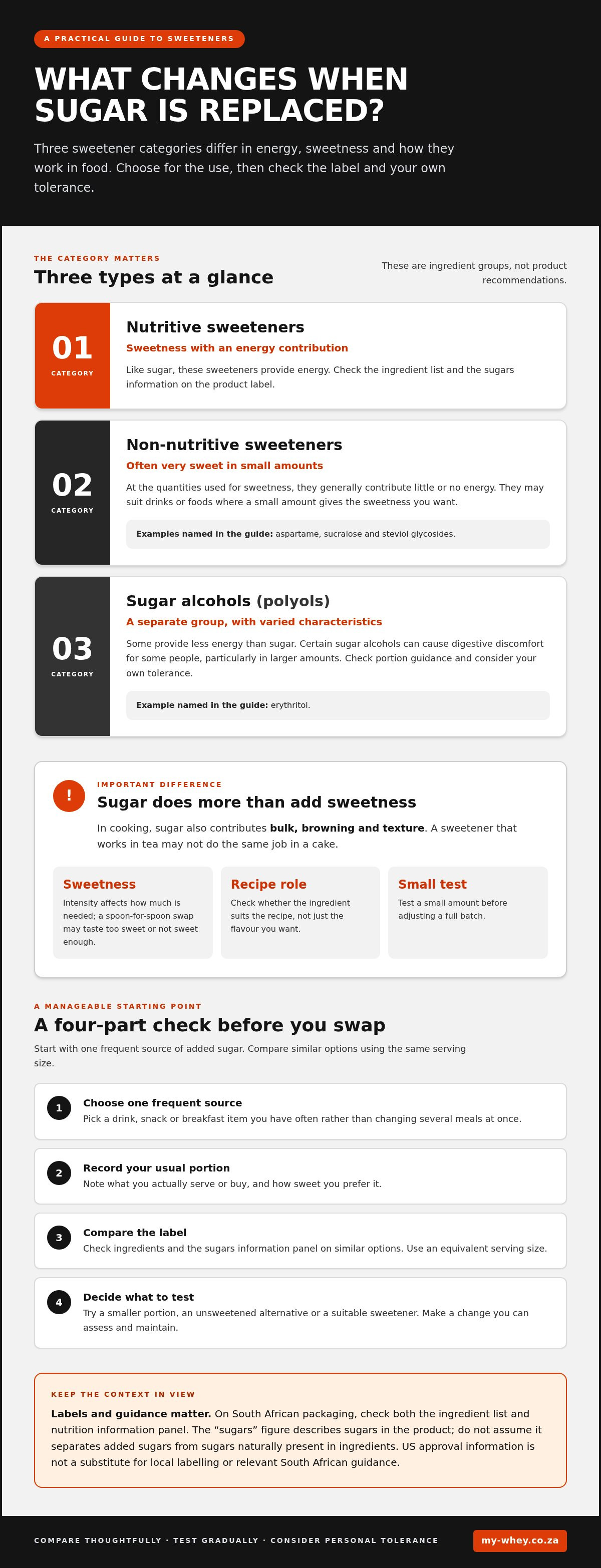
Do a short audit before swapping anything. Note your usual drinks, snacks, breakfast choices and packaged foods. Include what you actually consume, not just what the label calls a serving. Look for repetition: a daily sweetened drink or a familiar afternoon snack may be a more practical starting point than an occasional dessert.
- Choose one frequent source. Pick a drink, snack or breakfast item you have often, rather than changing several meals at once.
- Record your usual portion. Note the amount you serve or buy, and how sweet you prefer it.
- Compare the label. Check the ingredients and sugars information on similar options, using an equivalent serving size.
- Decide what to test. You might try a smaller portion, an unsweetened alternative or a suitable sweetener. The next section explains how these options differ.
There’s no single starting target that suits everyone. Needs, preferences and dietary advice vary, so focus on a change you can assess and maintain. My Whey’s carbohydrates, fibre and sweeteners category provides ingredients to consider, but choosing an ingredient is only one part of a broader plan to reduce added sugar.
Sweetener types explained: what changes when sugar is replaced?
Sweeteners are ingredients used to provide sweetness while replacing some sugar or reducing how much sugar a food or drink contains. The term covers ingredients that differ in energy contribution, sweetness, taste and function. Knowing the category can help you choose for a particular use, but it doesn’t mean every ingredient works in every recipe or suits every person.
Nutritive sweeteners provide energy, as sugar does. Non-nutritive sweeteners are generally much sweeter in small amounts and contribute little or no energy at the quantities used for sweetness. Sugar alcohols, also called polyols, are a separate group. Some provide less energy than sugar, but their characteristics vary. Aspartame, sucralose and steviol glycosides are examples of non-nutritive sweeteners; erythritol is a sugar alcohol. These are examples of ingredient types, not product recommendations.
Non-nutritive sweeteners and sugar alcohols
Non-nutritive sweeteners can work in drinks or foods where a small amount provides the sweetness you want. Sugar alcohols may be used in certain foods, but they aren’t identical to one another or to high-intensity sweeteners. Some people experience digestive discomfort from certain sugar alcohols, particularly when they consume larger amounts. Check the ingredient information and portion guidance, and consider your own tolerance.
Regulatory information also needs context. The FDA-approved high-intensity sweeteners page describes the US system; it isn’t a guide to South African permitted uses. Don’t treat a US approval list as a substitute for local labelling information or relevant South African guidance.
Why sweeteners do not always behave like sugar
Sweetness intensity affects how much of an ingredient is needed, so a spoon-for-spoon swap may make a drink or recipe far too sweet, or not sweet enough. Sugar also contributes bulk, browning and texture in cooking. A sweetener that suits tea may not provide those functions in a cake. Check the ingredient’s label and recipe guidance, then test a small amount before adjusting a full batch.
Use this comparison as a starting point, not a rule for every formulation:
| Category | Typical use | Practical check |
|---|---|---|
| Nutritive sweeteners | Sweetness with energy contribution | Check the ingredient list and sugars information. |
| Non-nutritive sweeteners | Sweetness in small amounts, often for drinks or foods | Check the sweetener type, portion guidance and intended use. |
| Sugar alcohols | Sweetness in some foods and formulations | Review ingredients and consider personal digestive tolerance. |
For how to cut sugar from your diet using sweeteners, match the ingredient to the job: consider sweetness, energy contribution, taste and cooking function together. My Whey’s sweeteners category offers ingredients to explore, alongside the other changes that can help reduce added sugar.
Are sweeteners safe? Weigh evidence, regulation, and expectations
Sweetener safety isn’t a simple choice between “safe” and “dangerous”. The evidence depends on the ingredient, the amount and the question being asked. A regulator’s assessment of a sweetener at specified levels is not the same as advice to use it for long-term weight management. Nor does it mean that every sweetened food is a nutritious choice.
What safety evidence can and cannot tell you
Different types of research answer different questions. Controlled human trials can test specific short-term effects under defined conditions. Observational studies can identify associations in populations but can’t, on their own, show that a sweetener caused an outcome. Mechanistic research explores possible biological pathways. Those pathways can guide further investigation, but they aren’t proof of harm in people. Regulatory assessments bring together evidence to evaluate safety for specified uses and exposure levels. No single study type settles every question.
The World Health Organization’s 2023 guideline conditionally recommends against using non-sugar sweeteners for weight control or to reduce the risk of non-communicable diseases. This is a recommendation about those intended outcomes, not a conclusion that every non-sugar sweetener is toxic. The guideline doesn’t apply to people with pre-existing diabetes, and it excludes sugar alcohols. For a balanced overview of the benefits and risks of artificial sweeteners, consider how the evidence relates to the specific ingredient and your reason for using it.
How to interpret daily intake guidance
An acceptable daily intake, or ADI, is a regulatory benchmark for the amount that can be consumed daily over a lifetime without appreciable health risk, based on the assessment. It isn’t a recommended personal target, a required intake or a guarantee that a product improves health. ADIs can differ by sweetener and are commonly expressed relative to body weight. Don’t apply one ingredient’s figure to another, or assume that an ADI tells you how much a particular food contains.
For South African readers, permitted sweeteners and conditions of use should be understood in the context of current local food rules. Regulations and guidance can change, so don’t rely on an overseas approval list as proof of what is permitted locally. Refer to current South African Department of Health information and the product’s ingredient and usage details. This section doesn’t set local limits or imply that a label alone replaces regulatory guidance.
For how to cut sugar from your diet using sweeteners, use safety information to make a considered choice, not to chase a maximum intake. Sweeteners are optional tools; reducing sweetness, choosing unsweetened options or having a smaller portion are alternatives. If you have a health condition, are pregnant, or need advice about a particular diet, seek individual guidance from a suitably qualified health professional. A sweetener choice can’t replace medical advice.
A practical plan for replacing sugar with sweeteners
Turn your audit into one manageable experiment. The aim is to reduce added sugar in a way that suits your routine, not to swap every ingredient at once. Choose a single drink, snack or recipe, make a measured change, then decide whether the taste and result work for you.
- Choose one regular source. Pick something you have often enough to assess, such as a sweetened drink or a snack you buy routinely.
- Select an alternative for that use. Consider an unsweetened option, a smaller portion or a suitable sweetener. Check the label for serving guidance and ingredients, and compare like-for-like portions if you’re choosing between packaged foods.
- Adjust gradually. Start with a small substitution rather than assuming the sweetener replaces sugar measure for measure. In tea or coffee, for instance, reduce the sugar or sweetener a little at a time and pause to taste before adding more.
- Review the result. Note the flavour, texture and how satisfying the portion feels. Also consider the rest of the meal or day: one lower-sugar choice doesn’t tell you the total sugar in everything else you’ve eaten.
Make substitutions that fit your routine
For a packaged alternative, compare the serving size, sugars information and ingredient list. A claim on the front of a pack won’t tell you everything about the food, so look at the panel and the portion you’ll actually eat. For protein-based choices, flavour can affect how much sweetness you prefer; this guide to whey protein can help you consider protein and flavour together.
Use sweeteners thoughtfully in recipes
In cooking, sugar does more than sweeten. Replacing an equal volume may change a recipe’s bulk, browning, moisture or texture, and not every sweetener is suited to baking. Follow guidance for the specific ingredient and recipe. Try a small test batch, then assess the result before adapting the full recipe.
Use this quick decision aid to choose what to test:
- Drinks: Try a less-sweet version or an unsweetened drink. If using a sweetener, follow its serving guidance and taste before adding more.
- Cold foods: Check whether the sweetener is intended for that use, and mix in a modest amount so you can adjust the flavour.
- Cooked recipes: Look for recipe-specific guidance. Test a small batch if the ingredient’s effect on texture or browning is uncertain.
Keep track of serving sizes and the sugars information across the whole meal or day, rather than focusing on one swap in isolation. To explore ingredients for a measured substitution, browse My Whey’s sweeteners category. Ingredient choice is one practical part of a broader sugar-reduction plan, and the most useful change is one you can maintain.
Choose sweeteners with confidence and make the change sustainable
A useful choice depends on more than whether an ingredient is labelled “natural”, “sugar-free” or “low sugar”. Match it to what you’re making, read the usage information and consider whether you enjoy the result. Then review the change in context: the aim is to reduce added sugar in a way that works for you, not to find a single ingredient that transforms your diet.
A quick checklist before choosing
Use this checklist to compare options for a drink, food or recipe:
- Intended use: Is the sweetener intended for this type of food or drink? A choice that works in a cold drink may not suit a cooked recipe.
- Ingredients: Read the full ingredient information rather than relying on front-of-pack wording alone.
- Portion guidance: Follow the label’s instructions, and account for the amount you actually use.
- Taste: Check whether the flavour and sweetness suit you. A technically suitable option won’t be useful if you dislike it.
- Personal tolerance: Notice how you feel after using it, particularly if you’re trying an ingredient you haven’t eaten before.
- Local guidance: If your decision depends on permitted use or an intake limit, refer to current South African regulatory information rather than assuming overseas guidance applies.
Digestive responses can vary. If you’re assessing your tolerance and want broader context about gut health supplements, this gut health supplements guide may help you explore the topic, but it doesn’t replace individual medical advice.
Keep progress realistic and reviewable
After making a change, ask whether it genuinely reduces added sugar in your overall routine. A smaller amount of a sweetened food or an unsweetened alternative may work just as well as adding a sweetener. Also consider whether the swap leaves you satisfied or leads you to take a larger portion elsewhere. Assess the full pattern, not just one product label.
Keep changes that are practical and enjoyable. If a substitution tastes unpleasant or is difficult to maintain, revise it: try a different approach, reduce sweetness gradually, or choose a smaller portion instead. Your preferences may change as you get used to less sweetness, but there’s no need to force a particular option.
Reducing added sugar doesn’t require sweeteners at every meal. Use them selectively, alongside unsweetened choices and portion adjustments. My Whey’s carbohydrates, fibre and sweeteners category offers ingredients to consider as part of that broader plan. For a practical next step, explore My Whey’s ingredient range and choose options that fit your intended use and preferences.
Make your next sugar swap a considered one
Start with one change you can observe and adjust. The most useful approach to how to cut sugar from your diet using sweeteners is one that fits your preferences, routine and wider eating habits. A sweetener can be part of that choice, but it doesn’t need to be the centre of your plan. Keep what works; rethink what doesn’t.
My Whey supplies customers across South Africa with ingredients in its carbohydrates, fibre and sweeteners category. Its bulk supply model is designed to avoid unnecessary retail packaging. Use the ingredient information and guidance for your intended use to make a considered selection.
Explore My Whey’s ingredient range and choose ingredients that suit your needs. Small, sustainable choices can help you move towards less added sugar without expecting a single ingredient to do all the work.
Frequently Asked Questions
Can I use sweeteners when baking?
Sometimes, but the result depends on the sweetener and the recipe. Sugar helps create volume, retain moisture and brown during baking, so replacing it may affect more than flavour. A direct swap can leave a cake denser or change its crust. Check instructions for the specific ingredient, then test a small portion of the recipe before making a full batch. Don’t assume one sweetener works in every bake.
Does sugar-free mean a food contains no carbohydrates?
No. “Sugar-free” doesn’t mean carbohydrate-free or calorie-free. For example, a product may contain starch or fibre, and some formulations include sugar alcohols. Check the nutrition panel and serving size, especially if you’re comparing snack bars or drinks. A smaller labelled serving can make figures look lower than the amount you’d actually consume. Judge the product against your dietary needs, not its front-of-pack claim alone.
Can sweeteners cause digestive discomfort?
Yes, some people experience digestive symptoms from certain sweeteners, and the response can depend on the ingredient and amount. If you’re trying a product containing a sugar alcohol, follow its serving guidance and notice how you feel. Don’t assume another person’s reaction predicts yours, or that all sweeteners affect digestion in the same way. Seek advice from a qualified healthcare professional if symptoms persist or concern you.
Are natural sweeteners automatically healthier than artificial sweeteners?
No. “Natural” describes an ingredient’s perceived origin, but it doesn’t establish that it’s safer, healthier or right for your circumstances. For instance, a plant-derived sweetener and an intensely sweet non-nutritive ingredient may differ in composition, taste and use. Compare the actual ingredient information and relevant evidence instead of relying on broad labels. Your dietary needs, preferences and intended use matter more than whether a product is marketed as natural.
Will replacing sugar with sweeteners make me lose weight?
No single swap can guarantee weight loss. Its effect depends on what the sweetened item replaces, portion sizes and your overall eating pattern. The World Health Organization’s recommendation against using non-sugar sweeteners for weight control is about that intended purpose; it isn’t a claim that every sweetener causes harm. If weight management is your goal, consider your wider habits and seek individual advice when appropriate.
Can I use more than one type of sweetener in a day?
That depends on which ingredients you use, the amounts and your individual circumstances. Different sweeteners have different intake guidance, so there isn’t one shared daily limit that applies to every type. Check each product’s serving information and consult current regulatory guidance relevant to the ingredient in South Africa. If you have a health condition, take regular medication or have a specific dietary concern, ask a qualified healthcare professional for personalised advice.