

How to Make Unflavoured Protein Taste Better: The Expert Guide to Custom Flavouring
Unflavoured protein isn't a compromise; it's actually the most versatile tool in your nutritional arsenal. You've likely stood in your kitchen staring at a bulk bag of whey, wondering if you've made a costly mistake because the flavour is bland or the texture feels chalky. It's a common frustration for anyone trying to avoid the artificial fillers and "flavour taxes" found in retail brands. We're going to fix that by showing you exactly how to make unflavoured protein taste better using professional techniques and simple pantry hacks.
You deserve a post-workout shake that feels like a reward, not a chore. By the end of this guide, you'll know how to transform plain protein into a delicious, high-performance drink whilst maintaining total control over your ingredients. We'll cover the best natural sweeteners, efficient mixing methods, and how to use specialised flavour systems to achieve a premium taste on a budget. It's time to stop wasting money on supplements you can't finish and start building a custom stack that works for your goals.
Key Takeaways
- Understand the economic and nutritional advantages of choosing unflavoured whey to avoid the "flavour tax" and hidden fillers found in pre-mixed powders.
- Utilise simple kitchen staples such as frozen berries, cinnamon, and unsweetened cocoa to craft bespoke, antioxidant-rich shakes that taste like a treat.
- Discover how to make unflavoured protein taste better by using professional flavour systems and natural sweeteners like Stevia to replicate premium flavours without the extra calories.
- Perfect your shake's consistency by applying the "liquid first" rule and selecting the ideal base liquid to balance flavour intensity and protein bioavailability.
- Learn to customise your supplement stack with precise control, ensuring your protein intake supports your wellness journey without compromising on purity.
The Logic of Unflavoured Protein: Why Purity Wins
Choosing unflavoured protein is a strategic decision for those who value purity over marketing gimmicks. It's the gold standard for athletes who want to avoid the artificial colours, thickeners, and synthetic sweeteners often found in retail products. When you start with a clean slate, you don't just get a better product; you get total control over your nutrition. The challenge for many lies in how to make unflavoured protein taste better without sacrificing these clean-label benefits. Once you understand the nutritional foundation, learning how to make unflavoured protein taste better becomes a simple exercise in pantry management.
A standard protein supplement from a retail shelf is often a cocktail of additives designed to appeal to the mass market. These additions frequently displace the actual protein content, meaning you're often paying for "cookies and cream" flavouring instead of the amino acids your body needs. By opting for a plain version, you eliminate this "flavour tax" and ensure every gram you consume serves a physiological purpose. It's a more efficient way to fuel your body whilst keeping your supplement stack as lean as possible.
Beyond the shaker, unflavoured powder offers unmatched versatility. You can't easily add strawberry-flavoured whey to a savoury soup or a homemade pizza base. Plain whey integrates seamlessly into both sweet and savoury recipes, acting as a functional ingredient rather than just a drink. It also allows you to adjust your macros with precision. If you're following a ketogenic protocol, you can add healthy fats like MCT oil; if you're carboloading, you can mix it with oats or fruit. You decide the fuel source, not the manufacturer.
Avoiding the 'Filler' Trap
Many commercial brands use intense sweeteners and thickeners to mask lower-quality protein sources that might otherwise have an unpleasant aftertaste. A 100% transparent ingredient list removes this guesswork entirely. Whey Protein Concentrate 80% serves as a high-purity base for customisation, offering a superior protein-to-weight ratio compared to most flavoured alternatives. It's about knowing exactly what is entering your system and avoiding the digestive bloating often caused by excessive sugar alcohols and gums.
Cost-Efficiency of Bulk Buying in South Africa
In the South African market, purchasing bulk unflavoured protein is a significant cost-saving measure. Bulk suppliers bypass the expensive branding and individualised packaging that drive up retail prices. This approach doesn't just benefit your wallet; it's also a more sustainable choice. Reduced packaging means less waste entering our local ecosystems. For a deeper dive into the technical details of different protein types, consult The Definitive Guide to Whey Protein to understand why concentrate remains a top choice for serious athletes.
Whole Food Mix-ins: Creating a Natural Flavour Profile
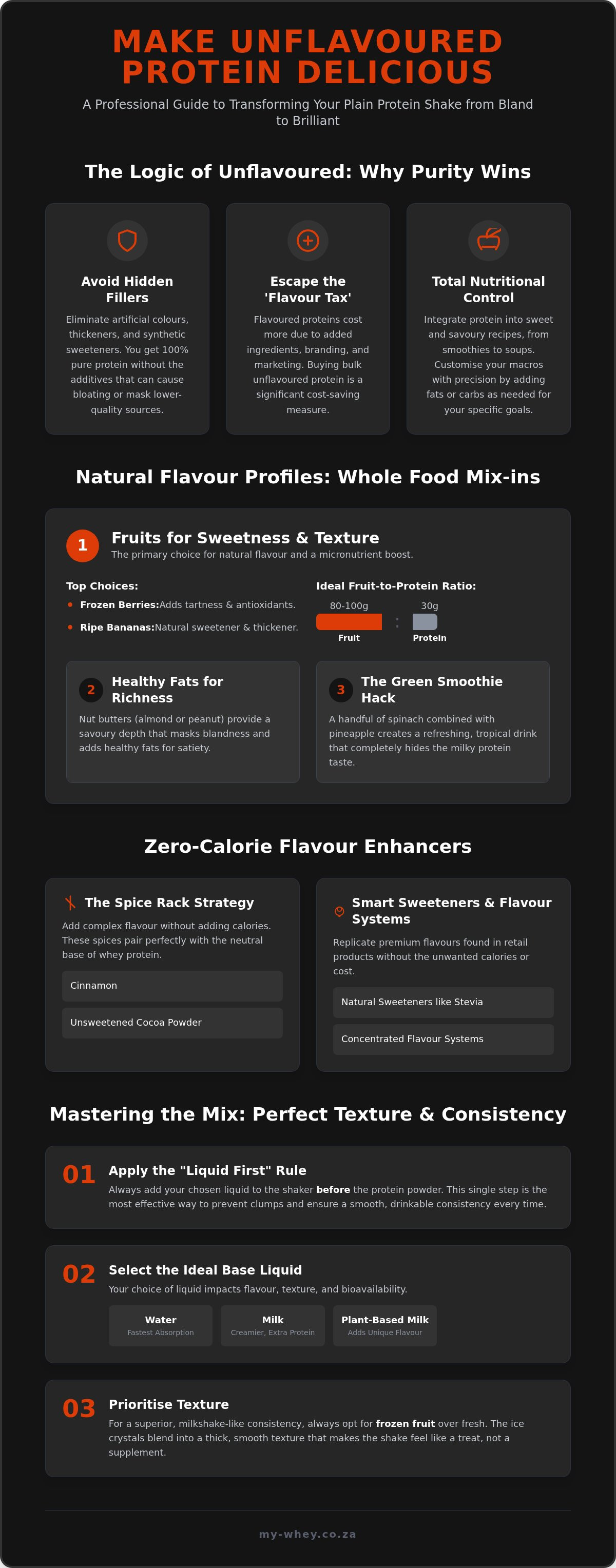
Using whole foods is the most direct way to solve the problem of how to make unflavoured protein taste better whilst boosting your micronutrient intake. When you move away from synthetic flavourings, you gain the ability to tailor every shake to your specific palate and fitness goals. Frozen berries are a primary choice for many athletes. They provide a tart contrast to the neutral base of whey and add a vibrant colour that makes the drink more appealing. More importantly, they pack the shake with antioxidants that support recovery after intense training sessions.
If you prefer a sweeter profile, ripe bananas are an essential pantry staple. They act as both a natural sweetener and a creamy thickening agent, giving the protein a texture similar to traditional soft-serve ice cream. For those needing more "body" in their shake, nut butters like almond or peanut provide healthy fats and a savoury depth that masks the blandness of plain powder. The green smoothie hack is another professional favourite. Combining a handful of spinach with a few chunks of pineapple completely masks the milky undertones of the whey, resulting in a refreshing, tropical drink that feels light on the stomach.
The Fruit-to-Protein Ratio
Precision is key when balancing flavour and nutrition. For a standard 30g serving of protein, aim for 80g to 100g of fruit. This quantity provides enough natural sugar to mask the protein without causing an unwanted insulin spike. Frozen fruit is consistently superior to fresh for texture; it creates a thick, milkshake-like consistency that prevents the shake from feeling watery. This approach allows you to bypass the dangers of protein powders that often contain hidden fillers and excessive artificial sweeteners. Additionally, the Vitamin C found in citrus or berry mix-ins supports your overall wellness stack by aiding immune function.
Healthy Fats for Better Mouthfeel
For those on calorie-controlled or low-carbohydrate diets, healthy fats offer a way to improve mouthfeel without adding fruit sugars. Adding half an avocado creates a neutral, ultra-creamy texture that mimics the richness of dairy fat. You can also enhance the nutritional profile by adding Omega 3 sources like milled flaxseeds or chia seeds. These additions provide a subtle nuttiness and improve the satiety of the shake. You can explore the systemic benefits of these essential fats in The Definitive Guide to Omega 3. Start with a high-quality base by selecting a pure whey protein concentrate to ensure your whole food additions remain the star of the show.
The Spice Rack Strategy: Calorie-Free Flavour Hacks
Your spice rack is a hidden treasure trove for customising your supplement routine. Whilst many people reach for fruit or nut butters, spices offer a way to manage how to make unflavoured protein taste better without adding a single calorie. Cinnamon and nutmeg are particularly effective. They transform a neutral whey base into a comforting 'horchata' or spiced chai style drink. If you're craving a classic chocolate profile, unsweetened cocoa powder is the most efficient solution. It provides a rich, dark flavour that completely masks any dairy undertones.
For those who struggle with the morning rush, instant coffee or espresso powder is a game-changer. It provides a caffeine kick whilst the bitterness of the coffee cuts through the natural creaminess of the whey. Another professional secret is the addition of a tiny pinch of sea salt. Salt doesn't make the shake salty; instead, it organises and enhances the other flavours, making sweetness taste sweeter and cocoa taste more intense. It's a simple adjustment that brings professional-level depth to a home-made drink.
Warm Spices and Digestive Benefits
Integrating ginger and turmeric into your post-workout routine provides a natural anti-inflammatory boost. These spices work synergistically with your recovery stack, complementing the repair processes supported by The Power of Branched Chain Amino Acids. Cinnamon also plays a functional role by helping to regulate blood sugar response. This is particularly useful if you're mixing your protein with oats or other carbohydrates to fuel a training session. It's a dual-purpose strategy that improves both the taste and the metabolic impact of your shake.
Savoury Applications for Unflavoured Protein
One of the biggest advantages of plain powder is its ability to go savoury, a benefit often overlooked in standard fitness advice. Unflavoured protein acts as a natural thickener in savoury sauces and gravies, adding nutritional value without altering the dish's profile. You can stir it into soups and stews at the end of the cooking process; just ensure you mix it with a little room-temperature liquid first to prevent clumping. For a unique breakfast, try the 'Proats' method using turmeric and black pepper. This creates a savoury porridge that feels more like a meal than a supplement, proving that how to make unflavoured protein taste better isn't limited to sweet shakes.
Professional Flavour Systems and Smart Sweeteners
While whole foods and spices provide a rustic charm, professional athletes often turn to concentrated systems for precision and variety. Learning how to make unflavoured protein taste better doesn't have to involve high-calorie additions like honey or maple syrup. Instead, using laboratory-grade flavour systems allows you to replicate gourmet profiles like salted caramel or Madagascan vanilla with just a few drops. This method preserves the purity of your whey whilst offering the convenience of retail brands without the associated "flavour tax".
These concentrates are the secret behind most commercial supplements, but buying them separately gives you the power. You can change your "flavour of the day" without committing to a massive tub of a single taste. Another popular shortcut is the sugar-free barista syrup hack. These syrups provide instant gourmet flavour and sweetness without the caloric burden of traditional sweeteners. It's a highly efficient way to achieve a treat-like experience whilst keeping your macros tight.
Understanding Flavour Concentrates
Water-based flavours are typically superior for protein shakes as they disperse more evenly in liquids than oil-based alternatives. Precision is critical; start with two or three drops and increase gradually to avoid a synthetic chemical aftertaste. This level of control is exactly what's missing when you buy pre-flavoured powders. For maximum efficiency, you can even pre-mix a 1kg bag of protein with your favourite dry flavouring to create your own custom bulk blend. This allows for a consistent taste across your entire supplement cycle.
Selecting the Right Sweetener
Choosing the right sweetener is a balance between taste purity and digestive comfort. Stevia and Erythritol are the preferred choices for those on strict calorie-controlled goals because they have zero glycaemic impact. Unlike honey, which contains significant sugar and calories, these natural extracts provide sweetness without hindering fat loss or spiking insulin. Xylitol is another effective option, though it requires careful dosing for some individuals to maintain gastric comfort.
Prioritising your digestive system is essential when selecting sweeteners. Many artificial options can disrupt your microbiome, so opting for natural plant-based extracts is often the smarter move for long-term wellness. You can learn more about maintaining a healthy internal environment in our guide to Gut Health Supplements South Africa. To start building your custom stack, explore our range of professional flavour systems and sweeteners today.
Mastering the Mix: Texture and Temperature Tips
Mouthfeel accounts for roughly half of your taste perception. You can use the most expensive extracts in the world, but if your shake is lumpy or watery, the experience will remain subpar. Understanding the mechanics of mixology is the final step in learning how to make unflavoured protein taste better. It starts with the "Liquid First" rule. Always pour your water or milk into the shaker before adding the powder. This simple sequence prevents the protein from becoming trapped in the corners or clumping at the bottom, ensuring a smooth dispersion every time.
The choice of liquid significantly impacts both flavour intensity and nutrient delivery. Water is the cleanest option for those prioritising rapid absorption, as it doesn't compete with the whey for digestion. However, using milk or a plant-based alternative adds a natural creaminess that mimics a traditional milkshake. This added fat content can actually improve the bioavailability of certain vitamins whilst providing a more satisfying "body" to the drink. If you find the natural taste of whey too prominent, a thicker liquid is often the most effective mask.
Temperature control is equally vital. Whilst a room-temperature shake might be functional, it rarely feels like a reward after a heavy session. Lukewarm water can emphasise the "cardboard" notes of unflavoured powder. Use chilled liquid and add two or three ice cubes to your shaker. The ice doesn't just lower the temperature; it acts as an extra agitator, breaking down any remaining particles for a silkier result. For those using a blender bottle, the stainless steel whisk ball is usually sufficient, but an electric blender remains the gold standard for integrating frozen mix-ins or fats like avocado.
Achieving the Perfect Consistency
If you miss the thick, indulgent texture of retail shakes, you can replicate it using tiny amounts of xanthan gum or guar gum. These natural fibres act as thickeners, giving your bespoke shake a premium mouthfeel without adding calories. For a "latte-style" experience, try using a handheld milk frother to integrate your protein into coffee. This method creates a light, airy foam that feels sophisticated. Just be mindful of "whey foam" caused by over-shaking; letting your drink sit for sixty seconds allows the air to escape, which can help minimise digestive bloating.
Preparation and Storage
Freshness is a major factor in how to make unflavoured protein taste better. Whilst you can mix a shake the night before, the flavour profile can begin to fade or change as the protein sits in liquid. If you must prep in advance, keep the shake in a vacuum-insulated bottle to maintain a near-freezing temperature. If you have created a custom dry blend by pre-mixing your bulk bag with cocoa or spices, store it in a cool, dark place in an airtight container. This prevents moisture from causing the powder to clump before it even hits the water. Ready to take control of your nutrition? Explore My Whey's range of high-purity protein and flavour systems.
Take Control of Your Nutritional Canvas
Choosing unflavoured protein is the smartest way to ensure you're getting high-purity nutrition without the unnecessary "flavour tax" or hidden fillers. You've now seen that mastering how to make unflavoured protein taste better is simply a matter of using the right tools, from common kitchen spices to professional-grade flavour systems. By refining your technique with the "liquid first" rule and managing your shake's temperature, you can transform a plain base into a premium, treat-like experience that aligns perfectly with your macro goals.
You don't need to settle for chalky drinks or over-sweetened retail brands. It's a choice. With lab-tested 80% protein purity and no-nonsense bulk pricing, you can build a supplement stack that is both cost-effective and delicious. As a proudly South African supplier, we provide the clean foundation you need to empower your wellness journey. Stop compromising on quality. Start creating shakes that you actually look forward to drinking.
Shop Pure Whey Protein Concentrate 80% and Flavour Systems at My Whey
Frequently Asked Questions
Is unflavoured protein better for you than flavoured versions?
Unflavoured protein is generally superior for those prioritising ingredient transparency and purity. It lacks the artificial colours, gums, and synthetic thickeners typically used to create retail flavours. By choosing a plain 80% concentrate, you receive more actual protein per gram whilst avoiding potential digestive irritants. It allows you to control exactly what enters your body, making it a cleaner choice for long-term health and performance goals.
What is the best natural sweetener for protein shakes?
Stevia and Erythritol are the most effective natural sweeteners for maintaining a calorie-controlled diet. These plant-derived extracts provide intense sweetness without the glycaemic impact of sugar or honey. Stevia is highly concentrated, requiring only a tiny amount, whilst Erythritol offers a bulkier texture that mimics sugar. Both options are excellent for anyone learning how to make unflavoured protein taste better without compromising their nutritional macros or gut health.
Can I add unflavoured protein powder to hot coffee?
You can add unflavoured protein to coffee, but you must avoid boiling temperatures to prevent the powder from denaturing and clumping. The best method is to mix the protein with a small amount of room-temperature water or milk first to create a slurry. Gradually stir this mixture into your hot coffee. This technique ensures a smooth, creamy result that functions like a high-protein milk substitute without the lumps.
How do I stop my unflavoured protein from clumping?
Preventing clumps requires following the "liquid first" rule mentioned earlier in this guide. Always pour your water or milk into the shaker before adding the protein powder. This prevents the powder from sticking to the dry corners of the bottle. Using a shaker with a stainless steel whisk ball or a mesh insert provides the necessary agitation to break down particles. For an even smoother consistency, a quick ten-second pulse in an electric blender is unbeatable.
Does adding fruit to my shake ruin the protein absorption?
Adding fruit does not negatively impact protein absorption; in fact, it can enhance your overall nutritional profile. Fruits like berries or citrus provide Vitamin C, which supports various metabolic processes. Whilst the fibre in fruit might slightly slow down the rate of digestion, this is often beneficial for sustained satiety. It's a practical way to improve the flavour profile whilst adding essential micronutrients to your post-workout recovery stack.
Can I use unflavoured protein in savoury recipes like soup?
Unflavoured protein is a highly versatile ingredient for savoury cooking because it lacks the sweet aftertaste of retail powders. You can stir it into soups, stews, or pasta sauces to increase the protein density of your meals. To ensure it integrates well, whisk the powder into a small amount of lukewarm liquid before adding it to the pot. This prevents the protein from seizing or clumping when it hits the hot liquid.
How much cocoa powder should I add to a 30g scoop of protein?
A standard ratio is one to two teaspoons of unsweetened cocoa powder for every 30g scoop of protein. This provides a deep, chocolatey flavour without adding significant calories or sugars. If you prefer a richer taste, you can increase the cocoa, but you may need to add a natural sweetener like Stevia to balance the bitterness. It is one of the most effective methods for anyone researching how to make unflavoured protein taste better.
What liquid makes unflavoured protein taste the most like a milkshake?
Full-cream dairy milk or creamy oat milk provides the most authentic milkshake-like experience. These liquids have a higher fat and solids content than water, which coats the palate and creates a luxurious mouthfeel. For a dairy-free alternative, coconut milk also offers a rich texture that masks the neutral profile of the whey. Using these thicker bases, combined with a few ice cubes, results in a thick, indulgent consistency that feels like a treat.