

How to Make Unflavoured Protein Taste Better: The Ultimate 2026 Guide
The most cost-effective way to hit your macros shouldn't be the hardest part of your day. Whilst many athletes choose pure whey for its 80% protein concentration and lack of fillers, the "raw milk" aftertaste and chalky texture often lead to wasted supplements. You aren't alone if you've stared at a half-finished bag wondering how to make unflavoured protein taste better without loading it with sugar or artificial additives. It's a common hurdle that separates basic supplementation from a sustainable, high-performance lifestyle.
We understand that you value purity but refuse to settle for a gritty, unpleasant experience. This guide provides the exact professional techniques needed to transform your raw protein into a delicious, versatile staple. You'll discover which natural sweeteners actually work, how to eliminate clumping for a smooth finish, and ways to integrate protein into your favourite meals. From mastering a reliable base shake to exploring savoury applications, we'll ensure your investment in clean nutrition never goes to waste again.
Key Takeaways
- Understand why unflavoured protein is the cleanest choice for athletes, allowing you to avoid artificial fillers whilst significantly reducing your monthly supplement costs.
- Learn how to optimise mouthfeel by selecting the right liquid base and plant-based alternatives to eliminate the traditional chalky texture.
- Discover professional methods on how to make unflavoured protein taste better using natural extracts and calorie-free sweeteners like Stevia or monk fruit.
- Expand your nutrition beyond the shaker bottle by integrating pure protein into savoury dishes and mastering the "protein porridge" technique to prevent clumping.
- Identify the importance of sourcing lab-tested, high-purity bulk ingredients in South Africa to ensure consistent quality and maximum nutritional efficiency.
The Benefits of Pure Protein: Why Unflavoured is a Strategic Choice
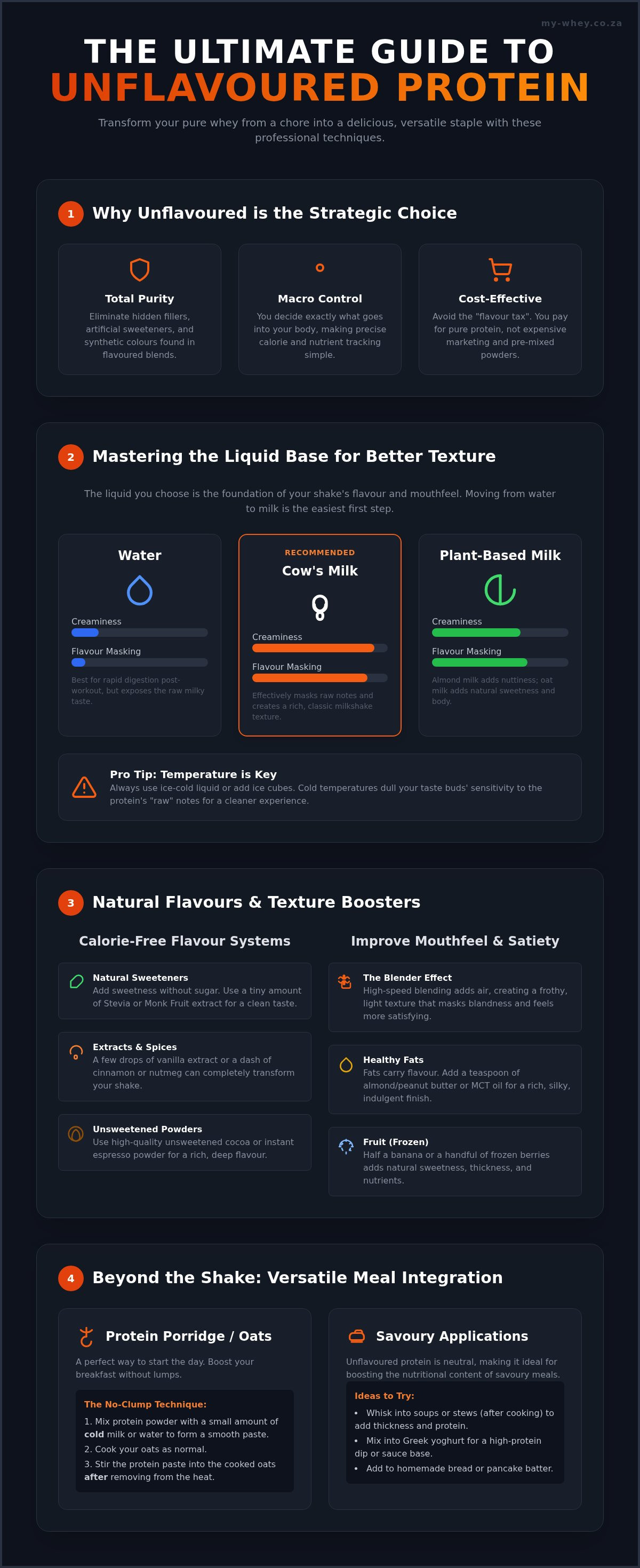
Choosing unflavoured protein isn't just about saving money; it's a commitment to nutritional transparency. Most retail protein tubs contain a cocktail of thickeners, artificial sweeteners, and synthetic colours designed to mask low-grade raw materials. By opting for a pure base, you eliminate these "hidden" fillers that often cause digestive discomfort or bloating. This level of control is essential for anyone tracking precise macros. You decide exactly what goes into your body, which makes the question of how to make unflavoured protein taste better a culinary opportunity rather than a chore.
Understanding Whey Protein Concentrate 80%
What does 80% actually signify? It refers to the Whey protein composition, indicating that 80% of the dry weight is pure protein. The remaining 20% consists of naturally occurring minerals, lactose, and fats that provide a mild, milky undertone. This specific ratio is ideal for dieting because it retains beneficial sub-fractions like immunoglobulins whilst keeping calories manageable. High-purity concentrate mixes far more easily than lower-grade alternatives because it hasn't been weighed down by heavy maltodextrin or soy lecithin fillers. It creates a smooth, thin base that acts as a perfect canvas for your own flavour additions.
Avoiding the 'Flavour Tax'
In the South African market, retail brands often apply a significant "flavour tax" to their products. You're effectively paying a premium for pre-mixed cocoa powder and chemical sweeteners. Buying bulk raw ingredients allows you to bypass this marketing markup. It also grants you the freedom to customise your intensity. If you buy a 5kg bag of chocolate protein and decide you hate it after a week, you're stuck. With unflavoured protein, you can have a vanilla shake on Monday and a savoury protein soup on Tuesday. This versatility is why professional athletes often prefer raw ingredients. They can adjust their intake based on their training phase without being tethered to a single, cloying flavour profile. Learning how to make unflavoured protein taste better gives you the flexibility to use one bag for every meal type, from breakfast oats to post-workout recovery drinks.
By taking control of the flavouring process, you gain several advantages:
- Calorie Management: You choose the sweetener, avoiding the hidden sugars found in commercial blends.
- Chemical Reduction: You skip the artificial dyes and synthetic aromas that serve no nutritional purpose.
- Economic Efficiency: You pay for protein, not packaging and branding.
Mastering the Liquid Base: Texture and Mouthfeel Optimisation
The foundation of any shake is the liquid. It dictates the primary flavour profile and texture of your drink. Mixing raw whey with water is the most efficient method for rapid digestion, but it leaves the natural, milky aftertaste of the 80% concentrate exposed. Using cow's milk reinforces these creamy notes, effectively masking the raw profile. If you're looking for how to make unflavoured protein taste better, transitioning from water to a milk-based liquid is the simplest first step. Plant-based alternatives like almond milk add a subtle nuttiness, whilst oat milk provides a natural sweetness and a heavier body that mimics a traditional milkshake.
Palatability improves significantly with temperature control. Always use ice-cold liquids or add three ice cubes before shaking. Cold temperatures dull the sensitivity of your taste buds to the "raw" notes of the protein, making the experience much cleaner. Additionally, consider the "blender effect." High-speed blending introduces aeration, creating a frothy, light mouthfeel. This aeration can mask a bland flavour profile by changing how the liquid interacts with your palate. A thin, flat shake is often less satisfying than one with a thick, aerated head of foam.
The Role of Healthy Fats
Fats are the primary carriers of flavour in any food system. Adding a teaspoon of almond or peanut butter doesn't just improve satiety; it coats the tongue, creating a more indulgent experience. For those following specific dietary protocols, a dash of MCT oil or coconut milk provides a rich, silky texture that mimics premium retail shakes. These healthy fats help to carry and distribute added extracts or sweeteners more effectively throughout the mixture, ensuring a consistent taste from the first sip to the last. If you're starting your journey with raw ingredients, you can browse high-purity protein bases to find the right starting point for your custom blends.
Thickness and Emulsification
Texture often matters more than taste when it comes to supplement enjoyment. Xanthan gum is a popular tool amongst South African athletes for achieving a thick, commercial-grade consistency without adding calories. A tiny pinch (roughly 1/4 teaspoon) transforms a thin liquid into a dense shake. You can also use frozen berries or a half-frozen banana to create a "pro-yo" consistency. To ensure a smooth result, a proper shaker bottle with a wire whisk is non-negotiable. It breaks down clumps and ensures the protein is fully emulsified, preventing the gritty texture that ruins many unflavoured shakes.
Natural Sweeteners and Flavour Systems: Avoiding the Sugar Trap
The primary hurdle for many is the lack of sweetness in raw whey. Most people ruin a lean protein source by adding high-sugar syrups or commercial cordials, which negates the metabolic advantage of using a pure 80% concentrate. If you want to know how to make unflavoured protein taste better without the calorie spike, look to your spice cupboard first. Cinnamon, nutmeg, and ground ginger provide warmth and a perceived sweetness that tricks the brain. For a more robust profile, raw cocoa powder is an essential tool. It transforms the milky base into a rich, dark chocolate shake whilst providing a dose of antioxidants.
Natural extracts like vanilla, almond, or peppermint essence are another secret weapon. These are highly concentrated and provide an intense aroma with zero calories. Just two drops can completely alter the character of your drink. If you require actual sweetness without the insulin crash, Stevia, Erythritol, and monk fruit are the gold standards. With South Africa's Draft R3337 regulation proposing mandatory warning labels for products high in certain sweeteners, choosing natural alternatives now is a smart, future-proof move. They provide a clean finish that integrates well with the natural minerals found in high-purity whey.
Custom Flavour Systems
Using dedicated flavour systems is the most efficient way to maintain variety. Instead of being locked into a single retail flavour, you can use concentrated drops to change your shake every day. This approach ensures you aren't consuming unnecessary fillers or synthetic dyes often found in pre-mixed tubs. High-quality flavour systems are designed to work with natural proteins, ensuring they mix clear and don't clump. It's a professional strategy that allows you to buy in bulk whilst enjoying the diversity of a fully stocked supplement shop.
Fruit-Based Sweetening
When calories aren't the primary concern, whole-food sweeteners offer a nutritional boost. Dates or a teaspoon of raw honey provide a natural energy source that pairs perfectly with the amino acid profile of whey. If you prefer a more intense fruit flavour without the moisture of fresh produce, freeze-dried fruit powders are excellent. They offer a concentrated burst of strawberry or blueberry that integrates smoothly into the powder.
Don't overlook the role of acidity. A quick squeeze of lemon or lime can "brighten" a berry-based protein shake, cutting through the creaminess of the whey to create a more refreshing, juice-like experience. This balance is key to understanding how to make unflavoured protein taste better for long-term adherence. By managing these variables, you transform a basic supplement into a gourmet performance tool.
Beyond the Shake: Integrating Protein into Savoury and Cooked Meals
Unflavoured protein is a versatile culinary tool that extends far beyond the gym shaker. Because it lacks the cloying sweetness of commercial blends, it functions as a high-protein flour alternative or a nutritional thickener for savoury dishes. Adding a scoop of whey to pasta sauces, stews, or soups is an efficient way to increase the protein density of your dinner without altering the primary flavour profile. Learning how to make unflavoured protein taste better involves moving beyond the shaker bottle and treating it as a functional ingredient in your kitchen.
Baking offers another significant opportunity for bulk whey. You can replace up to 25% of the flour in recipes for pancakes, muffins, or homemade bread with pure protein. This adjustment lowers the glycaemic index of your baked goods whilst improving satiety. For those who prefer on-the-go nutrition, unflavoured whey is the perfect base for homemade protein bars. You control the binders and sweeteners, allowing you to create a high-performance snack that costs a fraction of retail options available in South Africa.
Cooking with Whey: Temperature Tips
The biggest challenge when cooking with whey is preventing it from denaturing or "clumping." When exposed to high heat, protein molecules unfold and bond together, resulting in a rubbery, unpleasant texture. To avoid this, never add protein powder directly to a boiling pot. Instead, stir it into your soups or sauces after you have removed them from the heat.
Tempering is the most effective technique for a smooth finish. Mix your protein with a small amount of room-temperature liquid to create a slurry before folding it into your warm meal. If you are using a microwave for protein cakes or "mug cakes," use a lower power setting and cook in short bursts. This prevents the protein from becoming tough and maintains a moist, cake-like consistency.
Savoury Flavour Pairings
The mild, milky undertone of 80% whey concentrate pairs exceptionally well with dairy-based savoury dishes. You can whisk unflavoured protein into Greek yoghurt along with garlic, lemon, and fresh herbs to create a high-protein dip for vegetables or crackers. It also serves as an excellent thickener for creamy mushroom or tomato-based pasta sauces.
For a quick breakfast, the "protein porridge" hack is essential. Prepare your oats as usual, but wait until they have finished cooking before stirring in your whey. This ensures the protein integrates smoothly without turning lumpy. If you are ready to experiment with these techniques, you can order high-purity Whey Protein Concentrate 80% to start fortifying your favourite meals. By mastering these savoury applications, you ensure that your bulk supplement remains a flexible and enjoyable part of your daily diet.
Sourcing High-Purity Bulk Supplements in South Africa
The quality of your raw ingredients is the single most important factor in determining the success of your custom blends. High-purity supplements mix more predictably and carry flavours more effectively than lower-grade alternatives. When you understand how to make unflavoured protein taste better, you realise that a clean, lab-tested base is essential. Contaminants or low-quality fillers in inferior products often produce a metallic or bitter aftertaste that no amount of natural sweetener can fully mask. Selecting a reputable source ensures that your 80% concentrate remains a neutral, high-performance canvas.
Bulk purchasing is a strategic move for the serious athlete in South Africa. By opting for 5kg or larger quantities, you significantly reduce the "flavour tax" and marketing overhead associated with retail tubs. This approach also offers environmental benefits by minimising plastic waste and reducing the carbon footprint of frequent shipping. Beyond the protein itself, you can build a comprehensive performance stack by combining your whey with Creatine Monohydrate and Amino Acids. This allows for precise control over your recovery protocol whilst maintaining the purity of your intake.
The My Whey Commitment
We prioritise transparency and efficiency by focusing on high-purity Whey Protein Concentrate 80%. This specific concentration provides the optimal balance of protein-to-fat ratios for muscle recovery whilst maintaining the natural minerals that assist with emulsification. Our model provides the raw materials that allow you to act as your own "flavour chemist," giving you total authority over your nutrition. We facilitate this through national delivery across South Africa, ensuring that professional-grade supplements are accessible regardless of your location. You can learn more about our Whey Protein standards and the science behind our selection process to understand why purity is our primary metric.
Organisation and Storage for Bulk Users
Effective storage is vital when handling bulk quantities. To prevent the degradation of taste and texture, move your protein from the delivery bag into large, airtight containers. Exposure to humidity or "pantry smells" can quickly ruin a high-quality powder, making the task of how to make unflavoured protein taste better much more difficult. Store your containers in a cool, dark environment to preserve the integrity of the amino acids and natural fats.
Organisation also improves your daily routine. If you have developed specific flavour blends using cocoa, Stevia, or spice mixes, prepare smaller, labelled jars for the week ahead. This methodical approach saves time and ensures consistency in every shake. If you are ready to take control of your supplementation, browse our range of pure bulk supplements and start building your custom performance stack today. By investing in quality sourcing and proper storage, you ensure that your nutrition remains as effective as it is enjoyable.
Master Your Performance with Custom Nutrition
Choosing unflavoured protein is a strategic decision that prioritises purity and performance over marketing hype. By moving away from pre-mixed retail tubs, you eliminate unnecessary fillers and artificial dyes whilst gaining the freedom to customise your flavours. Whether you are whisking whey into a savoury soup or perfecting a chilled berry shake, the versatility of a raw base is unmatched. Mastering how to make unflavoured protein taste better is simply a matter of applying the right culinary techniques to high-quality ingredients.
We provide the foundation for your success with lab-tested supplements designed for the South African market. Our products contain zero fillers or artificial additives, ensuring you receive 80% protein content in every scoop. Take the next step in your wellness journey by securing affordable bulk pricing on our premium concentrate. It's time to stop overpaying for synthetic additives and start investing in pure, effective nutrition.
Shop our Pure Whey Protein Concentrate 80% and save on bulk nutrition
Start experimenting with your own flavour systems today and enjoy the confidence that comes from knowing exactly what fuels your body. Your path to cleaner, more efficient nutrition is now within reach.
Frequently Asked Questions
Is unflavoured protein better for you than flavoured protein?
Unflavoured protein is generally considered a cleaner choice because it lacks the artificial sweeteners, synthetic dyes, and thickeners found in most retail tubs. By choosing a pure Whey Protein Concentrate 80%, you avoid unnecessary fillers like maltodextrin that can cause digestive discomfort. This transparency allows you to control every ingredient in your shake, making it a superior option for those prioritising nutritional purity and precise macro tracking.
Can I mix unflavoured protein with just water?
You can certainly mix unflavoured protein with water, though it will have a very mild, milky taste. This is the most calorie-efficient way to consume your supplement, but it lacks the creamy mouthfeel of milk. To improve the experience, always use ice-cold water and a shaker bottle with a wire whisk. This ensures the powder emulsifies properly, preventing the gritty texture that can occur when mixing by hand.
How do I stop my unflavoured protein from clumping in hot food?
To prevent clumping, never add protein powder directly to a boiling pot. High heat causes the protein to denature and bond together, creating a rubbery texture. Instead, temper the powder by mixing it with a small amount of room-temperature liquid to create a smooth slurry. Stir this mixture into your soups, stews, or oats only after you have removed them from the primary heat source.
What is the best zero-calorie sweetener for protein shakes?
Stevia, Erythritol, and monk fruit are the most effective natural options for those learning how to make unflavoured protein taste better without adding sugar. These sweeteners provide a clean finish without the bitter aftertaste often associated with synthetic chemicals. Because they are highly concentrated, you only need a tiny amount to transform a neutral shake. They integrate perfectly with the natural mineral profile of high-purity whey concentrate.
Can I use unflavoured whey protein in coffee?
You can use unflavoured whey in coffee, provided you don't add it to boiling liquid. Adding the powder to a piping hot cup will result in instant clumping. For a smooth, high-protein latte, mix the protein with your cold milk or cream first before pouring it into your coffee. This method ensures the protein dissolves completely and adds a pleasant, creamy richness to your morning brew.
Does unflavoured protein have a strong taste?
High-quality unflavoured protein should have a very neutral, slightly milky profile. It doesn't possess the intense, cloying sweetness of commercial chocolate or vanilla blends, which makes it easier to customise. If your protein has a sharp or unpleasant "raw" taste, it's often due to the presence of low-grade fillers. Pure 80% concentrate is designed to be a subtle base that disappears when mixed with other ingredients.
How much cinnamon should I add to a protein shake for flavour?
Start with half a teaspoon of ground cinnamon per scoop of protein. This spice is a powerful, calorie-free tool for anyone wondering how to make unflavoured protein taste better because it provides a perceived sweetness. It pairs exceptionally well with the natural dairy notes of whey. You can adjust the amount based on your preference, but a small pinch is usually enough to significantly improve the aroma and taste.
What can I add to protein powder to make it taste like a milkshake?
To replicate a milkshake, use oat milk or full-cream milk as your base and add a tiny pinch of Xanthan gum for thickness. Blending in a handful of ice cubes or a frozen banana will create the frosty, dense texture found in traditional shakes. Add a few drops of vanilla essence and a natural sweetener like Stevia to achieve an indulgent flavour profile whilst maintaining the nutritional integrity of your pure protein.