

How to Stay Hydrated During Long Workouts: A Practical Guide
What if drinking more isn’t always the answer? If you’re unsure how to stay hydrated during long workouts without falling short or overdoing it, plan around your effort, the weather and how much you sweat rather than following a universal drinking quota. Too little fluid can leave you feeling fatigued and less focused; drinking far beyond your needs can also be dangerous.
It makes sense to reach for water and keep sipping when a session runs long, especially in hot conditions or when you’re sweating heavily. But water isn’t the only consideration. Longer, harder sessions and heavy sweating may make electrolytes useful, while many shorter, moderate workouts don’t call for them. A simple plan can help you feel prepared without turning every workout into a calculation.
This guide covers what to do before, during and after exercise. You’ll learn how to adjust your fluid intake to the conditions, when electrolyte drinks may help, which warning signs to watch for and how to avoid excessive drinking. Hydration supports training, but it’s separate from the role of carbohydrates and other sports nutrition.
Key Takeaways
- Learn how to stay hydrated during long workouts with a plan that adapts to your effort, conditions and sweat losses.
- Use a simple before, during and after routine, adjusting it to your activity and access to fluids.
- Choose between water, electrolytes and carbohydrate-containing drinks by considering workout duration, intensity, heat and personal tolerance.
- Use session notes to refine your approach. Estimating sweat rate can offer a useful guide, but it isn’t a medical assessment.
- Build a repeatable pre-workout checklist around the conditions, fluid access and how your body responds.
How hydration affects long workouts and exercise performance
Should you sip on a schedule, drink only when thirsty or switch to an electrolyte drink halfway through? There isn’t one rule that suits every long session. Start by understanding what your body is doing, then adapt your approach to your pace, sweat losses and surroundings. This is the basis of how to stay hydrated during long workouts without treating a fixed drinking quota as a goal.
Hydration means maintaining a workable balance between the fluid your body takes in and the fluid it loses. It doesn’t mean drinking as much as possible. During exercise, sweat helps regulate body temperature: as it evaporates from your skin, it carries heat away. If you lose fluid faster than you replace it, exercise may feel harder, particularly in hot conditions. Individual responses differ, and a dip in performance or cramp can have causes other than hydration.
Dehydration and overdrinking are separate risks: aim to respond to fluid losses, not to assume that more drinking is always better. Sports drinks are designed to replenish fluids, electrolytes and energy lost during physical activity, although their ingredients and intended uses vary. Keep that in mind when comparing drink options later in this guide.
What changes in your body as a workout continues?
As your session goes on, your body continues to produce heat and may lose fluid through sweat. How much you need to replace depends on more than duration. A hard-paced run in warm, humid weather can feel very different from a steady indoor cycle of the same length. Clothing that traps heat, access to shade or airflow, and the availability of drink breaks also affect your needs.
For example, you may sweat less in light clothing on a cool morning than during a demanding afternoon session. The same person can need a different approach on different days. Treat thirst, comfort and the conditions as useful clues, rather than taking one symptom as proof of dehydration. If you feel unusually unwell, stop exercising and seek appropriate medical help.
Why there is no single hydration target for everyone
Sweat rate varies between people, and fluid losses can change from one session to another. Two athletes following the same route may finish with different levels of sweat loss because their bodies, effort and conditions differ. A universal hourly volume can’t account for all those factors, and forcing fluid to match a generic target may not suit your needs.
Instead, build a flexible plan around you and the workout. Note the session’s duration, intensity, temperature, clothing and drink access, then consider how you felt during and afterwards. These observations can help you make gradual adjustments. A more formal estimate of sweat rate can offer another way to personalise your plan, but it’s an estimate, not a diagnosis or a reason to ignore how you feel.
- Session: How long and how hard will you exercise?
- Conditions: Is it warm, humid or likely to increase sweating?
- Access: When and where can you drink?
How to hydrate before, during, and after a long workout
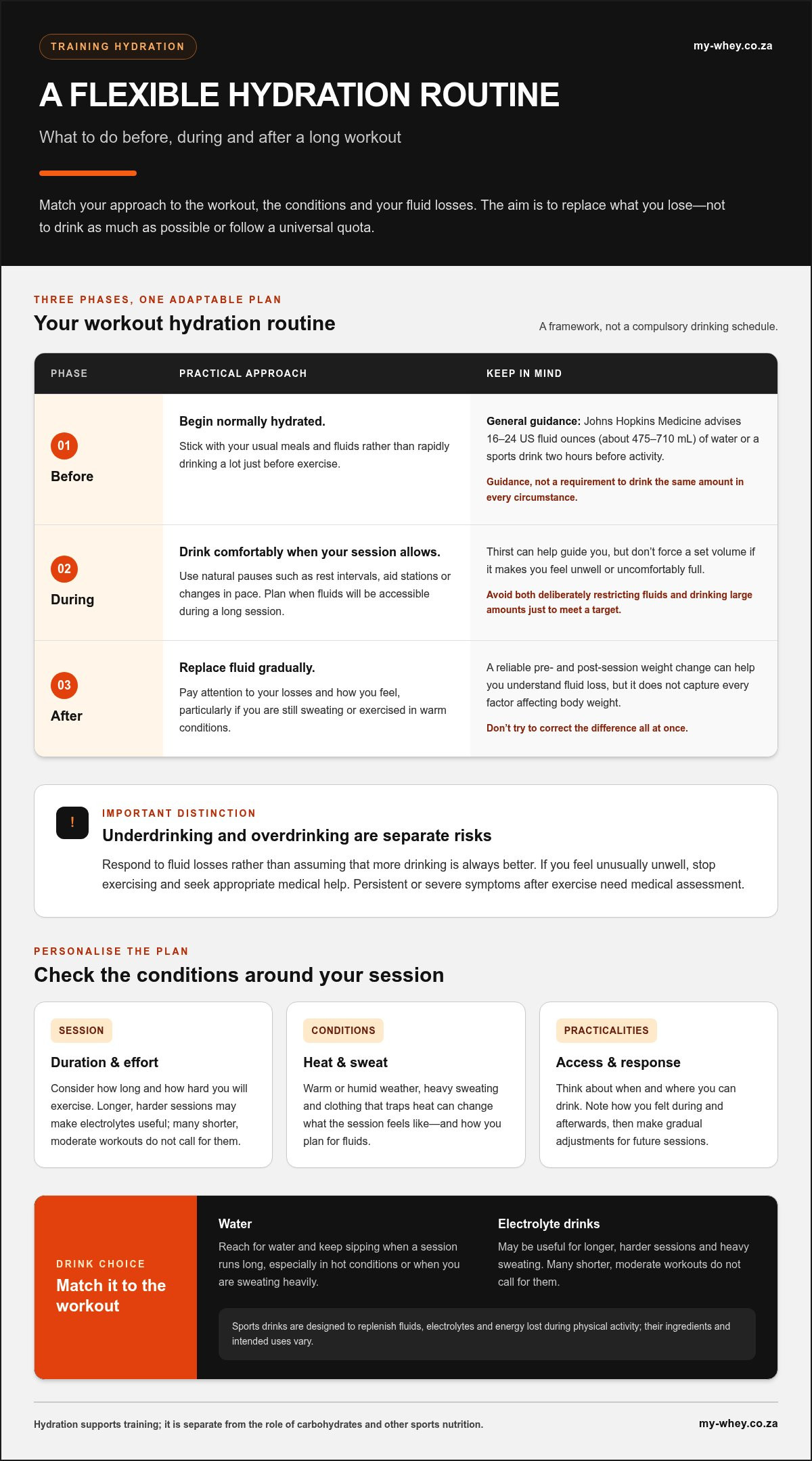
A straightforward routine can take the guesswork out of a long session: start normally hydrated, drink in response to the workout and replace losses gradually afterwards. The details depend on your activity and access to fluids. A runner with planned water stops, for example, has different opportunities to drink from someone cycling a remote route or exercising where bottles aren’t permitted.
Before: begin normally hydrated. During: take manageable drinks when your session allows. After: replace fluid gradually, guided by your losses and how you feel. This is a framework, not a compulsory drinking schedule. Avoid deliberately restricting fluids, but don’t force yourself to drink large amounts just to meet a target either.
What to do before a long training session
Stick with your usual meals and fluids rather than trying to “catch up” by rapidly drinking a lot immediately before exercise. Johns Hopkins Medicine advises drinking 16-24 US fluid ounces (about 475-710 mL) of water or a sports drink two hours before activity. Treat this as general guidance, not a requirement to drink the same amount regardless of your routine, comfort or circumstances.
Before setting out, consider the expected duration, temperature, intensity and where you’ll be able to refill or take a drink. A hot session with limited access to water calls for more planning than a workout with regular breaks and a nearby bottle. Urine colour can vary for several reasons, so don’t rely on it alone as a precise hydration test.
How to drink during exercise and recover afterwards
During exercise, use natural pauses such as rest intervals, aid stations or changes in pace to drink comfortably. Thirst can help guide you, but for a long session it’s sensible to plan when fluids will be accessible rather than waiting until you feel very thirsty. Don’t force a set volume if it makes you feel unwell or uncomfortably full.
Afterwards, keep replacing fluid over time, particularly if you’re still sweating or the session took place in warm conditions. If you have a reliable pre- and post-session weight, the change can help you understand your fluid loss, though it won’t capture every factor affecting body weight. Avoid trying to correct the difference all at once. Persistent or severe symptoms after exercise need medical assessment, not just more fluids or self-treatment.
Make the routine fit the session
Plan the practical details before you begin. For a long run, that might mean carrying a bottle or mapping refill points; for a gym session, it could mean keeping water within reach and drinking during breaks. Revisit your plan when the weather, pace or access to fluids changes. The aim is a routine you can follow comfortably, not a rigid quota.
Hydration and sports nutrition are separate considerations. Carbohydrates may have a role in fuelling longer training, but they don’t replace fluids. If you’re planning your broader training nutrition too, explore My Whey’s carbohydrate ingredients as a separate consideration from hydration.
Water or electrolytes during long workouts: how to decide
Choosing a drink doesn’t need to be complicated. First, decide what you need it to do: replace fluid, replace some electrolytes, or provide energy as well. Duration, effort, heat, sweat losses and personal tolerance all matter. A drink that suits a hard session in hot weather may be unnecessary for an easier workout in cool conditions.
Use this comparison as a starting point, not a fixed rule for every session:
| Drink | What it provides | When it may suit |
|---|---|---|
| Water | Fluid | Many low-to-moderate effort sessions, depending on duration and conditions |
| Electrolyte drink | Fluid and electrolytes, including sodium | Longer or demanding sessions, especially in heat or with heavy sweating |
| Carbohydrate-containing sports drink | Fluid, electrolytes and carbohydrate for energy | Prolonged exercise when extra fuel may be useful |
The table describes broad differences, not a guarantee of how a drink will feel or perform for you. Check the label, and consider taste and tolerance as well as the demands of your session. If a drink causes stomach discomfort, it may not be a practical choice during exercise.
When water may be enough
For many low-to-moderate intensity sessions lasting around 60-90 minutes or less, water is generally enough, though conditions and personal sweat losses can affect what feels appropriate. You don’t need an electrolyte or sports drink simply because you’re exercising. Plan access to fluids, then drink in a way that feels comfortable and suits the session, rather than trying to hit a universal volume.
In a cooler setting, an easier workout may not create the same fluid or electrolyte demands as a fast session in hot, humid weather. Compare like with like: you may prefer different options on different training days.
When electrolytes or carbohydrate may be useful
Sodium is an electrolyte involved in fluid balance, and sweat contains sodium. An electrolyte drink may be worth considering during longer, more intense sessions, in hot or humid conditions, or if you know you sweat heavily. That doesn’t mean it will prevent cramps: cramps can have multiple contributing factors, and no drink can promise to stop them.
Carbohydrate has a separate role. During exercise lasting over 90 minutes, carbohydrate-containing sports drinks may provide an additional energy source; they aren’t simply a stronger form of water. Keep hydration and fuelling distinct in your plan. Amino acids, including branched-chain amino acids, are also not hydration products. This guide to branched-chain amino acids covers their separate nutrition context.
To decide how to stay hydrated during long workouts, match the drink to the session, then review how you tolerate it. Adjust for conditions and effort, and don’t assume that more ingredients or more fluid automatically means a better choice.
How to personalise your workout hydration plan safely
A useful hydration plan reflects what actually happens in your sessions, not just what a chart suggests. Keep a brief record of the conditions, your access to drinks and how the plan felt. Across several comparable workouts, this can help you spot patterns and make measured changes. Hydration means matching intake to need, not maximising intake.
Drinking too little can contribute to dehydration, but taking in more fluid than your body can process can also be dangerous. Excessive intake during exercise can dilute sodium in the blood and contribute to exercise-associated hyponatraemia. Don’t treat every sign of discomfort by drinking more; symptoms can have different causes.
Use a simple sweat-loss check with sensible limits
For a rough personal reference, weigh yourself immediately before and after a session, using the same scale and similar conditions. For a clearer comparison, wear minimal, dry clothing and note any drinks consumed or bathroom visits during exercise. The result is only an estimate: clothing, food, measurement conditions and normal body-weight changes can all affect it.
Repeat the check in different conditions rather than treating one workout as definitive. A result from a cool, easy session won’t necessarily apply to a hot, demanding one, and it shouldn’t become a rigid daily drinking prescription.
Recognise warning signs and know when to stop
Headache, nausea, dizziness, unusual weakness or worsening discomfort during or after exercise can have several causes, including heat illness or a fluid-balance problem. These symptoms aren’t enough on their own to diagnose dehydration. Stop exercising if symptoms are concerning, move to a cooler place if possible, and don’t try to resolve severe symptoms by forcing down more fluid.
Confusion, collapse, seizures or other severe or rapidly worsening symptoms need urgent medical attention. Ask someone nearby for help and contact emergency services. If symptoms persist or recur, seek professional medical advice before returning to strenuous exercise.
Use this repeatable review after a session:
- Record the workout’s duration, effort and weather conditions.
- Note when drinks were available and whether you could drink comfortably.
- Review how you felt during recovery, then adjust one part of the plan for a similar session.
Change gradually and avoid chasing an exact number. If you’re also considering fuelling for longer exercise, explore My Whey’s carbohydrate ingredients as a separate part of training nutrition, not as a substitute for fluids.
Build a hydration routine that fits your training
A routine is useful when it works in real training conditions. Before your next long session, consider more than the drink itself: how long you’ll be active, how hard you expect to work, what the weather may be like and when you can access fluids. A route with refill points calls for different preparation from a session with few breaks. Use the checklist below as a starting point, then adapt it to your experience.
A practical checklist for your next long workout
Keep the plan simple enough to follow. Decide what you’ll do before setting off, then review it afterwards rather than trying to perfect it in advance.
- Check the session: Note the planned duration and intensity, and consider whether heat or humidity could affect how much you sweat.
- Plan fluid access: Identify likely breaks, refill points or places to carry a drink. Don’t assume you’ll be able to stop whenever you want.
- Choose your drink: Decide whether water suits the session or whether its length, demands and your personal needs make another option more appropriate.
- Keep it comfortable: Drink when opportunities fit the activity. Don’t deliberately restrict fluids or force yourself to drink beyond what feels manageable.
- Review afterwards: Note how the plan felt during exercise and recovery. If you make a change, adjust gradually and assess it during a comparable session.
For example, if your usual route is cooler than the one you’re planning for a warm day, account for the changed conditions and check where you can refill. The goal isn’t to follow the same routine regardless of circumstances. Make a considered choice before the session and learn from it afterwards.
Keep hydration separate from your wider recovery nutrition
Fluids, carbohydrates and protein have different roles. Drinking supports fluid replacement; carbohydrate can contribute energy during prolonged exercise, while protein is one part of overall recovery nutrition. One doesn’t automatically replace another, so consider each according to your training needs rather than treating a nutrition product as a hydration solution.
For separate recovery nutrition context, read this guide to whey protein. My Whey’s broader nutrition range is a distinct consideration from planning fluids for exercise. If you’re exploring training nutrition alongside your hydration routine, explore My Whey’s nutrition range.
With a plan for duration, conditions, drink access and personal response, you can make your next long workout more manageable without chasing a perfect number. Keep the routine practical, review what works and refine it as your training changes.
Put your plan into practice at your next session
Your next workout is a chance to learn what suits you. Before you start, choose one practical detail to pay attention to, such as whether you can reach your drink at planned breaks or how the conditions affect your comfort. After the session, note what you’d keep or change. Small, considered adjustments can help you build confidence without turning hydration into another performance target.
Knowing how to stay hydrated during long workouts is one part of preparing well. Give fluids their own place in your plan, alongside the food and recovery choices that support your broader training goals. My Whey supplies nutritional supplements and ingredients, including carbohydrate ingredients and amino acids for separate sports nutrition needs.
Explore those options as part of your wider routine, not as a replacement for fluids: Explore My Whey’s nutrition range. Take a practical plan into your next session, pay attention to how it works for you and keep building from there.
Frequently Asked Questions
Should I drink when I am thirsty during a long workout?
Yes, thirst is a useful cue, but don’t make it your only plan for a long session. If a route has long stretches without water, plan access before you start rather than relying on finding a drink when thirst appears. During training, notice whether thirst is increasing and whether drinking comfortably at available breaks helps. Practise your approach in ordinary sessions before relying on it during an event.
Can drinking too much water during exercise be dangerous?
Yes. Drinking more fluid than your body can use can dilute sodium in the blood, causing exercise-associated hyponatraemia. Warning signs can include nausea, headache, vomiting, confusion or seizures, and they can overlap with other exercise-related problems. Don’t respond to every symptom by drinking more. Stop exercising and seek urgent medical help for confusion, collapse, seizures or severe or worsening symptoms.
Are sports drinks necessary for every long workout?
No. A sports drink isn’t automatically needed just because a session is long; the conditions, intensity, sweat losses and your fuelling needs all affect the choice. Water may suit a steady session in mild weather, while a demanding workout in heat may make replacing electrolytes worth considering. A carbohydrate-containing drink can also provide energy, but that’s a fuelling role, not a requirement for every workout.
How can I estimate how much I sweat during a workout?
For a rough estimate, weigh yourself immediately before and after exercise using the same scale and similar conditions. Record how much you drank and whether you urinated during the session; these affect the weight change. For a more useful comparison, weigh in dry, minimal clothing and repeat the process across similar workouts. The result is an estimate, not a precise measurement or a fixed drinking prescription.
Can I use coffee or tea to hydrate before exercise?
Yes, coffee and tea contribute fluid, so a familiar cup can be part of your usual pre-exercise routine. Keep your own response in mind: caffeine can cause jitters, stomach upset or a stronger urge to urinate in some people, particularly if they’re not used to it. Try your routine before a normal training session rather than experimenting for the first time before a long or important workout.
What should I do if I feel dizzy during a long workout?
Stop exercising and move somewhere safe and cool; sit or lie down so you don’t fall. Dizziness can have several causes, so don’t assume that drinking water alone will fix it. If it doesn’t settle promptly, worsens or returns, seek medical advice. Confusion, fainting, collapse, seizures or other severe symptoms require urgent medical attention. Don’t resume exercise while you still feel unwell.
Does salty sweat mean I need an electrolyte supplement?
No. White marks on clothing or salty-tasting sweat aren’t enough to show exactly how much sodium you lose or whether you need a supplement. Sweat losses vary, and appearance alone can’t measure them. Consider the full picture, including how long and intensely you exercise, the conditions and whether heavy sweating is typical for you. If you’re unsure or have a health condition affecting fluid or salt balance, ask a healthcare professional for individual advice.