

How to Store Bulk Supplements: The 2026 Freshness Guide
Your five-kilogram bag of premium whey or creatine monohydrate is a ticking clock, not a permanent fixture. Buying in bulk is the smartest way to secure high-purity nutrition at a lower cost, yet many athletes watch their investment turn into a clumped, ineffective mess within weeks. Learning how to store bulk supplements to maintain freshness is the difference between 100% potency and literally throwing money in the bin. You've likely felt that frustration when a scoop of amino acids feels like a brick or your omega 3 softgels develop a sharp, rancid odour that ruins your morning routine.
It doesn't have to be this way. We'll show you how to master professional preservation techniques that protect your powders and capsules from the degrading effects of moisture, light, and heat. This guide covers the latest 2026 storage standards, including the updated USP definition for controlled room temperatures and precise decanting methods. From optimising your pantry space to managing the delicate stability of raw herbal extracts, you'll learn exactly how to keep your supplements free-flowing and powerful until the very last serving.
Key Takeaways
- Identify the primary environmental threats: heat, light, moisture, and air, and learn why your kitchen cupboard might be the worst place for storage.
- Use a 'working tub' decanting method to minimise air exposure, ensuring your main bulk bags remain sealed and potent for longer.
- Master the specific storage requirements for different products, including why refrigeration is often the best choice for keeping Omega 3 softgels from turning rancid.
- Discover how to store bulk supplements to maintain freshness using the 'First-In, First-Out' (FIFO) system to manage your nutritional inventory effectively.
- Establish a routine for monthly quality checks to detect signs of degradation, such as clumping or off-odours, before they impact your health.
Why Bulk Supplement Storage Matters: The Science of Potency
Buying in bulk is a strategic move for any serious athlete. It secures high-purity ingredients like Whey Protein Concentrate 80% or Creatine Monohydrate at a fraction of the retail price. However, once you break the seal on a large-volume bag, the clock starts ticking. Supplement degradation is the chemical breakdown of active compounds, where the molecular structure of your nutrients literally falls apart. This isn't just a matter of taste; it's a loss of efficacy that compromises your physical results. Understanding basic Dietary Supplement Overview principles reveals that potency is tied directly to chemical stability.
Bulk products face a unique challenge because of their surface-to-volume ratio. Each time you open a massive 5kg bag to scoop out a serving, you introduce a fresh supply of oxygen and moisture to a large quantity of product. Unlike small retail bottles that are finished quickly, bulk bags remain in your home for months. Because My Whey focuses on raw, unflavoured ingredients without artificial stabilisers or hidden fillers, our products are naturally more sensitive to the environment. Learning how to store bulk supplements to maintain freshness is essential to protect your financial investment and ensure your body receives the exact dosage you've planned for.
The Molecular Impact of Oxygen and Light
Oxygen is the primary enemy of lipid-based products like Omega 3 Softgels. When air enters the container, it triggers oxidation, a process that turns healthy fats rancid. This creates a sharp, unpleasant odour and can actually make the supplement counterproductive. UV light is equally destructive, providing the energy needed to snap the delicate bonds in amino acids and vitamins. Photodegradation is the process where light energy disrupts chemical stability. To prevent this, you must treat your bulk stack as a collection of volatile biological compounds rather than inert powders.
Hygroscopy: Why Powders Clump
Many high-performance ingredients, particularly Creatine and certain amino acids, exhibit hygroscopic behaviour. This means they actively attract and hold water molecules from the surrounding air. When moisture enters your storage area, it creates a bridge between powder particles, turning a free-flowing supplement into solid, unusable bricks. Beyond the frustration of trying to mix a clumped shake, hygroscopy leads to inaccurate dosing. As the powder absorbs water, its density changes, meaning a standard scoop may no longer provide the intended weight of the active ingredient. Maintaining a bone-dry environment is the only way to ensure consistent solubility and performance.
Identifying the Four Enemies: Heat, Light, Moisture, and Air
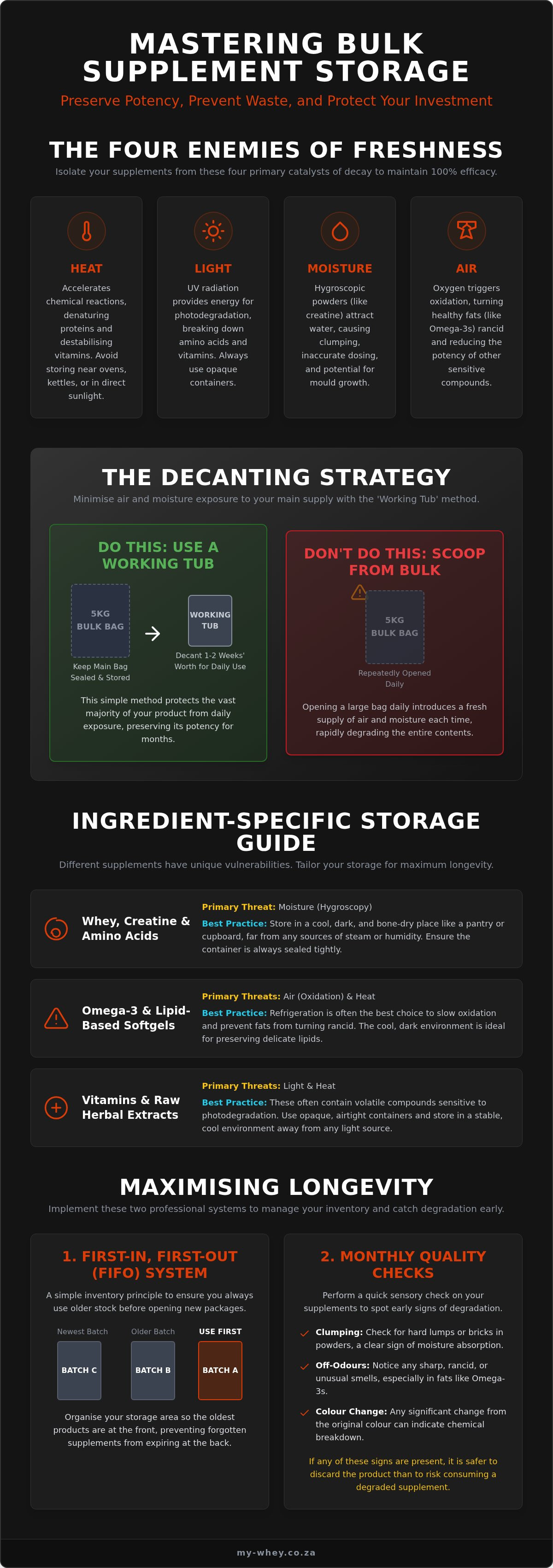
Preserving the integrity of your bulk stack requires a proactive defence against environmental stressors. While the molecular science explains why products fail, your daily habits determine how long they last. To master how to store bulk supplements to maintain freshness, you must isolate your supply from the four primary catalysts of decay: heat, light, moisture, and air. These elements don't act in isolation; they often work together to accelerate the shelf-life countdown of your most valuable powders.
Heat is perhaps the most common offender. Many people instinctively store their supplements in the kitchen, often in the cupboard directly above the stove or kettle. This is a critical error. Frequent blasts of heat can denature proteins and destabilise vitamins. According to official storage guidelines, maintaining a cool environment is vital for health products. Light follows closely as a silent destroyer. While clear glass jars look organised on a countertop, they offer zero protection against UV rays. Long-term bulk storage requires opaque or solid containers to prevent the light-triggered breakdown of amino acid chains.
Moisture and air present a double threat, particularly for whey protein. Oxygen initiates the oxidation process, while humidity turns fine powders into unusable lumps. Because raw ingredients lack the heavy artificial preservatives found in retail brands, they are more susceptible to these shifts. If you've already noticed your powders changing texture, it might be time to refresh your supplement supply with high-purity alternatives.
Managing Temperature Fluctuations
Most dry bulk powders thrive in a temperature range of 15-22°C. While recent 2026 pharmaceutical updates suggest a slightly broader room temperature range of up to 25°C, stability is the real goal. Constancy matters more than absolute cold. Avoid moving your products from a cold fridge to a warm room frequently. This causes 'sweating' and internal condensation, which introduces moisture directly into the heart of your powder.
Humidity Control and Desiccants
In humid coastal or tropical environments, standard packaging isn't enough. Use food-grade silica gel packets in your large tubs to pull residual moisture from the air. If you notice a damp smell or 'caking' around the edges of the bag, your storage area is too humid. Move your stack to a dry pantry or a climate-controlled cupboard away from external walls. This simple shift ensures your bulk investment stays free-flowing and effective for its entire lifespan.
The Decanting Strategy: Managing Large-Scale Supplement Volumes
Managing a five-kilogram bag of protein or amino acids requires more than just a large cupboard. Every time you open a bulk bag, you invite oxidation and moisture into the entire supply. To master how to store bulk supplements to maintain freshness, implement the 'Working Tub' strategy. This involves decanting a seven-day supply into a smaller, airtight container whilst keeping the primary 'mother' bag sealed in long-term storage. By limiting the exposure of the main batch to once a week, you significantly extend the lifespan of the active compounds.
Professional handling isn't just for manufacturers. Following FDA Storage Regulations regarding climate and light control ensures your home setup mirrors industry standards. After decanting, squeeze every possible centimetre of air out of the original bag before resealing the zip-lock. Store this mother bag in a dark, cool spot. Always label your working tub with the product name, the date you opened the bulk bag, and the original expiry date. This prevents batch confusion and ensures you use the oldest stock first.
Step-by-Step Decanting Workflow
Success starts with a sterile environment. Prepare a clean, bone-dry surface before opening any bulk packaging. Use dedicated stainless steel or BPA-free plastic scoops for each product to prevent cross-contamination. Even a tiny trace of whey in your creatine can introduce moisture or unwanted bacteria. Once the transfer is complete, wipe the seal of the bulk bag to ensure no powder prevents a perfect airtight closure. This methodical approach maintains the purity My Whey is known for.
Choosing Airtight Storage Containers
The container material is as vital as the seal. HDPE plastic is an excellent, durable choice, whilst opaque glass or stainless steel offers superior protection against light. Avoid simple 'snap-top' lids that lack a physical barrier. Instead, prioritise screw-top containers equipped with silicone gaskets or rubber seals. These are essential for keeping moisture-sensitive products like creatine monohydrate free-flowing. Ensure every container is washed and completely air-dried for at least 24 hours before refilling to avoid trapping residual humidity.
Ingredient-Specific Storage: From Whey Protein to Omega 3 Softgels
A universal approach to storage is a mistake. Each nutritional compound has a unique chemical profile that reacts differently to the environment. Whilst your Whey Protein Concentrate 80% might tolerate a dry pantry, your herbal extracts or amino acid blends could degrade rapidly if treated the same way. Understanding how to store bulk supplements to maintain freshness requires a targeted strategy for every category in your stack.
Whey protein is the most common bulk purchase, often arriving in large five-kilogram bags. The main challenge here is the 'protein smell' that develops when air is trapped inside a nearly empty bag for weeks. As the volume of powder decreases, the volume of oxygen increases. Always squeeze the air out of the bag before sealing or move the remaining powder to a smaller container. For those using branched chain amino acids, moisture protection is even more critical. These compounds are notoriously hygroscopic and will turn into a sticky mess if the seal isn't perfect.
Sensitive Amino Acids and Pre-Workout Ingredients
Raw amino acids like L-Glutamine and BCAA powders lack the artificial anti-caking agents found in mass-market brands. This purity is a benefit, but it demands vigilance. Raw sweeteners and flavour systems are also prone to clumping if exposed to even minor humidity. Heat is another concern for cognitive support supplements and herbal powders. High temperatures can break down delicate phytonutrients, rendering your superfoods less effective. Keep these in the coolest, darkest part of your home to preserve their biological activity.
Bulk Softgels and Liquid Supplements
Bulk oils require the strictest temperature controls. If you buy omega 3 softgels in large quantities, refrigeration is the gold standard. In warm environments, softgels can melt slightly and stick together, creating a single, unusable mass. More importantly, heat accelerates rancidity. You can identify spoiled fish oil by a sharp, sour smell or a persistent aftertaste that wasn't present when you first opened the container. For liquid herbal extracts, use dark, amber-coloured glass to block light and maintain potency. Secure your next batch of high-purity ingredients by visiting our bulk supplement shop today.
Maximising Longevity: Maintenance and Safety Checks for Your Bulk Stack
Effective storage isn't a one-time event; it's a recurring monthly habit. Even with the best containers, you must actively monitor your inventory to ensure your nutritional investment remains safe and effective. Learning how to store bulk supplements to maintain freshness involves regular physical inspections. Because My Whey products are high-purity and lack the heavy artificial preservatives found in retail brands, they are more sensitive to environmental shifts. This commitment to purity means storage is your most important habit to maintain the lab-tested quality of your supplements.
Implement the 'First-In, First-Out' (FIFO) method if you manage multiple bulk orders. Always place new bags at the back of your storage area and bring older stock to the front. This simple organisational shift ensures you never leave a bag at the bottom of the stack until it passes its peak potency. If a product reaches its expiry date, the potency of active compounds begins to decline. However, you should discard any supplement immediately if it shows signs of spoilage, regardless of the date on the packet. Safety should always take precedence over savings.
The Red Flags of Supplement Spoilage
Perform a sensory check every month. Look for visual changes like spotting, dark patches, or unusual discolouration, which often signal fungal growth or severe oxidation. Odour is an equally powerful indicator. A 'fishy' smell in your protein or a sharp, 'sour' scent in your creatine are clear warning signs that the product has compromised integrity. Texture changes also matter. Whilst minor clumping is common in hygroscopic amino acids, a complete transition to hard, damp bricks suggests significant moisture ingress that could lead to bacterial contamination.
Organising Your Supplement Station
Create a dedicated 'cool zone' in your home for your daily stack. This area should be well-ventilated and situated far away from cleaning chemicals, laundry detergents, or strong-smelling spices that powders can absorb. A professional home storage setup includes:
- Opaque Containers: Shielding every powder from UV-triggered photodegradation.
- Silica Packets: Placing fresh desiccant in every tub to manage residual humidity.
- Clear Labelling: Marking every container with the open date and expiry date.
- Elevated Storage: Keeping bags off the floor to avoid temperature transfer from cold or damp surfaces.
By following these protocols, you ensure that every scoop provides the 100% potency you expect from professional-grade nutrition. Mastery of how to store bulk supplements to maintain freshness allows you to enjoy the full economic and physical benefits of your bulk purchases without the risk of waste.
Protecting Your Nutritional Investment
Mastering the storage environment of your supplement stack is as critical as the training programme itself. By implementing a decanting strategy and isolating your powders from moisture, heat, and UV light, you preserve the molecular integrity of every scoop. Understanding how to store bulk supplements to maintain freshness ensures that your high-purity ingredients don't degrade before you reach the bottom of the bag. Consistency in storage leads directly to consistency in your physical results.
Regular monthly checks and the FIFO method keep your pantry efficient and safe. When you invest in ethically sourced raw ingredients that are lab-tested for maximum purity, you owe it to your body to keep them in peak condition. We provide national delivery across South Africa, bringing professional-grade nutrition directly to your door. Secure your next batch of high-purity bulk supplements at My Whey and take full control of the tools that fuel your progress. Your wellness journey deserves nothing less than absolute potency.
Frequently Asked Questions
Can I store my bulk supplements in the fridge to keep them fresh?
While refrigeration is the gold standard for Omega 3 softgels, you should avoid storing dry powders like Whey Protein or Creatine in the fridge. The primary risk is condensation. Every time you remove the container into a warmer room, moisture forms inside the tub. This leads to clumping and potential bacterial growth. Instead, prioritise a cool, dark pantry where the temperature remains stable between 15 and 22 degrees Celsius.
How long do bulk supplements usually last once the bag is opened?
Most bulk supplements remain potent for six to twelve months after opening, provided you follow professional storage protocols. Because My Whey products are high-purity and lack artificial preservatives, they require more careful handling than retail brands. Always check the original expiry date, but rely on your senses. If the powder develops a sharp odour or changes colour significantly, it's time to replace the batch to ensure you are getting full nutritional value.
Is it safe to use supplements that have started to clump together?
Minor clumping is often a natural result of hygroscopic behaviour in ingredients like Creatine or Citrulline and is usually safe to consume. You can often break these small lumps apart with a spoon. However, if the powder has turned into a solid, damp brick or shows dark spots, moisture has compromised the product. In these cases, discard the supplement immediately to avoid the risk of consuming degraded compounds or hidden mould.
What is the best type of container for storing 5kg of protein powder?
The ideal container for a five-kilogram volume is a food-grade HDPE plastic tub or a stainless steel canister with a dedicated gasket seal. These materials are durable and offer excellent barriers against oxygen. Ensure the container is opaque to prevent UV light from damaging the amino acid structures. A screw-top lid with a silicone seal is superior to a simple snap-on lid, as it provides a more reliable airtight environment for long-term storage.
Should I keep the silica gel packets inside the supplement tub?
You should absolutely keep silica gel packets inside your supplement tubs to manage internal humidity. These desiccant sachets are vital for pulling residual moisture out of the air that enters every time you open the lid. They are especially important for raw, unflavoured powders that lack anti-caking agents. Ensure the packets remain sealed and intact; if a sachet tears, discard the affected powder to prevent the ingestion of the silica beads.
Why does my creatine monohydrate smell different after a few months?
Pure Creatine Monohydrate is naturally odourless, so a developing scent usually indicates moisture ingress or contamination. If your creatine smells sour or chemical, it may have reacted with humidity or absorbed odours from nearby cleaning products. This is a primary reason why knowing how to store bulk supplements to maintain freshness is so important. Always ensure your scoop is bone-dry before use and that the lid is tightened immediately after every serving.
Can I mix different bulk supplements together in one large container?
You should never mix different bulk supplements in a single container. Each ingredient has a different molecular weight and degradation rate, meaning some will spoil faster than others. Mixing also makes it impossible to track individual expiry dates or identify which product has caused an adverse reaction. Keep your Whey 80%, Amino Acids, and Carbohydrates in separate, clearly labelled containers to maintain their purity and ensure you are dosing each compound accurately.
What happens if my supplements are exposed to direct sunlight for a day?
Exposure to direct sunlight for even a single day can trigger rapid photodegradation and heat damage. UV rays provide the energy needed to break the chemical bonds in vitamins and amino acids, whilst the heat can denature proteins. This is particularly dangerous for Omega 3 softgels, which can turn rancid within hours of high heat exposure. Always store your stack in a cool zone away from windows to prevent this invisible loss of potency.