

My Protein Shake Is Too Frothy? How to Fix It
A frothy shake doesn’t automatically mean your protein powder is faulty. If you’ve found yourself thinking, “my protein shake is too frothy”, the airy texture can make an otherwise simple drink unpleasant. It can also be difficult to tell whether the shaker, blender, liquid or powder is responsible. Mixing works air into the drink, and protein can help hold that air as foam, so your preparation method is a useful first place to investigate.
You don’t need to waste another serving by changing everything at once. This guide explains why protein shakes foam, how to narrow down the likely cause and which small adjustments to try. You’ll learn when adding liquid first, mixing more gently or letting the drink rest may help. We’ll also cover when to check the powder’s preparation instructions and product details. Testing one change at a time can help you find a smoother method without guesswork.
Key Takeaways
- If you’re thinking “my protein shake is too frothy”, compare your mixing method, liquid quantity and powder before assuming the powder is faulty.
- Test one small adjustment at a time, such as mixing more gently or allowing the shake to rest, so you can identify what affects the texture.
- Follow the preparation guidance on your product label, especially if it differs from general mixing advice.
- Check the storage guidance, packaging and serving directions if clumping or an unusual change continues.
- Review product details when comparing powders, but don’t use foam alone to judge a product.
Why Is My Protein Shake Too Frothy? Start With the Likely Causes
Excess foam commonly forms when air is worked into a protein shake during mixing. If you’re asking, “my protein shake is too frothy”, consider how you prepared it before assuming the powder is faulty. The result can depend on the powder, the type and amount of liquid, the equipment, and how vigorously or how long you mix.
Shaking a sealed bottle or running a blender can introduce air into the liquid and powder. That air becomes visible as bubbles held within the drink. In general, foam is a gas dispersed in a liquid. Powders and recipes can produce different textures, so the same technique may not give identical results with every shake. A thicker drink may also feel heavy without being especially bubbly.
What makes a protein shake form bubbles?
More vigorous mixing usually works more air into the drink. A shaker with plenty of room for the liquid to move, or a blender running at high speed, may create a noticeable foamy layer. The powder-to-liquid balance matters too: a mixture that feels thick can be mistaken for a frothy one, even when it has fewer bubbles. Don’t assume one piece of equipment is always the cause. Compare your method, recipe and powder instructions.
Is froth normal, or is something else wrong?
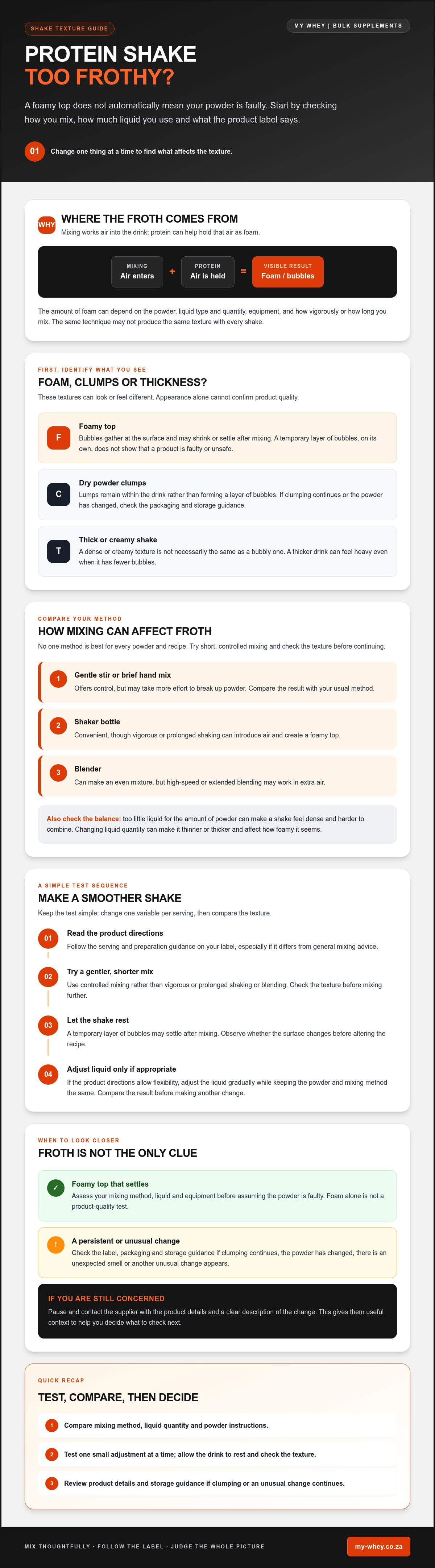
A temporary layer of bubbles can settle after mixing. On its own, it doesn’t show that a product is faulty or unsafe. Look closely at the texture: bubbles gather at the surface and may shrink, while dry powder clumps remain as lumps in the drink. An evenly thick or creamy shake is a different texture again. These signs can help you describe what you’re seeing, but appearance alone can’t confirm product quality.
Check the label if the texture differs from what you expected. Follow its serving and preparation directions, and review the packaging and storage guidance if the powder has changed. Persistent clumping, an unexpected smell or another unusual change deserves more attention than a foamy top that settles. Don’t rely on froth alone to diagnose the cause.
If you’re still concerned, pause and contact the supplier with the product details and a clear description of the change. That gives them useful context to help you decide what to check next. For a typical airy top, first assess your mixing method, liquid and equipment before replacing the powder.
How Mixing Method, Liquid, and Powder Affect Protein Shake Froth
Shake froth is a layer of air bubbles held in a mixed liquid. The amount you see depends partly on how much air your mixing method introduces and how the recipe behaves. If you’re wondering, “my protein shake is too frothy”, compare the method, liquid-to-powder balance and powder instructions before changing several things at once.
Does a blender make a protein shake foamier?
It can. High-speed blending may incorporate more air than a gentle stir or brief hand mix, particularly if you blend for longer than needed. The food-science explanation of the mechanism of protein foaming describes how mechanical action can help proteins form a structure that holds air bubbles.
Each method has trade-offs. Stirring in a glass gives you control but may take more effort to break up powder. A shaker is convenient, though vigorous or prolonged shaking can create a foamy top. A blender can produce a more even mixture, but extended high-speed blending may add extra air. Try short, controlled mixing, then check the texture before continuing. No one method is best for every powder and recipe.
Can the powder or liquid change the texture?
Yes. Powder formulations and recipes differ, and those differences can affect how a shake mixes. The liquid matters too: changing its quantity can make the drink thinner or thicker, which may change how foamy it seems. Too little liquid for the amount of powder can make the mixture feel dense and harder to combine, but adding more isn’t always the right fix.
Follow the product label first. If its directions allow flexibility, adjust the liquid gradually and change only one variable per serving. For example, keep the powder and mixing method the same while slightly increasing the liquid, then compare the texture. This helps you assess whether the ratio is contributing to the result instead of guessing.
Whey protein products can also differ, so avoid attributing a texture to a particular ingredient unless the product details confirm it. For broader context on whey types and selection, read the definitive guide to whey protein. You can also review whey protein product information when comparing options, and follow the preparation guidance for the powder you have.
Protein Shake Too Frothy? Compare These Fixes Before Changing Powders
If you’re thinking, “my protein shake is too frothy”, try a small preparation change before switching powders. The simplest first adjustment for excess bubbles is to mix more gently. Change one variable per serving, then compare the texture. Results can differ with the powder and recipe, so treat each adjustment as a test, not a guaranteed fix.
| What you notice | Low-effort test |
|---|---|
| A thick cap of bubbles after mixing | Use gentler, shorter mixing and check whether the foam is reduced. |
| Foam remains just after preparation | Let the shake stand briefly, then see whether the bubbles settle before changing the recipe. |
| The shake feels consistently too thick | Check the label, then test a gradual change in liquid quantity if the directions allow it. |
Which quick fix should you try first?
Start with the mixing method if your shake has a dense, bubbly top. If you normally shake hard or blend for a long time, reduce the intensity or duration while keeping the powder and liquid the same. You can also leave the prepared shake undisturbed for a short while. Minor foam may settle in 30 to 60 seconds; heavier froth can take several minutes, so check before deciding it hasn’t helped.
Follow the pack directions, and note what you changed and what happened. A quick record, such as “gentler shake, same liquid, less surface foam”, can help you find a useful routine without wasting servings on several simultaneous changes.
When should you change the recipe or equipment?
If the drink feels too thick each time, check that you’re using the stated serving and liquid amounts. Where the label permits adjustments, increase the liquid gradually and keep the mixing method unchanged for that test. A thinner shake may feel smoother, though it may not eliminate bubbles.
Choose equipment for the texture and convenience you want. A shaker is straightforward for mixing on the go, whilst a blender may suit a more evenly blended drink. Either can produce foam if used vigorously, so compare them using the same recipe and controlled mixing rather than assuming one is always better. Avoid adding ingredients just to reduce froth unless they fit your dietary needs and the product directions.
How to Make a Smoother Protein Shake: A Simple Step-by-Step Method
If “my protein shake is too frothy” is a recurring problem, use a consistent method before deciding the powder needs replacing. Follow your product label first. If its preparation instructions differ from the general steps below, use the label’s directions. Change one step at a time so you can tell what affects the texture.
1. Measure the liquid. Use the amount stated on the pack. Don’t estimate or alter the ratio yet, as keeping it consistent makes your next adjustment easier to assess.
2. Add the powder as directed. Check whether the label specifies an order for adding the liquid and powder, and follow it.
3. Mix gently. Use the shaker or blender method below, stopping once the powder is incorporated rather than continuing to mix out of habit.
4. Check the texture. Look for dry clumps as well as surface bubbles. If the mixture is blended but has a foamy top, let it stand briefly before deciding whether to change your method next time.
A gentler shaker method for fewer bubbles
Start with a clean shaker and follow the pack’s recommended order for adding ingredients. Secure the lid, then use controlled movements instead of forceful, prolonged shaking. Open carefully and check whether powder remains dry around the sides or base. If it’s mixed but still bubbly, give the shake time to settle. On your next serving, adjust only the shaking intensity or duration, not both the liquid quantity and the mixing method.
A blender method that keeps texture in check
Use a blender only if it suits your preferred texture or the shaker isn’t mixing the serving adequately. Follow the appliance instructions and blend in brief intervals, stopping as soon as the powder is incorporated. A shaker may be enough for a straightforward serving, so there’s no need to add equipment if your current method works. Clean the shaker or blender promptly after use, following its care guidance.
Keep a simple note of your liquid amount, mixing method and result. If the shake remains too foamy, test one change on the next serving while keeping the other steps the same. That gives you a clearer comparison than switching preparation methods and powder at once. To compare options, review whey protein product details alongside the preparation guidance on your current pack.
When to Recheck Your Protein Powder and Choose Your Next Step
A foamy top that appears after mixing and settles is different from dry clumps that persist or a noticeable change in the powder itself. If you’re still asking, “my protein shake is too frothy”, remember that froth alone can’t establish whether a powder is good quality or safe. Check for other changes and review the product information before drawing conclusions.
Does froth mean your protein powder is poor quality?
No. A bubbly shake, by itself, isn’t enough to assess product quality. Check that the packaging is intact, review the storage guidance and serving directions, and compare the powder with its stated ingredient information. If you notice an unexpected odour or appearance, don’t try to diagnose it from the shake’s texture. Set the product aside and contact the supplier with its details and a description of what has changed.
How to choose a powder that suits your routine
Compare products by protein type, ingredient information and preparation directions, then consider your own dietary needs and preferred texture. Different powders can mix differently, and a result from one preparation method may not tell you how another will behave. Follow the label and assess the prepared shake before deciding whether the product suits your routine.
My Whey offers Whey Protein Concentrate 80%. That category detail can help you compare options, but it doesn’t guarantee a particular texture or a froth-free shake. Read the product information and preparation guidance for the specific powder you’re considering.
If the packaging and product details look as expected and the only issue is temporary foam, review your preparation approach before replacing the powder. If an unusual change persists, ask the supplier for guidance rather than relying on appearance alone. To compare options, explore My Whey protein options and check their product details.
Take a More Confident Approach to Your Next Shake
If you’re thinking, “my protein shake is too frothy”, treat the texture as a clue to investigate, not proof that your powder is faulty. First distinguish temporary surface foam from persistent clumps or an unusual product change, then use the label and product details to guide your decision.
Keep your troubleshooting simple: make one adjustment at a time and note what changes. That way, you can work out whether your usual routine suits the powder before replacing it or overhauling your recipe. If anything about the product seems unexpectedly different, check its packaging and storage guidance, and contact the supplier if you’re unsure.
For readers comparing whey options, My Whey offers Whey Protein Concentrate 80% and describes its supplements as lab-tested. Review the information for the specific product and its preparation guidance, then decide whether it fits your needs and preferences. Explore My Whey protein options to learn more. A few careful checks can help you find a preparation routine that works for you.
Frequently Asked Questions
Why is my protein shake so frothy?
A protein shake often becomes frothy because mixing works air into the liquid and powder. Vigorous shaking or blending can create a layer of bubbles, while the powder, liquid quantity and recipe can affect the final texture. If you’re asking, “my protein shake is too frothy”, first consider how you mixed it and whether the foam settles. Froth alone doesn’t prove the powder is faulty.
How do I make my protein shake less foamy?
Try gentler, shorter mixing first, then let the prepared shake stand briefly to see whether the bubbles settle. Keep the powder and liquid amounts consistent with the product directions while testing this change. If the shake is also consistently too thick, check the label before adjusting the liquid quantity. Change one variable at a time so you can tell which adjustment, if any, helps.
Does blending protein powder make it frothy?
Blending can make a protein shake frothy, especially if it runs at high speed or for longer than needed. The movement may incorporate air into the mixture. Try brief blending intervals and stop once the powder is incorporated. A shaker or spoon may suit your routine just as well, depending on the powder and texture you prefer. Compare methods using the same recipe to assess the difference.
Should I let a protein shake sit after mixing?
Yes, letting it stand briefly can give surface bubbles time to settle. Minor foam may ease within 30 to 60 seconds, whilst a thicker layer can take several minutes. Check the texture before adding more liquid or changing powders. If the shake has persistent dry clumps or another unusual change, resting it won’t explain the cause, so review the product directions and details.
Does frothy protein powder mean it has gone bad?
No, froth by itself can’t show that protein powder has gone bad or establish its quality. Check the packaging condition, storage guidance, serving directions and stated ingredients. Persistent clumping, an unexpected odour or an unusual change in appearance warrants more attention than temporary foam. If you’re concerned, don’t rely on appearance alone to diagnose the product. Contact the supplier and share the product details.
Can the type of milk or liquid make a protein shake frothier?
It can affect the shake’s texture, as liquids differ and the amount used influences how thick or thin the mixture feels. The outcome also depends on the powder and mixing method, so there isn’t one liquid that will prevent froth for every recipe. Follow the product label, then, if its directions allow, test a gradual change in liquid quantity while keeping the other preparation steps the same.
Is it safe to drink a protein shake that is foamy?
A foamy top after mixing is generally safe to drink and doesn’t, by itself, change the shake’s protein content. Some people may find that swallowed air contributes to bloating or discomfort. Check for more than bubbles: an unexpected smell, appearance or persistent clumping should prompt you to pause and review the packaging and storage guidance. Contact the supplier if you’re unsure about a product change.