

Natural Adderall Alternatives for Focus: What to Know
Natural strategies can support focus, but they aren’t interchangeable with prescribed ADHD treatment. If you’re searching for natural alternatives to adderall for focus, you may want to concentrate on work, study or daily tasks without unwanted stimulant effects. It’s reasonable to look for options you understand, especially when supplement claims can be difficult to assess.
The useful distinction is between support and treatment. Sleep, movement and manageable routines can help create better conditions for attention. Supplements may be another part of a broader wellbeing approach, but none should be assumed to treat ADHD or replace medication prescribed for you.
This article covers practical habits, the limits of supplement evidence, and ways to assess product information and safety. It also explains when difficulty concentrating may call for a conversation with a healthcare professional. If you have an ADHD diagnosis, take medication or are considering a supplement, get professional advice before changing your care.
Key Takeaways
- Natural alternatives to adderall for focus include non-prescription approaches, but they are not equivalent to prescribed stimulant treatment.
- Consistent sleep timing, movement and manageable routines can build practical foundations for daytime focus.
- Assess supplement claims carefully, including the evidence, product information and possible safety concerns.
- Caffeine can affect sleep, anxiety and alertness differently from one person to another.
- If concentration problems persist or disrupt daily life, seek clinical guidance rather than relying on repeated supplement trials.
Natural alternatives to Adderall for focus: what counts as an alternative?
Difficulty concentrating can make work, study and everyday tasks feel harder than they should. If you’re looking for natural alternatives to adderall for focus, first clarify what “alternative” means. It may refer to non-prescription approaches such as changes to sleep habits, routines or supplements. That does not make them equivalent to prescription medication.
A natural focus strategy is a non-prescription approach that may support wellbeing or concentration; it isn’t a proven substitute for ADHD assessment or treatment. Lifestyle habits can create better conditions for attention, and some supplements are marketed for cognitive support. Evidence and effects vary. The term Nootropics is often used for substances promoted for cognitive benefits, but the label alone doesn’t show that a product works or is suitable for you.
What does Adderall do, and who may be prescribed it?
Adderall is a prescription stimulant containing a combination of amphetamine salts. It acts on the central nervous system and affects signalling involving dopamine and noradrenaline, chemicals involved in attention and other brain functions. Whether medication is appropriate depends on an individual clinical assessment, symptoms and health history. Difficulty focusing alone doesn’t establish an ADHD diagnosis or mean stimulant treatment is necessary.
Can a natural option replace prescribed ADHD medication?
No natural supplement should be presented as an equivalent replacement for prescribed ADHD medication. Sleep, movement, nutrition and structured routines may support general wellbeing, but they don’t necessarily treat ADHD symptoms. Supplements vary in evidence, quality and potential risks, and “natural” doesn’t automatically mean safe.
If you take prescribed medication, don’t stop, change or taper it without speaking with your prescriber. If you’re concerned about its effects or want to explore other options, discuss your goals and concerns with them. A conversation can help distinguish everyday concentration challenges from difficulties that may need clinical assessment, without relying on supplement claims alone.
How sleep, movement, nutrition, and routines can support focus
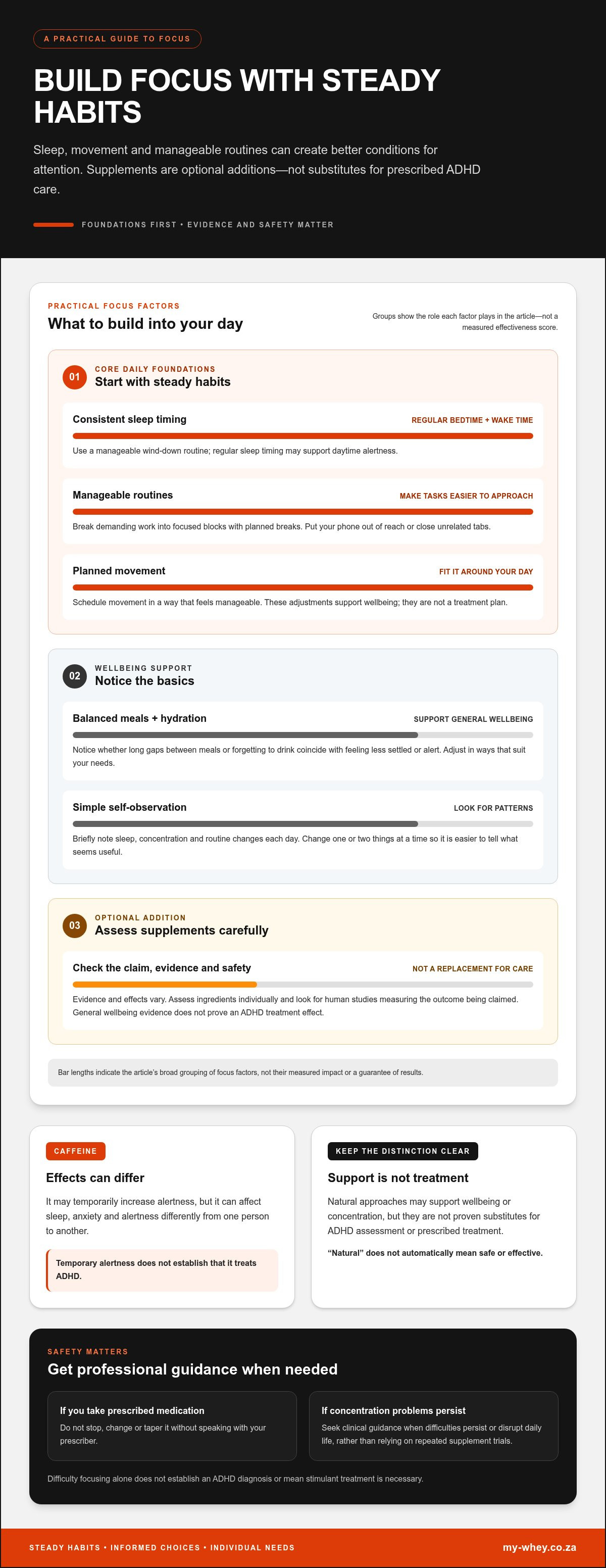
Daily habits can help create better conditions for attention, but they aren’t cures or guaranteed treatments for concentration problems or ADHD. Rather than searching for one quick fix, try small, consistent adjustments and notice whether they make your day more manageable.
Focus is often better supported by several steady habits working together than by one quick fix. A regular sleep schedule, planned movement and fewer distractions are practical places to start. For a broader perspective on non-medication approaches, CHADD’s guide to Complementary and other interventions discusses their role and limitations.
Which daily habits are worth trying first?
Keep the experiment simple. Aim for a consistent bedtime and wake time, supported by a manageable wind-down routine, such as setting work aside and preparing for the next day. Regular sleep timing may support daytime alertness, although individual needs differ.
Schedule movement in a way that fits your day. Break demanding tasks into focused blocks with planned breaks, and put your phone out of reach or close unrelated tabs while you work. These are practical adjustments, not a treatment plan. Briefly note your sleep, concentration and routine changes each day to spot patterns. Change one or two things at a time so it’s easier to tell what seems useful.
Can food and hydration affect concentration?
Balanced meals and regular hydration support general wellbeing. Notice whether long gaps between meals or forgetting to drink coincide with feeling less settled or alert, then make practical adjustments that suit your needs. Don’t assume a particular food, supplement or restrictive diet will improve ADHD symptoms.
Dietary fats are one part of overall nutrition, not a stand-alone focus treatment. For background on omega-3 fats and how to assess related claims, read this omega-3 guide. If you’re considering supplements alongside lifestyle changes, treat them as optional additions and review their safety and evidence before use. You can explore cognitive support and herbal supplements as part of a broader wellbeing routine, not as substitutes for clinical care.
Natural focus supplements: compare evidence, limits, and safety
Supplement claims can sound more certain than the research behind them. Assess each ingredient on its own, and look for human studies that examine the outcome being claimed. Research on general alertness or wellbeing doesn’t automatically show that a supplement improves ADHD symptoms.
Evidence that an ingredient supports general wellbeing is not the same as evidence that it treats ADHD. Keep that distinction in mind when weighing natural alternatives to adderall for focus. A supplement may be an optional part of a broader routine, but it shouldn’t be presented as a treatment or replacement for prescribed care.
What does the evidence say about common focus supplements?
Evidence varies by ingredient, study population and outcome measured. A result in one group or for one aspect of cognition may not apply to everyone or demonstrate a meaningful benefit for ADHD. Treat broad terms such as “focus blend” as a reason to check the ingredients and evidence, not as proof of effectiveness.
| Option | Evidence caveat | Safety consideration | Suitable next step |
|---|---|---|---|
| Caffeine | May temporarily increase alertness, but this doesn’t establish it as ADHD treatment or a reliable focus aid for everyone. | Can affect sleep or anxiety; sensitivity varies between people. | Notice how it affects your sleep and wellbeing, and discuss concerns with a healthcare professional. |
| Omega-3 supplements | Evidence for general health shouldn’t be assumed to show an effect on ADHD symptoms; check the population and outcomes in relevant research. | Review suitability and possible interactions, particularly if you take medicines or have a health condition. | Discuss your circumstances with a healthcare professional before adding a supplement. |
| Herbal or cognitive-support blends | Formulas can contain different ingredients, so evidence for one ingredient cannot validate a whole blend. | Check the full ingredient label and be cautious of unsupported promises. | Review the ingredients and evidence with a healthcare professional before use. |
How can readers assess supplement safety and quality?
Start with the label. Check the ingredients, amounts and warnings, and avoid products that promise to treat ADHD or guarantee a focus boost. Supplements may interact with medicines or be unsuitable for some health conditions, so speak with a healthcare professional before starting one, especially if you take medication or have a diagnosis. Look for clear ingredient information and transparent quality testing. Don’t change prescribed treatment without your prescriber’s guidance.
Choosing a Safer Focus Strategy and When to Seek Help
A clear next step is more useful than trying supplements one after another. Use this framework to decide what to do, not as a way to diagnose yourself.
- Define the difficulty. Note when concentration is hardest, how long it has been happening and which parts of life it affects.
- Review your routine. Consider whether sleep patterns, workload, distractions, meals or changes in daily demands may be contributing.
- Check safety. Before taking a supplement, review its ingredients alongside your medicines and health conditions with an appropriate healthcare professional.
- Choose a next step. Try a manageable routine adjustment, seek clinical advice if the problem persists, or discuss supplement questions before starting anything new.
When should someone discuss focus problems with a clinician?
Arrange a clinical discussion if concentration difficulties persist or interfere with study, work, relationships or everyday tasks. Attention can be affected by many factors, so a checklist or online description can’t confirm ADHD or identify the cause on its own. Ongoing impairment deserves assessment, not self-diagnosis.
Seek timely medical advice if you notice a severe or sudden change in mood, sleep or ability to function. If you have questions about ADHD medication, side effects or treatment options, speak with your prescriber. Don’t stop, alter or taper prescribed medication without their guidance.
What should someone do before trying a supplement?
Check the full ingredient label and discuss possible interactions with a healthcare professional, particularly if you take medicines or have an existing health condition. Avoid combining several supplements or stimulants without understanding their ingredients and potential risks.
If you decide with appropriate guidance to try a supplement, introduce one change at a time and keep a simple record of what you take and any changes you notice. This can help you describe your experience, but it can’t prove that the supplement caused an effect. Be cautious of products promising guaranteed focus or ADHD treatment.
For readers researching natural alternatives to adderall for focus, match the next step to the problem: adjust practical routines where useful, and seek assessment if difficulties persist or affect daily life. Supplements should remain optional additions, not substitutes for clinical care. My Whey offers cognitive support and herbal supplements for a broader wellbeing approach.
Building a realistic focus plan with informed supplement choices
A useful focus plan is practical, measurable and safe. Start with everyday foundations such as a steadier sleep routine and fewer distractions, then assess supplement claims carefully. If concentration problems continue to affect work, study or daily life, seek clinical advice rather than relying on repeated product trials. Supplements are optional additions to a wider wellbeing routine, never substitutes for ADHD assessment or prescribed treatment.
What should a practical focus-support plan include?
Choose one manageable change to begin with. For example, put your phone aside during a planned work block or set a regular time to prepare for bed. Keep the change realistic enough to repeat; a complicated plan can be difficult to maintain.
Use a brief record to note your focus, sleep pattern, routine changes and any supplement use. This can help you describe what you’ve noticed if you discuss concentration with a healthcare professional. It won’t prove that a particular change caused an improvement, so avoid firm conclusions from a short or inconsistent trial.
Review the plan honestly. Keep adjustments that fit your life, and seek an assessment if concentration difficulties persist or continue to interfere with daily functioning. If you take prescribed medication, speak with your prescriber before changing your treatment.
How can readers explore supplements without overpromising?
Read the full ingredient information, intended use and available quality details before considering a supplement. A broad label such as “cognitive support” doesn’t establish that a product will improve focus or treat ADHD. Check claims against evidence for the specific ingredients, and discuss possible interactions or health concerns with an appropriate professional. Avoid starting several new products at once, as that can make it harder to understand what you’re experiencing.
My Whey offers cognitive support and herbal supplements. These products can be considered as one optional part of a wider wellbeing routine, not as a replacement for clinical care. Base your choices on clear information rather than promises of guaranteed results.
For readers exploring natural alternatives to adderall for focus, a realistic sequence is to establish supportive habits, evaluate supplement evidence and seek clinical guidance when needed. Explore My Whey’s supplement range and review the product information as you consider your options.
Build your next step around evidence and wellbeing
Natural alternatives to adderall for focus can include supportive habits and supplements, but they aren’t proven equivalents to prescribed ADHD treatment. Start with practical foundations such as consistent sleep routines, regular movement and fewer distractions. Assess supplement claims ingredient by ingredient, including possible safety concerns, rather than relying on broad promises.
Choose one manageable change and keep track of your focus and sleep. If concentration problems persist or affect daily life, seek clinical advice instead of continuing to trial supplements. If you take prescribed medication, speak with your prescriber before making any changes. Supplements are optional additions to a broader wellbeing routine, not replacements for assessment or care.
My Whey offers cognitive support and herbal supplements for readers exploring their options. Review product information carefully and consider professional guidance before adding a supplement to your routine. Explore My Whey’s supplement range when you’re ready to learn more.
Build your plan steadily, make informed choices and take the next step that best supports your wellbeing.
Frequently Asked Questions
Are there natural alternatives to Adderall that work for ADHD?
No natural supplement is established as an equivalent replacement for prescribed ADHD treatment. Sleep routines, movement and other lifestyle measures may support general wellbeing and concentration, but they don’t necessarily treat ADHD symptoms. If you’re exploring natural alternatives to adderall for focus, distinguish general support from medical treatment. A healthcare professional can help assess ongoing difficulties and discuss suitable options for your circumstances.
Can caffeine replace Adderall for focus?
No, caffeine shouldn’t be treated as a replacement for Adderall or ADHD care. It may temporarily increase alertness for some people, but responses vary and it doesn’t provide an equivalent treatment effect. Caffeine can also affect sleep or anxiety, which may make concentration harder. Consider how coffee, tea or energy drinks affect you, and discuss concerns with a healthcare professional, particularly if you take medication.
What supplements may support focus, and how strong is the evidence?
Evidence depends on the specific ingredient, the people studied and the outcome measured, so there’s no reliable answer for supplements as a whole. A claim about general wellbeing doesn’t prove a benefit for ADHD. Review research on each ingredient rather than relying on a blend’s marketing, and check the complete label. Ask a healthcare professional about potential suitability and interactions before adding a supplement to your routine.
Can I stop taking Adderall and use natural supplements instead?
No, don’t stop or change prescribed Adderall in favour of supplements without guidance from your prescriber. Supplements aren’t proven substitutes for prescribed ADHD treatment, and changing medication may affect your care. If you’re concerned about side effects, want to explore other approaches or have questions about your treatment, explain those concerns to your prescriber. They can discuss options based on your health history and needs.
How can sleep and exercise affect concentration?
Consistent sleep timing and regular movement may support general wellbeing and daytime alertness, though they aren’t guaranteed treatments for ADHD. Try a manageable bedtime routine and schedule movement in a way that suits your day. You could also use planned work blocks and reduce distractions. Track sleep and concentration as you make changes, so you can notice patterns without assuming a habit alone caused them.
Are natural focus supplements safe to take with ADHD medication?
Not always. Supplements can interact with medicines, and an ingredient may be unsuitable for some health conditions. “Natural” doesn’t automatically mean safe. Before taking a focus supplement alongside ADHD medication, show the full ingredient label to your prescriber or another appropriate healthcare professional. Avoid combining multiple supplements or stimulants without advice, and don’t change your prescribed medication based on a supplement claim.
When should I speak to a healthcare professional about focus problems?
Speak to a healthcare professional if concentration problems persist or interfere with work, study, relationships or daily tasks. Attention difficulties can have different causes, so a symptom checklist can’t confirm ADHD or identify the right treatment. Seek timely medical advice if you experience a severe or sudden change in mood, sleep or ability to function. If you take ADHD medication, raise treatment questions with your prescriber.