

Prebiotics vs Probiotics: What's the Difference and Do You Need Both?
What if the premium probiotics you're taking are essentially starving before they can even begin to work? It's a common frustration to invest significant money into gut health only to still struggle with persistent bloating and digestive discomfort. You've likely encountered endless marketing hype and wondered about prebiotics vs probiotics what's the difference, especially when faced with the high cost of branded supplements in South Africa.
We agree that the terminology can be overwhelming and often masks simple biological truths. This article provides the clarity you need by explaining the distinct "fuel versus worker" relationship between these two essentials. You'll discover how to optimise your microbiome using pure, bulk ingredients that deliver results without the inflated retail price tag. We will examine the specific scientific roles of each component and provide a practical framework for stacking them to achieve maximum digestive performance and long-term wellness.
Key Takeaways
- Understand the "factory" analogy where probiotics act as the living workers and prebiotics provide the essential fuel to keep the system running efficiently.
- Master the technical details of prebiotics vs probiotics what's the difference to ensure you're selecting the right supplements for your specific digestive goals.
- Discover how to create your own synbiotic stacks by combining live cultures with specialised fibres for a more powerful, synergistic effect on gut health.
- Learn the benefits of sourcing pure, lab-tested ingredients in bulk to bypass high retail costs and unnecessary fillers found in premium branded products.
- Establish a clear, no-nonsense plan to eliminate bloating and digestive discomfort by focusing on high-purity ingredients and transparent sourcing.
Understanding the Gut Microbiome: The Foundation of Health
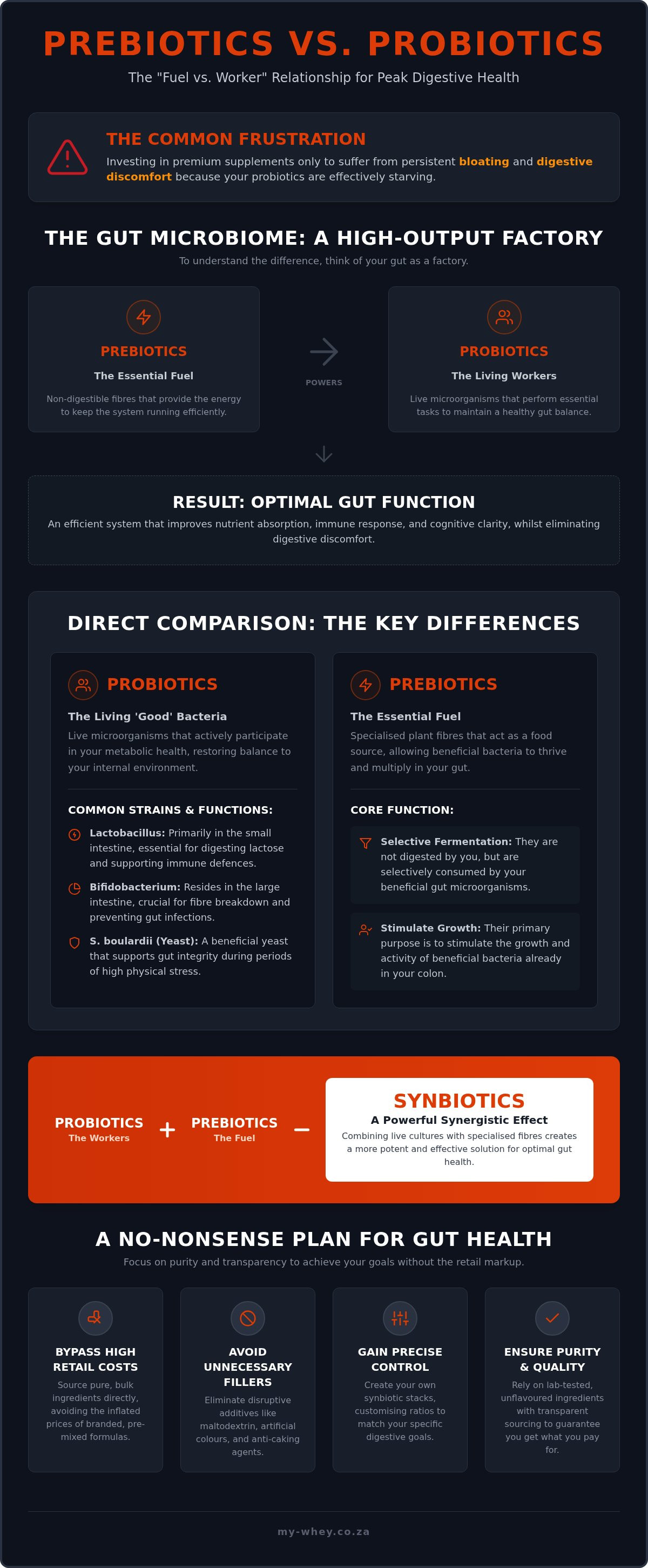
Your gut is home to a complex ecosystem of trillions of microorganisms. This community, known as the microbiome, functions like a high-output factory. In this environment, probiotics represent the skilled workers performing essential tasks. Prebiotics act as the electricity or fuel required to keep the machinery running. Without both, the system stalls. This balance is essential because your gut is your "second brain," directly influencing your immune response and cognitive clarity. Achieving homeostasis within this ecosystem is a prerequisite for physical performance and long-term vitality.
Why the Difference Matters for Your Wellness Routine
Confusion often stems from supplement marketing that treats all "biotics" as the same. However, understanding prebiotics vs probiotics what's the difference is critical for anyone serious about their health. Hiring a staff of probiotics without providing the necessary tools is a waste of resources. This is why many premium branded products in South Africa fail to deliver results; they often lack the correct ratio of fuel to worker. By choosing pure, unflavoured ingredients, you gain precise control over your gut environment. Citing a comprehensive Prebiotic (nutrition) overview helps clarify that these non-digestible fibres are what allow your beneficial bacteria to thrive. Using bulk, lab-tested components ensures you aren't paying for marketing hype or unnecessary fillers that could disrupt your progress.
The Role of the Microbiome in 2026 Performance Standards
Modern nutrition often fails the microbiome. Processed diets lack the microbial diversity found in traditional food sources. This deficiency impacts how your body processes other performance supplements. For example, a compromised gut cannot efficiently absorb nutrients from your Whey Protein or Amino Acids. If your internal "factory" is inefficient, your recovery times will suffer regardless of your training intensity. The microbiome is the central hub for systemic inflammation control. Maintaining this hub requires a proactive approach to supplementation. By stacking specific fibres with live cultures, you ensure your body is primed for maximum nutrient uptake and sustained energy levels.
Probiotics: The Living 'Good' Bacteria
Probiotics are live microorganisms that provide significant health benefits when consumed in adequate amounts. They're the active biological agents in your digestive tract. Their primary mission is to maintain a healthy balance by crowding out harmful pathogens that can cause bloating and discomfort. When you experience stress, illness, or a period of poor nutrition, your native bacterial populations often dwindle. Probiotics step in to restore this delicate internal environment. They aren't just additives. They're active participants in your metabolic health.
Whilst many consumers focus solely on high colony-forming unit (CFU) counts, the real value lies in the diversity of the strains you introduce to your system. A high count of a single strain is often less effective than a diverse profile. A resilient microbiome requires different specialists to handle various metabolic tasks. To truly grasp Probiotics and prebiotics, you must appreciate that these live cultures need specific conditions to survive the journey through your stomach acid. Understanding prebiotics vs probiotics what's the difference starts with recognising that probiotics are the living entities that require a stable environment to function.
Common Probiotic Strains and Their Specific Functions
Different strains serve different purposes. Lactobacillus is the most prevalent group in the small intestine. It's essential for digesting lactose and supporting your immune system's primary defences. Bifidobacterium resides mostly in the large intestine. These are the heavy lifters for fibre breakdown and are crucial for preventing gut infections. You might also encounter Saccharomyces boulardii. This isn't a bacterium but a beneficial yeast. It's particularly effective at supporting gut integrity during times of high physical stress.
Supplementing Probiotics: Purity vs. Marketing
Retail supplements often fail because the live cultures die on the shelf or are destroyed by stomach acid before reaching their destination. Marketing hype often obscures the presence of unnecessary fillers like maltodextrin or artificial colours. For consistent results, prioritising lab-tested options that focus on purity and stability is the smartest move. Looking for high-purity formulas ensures you're getting exactly what's on the label without the retail markup. If you're looking to enhance your daily routine, exploring a range of Gut Health ingredients allows you to build a customised stack that supports your specific performance goals.
Prebiotics: The Essential Fuel for Your Gut Flora
While probiotics often get the headlines, prebiotics are the silent partners driving the system. Unlike their living counterparts, prebiotics are specialised plant fibres that the human body cannot digest. They serve as fertilisers for the beneficial bacteria already residing in your gut. Understanding prebiotics vs probiotics what's the difference is simple when you view prebiotics as the essential fuel. Without this nourishment, even the most expensive probiotic colonies will eventually diminish and fail to colonise effectively. They aren't alive; they are complex carbohydrates that pass through the small intestine largely unchanged.
The magic happens through fermentation in the colon. When these fibres reach the large intestine, your healthy bacteria break them down. This process produces short-chain fatty acids (SCFAs) like butyrate, acetate, and propionate. These compounds are the primary energy source for the cells lining your colon. Citing the Prebiotics vs. Probiotics analysis from Cleveland Clinic highlights how this synergy is vital for maintaining a robust digestive environment. Mastering the specifics of prebiotics vs probiotics what's the difference allows you to stop guessing and start building a resilient digestive system.
Types of Prebiotic Fibres: Inulin, FOS, and GOS
Inulin is a versatile soluble fibre typically sourced from chicory root. It supports consistent digestion and metabolic health by slowing down glucose absorption. Fructo-oligosaccharides (FOS) are shorter chain molecules that specifically stimulate the growth of Bifidobacteria. Galacto-oligosaccharides (GOS) further diversify this support by promoting a wider range of beneficial microbes. While you can find these fibres in leeks or garlic, you would need to consume kilograms of them daily to reach therapeutic levels. Concentrated prebiotic powders offer a far more efficient, measurable way to hit your daily targets without the excess calories or digestive load of bulk food.
The Performance Benefits of Prebiotic Supplementation
Short-chain fatty acids produced during fermentation are critical for maintaining the gut barrier. A strong barrier prevents "leaky gut," a condition where undigested food particles or toxins enter the bloodstream and trigger systemic inflammation. For athletes in South Africa, this means better recovery and less downtime. Research also indicates that certain prebiotics enhance calcium and magnesium absorption. This directly supports bone density, which is a key performance factor for high-impact training and long-term physical health. Prebiotics represent the long-game strategy for establishing permanent gut health and a resilient microbiome.
Prebiotics vs Probiotics: A Direct Comparison
Directly comparing these two highlights why they are interdependent. Probiotics are the living beneficial organisms that actively manage your gut flora. Prebiotics are the non-living fibres that ensure those organisms have the energy to survive. One common misconception is that you only need to choose one. In reality, focusing on prebiotics vs probiotics what's the difference reveals that they are two halves of a single biological system. Probiotics are typically sourced from fermented foods or specific lab-grown strains, whilst prebiotics come from high-fibre plant sources like chicory root. You don't need to take them at separate times. Consuming them together is often more effective because it provides the "worker" with its "lunch" immediately upon arrival in the digestive tract.
The Synbiotic Advantage: Why 1+1=3
Synbiotics are combinations of prebiotics and probiotics that work synergistically. When you take them together, the prebiotics pave the way for the probiotics to colonise your gut more effectively. This creates a survival advantage for the beneficial bacteria, allowing them to outcompete harmful pathogens. By creating your own synbiotic stack using bulk ingredients, you avoid the high costs of pre-mixed retail products found on South African shelves. For a South African athlete, a practical daily stack might involve adding 5g of Inulin and a high-purity probiotic strain to a morning protein shake. This ensures your microbiome is supported throughout a day of intense training and metabolic stress. This DIY approach allows for precise dosage adjustments that retail capsules cannot match.
Choosing the Right Balance for Your Goals
Your specific health needs should dictate your ratio. If you struggle with immediate bloating or digestive sensitivity, start slow with prebiotics. Introducing large amounts of fibre too quickly can cause temporary gas, so gradual titration is key. For those recovering from a course of antibiotics, a heavy focus on probiotics is the initial priority to repopulate lost colonies. You can find more detailed strategies in our Gut Health Supplements South Africa: The 2026 Guide to Purity and Performance. Whether you are looking for long-term maintenance or targeted recovery, sourcing pure, lab-tested components is the most efficient path. To start optimising your microbiome today, browse our range of bulk gut health ingredients and take control of your digestive performance.
The My Whey Approach: Pure Gut Health Without the Frills
Choosing the right supplements shouldn't be a guessing game dictated by the size of a marketing budget. Most retail products in South Africa are loaded with unnecessary anti-caking agents, synthetic sweeteners, and artificial colours that add zero value to your microbiome. When you understand prebiotics vs probiotics what's the difference, you realise that purity is the only metric that matters. By sourcing in bulk, you eliminate the retail markup and focus entirely on the active ingredients. This results-oriented approach ensures you're getting a higher concentration of the fibres and cultures your body needs to perform at its peak.
Transparency is essential in the South African wellness market. Every batch of our gut health range undergoes rigorous lab-testing to verify its purity and potency. This commitment allows you to supplement with confidence, knowing that you aren't introducing fillers that could trigger the very bloating you're trying to resolve. Unflavoured bulk powders provide the ultimate flexibility. They integrate seamlessly into your existing nutrition plan without altering the flavour profile of your meals. Mastering the nuances of prebiotics vs probiotics what's the difference allows you to stop paying for fillers and start investing in pure performance.
How to Build Your Gut Health Stack with Bulk Ingredients
Building a customised stack is the most efficient way to manage long-term gut health. You can easily mix prebiotic fibres like Inulin or FOS into your morning smoothie or post-workout shake. There is a powerful synergy between gut health and Whey Protein. A healthy microbiome ensures you're actually absorbing the amino acids required for muscle repair and recovery. Because our ingredients are pure, you aren't paying for expensive flavour systems or dyes. You're investing in raw, high-performance nutrition that works for your specific biological needs.
Integrity in Sourcing: The My Whey Commitment
Flashy labels don't improve your digestion. We prioritise substance over style by providing high-quality raw materials at accessible prices. By removing the costs associated with traditional retail packaging and middlemen, we pass those savings directly to you. This model allows for a level of quality control that branded products often skip to maintain their margins. It puts you in the driver's seat of your wellness journey. Empower yourself with the tools to build a resilient system from the inside out. Browse our range of pure Gut Health supplements today and experience the difference that transparency makes to your results.
Take Control of Your Digestive Performance
Building a high-performance gut requires more than just following the latest wellness trends. It demands a clear understanding of the biological relationship between the living workers in your system and the fuel they require to thrive. Mastering prebiotics vs probiotics what's the difference allows you to bypass expensive marketing buzzwords and focus on what actually delivers results. By stacking these components correctly, you ensure your microbiome is resilient, efficient, and ready to support your wider physical goals.
Prioritising purity is the smartest way to manage your long-term health. Our range of gut health ingredients is lab-tested for purity and offered at bulk pricing to ensure your wellness journey remains sustainable. You won't find any unnecessary fillers or additives here; just the raw, active compounds needed for optimal digestion. Maximise your gut health with pure, bulk supplements from My Whey and experience the clarity of transparent sourcing. You have the tools and the knowledge to transform your digestive health. Start building your customised stack today and feel the difference in your daily performance.
Frequently Asked Questions
Can I take prebiotics and probiotics at the same time?
You can and should take them together. This combination is known as a synbiotic approach. By consuming them simultaneously, you provide the live probiotics with the specific fuel they need to survive the journey through your digestive tract. This immediate nutrient source helps the beneficial bacteria colonise your gut more effectively. Using pure, bulk ingredients from My Whey allows you to mix these precisely into a single daily shake for maximum efficiency.
Which is better for reducing bloating and gas?
Probiotics are often better for immediate relief as they help rebalance the "workers" in your gut factory. However, chronic bloating is frequently a sign of a starved microbiome, which requires prebiotics for a long-term solution. When addressing prebiotics vs probiotics what's the difference for bloating, the key is titration. Start with a small dose of prebiotic fibre and increase it gradually over two weeks to allow your system to adapt without causing temporary gas.
Do I really need supplements if I eat fermented foods?
While fermented foods like kefir and sauerkraut are beneficial, they often lack the standardised strain diversity and potency found in lab-tested supplements. Food sources can also be high in sodium or sugar. Supplements provide a concentrated, measurable dose of specific strains that have been verified for stability. For high-performance goals in 2026, using pure bulk ingredients ensures you hit therapeutic levels that are difficult to achieve through diet alone in the South African market.
What happens if I take too many prebiotics at once?
Consuming an excessive amount of prebiotic fibre too quickly can lead to significant bloating, flatulence, and abdominal discomfort. This happens because your gut bacteria ferment the fibre rapidly, producing excess gas. To avoid this, introduce bulk prebiotic powders in small increments of 2g to 3g per day. Listen to your body's feedback and only increase the dosage once your digestion feels stable and comfortable. Gradual adjustment is the most reliable path to success.
How long does it take to see results from gut health supplements?
Most individuals notice improvements in digestion and energy levels within two to four weeks of consistent use. Gut health is a cumulative process rather than an overnight fix. While some experience reduced bloating within days, the structural changes to your microbiome take longer to stabilise. Consistency is the most important factor. Using bulk sourcing from My Whey makes this long-term commitment more affordable by reducing the cost per daily dose without sacrificing quality.
Are prebiotics or probiotics more important after taking antibiotics?
Probiotics take priority immediately after a course of antibiotics to help repopulate the beneficial bacteria that the medication may have cleared. Once you have reintroduced these "workers," prebiotics become essential to provide the fuel they need to thrive and multiply. A balanced approach ensures you don't just temporarily add bacteria but actually build a sustainable ecosystem that can defend against future pathogens and support your immune system effectively.
Should gut health supplements be taken on an empty stomach?
Probiotics are generally most effective when taken on an empty stomach or with a light, non-acidic meal to ensure they pass through the stomach quickly. This increases the survival rate of the live cultures. Prebiotics are more flexible and can be taken at any time of day. Mixing both into your morning routine or a protein shake is a practical way to ensure you never miss a dose while maintaining high purity standards in your daily supplementation.
Can prebiotics help with weight management or cravings?
Yes, prebiotics play a significant role in weight management by increasing the production of satiety hormones. These hormones signal to your brain that you are full, which can naturally reduce sugar cravings and overall calorie intake. By fermenting these fibres, your gut produces short-chain fatty acids that help regulate metabolism. Incorporating pure prebiotic fibres into your daily routine is a smart, transparent strategy for supporting long-term body composition and performance goals.