

Reducing Muscle Soreness After Workouts: A Practical Guide
A sore workout isn’t automatically a successful one. If stiffness is making the stairs, daily tasks or your next training session harder, it’s understandable to look for a quick fix. But reducing muscle soreness after workouts usually takes more than one product or recovery trick. It comes down to managing training demands and supporting your body consistently.
That familiar ache often develops after exercise, particularly when a session includes movements your muscles aren’t used to. It doesn’t mean lactic acid is trapped in your muscles, and soreness isn’t a reliable measure of how effective a workout was. You can build strength without feeling sore.
This guide explains what typical delayed-onset muscle soreness feels like, why it happens and what may help you recover. You’ll find practical ways to adjust training, keep moving gently, eat and drink well, and prioritise sleep. We’ll also explain how supplements such as whey protein may contribute to daily nutrition, without presenting them as a guaranteed treatment. Finally, you’ll learn which symptoms deserve more attention so you can make sensible recovery choices and train consistently.
Key Takeaways
- Learn how delayed-onset muscle soreness differs from pain that may need more attention.
- Understand why unfamiliar exercises, increased training demands and controlled lowering movements can leave muscles feeling sore.
- Compare practical recovery habits and choose light movement or rest according to how your body feels.
- Use a simple step-by-step approach to reducing muscle soreness after workouts and build training demands gradually.
- See how protein can contribute to daily nutrition, while recognising that supplements aren’t a substitute for sleep, balanced meals and sensible training.
What causes muscle soreness after workouts, and when is it normal?
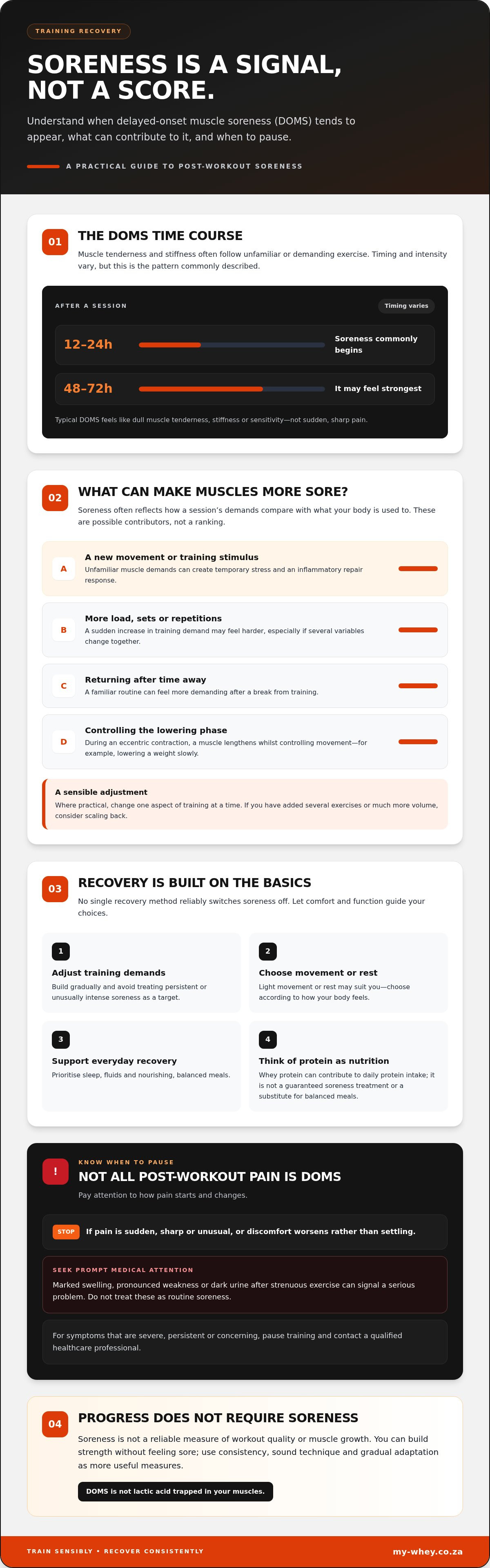
Delayed-onset muscle soreness (DOMS) is muscle tenderness and stiffness that develops after exercise, often following unfamiliar or demanding activity, as the muscles respond to exercise-related strain. It commonly begins 12-24 hours after a session and may feel strongest 48-72 hours later, although timing and intensity vary. The Delayed Onset Muscle Soreness (DOMS) overview explains its symptoms and current understanding of how it develops.
DOMS is more likely after a change in your routine: trying a new movement, increasing the load or number of sets, or returning to training after a break. It can also follow eccentric exercise, when a muscle lengthens whilst controlling a movement, such as lowering a weight slowly. These demands can contribute to temporary muscle damage and an inflammatory repair response. The ache isn’t caused by lactic acid remaining in your muscles.
How does delayed-onset muscle soreness feel and develop?
Typical soreness feels like dull tenderness, stiffness or sensitivity in the muscles you worked. You may notice it when standing up, reaching overhead or using the affected muscles, rather than during the workout itself. Movement may feel uncomfortable, but the sensation should generally resemble muscle tenderness rather than sudden, sharp pain.
People experience DOMS differently, and even a familiar workout can feel harder than expected. Soreness alone can’t tell you whether a session was effective: it isn’t a reliable measure of workout quality or muscle growth. You can make progress without becoming sore, so don’t use discomfort as a target when reducing muscle soreness after workouts.
When is post-workout pain a reason to stop and seek advice?
Pay attention to how pain starts and changes. Stop exercising if you feel sudden, sharp or unusual pain, or if discomfort worsens rather than settling. These signs differ from the general tenderness associated with DOMS and may need assessment.
Seek prompt medical attention for marked swelling, pronounced weakness or dark urine after strenuous exercise. These symptoms can signal a serious problem and shouldn’t be treated as routine post-workout soreness. If symptoms are severe, persistent or concerning for any reason, pause training and contact a qualified healthcare professional. A cautious response helps protect your health and supports a safe return to exercise.
Why do some workouts leave muscles more sore than others?
The amount of soreness after a session often reflects how its demands compare with what your body is used to. A new exercise, a return after time away, or a sudden increase in sets, repetitions or resistance can all make a workout feel more demanding. Even a familiar routine can cause more discomfort if you increase several training variables at once.
A new training stimulus can trigger DOMS because unfamiliar muscle demands cause temporary stress in muscle fibres, and the body’s response to that stress can include soreness. The DOMS overview describes this response and how muscles can adapt to repeated exposure to similar activity. That adaptation is one reason a workout may feel less novel over time, although responses vary between people and sessions.
How can exercise selection and training load affect soreness?
Some movements place greater emphasis on controlling a muscle as it lengthens. This is called an eccentric contraction. For example, the lowering phase of a squat or a weight-lifting movement is eccentric when you resist gravity rather than letting the weight drop. It’s a normal part of many exercises, not inherently harmful, but a high volume of unfamiliar or demanding repetitions may leave muscles more tender afterwards.
Progress gradually. Where practical, change one aspect of training at a time and consider your recent activity and how you responded to the last session. If you’ve added several new exercises or much more volume, scale back rather than assuming soreness is something you must push through.
Does being sore mean the workout was more effective?
No. Soreness isn’t required for strength or muscle-building progress, and a more painful session isn’t automatically better. It can signal that your muscles encountered a new or increased demand, but it doesn’t measure how much progress you’ve made. People can respond differently to the same workout, too.
Use more useful measures: whether you train consistently, maintain sound technique and gradually adapt to manageable increases in training demand. Persistent or unusually intense soreness may be a reason to adjust, not a badge of achievement. Harvard Health Publishing’s guidance on muscle recovery and strain is a helpful reminder that training soreness and muscle strain shouldn’t be treated as the same thing.
Keep the foundations steady as you work on reducing muscle soreness after workouts. If a busy training schedule makes it harder to meet your daily protein needs through meals, whey protein can be a convenient way to contribute to your intake. Explore whey protein options as part of a balanced nutrition routine, not as a soreness remedy.
Which recovery methods can help reduce muscle soreness after workouts?
No single recovery method reliably switches soreness off. A more dependable approach combines sensible training adjustments with enough rest, sleep, fluids and nourishing meals. How much each helps can vary, so use comfort and function to guide your choices rather than chasing a quick fix.
| Recovery approach | How to use it |
|---|---|
| Light movement | Try an easy walk or gentle mobility if it feels comfortable. Keep it relaxed, not another demanding workout. |
| Rest | Reduce training load or take a rest day if movement hurts or affects your normal technique. |
| Sleep | Make consistent, good-quality sleep a recovery priority. One night won’t necessarily remove soreness. |
| Fluids | Drink according to thirst and account for heat, exercise and how much you sweat. Avoid forcing excessive water. |
| Balanced meals | Eat a varied diet with enough energy and protein to support your overall training and recovery needs. |
Should you rest or do light exercise when muscles are sore?
Gentle movement may ease stiffness for some people, but keep it easy and comfortable. If soreness makes a movement painful, changes how you move or affects your technique, rest or reduce the intensity instead. Don’t use a hard session to test whether the discomfort has gone. Light activity is an option, not an obligation.
How do sleep, fluids, and food support recovery?
Sleep supports the body’s normal recovery processes, so protect a consistent sleep routine rather than expecting one long night to fix soreness. Hydration matters too, especially after sweating in warm conditions, but drinking far beyond thirst isn’t a shortcut to recovery.
Build meals around a range of nourishing foods and include protein across the day. Protein contributes to daily nutrition, but no particular meal guarantees relief from muscle soreness. If meeting your protein needs through food is difficult, whey protein can be a convenient option. Read this guide to whey protein to understand its role in an overall nutrition plan.
For reducing muscle soreness after workouts, focus on a routine you can sustain: adjust training when needed, move gently only if it feels right, and give sleep, fluids and balanced meals consistent attention. These habits support recovery without promising instant results.
How can you build a simple plan for reducing soreness after workouts?
A repeatable routine helps you respond to soreness without letting it dictate every training decision. Use the steps below, then adjust them to your symptoms and training history.
- Assess how you feel. Check whether the discomfort is general and manageable, or sharp, severe or getting worse. If symptoms are concerning, stop and seek medical advice rather than trying to train through them.
- Adjust your next session. If soreness affects your range of movement, comfort or technique, avoid demanding work for those muscles. Rest or choose activity that feels comfortable instead.
- Support recovery. Keep daily movement gentle if it feels right, eat your usual balanced meals, drink according to thirst and activity conditions, and make space for sleep.
- Review your response. Notice whether symptoms settle and how you feel when you return to training. Use that information to guide your next session, not to chase soreness.
What should you do in the first day after a demanding workout?
Start by checking how the discomfort behaves. General tenderness that doesn’t interfere much with everyday movement may call for a lighter day, while sharp, severe or worsening pain is a reason to stop and seek advice. Choose comfortable daily movement, normal meals and fluids, and adequate rest. Don’t repeat demanding work for sore muscles if pain affects your technique or movement.
How should you return to training as soreness improves?
Resume with a manageable session. If some discomfort remains, consider reducing the load, repetitions or overall volume, and focus on controlled technique. Build training demand gradually rather than making abrupt increases in several areas at once. A simple log of exercises, effort, rest and soreness patterns can help you spot what works. Look for trends over time rather than judging progress by daily fluctuations.
If symptoms persist, worsen or substantially interfere with daily activities, pause training and contact a qualified healthcare professional. A careful return is more useful than trying to recreate the soreness of a previous workout.
Nutrition supports the overall routine, but amino acid supplements aren’t a soreness treatment. Branched-chain amino acids are one category of amino acids, but they shouldn’t be relied on to prevent or remove post-exercise discomfort. Whey protein can be a convenient way to contribute to daily protein intake when it fits your needs. Keep supplements secondary to consistent meals, sleep and sensible training. Explore whey protein options as part of your nutrition routine.
Can supplements reduce muscle soreness, and what should you expect?
Supplements may help fill a nutritional gap, but they aren’t a shortcut for recovery. Sensible training, sufficient sleep and balanced meals remain the foundations. If you’re focused on reducing muscle soreness after workouts, treat supplements as optional support for your broader nutrition and training goals, not as a guaranteed way to prevent or remove DOMS.
Can whey protein or amino acids make soreness go away?
No supplement should be treated as a fast-acting pain remedy. Protein contributes to your daily dietary intake, which supports normal muscle maintenance and repair, but taking whey protein doesn’t guarantee less soreness. Amino acids and BCAAs shouldn’t be relied on to prevent or eliminate post-exercise discomfort either.
Whole foods and supplements can both contribute to an overall nutrition plan. For example, meals containing protein can help you meet your needs; whey protein may be convenient if it’s difficult to get enough through food alone. The right choice depends on your diet, preferences and circumstances. For more on protein’s role in nutrition, read this guide to whey protein.
Creatine monohydrate has a distinct role in supporting high-intensity training and performance, but it shouldn’t be presented as a treatment for DOMS. It may be one part of a training nutrition plan, not a replacement for recovery habits.
How should you assess supplement claims about recovery?
Be cautious of dramatic promises such as instant relief or soreness-free training. Look for clear ingredient information and credible evidence that matches the specific claim. A product’s general role in nutrition or exercise doesn’t prove that it treats muscle soreness. Follow the directions provided for any supplement you choose, and seek advice from a qualified healthcare professional if you have a health condition, take medicines or are unsure whether it’s suitable for you.
Keep the order clear: plan training sensibly, prioritise sleep and balanced nutrition, then consider whether a supplement is useful for your individual needs. Consistency matters more than chasing a quick fix. If you’re exploring optional nutrition support, browse My Whey nutrition products and consider how they may fit into your wider routine.
Recover consistently and keep progressing
Post-workout soreness can follow unfamiliar or more demanding exercise, but it isn’t proof that a workout was effective. For reducing muscle soreness after workouts, focus on steady training progress, comfortable movement, enough rest, quality sleep, fluids and balanced meals. Adjust your next session if discomfort affects your technique, and seek medical advice for severe, worsening or unusual symptoms.
Supplements are optional support, not a substitute for these foundations or a guaranteed soreness remedy. Whey protein can help contribute to daily protein intake, while creatine has a distinct role in training nutrition. My Whey offers lab-tested wellness products, including Whey Protein Concentrate 80%, Creatine Monohydrate, Omega 3 Softgels and Amino Acids.
Choose what fits your nutrition needs and routine. Explore My Whey nutrition products as one part of a balanced approach. With sensible recovery habits and gradual training changes, you can build consistency with confidence.
Frequently Asked Questions
How long does muscle soreness last after a workout?
Delayed-onset muscle soreness (DOMS) commonly starts 12-24 hours after exercise and may peak 48-72 hours later. It often eases over the following days, but the experience varies with the person and the workout. If soreness is severe, worsening or persists beyond a few days, don’t assume it’s routine DOMS. Pause demanding exercise and contact a qualified healthcare professional for advice.
Should I work out when my muscles are sore?
You can consider gentle activity if the soreness is mild and movement feels comfortable. An easy walk or light mobility work may be preferable to another demanding session. If pain affects your range of movement, normal technique or daily activities, rest or reduce the load, especially for the sore muscles. Stop if pain becomes sharp or worsens, and seek advice for concerning symptoms.
Does muscle soreness mean my workout was effective?
No. Soreness can follow unfamiliar or more demanding exercise, but it isn’t a reliable measure of workout quality or muscle growth. You can build strength without feeling sore. Look instead for consistent training, controlled technique and gradual progress in what you can manage over time. Don’t add more exercise just to make yourself sore; discomfort isn’t a requirement for results.
What is the quickest way to reduce muscle soreness after exercise?
There’s no guaranteed quick fix for DOMS. For reducing muscle soreness after workouts, prioritise sensible adjustments to training, rest, sleep, normal hydration and balanced meals. Gentle movement may feel helpful, but continue only if it’s comfortable. Avoid turning active recovery into another hard workout, and don’t force excessive fluids or rely on a supplement or treatment to remove soreness immediately.
Can stretching prevent or relieve post-workout soreness?
Stretching shouldn’t be relied on to prevent or eliminate DOMS. Gentle stretching may feel comfortable and help you maintain mobility, but it isn’t a guaranteed soreness remedy. Avoid forcing a stretch or pushing into pain, particularly if discomfort is sharp or unusual. A more practical approach is to increase training demands gradually and choose movement that feels manageable as you recover.
Can protein powder help with muscle soreness?
Protein powder can contribute to your daily protein intake, but it isn’t a fast-acting treatment for soreness and can’t guarantee relief. Meals containing protein can also fit into a balanced nutrition plan. Whey protein may be convenient if meeting your needs through food alone is difficult. Keep it optional, alongside sensible training, sufficient sleep and varied meals, rather than treating it as a substitute for recovery.
When should I worry about muscle pain after a workout?
Take sudden, sharp, severe, worsening or unusual pain seriously, particularly if it affects movement. Marked swelling, pronounced weakness or dark urine after strenuous exercise needs prompt medical attention. These signs shouldn’t be dismissed as ordinary post-workout soreness. If symptoms persist, substantially interfere with daily activities or concern you for any reason, stop demanding exercise and contact a qualified healthcare professional.