

Storing Bulk Supplements for Freshness and Potency in 2026
You open your 5kg bag of whey protein, ready for a post-workout shake, only to find a solid, humid block that refuses to dissolve. It's a frustrating moment that signals more than just a ruined drink; it represents a wasted investment in your health. Learning how to store bulk supplements to maintain freshness is the only way to prevent this common pitfall and protect the potency of your nutritional assets. As the global supplement market reaches new heights in 2026, maintaining the purity of your lab-tested ingredients has never been more vital for achieving consistent results.
We agree that watching expensive powders clump or fish oils turn rancid is an unnecessary drain on your hard-earned resources. You deserve a system that preserves every gram of your investment from the elements. This article provides a professional blueprint for managing large-scale quantities, from creatine monohydrate to delicate superfoods. You will discover how to organise a two-tier storage method that keeps your reserve stock in peak condition whilst ensuring your daily routine remains fast and efficient.
Key Takeaways
- Identify the primary environmental threats, such as oxidation and humidity, that can degrade the potency of high-purity ingredients like Creatine Monohydrate.
- Implement a tiered storage system to learn how to store bulk supplements to maintain freshness by separating your daily supply from your main reserve stock.
- Choose the most effective containers for your nutritional investments, prioritising opaque and airtight materials to eliminate light exposure and moisture ingress.
- Apply category-specific preservation techniques, such as temperature control for Omega 3 softgels, to prevent denaturation and maintain ingredient integrity.
- Master the sensory checks and "clump tests" required to accurately distinguish between minor surface texture changes and genuine product spoilage.
The Four Enemies of Supplement Freshness and Potency
Maintaining the purity of your nutritional investment requires understanding the biochemical threats that begin the moment you break the seal. Four primary environmental factors work in tandem to degrade your products. Gaining a deeper knowledge of the factors that influence shelf life is essential for anyone buying in volume. When you buy bulk, you are managing a larger surface area of product that remains in your home for longer periods, making environmental control your top priority.
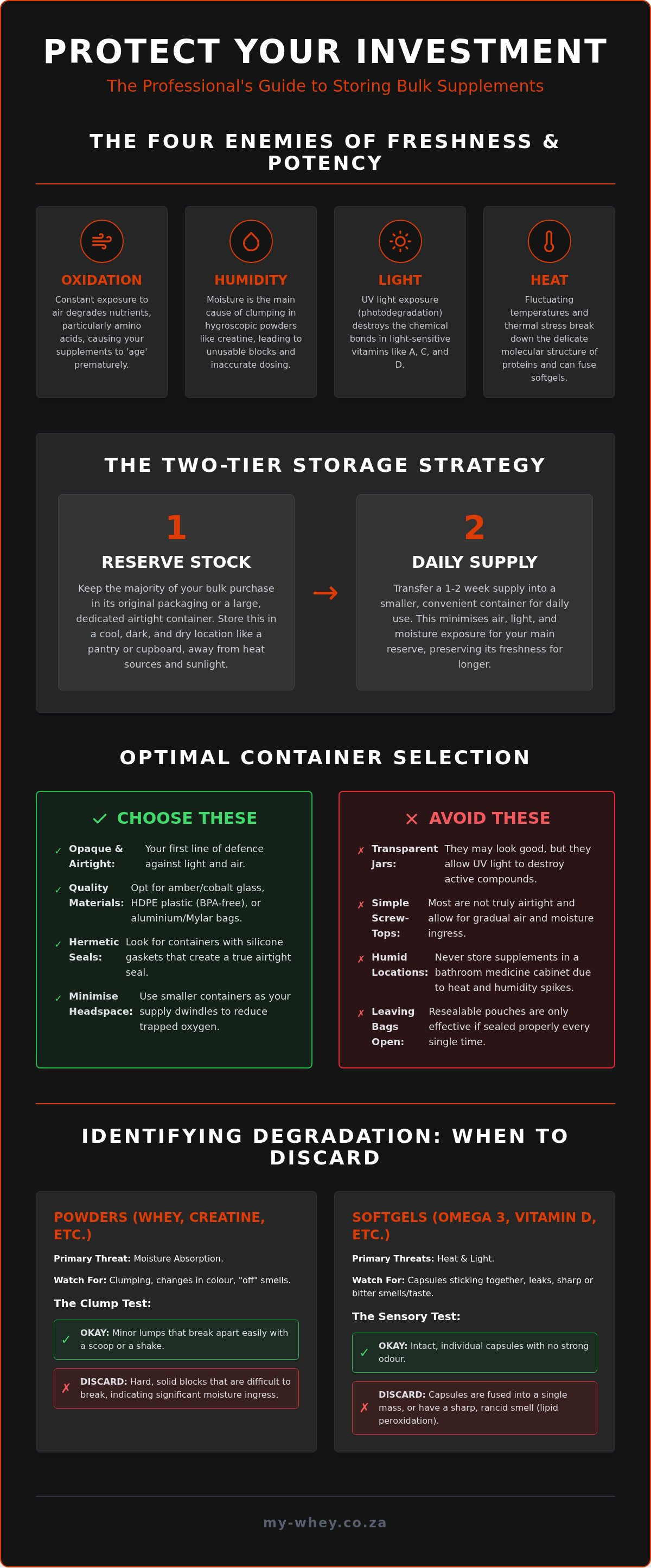
Oxidation occurs when constant air exposure strips electron stability from your nutrients, effectively "ageing" the product before you can consume it. This is particularly problematic for powdered amino acids. Humidity is the specific enemy of hygroscopic powders like Creatine Monohydrate; it causes particles to bind together into unusable blocks through moisture absorption. Photodegradation involves UV light penetrating containers to destroy the chemical bonds in vitamins A, C, and D. Finally, thermal stress from fluctuating temperatures breaks down the delicate molecular structure of proteins. Learning how to store bulk supplements to maintain freshness starts with neutralising these four variables through disciplined storage habits.
Why Moisture is the Greatest Threat to Bulk Powders
Many high-purity ingredients are naturally hygroscopic, meaning they actively pull water molecules from the surrounding air. In South Africa's often humid coastal or summer climates, this process accelerates rapidly. When moisture enters a large bag of whey protein, it doesn't just create annoying lumps. It can lead to protein denaturation and potentially encourage microbial growth if left unchecked. Clumping also makes accurate dosing nearly impossible. As the powder density changes due to moisture weight, your standard scoop may no longer provide the intended serving size, leading to inconsistent results in your training or wellness routine.
The Impact of Light and Heat on Softgels
Softgels are particularly vulnerable to the combination of light and heat. When omega 3 softgels are exposed to UV rays, the fats undergo a chemical transition known as lipid peroxidation. This turns the high-quality oil rancid, which you will notice via a sharp, unpleasant smell or a bitter aftertaste. Heat causes the gelatin shells to soften and fuse together. This often results in "clumping" where the capsules stick in a single mass, eventually leading to leaks that can contaminate the entire container. Whilst many people instinctively reach for the bathroom medicine cabinet, the high humidity and temperature spikes from daily showers make this the worst possible location for maintaining ingredient integrity.
Selecting the Optimal Containers for Bulk Storage
Your choice of vessel is the second line of defence against degradation. Whilst bulk powders often arrive in high-quality resealable pouches, transferring them to dedicated containers can offer superior protection. Understanding how to store bulk supplements to maintain freshness involves evaluating the permeability of different materials. Glass remains a gold standard for its non-reactive nature, ensuring zero chemical leaching into your product. However, for large-scale storage, high-density polyethylene (HDPE) is a practical, BPA-free alternative that provides durability without the risk of shattering.
Opaque containers are non-negotiable for herbal supplements and superfoods. Transparent jars might look aesthetic on a kitchen counter, but they allow UV light to trigger photochemical reactions that strip away active compounds. If you must use glass, opt for amber or cobalt shades. For the absolute highest level of protection, aluminium or Mylar bags provide a total barrier against both light and oxygen. These materials are often used in professional settings to meet official cGMP storage requirements, which demand strict control over the environment to prevent contamination and loss of potency.
The Science of Airtight Sealing
A simple screw-top lid isn't always enough to stop micro-airflow. Professional-grade storage relies on silicone gaskets that create a physical block against the atmosphere. You should aim for a hermetic seal. A hermetic seal is a barrier that is completely airtight. Another critical factor is "headspace," which refers to the air trapped between the supplement and the lid. A half-empty container contains a significant volume of oxygen that will continue to react with your powder. To mitigate this, either use smaller jars as your supply dwindles or use vacuum-sealing technology to remove the air entirely.
Using Desiccants and Oxygen Absorbers
You'll often find small silica gel packets in your high-purity supplements; don't discard these. These desiccants are designed to pull residual moisture from the air inside the container. However, they have a saturation point. If you live in a humid area, consider replacing them every few months or using colour-changing beads that signal when they've reached capacity. Oxygen scavengers are different; they use iron powder to chemically remove oxygen from the headspace. Always ensure these packets remain intact. If a packet bursts, the contents can contaminate your powder, rendering it unsafe for consumption.
The Tiered Storage Strategy: A Practical Workflow
Working directly out of a large 5kg bag every morning is the fastest way to compromise your investment. Every time you break that seal, you introduce a fresh volume of oxygen and ambient humidity to the entire supply. To solve this, we recommend a tiered storage strategy. This system involves keeping the bulk of your product, the "Reserve," tucked away in ideal conditions whilst using a smaller "Daily" container for your immediate needs. This simple shift in habit is a cornerstone of how to store bulk supplements to maintain freshness over the long term.
Your first task is to identify the "Cold Zone" in your home. This isn't necessarily the fridge, which can introduce condensation risks, but rather a dark, stable environment like a low pantry shelf or a cupboard away from the oven and dishwasher. Consistency is vital because fluctuations in the environment can be just as damaging as sustained heat. Professionals often point to the impact of temperature excursions as a primary reason for premature nutrient degradation. By keeping the Reserve in a stable Cold Zone, you ensure the core of your supply remains potent for months.
How to Decant Bulk Supplements Safely
Decanting requires a methodical approach to prevent cross-contamination. Follow these steps to manage your supply effectively:
- Step 1: Sanitise a smaller, airtight container and ensure it is completely dry. Even a single drop of water can ruin a week's supply of amino acids.
- Step 2: Use a clean, dry scoop to transfer a 7 to 14 day supply into the smaller jar.
- Step 3: Squeeze as much air as possible out of the bulk Reserve bag before resealing it tightly.
- Step 4: Return the Reserve to its Cold Zone immediately and keep the Daily jar in an accessible, dry spot.
Batch Management and Expiry Dates
Effective bulk management relies on the "First-In, First-Out" (FIFO) principle. If you have multiple bags of the same product, always finish the oldest batch before opening the new one. A common mistake is "topping up" a daily jar that still has a small amount of old powder at the bottom. This old residue can act as a catalyst for degradation, seeding the new powder with moisture or oxidised particles. Always empty and wipe down your daily container before refilling it. Additionally, use a permanent marker or a label to record the original expiry date and batch number on your decanted jars to maintain full traceability.
Storage Requirements for Specific Supplement Categories
Every supplement category possesses a unique chemical profile that dictates its environmental sensitivity. Whilst the general rules of "cool, dry, and dark" apply across the board, certain high-purity ingredients require more nuanced care. Gaining mastery over how to store bulk supplements to maintain freshness involves adjusting your environment based on whether you are handling delicate lipids, sturdy proteins, or aggressive moisture-seekers like creatine. In the South African heat, these distinctions become the difference between a potent product and a wasted investment.
Hygroscopic powders like Creatine Monohydrate and Citrulline Malate are notoriously difficult to manage in humid coastal regions. These substances don't just clump; they can undergo chemical changes when they absorb enough moisture to reach a liquid state on a microscopic level. For herbal extracts and botanicals, the focus shifts to light protection. The delicate phytonutrients in superfoods and cognitive support blends can be neutralised by UV exposure, leading to a loss of both colour and efficacy. Always prioritise opaque containers for these categories to shield them from the sun's reach.
Managing Bulk Proteins and BCAAs
Whey Protein Concentrate 80% is relatively stable, yet it can develop a distinct "stale" odour if the large reserve bag isn't managed correctly. This smell is often the first sign of minor oxidation of the residual fats within the protein. When storing large volumes, remember that heat rises. The top shelf of a kitchen cupboard can be several degrees warmer than the pantry floor, making lower levels ideal for long-term storage. When handling branched chain amino acids, be wary of the fine, bitter dust. This powder is extremely light and prone to airborne contamination, so always decant it in a draught-free area using a clean funnel.
To Refrigerate or Not? The Lipid Debate
Lipids, specifically Omega 3 softgels and flaxseed oils, are the most prone to rancidity. Storing your bulk Omega 3 supply in the fridge is an excellent way to slow down the oxidation process. However, this introduces a new risk: condensation. If you open a cold container in a warm room, moisture from the air will instantly condense on the capsules. This leads to the very clumping and degradation you are trying to avoid. Always allow a chilled container to sit at room temperature for at least 30 minutes before breaking the seal. For liquid-based herbal supplements, refrigeration is often mandatory after opening to maintain ingredient purity. To secure the highest quality ingredients for your wellness journey, browse our range of lab-tested bulk supplements today.
Identifying Degradation: When to Discard Your Supplements
Even after mastering how to store bulk supplements to maintain freshness, biological and chemical changes will eventually take their toll. Your senses are the most reliable tools for auditing your supply. A regular inspection ensures you aren't consuming ineffective or potentially harmful substances. Whilst most supplements have a long shelf-life, they are not immortal. Knowing the difference between a product that is merely "past its best" and one that is genuinely spoiled is vital for your health and performance.
The "Clump Test" is an essential diagnostic for any bulk powder user. Small, soft lumps that break apart with a gentle shake of the container are usually harmless results of the powder settling. However, if the clumps are hard, rubbery, or require a utensil to break, deep moisture damage has occurred. In these cases, the chemical stability of the ingredient is compromised, and the product should be discarded. This is particularly common with hygroscopic aminos that have been exposed to high humidity over several months.
Sensory Warning Signs
Start with the olfactory test. Rancidity in Omega 3 softgels or flaxseed products manifests as a sharp, sour, or overly "fishy" odour that is noticeably different from the fresh state. Discolouration is another red flag; look for yellowing or dark spots in white powders like Creatine or Amino Acids. These spots often indicate localised moisture ingress and microbial activity. The texture of spoiled whey protein is unusually gritty or resistant to mixing. If your shake feels sandy despite thorough blending, the protein structure has likely denatured beyond use.
The My Whey Commitment to Purity
At My Whey, we believe that longevity begins with raw ingredient quality. Our lab-tested sourcing ensures you start with the freshest possible ingredients, free from the fillers that often attract moisture and accelerate spoilage. Choosing unflavoured bulk products also provides a significant advantage for shelf-life. These products lack the sensitive flavouring systems and sweeteners that can degrade faster than the active compounds themselves. When you are ready to restock, explore our range of high-purity bulk supplements to ensure your next investment is built on a foundation of excellence.
Potency loss is common in aged vitamins, where the supplement simply becomes less effective over time. Safety, however, is a different matter. Rancid fats and moist proteins can cause digestive distress or inflammatory responses. If you decide to discard a product, do so responsibly. Avoid flushing large quantities of powder down the drain, as this can impact local water systems. Instead, mix the supplement with an undesirable substance like coffee grounds and place it in your household waste, or check for local community disposal programmes for nutritional products.
Secure Your Nutritional Investment for the Long Term
Buying in bulk is a smart decision for both your physical performance and your financial wellness. However, that investment only pays off if the product maintains its biological integrity until the very last scoop. You now have a professional framework to combat the environmental threats of heat, light, and humidity. By adopting a tiered storage strategy and selecting high-quality, opaque containers, you have mastered how to store bulk supplements to maintain freshness. These habits ensure that every serving remains as pure and effective as the day it was first opened.
Starting with superior raw materials is the first step in any successful preservation plan. My Whey provides lab-tested ingredients that are free from unnecessary fillers and marketing hype, ensuring a cleaner profile and a longer shelf-life. With efficient national delivery across South Africa, premium nutrition is always within reach. Invest in pure, high-performance bulk nutrition at My Whey and take the guesswork out of your wellness journey. You've refined your storage system; now fuel it with the best.
Frequently Asked Questions
Can I store my bulk protein powder in the freezer to make it last longer?
You shouldn't store bulk protein powder in the freezer because it introduces significant condensation risks. When you remove a cold bag from the freezer, moisture from the ambient air instantly settles on the powder. This leads to clumping and potential microbial growth. Instead, stick to a cool, dry pantry where the temperature remains stable and the humidity is low.
Is it safe to consume supplements that have clumped together?
It's generally safe if the clumps are soft and crumble easily, but hard, rubbery blocks usually indicate deep moisture damage. If the powder has changed colour or developed an unusual smell alongside the clumping, you should discard it. Minor clumping is a common occurrence in hygroscopic ingredients like creatine, but persistent moisture can lead to chemical degradation of the active compounds.
How long do bulk supplements usually stay fresh after opening?
Bulk supplements typically maintain peak potency for 6 to 24 months after opening, provided they are stored correctly. Proteins and amino acids tend to be more stable, whilst lipids like Omega 3 softgels have a shorter window. Understanding how to store bulk supplements to maintain freshness through a tiered system can help you reach the upper limit of this shelf-life by minimising environmental exposure.
Should I keep the silica packets that come in the supplement bag?
You should always keep the silica packets in the container as they are essential for moisture control. These desiccants actively pull residual humidity from the air inside the jar, preventing your powders from clumping. If you're decanting into a smaller daily container, consider moving the packet with the powder or purchasing fresh food-grade silica inserts to ensure continued protection.
What is the best temperature for storing bulk creatine monohydrate?
The optimal temperature for storing bulk creatine monohydrate is between 15°C and 25°C in a dry environment. Extreme heat can cause the powder to degrade, whilst excessive cold increases the risk of moisture through condensation. Focus on keeping the container in a dark cupboard away from heat-generating appliances like ovens or kettles to maintain the ingredient's high-purity crystalline structure.
Can I mix different batches of the same supplement in one container?
You shouldn't mix different batches of the same supplement in a single container. Combining old and new powders makes it impossible to track expiry dates and batch numbers for safety purposes. Additionally, any residual moisture or degradation in the older batch can act as a catalyst, accelerating the spoilage of the fresh product. Always finish one batch and clean the container before starting the next.
Does the material of the scoop affect the freshness of the powder?
The material of the scoop doesn't directly affect freshness, but its cleanliness and dryness are critical. A damp scoop introduces moisture directly into the bulk supply, which is the primary cause of localised spoilage. Always ensure your scoop is completely dry before it touches the powder. If you're using a metal scoop, ensure it's made of food-grade stainless steel to prevent any metallic leaching.
How can I tell if my Omega 3 softgels have gone rancid?
You can identify rancid Omega 3 softgels by a sharp, sour, or overly "fishy" odour that is noticeably unpleasant. Fresh softgels should have a very mild scent. If the capsules have become cloudy, discoloured, or have fused together in a sticky mass, they have likely undergone lipid peroxidation. Learning how to store bulk supplements to maintain freshness in the fridge can significantly delay this process, provided you manage condensation correctly.