

Supplements to Reduce Bloating and Gas: The 2026 Science-Backed Guide
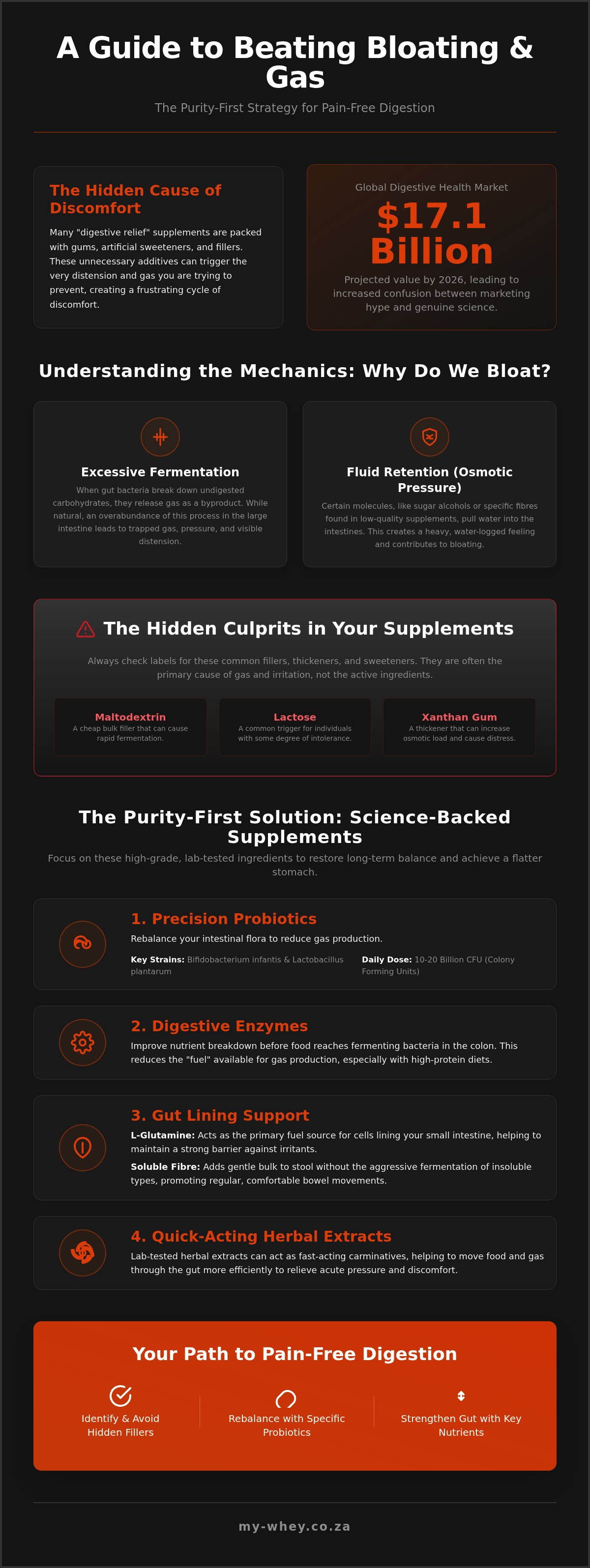
What if the very supplements you're taking to soothe your stomach are actually the hidden cause of your discomfort? It's a frustrating irony that many products designed for digestive relief are packed with gums, artificial sweeteners, and bulk fillers that trigger the exact distension you're trying to avoid. If you've ever felt the social embarrassment of unexpected gas or the physical strain of a tight waistband after a "healthy" meal, you're certainly not alone. With the global digestive health market reaching 17.1 billion dollars in 2026, the confusion over marketing hype versus genuine science has never been higher.
We agree that you deserve a reliable daily routine that prioritises purity and long-term affordability without the guesswork. This guide will help you identify the most effective, science-backed supplements to reduce bloating and gas that skip the unnecessary additives in favour of high-grade ingredients. We'll explore the latest shift towards precision probiotics and why choosing lab-tested herbal extracts is essential for a flatter stomach. You'll gain a clear, no-nonsense plan to organise your gut health and finally enjoy pain-free digestion every single day.
Key Takeaways
- Identify the biological triggers behind physical distension and why your microbiome's fermentation process is the key to lasting relief.
- Learn how to select specific probiotics and digestive enzymes that rebalance your intestinal flora and improve nutrient breakdown.
- Discover which lab-tested herbal extracts act as fast-acting supplements to reduce bloating and gas by moving food through the gut more efficiently.
- Uncover the "hidden culprits" in your supplement cupboard, including common fillers and sweeteners that often cause more irritation than the active ingredients.
- Master a "Purity-First" strategy for stacking high-grade gut health products to achieve a flatter stomach and pain-free digestion.
Understanding the Mechanics: Why Do We Bloat?
Bloating isn't just an internal feeling; it's a measurable increase in abdominal pressure. Most people ask What is bloating? when they experience that tight, "stretched" sensation. It often involves physical distension caused by trapped gas or an accumulation of fluid. This pressure usually stems from how your body processes nutrients and interacts with its resident bacteria.
Your gut microbiome is a complex ecosystem of trillions of microbes. When you consume carbohydrates that your body doesn't fully digest, these bacteria step in to finish the job. Fermentation is the chemical breakdown of substances by bacteria or yeasts, typically involving effervescence and the release of gas as a byproduct. Whilst this is a natural biological function, excessive fermentation leads to the uncomfortable pressure many of us recognise after a heavy meal.
Sometimes the issue isn't gas but fluid retention. Osmotic pressure occurs when certain molecules, like sugar alcohols or specific fibres, pull water into the intestines. This effect creates a feeling of heaviness and can cause digestive transit issues. It's also why choosing high-purity supplements to reduce bloating and gas is so vital; poor-quality products often use cheap fillers that increase this osmotic load.
We see this frequently with "supplement-induced bloating." Many retail products are packed with maltodextrin, lactose, or thickeners like xanthan gum. These additives are often the primary cause of gas rather than the active ingredients themselves. By focusing on filler-free options, you eliminate these unnecessary triggers from your daily routine.
The Biological Process of Gas Production
Gas production begins when bacteria interact with undigested fibre and sugars in the large intestine. It's useful to distinguish between upper GI gas and lower GI bloating. Upper gas usually comes from swallowed air or carbonated liquids. Lower GI bloating happens deep in the colon. If your digestive enzymes are insufficient, more undigested food reaches these bacteria, resulting in a surge of hydrogen or methane gas. This internal pressure is what causes the visible distension of the stomach.
Common Triggers in Modern Diets
High-FODMAP foods are the most frequent dietary culprits. Ingredients like garlic, onions, and certain sweeteners are notorious for rapid fermentation in sensitive individuals. Stress also plays a significant role. When you eat whilst rushed or anxious, your body suppresses the production of digestive enzymes. Additionally, a sudden spike in protein intake can overwhelm the gut. If you switch to a high-protein diet without ensuring your supplements to reduce bloating and gas are lab-tested for purity, you might inadvertently trigger the very symptoms you're trying to solve.
Essential Gut Health Supplements for Long-Term Balance
Achieving a calm digestive system requires more than just avoiding triggers. It's about building a resilient internal environment. Whilst the previous section highlighted the mechanics of gas production, we must now focus on the core tools that restore balance. L-Glutamine is a standout amino acid for this purpose. It acts as a primary fuel source for the cells lining your small intestine, helping to maintain a strong barrier against irritants. When combined with soluble fibre, which adds gentle bulk to stool without the aggressive fermentation of insoluble types, you create a foundation for regular, comfortable bowel movements.
The synergy between these elements is what most retail products miss. Taking a single probiotic is rarely enough if your gut lining is compromised or if you lack the enzymes to process your meals. By stacking these supplements to reduce bloating and gas, you address the issue from multiple angles: improving digestion, strengthening the gut wall, and rebalancing the microbiome. This comprehensive approach is what leads to a flatter stomach and consistent relief.
Probiotics and the Microbiome
Not all bacteria are created equal. To find the right supplements to reduce bloating and gas, you should prioritise specific strains like Bifidobacterium infantis and Lactobacillus plantarum. These have shown particular efficacy in reducing abdominal distension. You'll often see CFU (Colony Forming Units) on the label. A count of 10 to 20 billion is usually sufficient for daily maintenance. High-quality gut health supplements South Africa offers focus on these verified strains to ensure they survive the journey through your stomach acid and reach the lower GI tract where they are needed most.
The Role of Digestive Enzymes
Digestive enzymes are the workhorses of your GI tract. They break down macronutrients into smaller, absorbable molecules before they have a chance to reach the colon and ferment. Protease handles protein, amylase targets carbohydrates, and lipase focuses on fats. If you struggle with dairy, a targeted lactase enzyme is indispensable. Scientific reviews on Gas and Bloating suggest that enzyme deficiency is a leading cause of post-meal discomfort. For maximum efficacy, take these enzymes approximately 10 to 15 minutes before your largest meals. This proactive approach ensures the enzymes are present and active as soon as food enters the stomach. You can find these pure gut health ingredients in our specialised range, designed to eliminate the heavy feeling that often follows a high-protein meal.
Quick-Acting Herbal Remedies for Gas and Distension
While long-term strategies like probiotics build a foundation, sometimes you need immediate relief from acute symptoms. Herbal extracts provide a potent, fast-acting solution for those moments when distension becomes physically uncomfortable. Unlike standard teas, which often lack a standardised concentration of active compounds, high-purity herbal supplements offer a reliable dosage that interacts directly with the digestive tract. This efficiency is why concentrated extracts are superior for managing sudden flare-ups.
Peppermint oil is one of the most well-documented supplements to reduce bloating and gas. It works as an antispasmodic by relaxing the smooth muscles of the gastrointestinal wall. This relaxation allows trapped gas to pass more easily, reducing the sharp pains associated with trapped wind. Ginger complements this by acting as a prokinetic agent. It stimulates the migrating motor complex, the process that moves food through the stomach and small intestine. This prevents food from sitting too long and fermenting, which we previously identified as a primary cause of gas.
Other effective aids include fennel and activated charcoal. Fennel helps to dissipate gas by relaxing the intestinal lining, whilst charcoal works through adsorption, essentially binding to gas molecules to reduce their volume. When you source these in pure, bulk formats, you avoid the additives that often trigger sensitivity in the first place.
Peppermint and Ginger: The Dynamic Duo
Using these two together creates a powerful synergy for rescue supplementation. Peppermint addresses the muscle tension, whilst ginger stimulates saliva and bile production to accelerate the digestive process. For acute gas, taking these extracts at the first sign of discomfort can prevent a minor bloat from becoming a painful distension. It's a proactive way to manage social embarrassment without waiting hours for a probiotic to take effect. This combination provides a reliable safety net for your digestive system.
Herbal Extracts for Daily Maintenance
Beyond rescue use, integrating these herbs into your daily routine offers cumulative benefits. Regular use can help maintain a steady digestive rhythm and prevent the buildup of gas before it starts. These extracts should be part of a broader nutritional supplements strategy that focuses on high-grade, lab-tested ingredients. By choosing bulk, pure extracts, you ensure you're only getting the active botanical compounds. This purity-first approach ensures your daily maintenance routine supports your gut health without adding to the digestive load, allowing you to maintain a flatter stomach with absolute confidence.
The Hidden Culprits: Avoiding Fillers in Your Routine
Labels lie by omission. Most consumers focus on the active ingredients on the front of the bottle, but the real story is hidden in the "Other Ingredients" list. When you invest in supplements to reduce bloating and gas, you expect relief, not a secondary reaction. Unfortunately, the "inactive" ingredients used as carriers or bulking agents are often the primary triggers for the very distension you're trying to cure. Whilst the active compound might be science-backed, the maltodextrin or lactose surrounding it can trigger a cascade of digestive distress.
Fillers like maltodextrin have a high glycaemic index and can rapidly ferment in the gut, especially in those with sensitive microbiomes. Lactose is another common offender, used frequently in retail capsules as a cheap bulking agent. If you've ever wondered why a "natural" supplement made your stomach feel tighter, these excipients are likely to blame. To ensure your routine is actually helping, follow this purity checklist when reading labels:
- Identify Maltodextrin: This starch is a common filler that can disrupt gut bacteria balance.
- Check for Lactose: Even small amounts can trigger gas in lactose-sensitive individuals.
- Avoid Sugar Alcohols: Ingredients like sorbitol or xylitol are notorious for drawing water into the bowel.
- Watch for Gums: Xanthan and guar gums are often used as thickeners but can cause significant fermentation.
Why Fillers Cause Fermentation
Sugar alcohols, known as polyols, are particularly problematic because they are poorly absorbed in the small intestine. They travel to the colon where they draw water in through osmosis, leading to a heavy, bloated feeling. Once there, your gut bacteria ferment them, releasing the gas that causes physical pressure. This is why My Whey prioritises lab-tested purity over retail convenience; we eliminate these unnecessary carriers to ensure your body only processes what it needs. By removing these "hidden" triggers, you allow your digestive system to heal without the constant irritation of artificial bulking agents.
The Economic and Health Benefits of Bulk Sourcing
Buying pure powders in bulk isn't just about the price-per-dose, though the savings are substantial compared to retail capsules. The true advantage is the total control over your intake. Standard capsules often require flow agents like magnesium stearate or silica to prevent machines from clogging during production. When you choose pure ingredients, you bypass these manufacturing requirements entirely. This approach allows for custom dosing tailored to your specific needs without any extra fillers. If you are new to this method, our bulk supplements South Africa guide provides essential tips for sourcing and storing high-grade ingredients. This ensures your supplements to reduce bloating and gas stay potent and pure from the first dose to the last. To start your journey toward a cleaner routine, explore our lab-tested pure ingredients and feel the difference that zero-filler supplementation makes.
Optimising Your Digestive Health with My Whey
Our Purity-First framework isn't just a marketing slogan; it's a necessary response to an industry saturated with digestive irritants. Throughout this guide, we've identified how fillers and poor-quality additives trigger physical distension. By choosing lab-tested, bulk ingredients, you're taking a proactive step toward eliminating those triggers. This methodical approach ensures your body only interacts with the active compounds it needs to function at its peak. When you select supplements to reduce bloating and gas, the absence of "inactive" ingredients is often more important than the active ones themselves.
We believe that high-grade nutrition should be accessible and transparent. Sourcing your gut health products in bulk allows you to avoid the manufacturing agents found in mass-market capsules whilst maintaining a cost-effective routine. This transition to pure powders and extracts is the most reliable way to achieve a flatter stomach and consistent, pain-free digestion.
Solving the Protein Bloat
Many athletes and fitness enthusiasts experience significant discomfort after their post-workout nutrition. This "protein bloat" is frequently caused by the thickeners and artificial sweeteners found in commercial blends. Using a high-purity whey protein is significantly easier on the stomach because it lacks the gums that cause fermentation. If you have a sensitive system, we recommend choosing unflavoured options to bypass sweeteners entirely. You can further optimise your recovery by adding a serving of digestive enzymes directly to your shake. This ensures that the protein is broken down efficiently before it can cause pressure in the lower GI tract.
Creating Your Personalised Gut Stack
A reliable daily routine is the key to long-term balance. We suggest a structured stack to keep your digestive system calm and efficient throughout the day. Start your morning with a high-quality probiotic to support your microbiome. Approximately fifteen minutes before your largest meal, take a targeted digestive enzyme to assist with nutrient breakdown. Finally, keep herbal supplements like ginger or peppermint extract on hand as a rescue measure for any unexpected acute gas. This three-pronged approach provides comprehensive support for every stage of digestion.
Every product in our range is lab-tested for purity, giving you absolute peace of mind. We handle the complexities of quality control so you can focus on your results. You can explore our full range of gut health supplements online, with reliable national delivery available across South Africa. Start building your personalised, filler-free routine today and experience the difference that pharmaceutical-grade purity makes to your daily comfort.
Take Control of Your Digestive Comfort Today
Bloating doesn't have to be a recurring part of your daily life. As we've explored, the key to relief lies in prioritising lab-tested purity and eliminating the hidden fillers that often trigger physical distension. By focusing on a "purity-first" approach, you can remove the unnecessary additives that disrupt your microbiome and cause social embarrassment. Building a resilient gut requires a structured strategy, combining precision probiotics with fast-acting herbal extracts to maintain long-term balance.
Choosing high-grade supplements to reduce bloating and gas ensures your body only processes what it needs for peak performance. Our range is lab-tested for maximum purity and contains no unnecessary fillers or gas-inducing additives that compromise your results. We offer affordable bulk pricing for South African wellness, allowing you to sustain a clean routine without the retail markup. Explore our range of pure Gut Health Supplements today and start your journey toward a flatter stomach and pain-free digestion. You now have the tools to organise a reliable daily routine and enjoy your favourite meals with absolute confidence.
Frequently Asked Questions
Which supplement is best for immediate bloating relief?
Peppermint oil and ginger are the most effective supplements to reduce bloating and gas for immediate relief. Peppermint acts as an antispasmodic by relaxing the smooth muscles of the digestive tract, allowing trapped wind to pass. Ginger works as a prokinetic agent to speed up gastric emptying. These concentrated herbal extracts are far more potent than standard teas, providing a reliable rescue measure when physical distension becomes uncomfortable or socially embarrassing.
Can taking too many supplements actually cause gas?
Yes, excessive supplementation can trigger gas if the products contain cheap bulking agents or excipients. Many retail capsules use maltodextrin, lactose, or thickeners like xanthan gum to fill out the product. These "inactive" ingredients are often rapidly fermented by gut bacteria, leading to the exact pressure you're trying to avoid. Switching to lab-tested, pure powders in bulk eliminates these unnecessary triggers and ensures your system only processes the active ingredients.
Is it better to take probiotics in the morning or at night?
Probiotics are generally most effective when taken in the morning, approximately 30 minutes before your first meal. Taking them on an empty stomach or with a light, low-fat meal helps the live bacteria survive the harsh acidic environment of the stomach. This timing ensures the CFU count reaches the large intestine where it can effectively rebalance your intestinal flora. Consistency is more important than the specific hour, so choose a time you can maintain daily.
How do digestive enzymes differ from probiotics?
Digestive enzymes and probiotics perform entirely different functions in the gut. Enzymes are proteins that chemically break down macronutrients like fats, proteins, and carbohydrates into smaller molecules for absorption. Probiotics are live, beneficial bacteria that help maintain a healthy microbiome and support immune function. Whilst enzymes provide more immediate assistance with post-meal heaviness, probiotics focus on long-term balance and reducing the chronic fermentation that leads to bloating.
Why does my protein powder make me feel bloated?
Protein-induced bloating is usually caused by secondary ingredients like artificial sweeteners, gums, and thickeners found in mass-market blends. If you use a whey concentrate, the lactose content might also be a factor for those with sensitivities. Choosing unflavoured, high-purity protein options allows you to avoid these irritants entirely. Adding a targeted digestive enzyme to your post-workout shake can further assist your body in breaking down the protein before it reaches the colon.
Are herbal supplements safe to take every day for gut health?
High-purity herbal supplements are generally safe for daily use and can provide cumulative benefits for your digestive rhythm. Ingredients like ginger and fennel help maintain steady motility and prevent the buildup of gas before it starts. However, it's vital to ensure your herbs are lab-tested and free from contaminants or unnecessary fillers. Always follow the specific dosage instructions on the label to ensure you're supporting your gut health safely and effectively.
How long does it take for gut health supplements to start working?
The timeline for results depends on the type of supplement you're using. Digestive enzymes and herbal extracts like peppermint often provide relief within 30 to 60 minutes of ingestion. Conversely, probiotics and gut-lining supports like L-Glutamine typically require two to four weeks of consistent daily use to noticeably rebalance the microbiome. Patience is essential when building a long-term foundation for digestive health; the goal is sustainable relief rather than a temporary fix.
What should I look for on a supplement label to avoid bloating?
You must scrutinise the "Other Ingredients" section of the label to identify potential triggers. Look specifically for maltodextrin, lactose, and sugar alcohols like sorbitol or xylitol, which are notorious for causing gas through fermentation or osmotic pressure. Avoid products with unnecessary thickeners like carrageenan or xanthan gum. Prioritising supplements to reduce bloating and gas that are lab-tested for purity ensures you aren't inadvertently consuming additives that compromise your digestive comfort.