

Supplements to Reduce Brain Fog and Fatigue: What Helps?
Could the supplement you’re considering address the cause of your brain fog, or add another cost without helping? If you’re searching for supplements to reduce brain fog and fatigue, it’s understandable to want a clear answer. These symptoms can have several possible causes, from poor sleep and stress to nutrient deficiencies, medication effects or other health factors.
A supplement isn’t always the right next step. This guide explains which options may be worth considering, what the evidence can and can’t tell you, and why a supplement is neither a diagnosis nor a guaranteed fix. You’ll also learn when to seek clinical advice and how to assess product labels, possible side effects and interactions.
We’ll look at the evidence with a practical, cautious lens, so you can decide whether a supplement, including a product in My Whey’s cognitive-support category, fits your needs. Start by considering the possible cause, then weigh the evidence and safety before choosing what to do next.
Key Takeaways
- Brain fog and fatigue describe symptoms, not a diagnosis. Ongoing or concerning symptoms may warrant clinical advice.
- Whether supplements to reduce brain fog and fatigue may help depends on the ingredient, the likely cause and your individual needs.
- Weigh the evidence and safety considerations rather than relying on broad promises of instant focus or energy.
- Use a practical sequence: track symptoms, review routines, seek advice when needed and introduce only one change at a time.
- Assess supplement categories by reading the label and considering your needs and the evidence before choosing a product.
What can brain fog and fatigue mean, and when should you look beyond supplements?
Forgetfulness, difficulty concentrating and low energy can make everyday tasks harder, but they don’t point to one specific cause. Brain fog is a descriptive term for difficulties with concentration or mental clarity, not a medical diagnosis. Before considering supplements to reduce brain fog and fatigue, describe what you’re experiencing as clearly as you can. This can help you decide whether to review everyday habits or seek professional advice.
Brain fog and fatigue: symptoms, not diagnoses
Brain fog might mean losing your train of thought during a conversation, rereading the same paragraph or finding it harder to organise familiar tasks. Mental fatigue is the feeling that sustained thinking takes more effort than usual. It differs from sleepiness, which is a tendency to doze, and physical tiredness, which can make movement feel demanding. These experiences can overlap, but one doesn’t automatically explain the others.
Symptoms vary between people and may shift during the day. A brief concentration lapse after a poor night’s sleep is different from a pattern that keeps returning, although a single episode can’t establish the cause. Sleep disruption, stress, changes in eating or drinking habits, medicines and health conditions are among the factors that may contribute. Tiredness alone doesn’t prove you have a nutrient deficiency or a medical condition.
When is it sensible to seek medical advice?
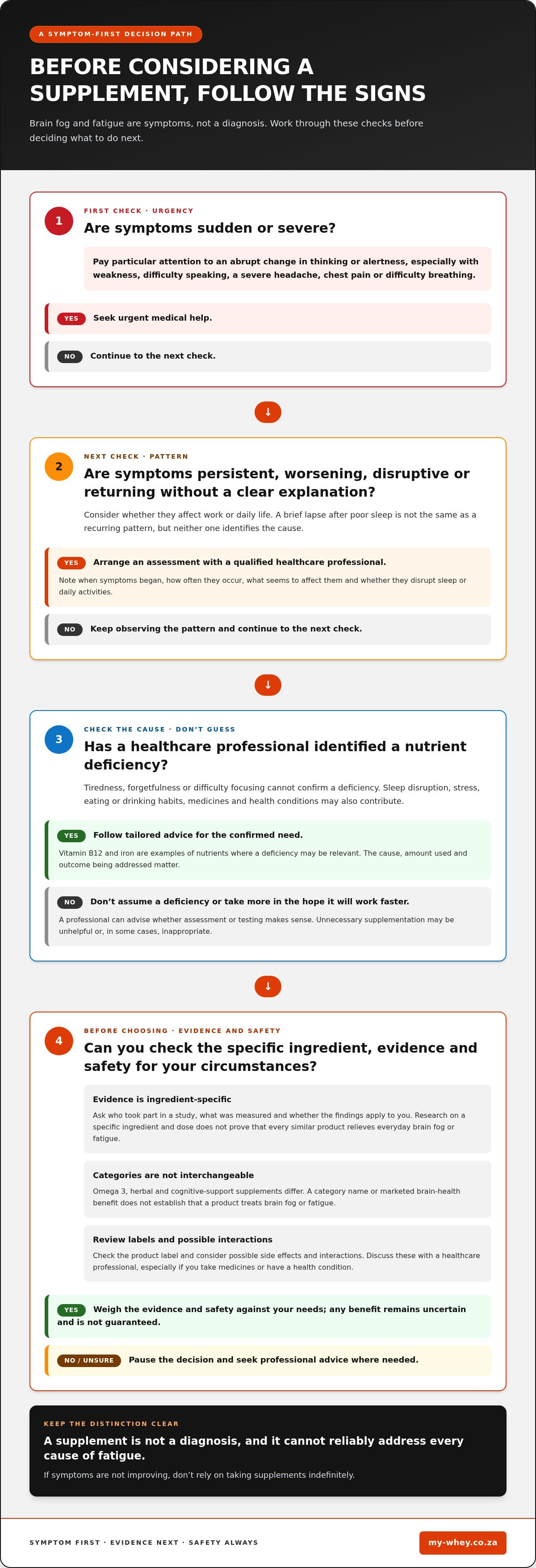
Arrange an assessment if symptoms persist, worsen, interfere with work or daily life, or keep returning without a clear explanation. A qualified healthcare professional can consider the broader picture and advise whether further assessment is appropriate. Don’t rely on taking supplements indefinitely to manage symptoms that aren’t improving.
Persistent or worsening brain fog or fatigue deserves clinical assessment, not guesswork with supplements. Sudden or severe symptoms need more urgent attention. Seek urgent medical help for an abrupt change in thinking or alertness, particularly if it occurs with weakness, difficulty speaking, a severe headache, chest pain or difficulty breathing.
Prepare a short record before your appointment. Note when symptoms began, how often they occur, what seems to affect them and whether they disrupt sleep or daily activities. Bring a current list of medicines and supplements, including how much you take and when. This gives the healthcare professional useful context and helps them consider possible interactions alongside your symptoms.
Which supplements to reduce brain fog and fatigue have plausible evidence?
There isn’t one supplement that suits everyone with low energy or difficulty concentrating. Potential benefit depends on the ingredient, a person’s needs and the reason symptoms are occurring. Correcting a diagnosed deficiency is different from taking a nutrient without evidence that levels are low. In the first case, a clinician can recommend an appropriate response. In the second, benefit may be uncertain, and unnecessary supplementation can carry risks.
Assess evidence by asking who took part in a study, what was measured and whether the findings apply to your situation. A result involving a particular group or a specific test of cognitive performance doesn’t prove that a supplement will relieve everyday brain fog. Research may examine a defined ingredient and dose, not every product making a similar claim. Be particularly cautious of broad promises of instant focus.
Nutrient deficiencies and targeted supplementation
Vitamin B12 and iron are examples of nutrients for which a deficiency may be relevant to health and energy. But feeling tired, forgetful or unfocused can’t confirm either deficiency. Similar symptoms can have other explanations, and taking a supplement without knowing your status may be unhelpful or, in some cases, inappropriate. A healthcare professional can decide whether assessment or testing makes sense and advise on next steps.
If a deficiency is identified, advice can be tailored to its cause and your health circumstances. Don’t use a supplement as a substitute for finding out why symptoms are present, or assume that taking more will work faster. For targeted supplementation, the confirmed need, the amount used and the outcome being addressed all matter.
Omega 3, herbal and cognitive-support supplements
Omega 3, herbal and cognitive-support supplements aren’t interchangeable, and their names alone don’t establish that they treat brain fog or fatigue. Evidence can vary by ingredient, dose, study population and measured outcome. Some research may examine a specific health measure rather than clearer thinking or reduced tiredness in everyday life. Harvard Health’s perspective on brain supplements also cautions readers against assuming that marketed brain-health benefits are well supported.
A supplement can’t reliably address every cause of fatigue. For Omega 3, distinguish general information about the nutrient from evidence for a particular symptom. A guide to Omega 3 benefits and selection can help you assess the category without treating it as a guaranteed solution. Apply the same care to herbal ingredients and cognitive-support products: review the label and discuss possible interactions with a healthcare professional, especially if you take medicines or have a health condition.
After considering your needs and safety, you can explore My Whey’s cognitive-support supplements. Let the evidence and your circumstances guide your choice, not a promise of a quick fix.
Compare brain fog and fatigue supplements without hype
Start a useful comparison with the ingredient and the reason it might be considered, not the boldest promise on the front of the pack. The table below offers questions to ask, not a recommendation to start a supplement. Evidence and safety depend on your health, medicines and whether there’s a specific need.
| Ingredient or category | Intended use | Evidence limitations | Safety consideration | Question for a clinician |
|---|---|---|---|---|
| Vitamin B12 | Addressing a confirmed deficiency | May not help symptoms if a deficiency isn’t present; symptoms alone can’t confirm one. | Check suitability and dose, particularly if you take medicines or have a health condition. | Is testing appropriate, and what would the result mean? |
| Iron | Addressing iron deficiency when identified | Fatigue alone doesn’t establish low iron; benefit depends on need and assessment. | Don’t take it routinely without advice; ask about risks and monitoring. | Should my iron status be assessed before considering a supplement? |
| Omega 3 | Supplementing the diet with Omega 3 | Evidence for a general nutrient or other outcomes doesn’t prove an effect on brain fog. | Discuss use alongside medicines and any relevant health conditions. | Is this relevant to my diet or health goals? |
| Herbal or cognitive-support products | Depends on the specific ingredient and the product’s stated purpose | Findings for one ingredient, dose or group may not apply to another product or to everyday fatigue. | Check all ingredients and warnings for possible interactions. | Could any ingredient conflict with my medicines or condition? |
What should a transparent supplement label tell you?
Read beyond the front label. Look for a full ingredient list, the amount per serving, serving directions, warnings and manufacturer details. Clear quantities make products easier to compare; a vague “proprietary blend” can make it difficult to tell how much of each ingredient is included. A lab-tested description may tell you about product checks, but it isn’t proof that a product treats brain fog or fatigue.
More ingredients or a higher dose don’t automatically make a supplement a better choice. They can make it harder to identify what you’re taking and assess whether it suits you. If digestive symptoms are also a concern, treat them as useful context for a health discussion rather than assuming a gut-health supplement will resolve concentration or fatigue. This South African gut health supplements guide offers a separate perspective on that category.
How to assess supplement claims and evidence
Look for human research on the specific ingredient and an outcome that matches your question. A preliminary finding isn’t the same as consistent evidence of a meaningful benefit for people with brain fog. Be cautious of claims such as “instant focus” that promise a broad result without explaining the ingredient or evidence behind it. Product claims and regulatory requirements can vary, so check current South African guidance rather than assuming a label phrase proves effectiveness.
Use the same label-led approach when exploring My Whey’s cognitive-support supplements. Compare the stated ingredients and serving information with your needs, then discuss suitability with a qualified healthcare professional.
What practical steps should you take before trying a supplement?
A clear process can help you avoid guesswork and give a healthcare professional useful context. Before choosing supplements to reduce brain fog and fatigue, work through these steps. If symptoms are sudden, severe or getting worse, prioritise medical advice rather than testing products yourself.
- Record what you’re experiencing. Note the symptoms, when they occur and how they affect your day. Include changes in concentration, energy, sleepiness or physical tiredness, rather than relying on a general note such as “feeling off”.
- Review your routines. Add brief notes on sleep, meals, hydration, stress and activity. Look for patterns, such as feeling more tired after disrupted sleep or noticing concentration changes at a particular point in the day. A log can highlight useful context, but it can’t diagnose the cause.
- Seek advice when needed. If symptoms persist, worsen or disrupt daily life, discuss them with a qualified healthcare professional. Share your notes and a current list of medicines and supplements. Ask whether assessment is appropriate before adding a product, particularly if you suspect a nutrient deficiency.
- Consider one change at a time. If you and your healthcare professional decide a supplement is suitable, avoid starting several products together where possible. A single change makes it easier to keep track of what you’re taking and notice any unwanted effects. Don’t use this approach to delay assessment or care.
Track patterns before adding a supplement
Keep the log simple enough to maintain. You could note when you went to bed, whether sleep felt disrupted, roughly when you ate, whether you drank less than usual, and how stress or activity affected your day. Record symptoms in plain language. This context may make a healthcare conversation more focused and help distinguish an occasional lapse from a recurring pattern.
Check safety, interactions and local guidance
Supplements can interact with medicines or be unsuitable in some circumstances. Discuss a planned product with a qualified healthcare professional if you take regular medication, have an existing health condition, are pregnant or are breastfeeding. Bring the full product label, not just the front panel, so the ingredients and serving directions can be considered alongside your circumstances.
Follow the label directions and don’t assume that taking more will improve the result. If you notice a possible adverse reaction, stop taking the supplement and seek professional advice. Seek urgent medical help for a severe reaction. Avoid relying on broad claims or assumptions about regulatory status. South African requirements can depend on the product and its claims, so use current authoritative local information rather than treating a label as proof of approval or effectiveness.
After considering your needs and safety, explore My Whey’s cognitive-support range with the product label and your healthcare discussion in mind.
How to choose a sensible next step with My Whey's supplement range
Start with your symptoms and what may be contributing to them, not with a product category. Brain fog and fatigue can have different causes, so consider a supplement only if its ingredients and intended use are relevant to your circumstances. If symptoms persist or interfere with daily life, appropriate health advice comes first. A product can’t diagnose why you feel unwell or guarantee a change.
Match a supplement category to an informed decision
My Whey offers several wellness categories to explore after you’ve considered your needs and any safety advice. Assess each category on its ingredients and intended use, not as a promise of a particular result:
- Cognitive support is a category to review by checking its ingredients and stated purpose.
- Herbal supplements vary by ingredient, so consider the full label and possible suitability for you.
- Superfoods are a broad category; don’t assume the name alone means a product addresses your symptoms.
- Omega 3 softgels can be assessed in light of your diet, needs and professional advice.
Compare the label with the question you’re trying to answer. Does the stated purpose relate to your needs? Are the ingredients and serving information clear? If you take medicines, have a health condition or have been advised to avoid an ingredient, factor that into your decision. A category name alone isn’t evidence that a product will reduce brain fog or fatigue.
Keep expectations practical and evidence-led
My Whey describes its wellness products as lab-tested and focuses on purity and value. This can inform a label-led choice, but lab testing isn’t proof that a product treats symptoms or will produce a particular outcome. My Whey’s bulk approach aims to reduce unnecessary retail packaging costs; value doesn’t replace the need to decide whether a supplement is suitable for you.
Use supplements as a considered addition, not a substitute for appropriate assessment or everyday routines that support wellbeing. Avoid choosing a product because it promises a rapid or guaranteed result. Instead, weigh the ingredient, the evidence relevant to your needs, the label directions and any advice you’ve received. If you decide to try a product, follow its label and seek professional advice if you have concerns or experience an adverse reaction.
There’s no need to rush the choice. Once you’ve considered the possible cause of your symptoms and relevant safety factors, explore My Whey's supplement range and compare the available categories with your needs. A cautious, informed decision is more useful than expecting any supplement to work for everyone.
Make your next choice a considered one
You don’t have to solve everything at once. Choose a clear next step: arrange an assessment if symptoms need attention, or discuss a specific supplement with a qualified healthcare professional before adding it to your routine. This keeps your decision grounded in your needs, rather than the loudest claim on a label.
If you’re weighing supplements to reduce brain fog and fatigue, use the same standard for every option: understand why you’re considering it, read the label carefully and be realistic about what the evidence can show. A measured approach can help you avoid unnecessary products and make any change easier to discuss or reassess.
When you’re ready to compare categories, explore My Whey’s supplement range and use what you’ve learned to make a thoughtful choice. Keep your wellbeing at the centre and take the next step at a pace that feels informed and manageable.
Frequently Asked Questions
Can supplements help with brain fog and fatigue?
Sometimes, but it depends on the cause of symptoms and whether a supplement addresses a genuine need. Correcting a nutrient deficiency may be appropriate when a clinician identifies one; taking a product without that need may not help. Evidence for supplements to reduce brain fog and fatigue varies by ingredient and the outcome studied. Don’t judge suitability by a product’s name or promise alone.
Which vitamin deficiency can cause brain fog and tiredness?
Vitamin B12 deficiency can be associated with tiredness and changes in memory or concentration. Iron deficiency can also contribute to fatigue, although iron is a mineral, not a vitamin. These symptoms have other possible causes, so they can’t identify a deficiency by themselves. If you’re concerned, describe your symptoms and diet to a healthcare professional, who can decide whether testing or further assessment is appropriate.
How long does it take for supplements to help with fatigue?
There’s no reliable universal timeframe. Any change depends on the cause of fatigue, the ingredient, whether it addresses a confirmed need and individual circumstances. If a clinician recommends supplementation, ask when to review your symptoms and what to do if they don’t change. Avoid increasing the amount or adding other products to speed things up; follow the label and seek advice if you have concerns.
Can I take supplements for brain fog with prescription medication?
Possibly, but check with a doctor or pharmacist before combining them. Interactions and suitability depend on the specific ingredients, your medicines and your health circumstances; herbal products can contain active ingredients too. Show the healthcare professional the full label, including serving directions and warnings, and name every medicine and supplement you take. Don’t stop or change prescribed treatment to make room for a supplement without professional advice.
Should I take iron for fatigue without a blood test?
Don’t start iron for fatigue on your own. Tiredness doesn’t confirm low iron, and unnecessary supplementation may cause harm. A healthcare professional can decide whether a blood test is suitable and interpret the result alongside your symptoms and health history. If iron deficiency is found, ask what may be contributing to it and what follow-up is needed, rather than assuming a supplement alone addresses the underlying issue.
When should I see a doctor about brain fog and fatigue?
Arrange medical advice if symptoms persist, worsen, keep returning or affect everyday activities such as working, studying or managing routine tasks. Seek urgent medical help for sudden or severe changes, particularly confusion or difficulty speaking alongside weakness, a severe headache, chest pain or breathing difficulty. Before an appointment, note when symptoms began and how they’ve changed, and bring a current list of medicines and supplements.