

The Ultimate Affordable Bulking Diet Plan for South Africans in 2026
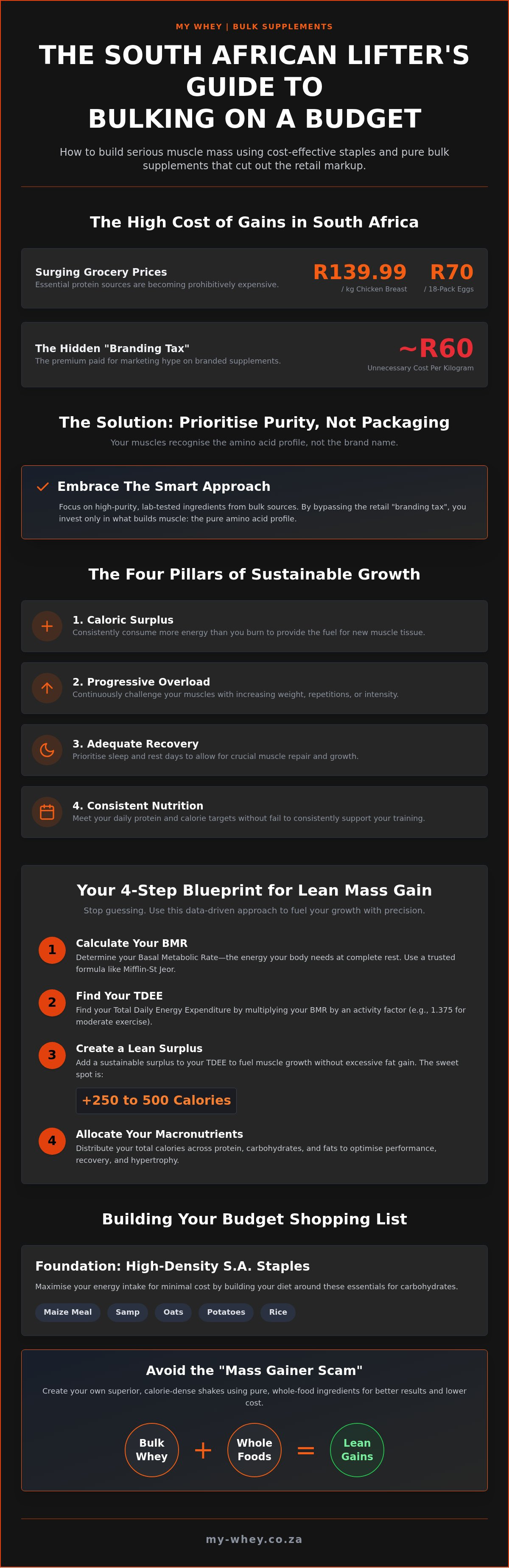
Why are you paying a R60 premium per kilogram for boutique branding when your muscle fibres only recognise the amino acid profile? With the price of chicken breast reaching R139.99 per kilo at some retailers and 18-packs of eggs averaging R70, many South African lifters feel priced out of their own fitness goals. Finding a bulking on a budget shopping list south africa lifters can actually afford is becoming a necessity as grocery bills climb while progress stays stagnant; it's a common struggle in our current economy.
We've engineered a solution that prioritises physiological results over fancy packaging and marketing hype. It's about substance. You'll discover how to pack on serious muscle mass using cost-effective staples and pure bulk supplements that cut out the retail markup. By focusing on high-quality basics like maize meal and bulk-sourced whey protein, you can hit your targets without draining your bank account.
This guide provides a transparent blueprint for your physical transformation. We'll break down a value-focused supplement strategy, explore the most affordable protein sources across major retailers, and deliver a sustainable 7-day meal plan built for real-world results in 2026.
Key Takeaways
- Master the precise calculation of your TDEE and macro ratios to ensure your surplus drives lean muscle hypertrophy rather than unwanted fat gain.
- Build your foundation with a bulking on a budget shopping list south africa featuring high-density local staples like maize meal and samp for maximum value.
- Avoid the "mass gainer scam" by creating your own calorie-dense shakes using high-purity bulk whey protein and whole-food ingredients.
- Streamline your nutrition with a structured 7-day meal plan designed around efficient meal prepping to eliminate expensive, last-minute food choices.
- Prioritise results by choosing lab-tested, raw supplement ingredients that bypass retail markups and deliver uncompromising purity for your muscle-building journey.
The Fundamentals of an Affordable Bulking Diet in South Africa
Bulking is often misunderstood as a simple licence to eat anything in sight. In reality, it's a strategic period of increased nutritional intake designed to facilitate muscle hypertrophy. Understanding The Fundamentals of Bulking is essential for anyone looking to transform their physique without accumulating excessive body fat. We categorise this process into two distinct paths: dirty bulking and lean bulking. While a "dirty" bulk involves consuming high-calorie junk food to hit targets, a lean bulk prioritises nutrient-dense foods to ensure that weight gain is primarily muscle tissue rather than adipose fat.
The current economic climate in South Africa has made traditional bodybuilding diets, often heavy on imported "superfoods" and expensive cuts of steak, feel increasingly out of reach. Prices for basic protein sources have surged, which means your strategy must evolve. Developing a bulking on a budget shopping list south africa lifters can rely on is about being smart with local staples. Success isn't found in the most expensive trolley; it's found in the four pillars of growth:
- Caloric Surplus: Consistently eating more energy than you burn.
- Progressive Overload: Challenging your muscles with increasing weight or intensity.
- Adequate Recovery: Prioritising sleep and rest days to allow tissue repair.
- Consistent Nutrition: Meeting your daily protein and calorie targets every single day.
The Caloric Surplus: Why Quantity Matters
Building muscle is a metabolically expensive process. Your body requires a steady stream of extra energy to synthesise new muscle proteins. Most experts recommend a "sweet spot" surplus of 250 to 500 calories above your maintenance level. This provides enough fuel for growth without overwhelming your system. However, consuming a high-calorie diet can sometimes strain your digestion. Maintaining optimal internal function is key; using gut health supplements South Africa athletes trust can help your body process these larger volumes of food efficiently, ensuring you actually absorb the nutrients you're eating.
Protein Purity vs. Marketing Hype
Most lifters believe they need the most expensive, brightly coloured tubs on the retail shelf to see results. This is a myth. Your muscles don't care about the branding; they care about the Biological Value (BV) and the amino acid profile of the protein you consume. Whey remains the gold standard for muscle protein synthesis due to its rapid absorption and high leucine content. By choosing raw, lab-tested ingredients, you can bypass the "branding tax" that inflates retail prices. This transparent approach is the core of a bulking on a budget shopping list south africa, allowing you to invest in high-purity protein concentrate without paying for unnecessary marketing or fillers.
Calculating Your Macros and Surplus for Lean Mass Gain
Before you head to the shops, you need a mathematical target. Guessing your intake often leads to either stalled progress or excessive fat gain, both of which waste your hard-earned money. To avoid this, you must first determine your Basal Metabolic Rate (BMR), which is the energy your body requires to function at rest. Once you have this baseline, you can apply an activity factor to find your Total Daily Energy Expenditure (TDEE). Evidence-based frameworks for Calculating Your Macros suggest that once your TDEE is established, adding a modest 10 to 15 per cent surplus provides the necessary fuel for muscle growth without the spillover of a "dirty" bulk.
This data ensures that your bulking on a budget shopping list south africa is precise rather than speculative. Follow these four steps to build your plan:
- Step 1: Use the Mifflin-St Jeor formula to find your BMR based on your age, weight, and height.
- Step 2: Multiply your BMR by an activity multiplier (typically 1.375 for moderate exercise) to determine your TDEE.
- Step 3: Add 250 to 500 calories to your TDEE to create a sustainable surplus.
- Step 4: Allocate these calories across protein, carbohydrates, and fats to support recovery and performance.
Consistency in tracking these numbers is far more valuable than achieving perfection for a single day. If you hit your targets 80 per cent of the time, your body will have the resources it needs to grow. Building a bulking on a budget shopping list south africa around these specific requirements prevents you from overbuying foods you don't actually need.
Setting Your Protein Floor
Protein is the most expensive component of any diet, so efficiency is paramount. Aim for 1.6g to 2.2g of protein per kilogram of body weight. Consuming more than this doesn't typically lead to faster growth; it simply increases your grocery bill. For those looking to maximise their recovery windows, the definitive guide to whey protein provides specialised insights into how timing affects muscle protein synthesis. By focusing on high-purity sources, you ensure every gram counts towards your goal.
Carbohydrates and Fats: The Energy Drivers
Carbohydrates are your primary fuel source and are "protein-sparing," meaning they prevent your body from burning protein for energy. Healthy fats are equally vital, as they support testosterone production and overall hormonal health. For an average 80kg male bulker aiming for a 2,800-calorie surplus, a macro split of 160g protein, 80g fat, and 360g carbohydrates provides the optimal balance to support hypertrophy while maintaining hormonal health. Choosing lab-tested, raw ingredients allows you to hit these targets without the added cost of proprietary blends or fillers.
The SA Bulking Grocery List: High-Calorie Staples on a Budget
To build an effective bulking on a budget shopping list south africa, you must shift your perspective from price per kilogram to price per 100 calories. In our current economy, traditional bodybuilding staples like lean beef and imported berries have become luxury items. A pragmatic approach focuses on local staples that provide high caloric density at a fraction of the cost. By prioritising items like maize meal, samp, and peanut butter, you can secure the energy required for growth without financial strain. These foods serve as natural mass gainers, especially when paired with full-cream milk, which remains one of the most cost-effective ways to add liquid calories to your day.
Efficiency is the goal. When you compare the cost of chicken breast (averaging R99.99 per kg) to tinned pilchards or eggs, the value gap becomes clear. Following Healthy Weight Gain Strategies means selecting foods that offer both high protein and significant energy. Your grocery trolley should be a tool for progress, not a source of debt.
Affordable Protein Sources in South Africa
Eggs are the undisputed champions of budget nutrition in SA. At approximately R70 for an 18-pack of large eggs, they provide the highest biological value of any whole-food protein. Tinned pilchards are another powerhouse, offering roughly 20g of protein per serving along with essential omega 3 fatty acids that support joint health and inflammation management. While meat is vital, relying on it for every meal is expensive. Investing in 5kg bags of bulk whey protein concentrate often results in a lower cost per gram of protein than fresh meat, allowing you to hit your 2.2g per kg target more reliably.
Budget Carbohydrates for Energy
Carbohydrates drive your training intensity. Maize meal (pap) is the ultimate high-volume fuel for South African lifters, costing as little as R34 for a 2.5kg bag. It is versatile, easy to digest, and provides the sustained energy needed for heavy sessions. Oats are equally essential; at R37.99 per kg on promotion, they are the perfect base for high-calorie shakes. To further reduce your unit price, always aim for 10kg bags of potatoes or rice. This bulk-buying strategy ensures your bulking on a budget shopping list south africa remains sustainable over the long term, protecting you from weekly price fluctuations at the till.
Supplementing for Size: Why Bulk Purity Beats Branded Mass Gainers
Many lifters fall for the mass gainer trap. These products often rely on cheap maltodextrin as the primary calorie source while charging premium protein prices. It's essentially paying for expensive sugar. By sourcing raw ingredients, you gain total control over your macronutrients and avoid the bloating associated with low-quality fillers. A DIY mass gainer is a far more efficient tool for your bulking on a budget shopping list south africa. Simply blend Whey Protein Concentrate 80% with finely ground oats and a tablespoon of natural peanut butter. This combination delivers high-quality protein, complex carbohydrates, and healthy fats at a fraction of the retail cost.
Your foundation stack should remain focused on three core pillars: Whey Protein, Creatine Monohydrate, and branched chain amino acids. These ingredients facilitate muscle protein synthesis, improve strength output, and support intra-workout recovery. Buying these in their raw form removes the "branding tax" often found in shopping centres, allowing you to allocate more of your budget to whole-food staples like eggs and maize meal.
Creatine: The Most Cost-Effective Muscle Builder
Creatine Monohydrate is the most researched and cost-effective supplement available today. While pre-workout blends often hide sub-optimal doses of creatine behind a wall of stimulants, buying it pure ensures you hit the effective threshold every time. A daily intake of 5g of pure creatine is the standard for increasing muscle cell volumisation and strength. When you compare the cost per serving of a 1kg bulk bag to a 300g branded tub, the savings are undeniable. It's a simple addition that provides the highest return on investment for your physique.
The Role of Amino Acids and Omega 3
As your training volume increases, your body's demand for recovery nutrients rises. BCAAs support muscle tissue during intense sessions, helping to prevent catabolism when you're pushing for new personal bests. Omega 3 softgels are equally vital; they help manage the systemic inflammation that naturally occurs with heavy lifting and increased caloric intake. We prioritise lab-tested purity across all our bulk categories to ensure you receive exactly what is listed on the label. Shop high-purity bulk supplements to start building your budget-friendly stack today.
A Sample 7-Day Affordable Bulking Meal Plan
Consistency is the deciding factor between a successful physical transformation and a wasted month in the gym. Once you've compiled your bulking on a budget shopping list south africa, the challenge shifts from selection to execution. Relying on willpower alone often leads to expensive, last-minute convenience meals that derail your progress. By structuring your week around nutrient-dense, local staples, you ensure your body receives a steady stream of energy for hypertrophy without overspending. This plan prioritises high-volume carbohydrates and bioavailable proteins that are accessible to every South African lifter.
Daily Meal Structure Example
This schedule is designed for maximum efficiency and utilises ingredients readily found at major retailers like Shoprite or Checkers. Each meal focuses on hitting your protein floor while providing the carbohydrate volume needed for heavy training sessions. It's a pragmatic blueprint that respects both your biology and your bank account.
- Breakfast: One cup of Jungle Oats prepared with water or full-cream milk; stir in two tablespoons of peanut butter and one scoop of Whey Protein Concentrate 80% for a calorie-dense start.
- Lunch: 200g of bulk-bought chicken breast or a tin of pilchards; serve with two cups of pap and a generous portion of sautéed spinach for essential micronutrients.
- Dinner: 150g of lean beef mince or brown lentils; pair with a large portion of white rice and seasonal vegetables like carrots or cabbage to support recovery.
- Post-Workout Shake: Blend one scoop of My Whey protein with 50g of finely ground oats and 300ml of full-cream milk. This DIY mass gainer provides roughly 600 calories and 40g of protein at a fraction of the cost of branded retail tubs.
Smart Shopping and Prepping Tips
Success in the kitchen starts with your shopping strategy. To keep your bulking on a budget shopping list south africa effective, you must embrace bulk purchasing for your non-perishables. Opt for 10kg bags of rice, 5kg bags of maize meal, and the largest available packs of eggs, such as 30-packs or 2 x 18-pack deals. These larger units significantly reduce the cost per serving and protect you from weekly price fluctuations.
Set aside three hours on a Sunday to organise your week ahead. Cook your rice, samp, and primary protein sources in large batches. This ensures you never miss a caloric target when your work or study schedule becomes demanding. This methodical approach removes the guesswork from your nutrition, allowing you to focus on progressive overload while your recovery is fuelled by high-purity, cost-effective ingredients. Stock up on bulk bulking essentials at My Whey and start your 7-day plan with the right foundations.
Take Control of Your Physical Growth
Achieving a powerful physique in 2026 doesn't require a boutique budget or overpriced retail supplements. By pivoting to local staples like maize meal and eggs, and calculating your macros with precision, you've already handled the most difficult part of the process. Your bulking on a budget shopping list south africa is now a strategic tool designed for maximum hypertrophy at the lowest possible cost per calorie. You've learned that substance always beats style; raw, high-purity ingredients provide the results that flashy branding simply cannot match.
Efficiency is the bridge between your current state and your goals. We provide the lab-tested purity and direct-to-consumer bulk pricing you need to bypass unnecessary markups. With national shipping from our primary distribution centre, your essentials are always within reach. Build your affordable bulking stack with My Whey bulk supplements to ensure every gram of protein and creatine you consume is working toward your recovery. The plan is in your hands; now it's time to execute with consistency and purpose.
Frequently Asked Questions
Is it possible to bulk on a vegetarian diet in South Africa?
Yes, bulking on a vegetarian diet is entirely achievable in South Africa by prioritising high-protein plant staples. Brown lentils, priced at approximately R23.00 per kg, and dried beans offer excellent value for money. Combine these with eggs and full-cream dairy to ensure you hit your essential amino acid requirements. This approach keeps your costs low whilst providing the necessary caloric density for muscle hypertrophy.
How much should I expect to spend on an affordable bulking diet per month?
A budget-conscious bulking diet in South Africa typically costs between R2,500 and R4,000 per month depending on your specific caloric needs. By following a bulking on a budget shopping list south africa focused on 10kg bags of rice and maize meal, you can keep expenses near the lower end of that range. Savings are maximised by purchasing proteins like eggs and bulk-sourced whey instead of expensive fresh red meat every day.
Can I bulk using only whole foods without any supplements?
You can bulk using only whole foods, though it requires significant meal preparation and a high volume of eating. Supplements like whey protein are tools for convenience and cost-efficiency rather than strictly mandatory requirements. However, hitting a target of 160g of protein daily through whole foods alone often proves more expensive and time-consuming than using a high-purity concentrate to fill the gaps.
Will a bulking diet make me gain excessive body fat?
Gaining excessive fat only happens if your caloric surplus is too high or if you stop training with sufficient intensity. A controlled surplus of 250 to 500 calories above maintenance ensures that weight gain is primarily lean muscle tissue. Tracking your progress and adjusting your intake prevents the "spillover" effect often seen in aggressive, uncontrolled bulking phases where calories are too high.
What is the cheapest protein powder for bulking in South Africa?
The most cost-effective protein powder in the local market is unflavoured Whey Protein Concentrate 80% purchased in bulk. By choosing raw ingredients over branded retail products, you avoid the high costs of marketing and proprietary flavour systems. Including this in your bulking on a budget shopping list south africa ensures the lowest possible price per gram of protein, making your nutritional targets much easier to reach.
How many calories are in a standard portion of South African pap?
A standard 150g portion of cooked maize meal contains approximately 180 to 200 calories. It is primarily composed of complex carbohydrates, making it an ideal fuel source for heavy lifting. Because it is incredibly affordable at roughly R34 for 2.5kg of dry meal, it remains the most efficient way for South African athletes to hit high daily energy targets without overspending.
Is dirty bulking with fast food cheaper than a clean budget diet?
Home-cooked budget meals are significantly cheaper than dirty bulking with fast food. A single takeaway burger meal can cost R80 to R120, whereas a nutrient-dense home meal of chicken, pap, and spinach costs less than R30. Choosing whole foods allows you to consume higher quality nutrients and more total calories for a fraction of the price of processed, greasy alternatives.
How long should a bulking phase last for a beginner?
A beginner bulking phase should ideally last between 12 and 16 weeks to allow for significant muscle tissue synthesis. Shorter phases often don't provide enough time for noticeable growth, whilst excessively long phases can lead to fatigue or unwanted fat accumulation. Consistency during this period is vital; use the data from your initial macro calculations to guide your progress throughout the entire duration of the phase.