

What Happens When You Stop Taking Creatine? The Science of Cessation
Your hard-earned muscle doesn't simply vanish the moment you stop your creatine cycle. It's a common fear amongst South African athletes who rely on that extra edge for their heavy sets. However, the reality of what happens when you stop taking creatine is far less dramatic than the locker room rumours suggest. While you will notice changes in your scale weight and muscle fullness, your actual contractile tissue remains intact if your training stays consistent.
We understand the anxiety of watching the scale dip or feeling slightly less "pumped" during your workout. It's important to realise that this is primarily a shift in intracellular water, not a loss of actual muscle fibre. In this guide, we'll walk you through the precise physiological timeline of the four to six-week washout period. You'll discover how to maintain your performance levels through smart nutrition and training adjustments, ensuring you stay strong and capable during your transition. We're here to provide the transparent, science-backed clarity you need to navigate your wellness journey with confidence.
Key Takeaways
- Understand the 4 to 6-week washout period and how your body naturally restores its endogenous creatine synthesis once you stop supplementing.
- Gain clarity on the distinction between intracellular water loss and actual muscle tissue to better understand what happens when you stop taking creatine.
- Identify the slight changes to your ATP-CP energy system and learn why you may only see a minor reduction in your peak work capacity.
- Discover how to maintain your progress by keeping training intensity high and prioritising protein intake of 1.6g to 2.2g per kg of body weight.
- Evaluate the long-term safety profile and cognitive benefits that make continuous supplementation a viable option for overall wellness.
The Immediate Aftermath: How Your Body Recalibrates
Cessation isn't an event; it's a gradual recalibration. When you take your final dose, your body doesn't enter a state of emergency. Instead, it begins a methodical process of returning to its natural baseline. Unlike the sudden lethargy that follows a caffeine detox, the physiological shift here is subtle and slow. Understanding what happens when you stop taking creatine starts with the distinction between your systemic circulation and your muscle tissue.
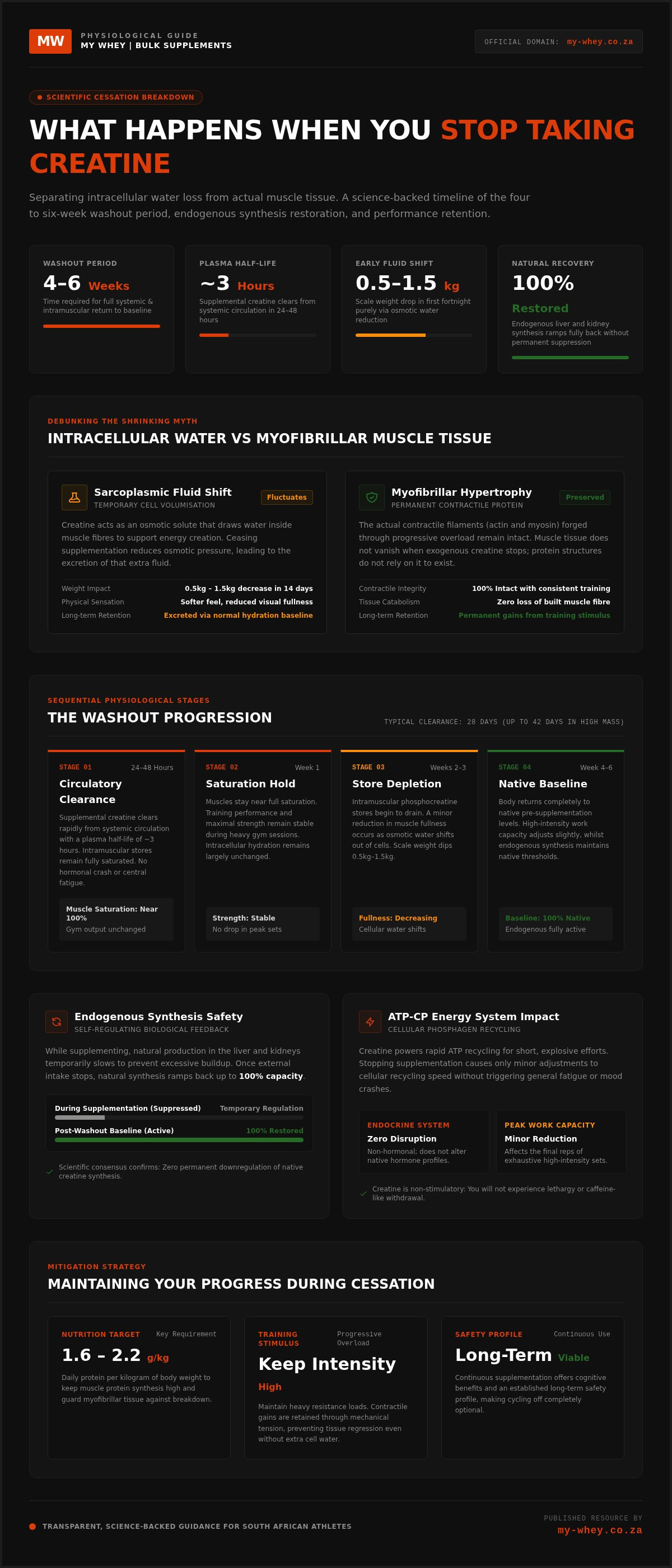
Within 24 to 48 hours, supplemental creatine is cleared from your blood. Your plasma half-life is relatively short, usually around three hours. However, your intramuscular stores remain highly saturated. You won't feel a 'crash' because creatine is non-stimulatory. It doesn't hijack your central nervous system or disrupt your endocrine system like hormonal supplements might. It's simply a stored energy reserve. While your ATP recycling efficiency might dip slightly at the cellular level after the first few days, you're unlikely to notice this change in your everyday energy levels or mood.
The 28-Day Wash-Out Timeline
The transition back to baseline typically follows a predictable four-week arc, though full clearance can take up to six weeks for some South African athletes with higher muscle mass.
- Week 1: Your muscles remain near full saturation. Performance usually stays stable, and you'll likely maintain your strength during your gym sessions.
- Week 2-3: Intramuscular phosphocreatine stores begin to drain. You might notice a slight decrease in muscle 'fullness' as water retention begins to shift.
- Week 4: Your body typically returns to its pre-supplementation baseline levels. This is the point where what happens when you stop taking creatine becomes visible on the scale and in your high-intensity work capacity.
Endogenous vs Exogenous Creatine
Your body is incredibly efficient. Whilst you're supplementing, your natural endogenous creatine synthesis is temporarily suppressed to maintain balance. This isn't a permanent shutdown. Once exogenous intake stops, your liver and kidneys quickly ramp production back up to 100% capacity. The idea that long-term use causes permanent downregulation is a myth unsupported by science. Healthy adults see a seamless transition back to natural production, ensuring your muscle creatine levels never drop below your native, pre-supplementation threshold. It's a safe, self-regulating system that prioritises your long-term metabolic health.
Muscle Mass vs Water Weight: Debunking the 'Shrinking' Myth
The most visible shift you'll encounter is a reduction in muscle volume, often mistaken for tissue loss. This visual "deflation" is the primary source of anxiety for many South African lifters. However, it's essential to distinguish between sarcoplasmic fluid and myofibrillar protein synthesis. When you supplement, creatine pulls water into your muscle cells to support energy production. This process, known as osmotic cell volumisation, creates a fuller, harder appearance. When considering what happens when you stop taking creatine, you must realise that while the water leaves, the actual muscle tissue you built stays behind.
Psychologically, losing the "creatine pump" can be challenging. You might feel smaller in your gym kit or notice the scale weight dropping by 0.5kg to 1.5kg within the first fortnight. This isn't a sign of failure or catabolism. It's simply your body returning to its natural hydration baseline. According to the ISSN position stand on creatine, this fluid shift is purely osmotic and does not represent a loss of the contractile proteins that drive your strength.
Understanding Intracellular Hydration
Creatine is a solute that demands water for storage. By drawing fluid into the intracellular space, it increases the physical diameter of the muscle fibre. This isn't just about aesthetics; a hydrated cell is an anabolic cell. When you cease supplementation, the osmotic pressure decreases and that extra water is excreted. You aren't "shrinking" in the sense of losing muscle; you're simply losing the temporary volume that water provided. Your muscles may feel slightly softer to the touch, but your structural integrity remains unchanged.
Preserving Myofibrillar Hypertrophy
The actual muscle fibres you've forged through progressive overload are permanent gains. Myofibrillar hypertrophy, the thickening of the actin and myosin filaments, doesn't rely on the presence of supplemental creatine to exist. To ensure you maintain these gains during cessation, your nutritional strategy must remain airtight. Using a high-quality whey protein is a practical way to keep your amino acid pool saturated, protecting your hard-earned tissue from breakdown. Even if you look slightly less "full" amongst your peers, your actual power output and muscle mass are yours to keep. If you find the loss of volume affects your motivation, you can always browse pure creatine options to restart your cycle whenever you're ready.
Performance and Recovery: What Changes in the Gym?
Whilst your muscle tissue stays intact, your immediate power output will face a slight recalibration. This is the functional reality of what happens when you stop taking creatine. You won't suddenly lose the ability to lift, but you'll likely notice the "final two reps" of a high-intensity set become significantly harder to grind out. Your body is transitioning from a state of peak phosphocreatine saturation back to its native energy production levels. This shift often manifests as an increase in perceived exertion. Heavy compound lifts simply feel heavier because your explosive power reserves aren't replenishing as rapidly as they did during supplementation.
The ATP-CP Energy System Explained
The ATP-CP system is your primary engine for short, explosive movements. Phosphocreatine acts as a rapid-response battery, donating a phosphate group to turn ADP back into ATP during maximal effort. When these stores dip, your ability to regenerate energy between reps slows down. You might find that your usual five-rep max on the squat feels more taxing, or that you need an extra 30 to 60 seconds of rest to maintain your performance across multiple sets. As highlighted in this Mayo Clinic overview of creatine, these changes are metabolic and expected. Interestingly, endurance athletes amongst the South African community-such as long-distance runners-rarely report a performance drop. Aerobic activities rely on different energy pathways that don't depend on high phosphocreatine stores.
Recovery and Muscle Soreness
Recovery also undergoes a subtle shift. Some lifters report a slight increase in Delayed Onset Muscle Soreness (DOMS). While creatine isn't a direct painkiller, its role in cell hydration and energy availability supports a faster bounce-back after heavy training. To mitigate this, focus on high-quality recovery tools. Supplementing with branched chain amino acids can help maintain your recovery speed whilst your body adjusts to its new baseline. Don't be afraid to slightly lower your total set volume for the first fortnight off-cycle. This proactive approach prevents overtraining and keeps your progress steady. Stay consistent with your training intensity, even if you have to shave off a few reps to maintain proper form.
Managing the Transition: How to Maintain Your Progress
Transitioning off your cycle requires a tactical shift rather than a surrender of your hard-earned gains. When you understand what happens when you stop taking creatine, you can pivot your approach to protect your strength. The goal is to keep your training stimulus high while acknowledging that your explosive energy reserves are no longer at peak saturation. By prioritising quality over quantity, you ensure that your muscle fibres remain under the necessary tension to prevent regression. Monitoring your scale weight without panic is essential, as the initial drop is merely a shift in hydration, not a loss of tissue.
Training Adjustments for the Off-Cycle
Your explosive energy is highest at the start of your session. Move your heavy compound lifts, like squats and deadlifts, to the very beginning of your workout. This allows you to utilise your available phosphocreatine stores when they are most effective. If you find your endurance flagging, consider using rest-pause sets. This technique involves taking a 15-second break after a near-failure set to squeeze out a few more reps. Maintain your lifting intensity but reduce the total number of sets if you find fatigue peaking earlier than usual. This ensures your intensity remains high without pushing your recovery capacity past its limit.
Nutritional Support for Maintenance
Nutrition becomes your primary tool for tissue preservation. You should aim for a daily protein intake between 1.6g and 2.2g per kg of body weight to keep your amino acid pool saturated. This protects your contractile proteins from being used as energy. Additionally, ensure your carbohydrate intake is sufficient to maintain muscle glycogen levels, which helps offset the loss of cellular hydration. Supporting your joints is also vital during this phase. Integrating high-quality omega 3 can assist with joint health and inflammatory response while you continue to lift heavy. Focus on your strength benchmarks in your logbook as the true measure of your progress. If you are ready to bridge the gap or restart your journey, order pure creatine monohydrate to maintain your edge.
Long-Term Health and When to Consider Restarting
Deciding to cease supplementation is often a matter of convenience or cost, but it's rarely a requirement for health. The safety profile of long-term creatine use is exceptional. Research spanning over five years of continuous use shows no adverse effects on renal or hepatic function in healthy individuals. While you now understand what happens when you stop taking creatine in terms of muscle volume and gym performance, you should also consider the systemic benefits you might be leaving behind. Creatine isn't just a sport supplement; it's a fundamental cellular energy supporter that plays a vital role in long-term wellness.
The Cognitive Connection
Your brain is one of the most energy-demanding organs in your body. Much like your muscles, your brain relies on ATP for rapid energy metabolism. Cessation can lead to a subtle dip in cognitive endurance, especially during periods of high mental stress or sleep deprivation. We've seen a significant rise in older adults amongst the South African population using creatine for its neuroprotective qualities and its ability to support memory. Whether you're pushing for a PB in the gym or managing a high-stakes project at the office, the energy-buffering capacity of creatine provides a tangible advantage that extends far beyond your biceps.
Pure Monohydrate: The Bulk Advantage
If you choose to restart your journey, don't be swayed by marketing hype. Fancy 'buffered' versions or Creatine HCL often carry a premium price tag in South Africa without providing superior results. Pure monohydrate remains the gold standard for both efficacy and safety. The transparency of My Whey's bulk creatine monohydrate ensures you're receiving a lab-tested product without unnecessary fillers or hidden stimulants. When you're ready to jump back on, you have two choices for your restarting protocol. You can opt for a traditional loading phase of 20g daily for five to seven days to reach saturation quickly, or simply take 3g to 5g daily. While the latter takes about 28 days to reach full saturation, it's often easier on the digestive system. Regardless of your choice, staying with a pure, bulk-sourced product makes long-term maintenance affordable and sustainable for every South African athlete.
Navigate Your Performance Transitions with Confidence
Understanding what happens when you stop taking creatine empowers you to manage your cycles without the fear of losing your hard-earned progress. You've learned that the initial drop in scale weight is a shift in hydration rather than a loss of contractile tissue. By maintaining high training intensity and hitting your protein targets, you can preserve your strength whilst your body recalibrates its natural energy stores over the four-week washout period.
Whether you're taking a temporary break or refining your long-term wellness strategy, the science is clear: your gains are resilient. When you're ready to re-saturate your muscle stores or explore the cognitive benefits of continuous use, choose a partner that prioritises purity and transparency. Secure your pure, lab-tested Creatine Monohydrate at bulk rates from My Whey. Our products are lab-tested for 99.9% purity and offer the most affordable bulk pricing in South Africa, completely free from hidden fillers or artificial sweeteners. Stay focused on your benchmarks and trust the process of your personal evolution.
Frequently Asked Questions
Will I lose weight when I stop taking creatine?
You will likely experience a weight drop of approximately 0.5kg to 1.5kg within the first two weeks of stopping. This reduction is almost entirely due to the loss of intracellular water that creatine naturally pulls into your muscle cells. It's important to remember that this isn't a loss of contractile muscle tissue. Your scale weight is simply returning to its pre-supplementation hydration baseline as the osmotic pressure within your cells decreases.
Can I stop creatine cold turkey or should I taper off?
You can stop taking creatine immediately without any need to taper your dosage. Since creatine is a non-hormonal and non-stimulatory compound, your body doesn't develop a dependency or a biological "crash" upon cessation. Your natural endogenous production will simply ramp back up to its full capacity over the following weeks. There's no evidence suggesting that a gradual reduction provides any physiological benefit compared to stopping cold turkey today.
How long does it take for creatine to leave your system completely?
Supplemental creatine is cleared from your blood circulation within 24 hours, but your muscle stores take much longer to deplete. It typically takes between four and six weeks for your intramuscular phosphocreatine levels to return to their natural baseline. This is known as the "wash-out" period. During this time, your body gradually excretes the excess stores through your kidneys as creatinine while your natural synthesis processes begin to take over again.
Does stopping creatine cause hair loss or other side effects?
No, stopping creatine doesn't cause hair loss or adverse clinical side effects. There's no scientific evidence linking creatine supplementation, or the cessation of it, to male pattern baldness or hormonal imbalances. Because it isn't a stimulant, you won't experience rebound lethargy or mood disturbances. Some users might notice a slight decrease in muscle "hardness" due to fluid shifts, but this is a purely aesthetic change rather than a negative health outcome.
Will my strength drop significantly if I stop supplementing?
Your peak explosive power might dip slightly, but you won't experience a total collapse in strength. What happens when you stop taking creatine is a minor reduction in your high-intensity work capacity, often manifesting as losing one or two reps during a maximal set. However, the structural strength you built through progressive overload remains. By maintaining your training intensity and protein intake, you can keep the vast majority of your gym performance intact.
Is it better to cycle creatine or take it continuously?
Continuous supplementation is generally considered superior to cycling for long-term results. Modern sports science has largely debunked the need for "off-cycles," as your body doesn't build a tolerance to creatine. Taking it consistently ensures your muscle stores remain fully saturated, providing constant support for both physical performance and cognitive health. Cycling often leads to unnecessary fluctuations in water weight and strength without offering any proven metabolic advantage for healthy South African athletes.
What happens to my kidneys when I stop taking creatine?
Your kidneys will continue to function normally, simply processing less creatinine as your supplemental stores diminish. In healthy individuals, creatine has no negative impact on renal health, and stopping it merely reduces the total volume of metabolites your kidneys need to filter daily. Your body's highly efficient at regulating its own levels. Once you stop, your renal system simply adjusts to the lower turnover rate of your natural, baseline creatine production.
Can I maintain my muscle size whilst off creatine?
You can absolutely maintain your actual muscle tissue size whilst off-cycle by staying consistent with your training and nutrition. While your muscles might look slightly less "full" or "pumped" due to the loss of intracellular water, the myofibrillar protein fibres you built are permanent. What happens when you stop taking creatine is a visual recalibration, not a catabolic event. Prioritising high-quality protein and maintaining your lifting volume will ensure your hard-earned gains stay with you.