

What Supplements Should I Take During My First Month at the Gym?
Your first month at the gym probably doesn’t need a supplement stack. If you’re wondering what supplements to take for my first gym month, the simplest answer may be none until you’ve looked at your training, meals and recovery.
Conflicting advice can make it seem as though you need several products to make progress. You don’t. Supplements can be useful, but they can’t replace consistent workouts, enough food or good-quality sleep. Buying products without a clear need can add cost without solving a problem.
This guide will help you build a straightforward plan: start with the habits that matter most, then consider a supplement only if it fills a real gap. You’ll learn when whey protein may be a convenient way to meet your protein needs, what to know about creatine monohydrate, and why amino acids aren’t essential for most beginners who already get enough protein from food.
Keep your routine manageable and give your habits time to settle before judging results. My Whey offers categories including Whey Protein Concentrate 80% and Creatine Monohydrate, but the right first step is deciding whether you need a supplement at all.
Key Takeaways
- Joining a gym doesn’t mean you need to start taking supplements. First build consistent training, balanced meals and recovery habits.
- If you’re asking “what supplements to take for my first gym month”, assess your actual needs before choosing a product.
- Compare whey, creatine and amino acids by their purpose, food-first alternatives and relevance to your routine.
- Change one thing at a time and review whether it’s practical and suits you before adding anything else.
- Consider relevant options, including My Whey’s confirmed supplement categories, without treating them as a must-buy list.
What matters more than supplements in your first month at the gym?
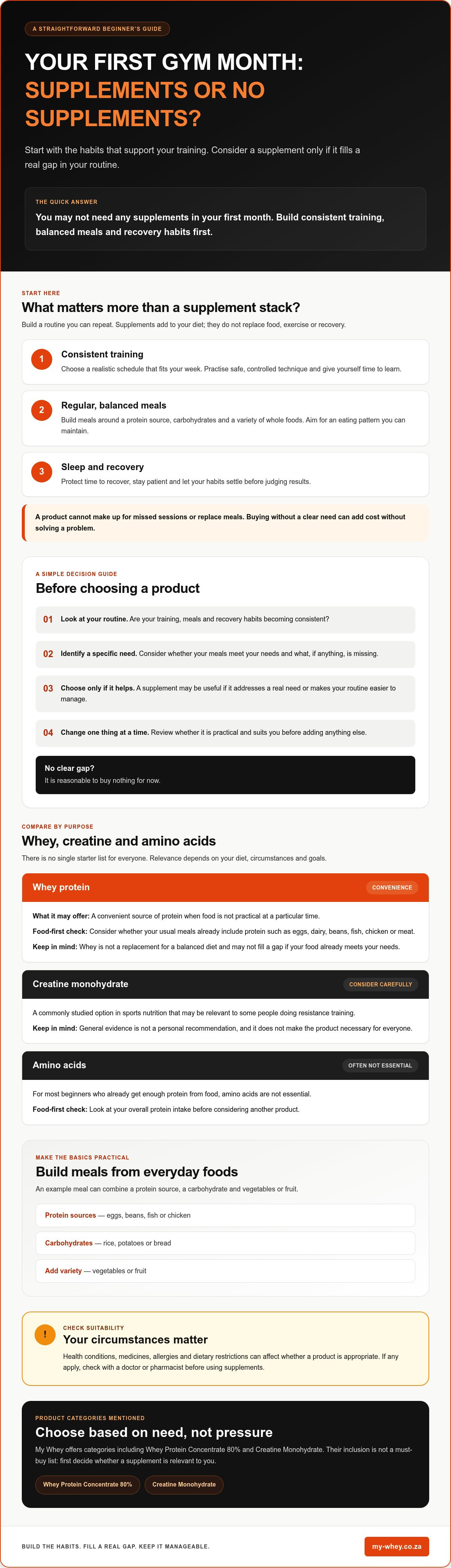
You don’t need a supplement simply because you’ve joined a gym. In your first month, focus on building a routine you can repeat: train consistently, eat regular meals that support your activity, allow time for recovery and be patient as you learn. A product can’t make up for missed sessions or replace meals.
A dietary supplement adds to the diet; it isn’t a substitute for appropriate food or exercise. The term covers different kinds of products. This dietary supplements overview offers a starting point for understanding the category. Whether a supplement is relevant depends on your diet, circumstances and goals, not on being new to the gym.
Quick answer: Before buying anything, prioritise repeatable resistance training, sound exercise technique, regular balanced meals, sleep and recovery. Consider a supplement only if you can identify a specific need it may help address.
What should a beginner focus on before buying supplements?
Choose a realistic training schedule that fits your week, then give yourself time to learn safe, controlled exercise technique. Consistency matters more than making every session complicated or exhausting. If you’re unsure how to perform an exercise, ask a suitably qualified professional for guidance.
Build meals around a protein source, carbohydrates and a variety of whole foods. For example, a meal might include eggs, beans, fish or chicken alongside rice, potatoes or bread, with vegetables or fruit. The aim is a practical eating pattern you can maintain, not a perfect menu. Protect time for sleep and recovery, too. Progress takes time, and no particular outcome is guaranteed.
Why does the first month not need a complicated supplement stack?
A new gym routine already asks you to organise sessions, practise movements and establish eating habits. Adding several products at once can make it harder to work out what’s useful, what’s convenient and what doesn’t suit you. Keep changes manageable.
Separate convenience from performance claims. A protein powder, for instance, may be practical if a meal isn’t available, but it isn’t automatically necessary if food already meets your needs. Products marketed for performance or muscle gain are a separate consideration. Don’t assume they’re required for beginners or that they replace consistent training.
Your circumstances matter. Health conditions, medicines, allergies and dietary restrictions can affect whether a product is appropriate. Check with a doctor or pharmacist before using supplements if any of these apply, rather than relying on general gym advice. So, if you’re asking what supplements to take for my first gym month, start by identifying a genuine gap. If there isn’t one, it’s reasonable to buy nothing for now.
Which supplements may help during your first gym month?
There isn’t one starter list that suits everyone. A supplement may be useful if it addresses a specific need or makes your existing routine easier to manage. Otherwise, it may be an optional extra. For a beginner, the practical questions are whether your meals meet your needs and whether a product offers a clear benefit in your circumstances.
Meeting a nutrition need means getting enough of a nutrient through food or, where useful, a supplement. Buying a supplement without identifying a need simply adds another product to your routine. The National Institutes of Health Office of Dietary Supplements reviews the scientific evidence for performance supplements, including protein, creatine and amino acids. Evidence about an ingredient is useful context, but it doesn’t make a product necessary for everyone.
When could whey protein be a practical choice?
Whey is a convenient source of protein, not a replacement for a balanced diet. First consider what your usual meals provide. If you regularly eat protein sources such as eggs, dairy, beans, fish, chicken or meat, a powder may not fill a gap. If food isn’t practical at a particular time, whey protein can be a straightforward option to help meet your protein needs.
Check the product information and serving guidance before choosing, and consider how it fits your diet and preferences. For a closer look at the evidence and selection factors, read this whey protein science and selection guide.
Should a beginner consider creatine monohydrate?
Creatine monohydrate is a commonly studied option in sports nutrition and may be relevant to some people doing resistance training. That general evidence isn’t a personal recommendation or a promise of results. It’s optional, and you can begin gym training without it. Don’t assume that you need a complicated protocol or that creatine will produce rapid muscle gain.
If you have a health condition, take medicines or aren’t sure whether creatine is suitable for you, speak with a qualified health professional before using it. Apply the same cautious approach to other performance-focused products: consider the ingredient, your circumstances and the evidence, not just the marketing.
Amino acids are another category beginners may encounter. If your diet already includes enough protein, a separate amino acid product may not be needed. To compare relevant options after identifying a genuine gap, you can review My Whey’s supplement categories, including Whey Protein Concentrate 80% and Creatine Monohydrate. Let your needs guide the choice, not the size of the product range.
Whey, creatine and amino acids: how should beginners compare them?
These supplements have different purposes, so compare them against a specific need rather than treating them as a standard starter set. Whey can be a convenient way to add protein; creatine is an optional performance supplement; amino acid products may be relevant in some circumstances, but could add little if your protein intake is already suitable. The NIH fact sheet on athletic supplements reviews evidence for these and other ingredients. Evidence about a category doesn’t mean every beginner needs it.
| Option | Purpose | When it may be relevant | Food-first alternative | Key caution |
|---|---|---|---|---|
| Whey protein | Convenient protein source | If meals don’t reliably meet your protein needs or a suitable meal isn’t practical | Protein-containing foods such as eggs, dairy, beans, fish, chicken or meat | It’s a convenience, not a replacement for a varied diet or a requirement for training |
| Creatine monohydrate | Optional supplement used in sports nutrition | If you’re considering a performance supplement and have checked whether it suits your circumstances | Keep a consistent training routine and assess your overall diet; food isn’t a direct substitute for a supplement | General evidence isn’t an individual recommendation or a guarantee of results |
| Amino acids | Provides selected amino acids | When there’s a specific reason to consider them | Suitable protein foods, which supply amino acids as part of protein | May be unnecessary if your protein needs are already met |
How do whey protein and amino-acid supplements differ?
Whey is a protein source, and protein contains amino acids. Amino acid products provide selected amino acids rather than protein as a whole. In practice, if your meals already provide enough suitable protein, adding a separate amino acid product may not address a meaningful gap. Learn more about branched-chain amino acids in this branched-chain amino acids guide.
Which popular extras can most beginners leave out?
Pre-workouts, BCAAs and multi-product stacks are optional, not default purchases. Before considering any of them, ask what specific dietary or training need they would address. The same applies to Omega 3, herbal products and specialist supplements: their presence in a range doesn’t make them necessary for every gym-goer.
If you’re weighing up what supplements to take for my first gym month, use the table to identify each option’s role, then decide whether it matches your needs. Keep the choice simple and don’t assume that more products mean better results.
How can you build a simple, safe first-month supplement routine?
A good routine starts with a reason, not a shopping list. A supplement plan should respond to a defined need, not the assumption that every new gym-goer needs extra products. Use this five-step process to decide whether anything belongs in your first month.
- Establish your habits. Set a realistic training schedule and keep a simple record of sessions, meals and recovery. Give yourself time to make these routines consistent.
- Assess your meals. Notice what you eat across a typical week. Consider whether regular meals provide suitable protein and enough variety, and whether your eating pattern fits your training routine.
- Identify a specific gap. For example, if a protein-containing meal isn’t practical at a particular time, a protein powder may offer convenience. If you can’t name the need a product would address, pause before buying it.
- Choose cautiously. Select one product that matches the gap, read its current label and follow the directions provided. Don’t exceed label directions or combine products with overlapping ingredients without checking what they contain.
- Review before adding anything else. Change one variable at a time so you can judge whether the product is practical, suits your routine and is tolerated. Avoid introducing several products together.
What should you check before using a supplement?
Read the full ingredient list, serving directions, allergen information and storage instructions. If you’re considering more than one product, compare their ingredient lists, particularly for multi-ingredient blends, to spot overlap. Don’t assume that different packaging means the contents are different. If you have a health condition, take medicines, have dietary restrictions or are unsure about suitability, ask a doctor or registered dietitian for personalised advice.
How can you tell whether your approach is working for you?
Track the basics: whether you’re following your training plan, how meals fit your day and whether you’re allowing time for recovery. Note relevant changes, but don’t attribute every shift in how you feel or perform to a supplement. Training, food, sleep and other factors all matter.
Ask whether the product still has a clear purpose, is convenient and agrees with you. If you experience an unexpected reaction, stop using it and seek appropriate medical advice. Reassess rather than adding another product to compensate.
Once you’ve identified a genuine need, you can explore My Whey’s supplement range and compare relevant options against your routine and the product label.
How can My Whey help you choose only what you need?
Choosing a supplement should come after deciding whether you need one. The question “what supplements to take for my first gym month” doesn’t have a single answer for every beginner. Your meals, preferences and circumstances matter more than the size of a product range. My Whey offers categories including Creatine Monohydrate, Whey Protein Concentrate 80%, Omega 3 softgels and amino acids. These are options to assess, not a list of essentials.
What should you look for when choosing a supplement supplier?
Read the product information before purchasing. Check the ingredient list, serving information, allergen details and instructions, and make sure you understand what the product is intended to provide. Clear information helps you compare options against your actual needs. Be cautious about dramatic claims or large stacks that combine several products without explaining why each one may be relevant to you.
My Whey describes its products as lab-tested. If testing is important to your decision, review the current product documentation for the specific item and check what information it provides. Don’t assume a particular testing method, certification or product-specific result unless it’s confirmed in that documentation. Apply the same care to any supplier you’re considering.
How can you keep your first supplement choices practical?
Start with one defined need, then look for an option that addresses it. For example, Whey Protein Concentrate 80% may be worth considering if a convenient protein source would help you meet your needs when preparing or accessing a meal isn’t practical. If your meals already provide suitable protein, you may not need protein powder. Likewise, consider creatine, Omega 3 softgels or amino acids only if you have a clear reason to explore that category.
Choosing one relevant product, if any, makes the decision easier to assess than buying several categories at once. Compare the product information with your routine and dietary needs, and follow the label directions. If you’re uncertain about suitability because of a health condition, medicines or dietary restrictions, seek personalised advice from a qualified health professional before use.
My Whey’s range includes the categories above, and the company states that its products are lab-tested. That information can help you review available options, but it doesn’t determine whether supplementation is right for you. Explore My Whey supplements if you’ve identified a specific need, or continue with food and training alone if you haven’t.
Start your first month with a plan that fits
Your first month at the gym doesn’t need a complicated supplement routine. Consistent training, suitable meals and recovery are the foundation; products are optional additions. If you’re deciding what supplements to take for my first gym month, first identify a genuine need, such as wanting a convenient protein source when a meal isn’t practical.
Compare each option by its purpose, check the product information and introduce one change at a time. Whey protein and creatine monohydrate may be relevant for some people, but neither is automatically required. Amino acid products and other extras also depend on your individual diet and circumstances.
My Whey’s confirmed range includes Whey Protein Concentrate 80% and Creatine Monohydrate, and the business states that its products are lab-tested. That’s a starting point for reviewing options, not a reason to buy something you don’t need. If you’ve identified a product category that may suit your routine, explore My Whey supplements and assess the details before choosing.
Keep it simple, stay consistent and give yourself time to build habits that last.
Frequently Asked Questions
Do I need to take supplements during my first month at the gym?
No, joining a gym doesn’t mean you need supplements. Start by building a realistic training routine, eating regular meals with suitable protein and carbohydrates, and allowing time for sleep and recovery. Supplements are optional additions, not replacements for food or exercise. Consider one only if you can identify a specific need it may address, such as wanting a convenient protein source when a meal isn’t practical.
Which supplement should a beginner take first at the gym?
There’s no single supplement every beginner should take first. Check whether your meals already meet your needs and whether a product would solve a practical problem. Protein powder may suit someone who struggles to get enough protein from food or needs a convenient option; creatine monohydrate is an optional performance supplement. If you can’t identify a clear reason to use a product, you can start without one.
Is whey protein necessary if I am new to working out?
No, whey protein isn’t necessary if your usual meals provide suitable protein. It’s a convenient protein source, not a special requirement for people who have just started exercising. Foods such as eggs, dairy, beans, fish, chicken or meat can contribute protein to meals. Consider whey only if it helps you meet your needs when food isn’t practical, and check the product label for ingredients and serving information.
Can beginners take creatine monohydrate?
Some beginners may choose to use creatine monohydrate, but it’s optional and not a requirement for starting resistance training. Evidence about an ingredient doesn’t guarantee a particular result or make it suitable for everyone. Read and follow the product’s current label directions. If you have a health condition, take medicines or are unsure whether creatine is appropriate for you, ask a doctor or pharmacist before using it.
How much protein should I get when I start going to the gym?
Your protein needs depend on individual factors, so there isn’t one amount that suits every new gym-goer. Review your typical meals first and consider whether they include regular protein sources, such as dairy, eggs, legumes, fish or meat. A registered dietitian can help you work out an appropriate intake for your circumstances, particularly if you have dietary restrictions or a health condition. Powder is optional if food meets your needs.
Are BCAAs useful if I already eat enough protein?
If your diet already provides suitable protein, a separate BCAA supplement may add little to your routine. Protein-containing foods and protein powders such as whey provide amino acids as part of protein. Before buying BCAAs, ask whether you have a specific dietary or training need they address. They aren’t a default requirement for beginners, and adding them doesn’t replace balanced meals or consistent training.
Should I take pre-workout during my first month at the gym?
No, pre-workout isn’t essential during your first month. It’s an optional product, so first consider whether you have a specific reason to use one and check its full ingredient list, directions and any allergen information. Avoid combining products with overlapping ingredients without checking what they contain. If you take medicines, have a health condition or are unsure about suitability, ask a qualified health professional before use.