

What to Eat After a Workout to Build Muscle: 2026 Guide
The frantic sprint to down a protein shake thirty seconds after racking your final barbell is completely unnecessary. For years, gym folklore insisted that missing a narrow anabolic window would ruin your training session. In reality, deciding what to eat after a workout to build muscle shouldn't feel like a stressful race against an imaginary clock.
If you feel overwhelmed by conflicting macronutrient advice, soaring grocery bills, and retail shelves packed with proprietary fillers, we understand your frustration. You don't need overpriced marketing gimmicks or complicated meal prep to achieve genuine growth. This guide gives you the verified protein thresholds, carbohydrate replenishment ratios, and practical food pairings required to maximise muscle protein synthesis efficiently. Ahead, we break down the science of the leucine trigger, dismantle outdated nutrient timing myths, and share cost-effective recovery strategies built for consistent, long-term results.
Key Takeaways
- Muscle hypertrophy occurs only when muscle protein synthesis outpaces post-exercise breakdown, making intentional nutritional replenishment essential.
- Reaching the biological leucine threshold of 2.5 to 3 grams per feeding is the primary catalyst that triggers muscle repair.
- Understanding what to eat after a workout to build muscle requires balancing complete, bioavailable proteins with targeted carbohydrates in an efficient 1:1 or 2:1 ratio.
- Pure, rapid-digesting proteins like unflavoured whey concentrate provide high amino acid availability without the digestive fatigue or premium markups of filler-laden retail blends.
- Limiting heavy fats immediately after training accelerates gastric emptying, ensuring critical amino acids reach depleted muscle tissue without delay.
The Science of Recovery: How Post-Workout Nutrition Drives Muscle Growth
Lifting heavy weights creates microscopic structural tears within skeletal tissue while depleting intracellular glycogen stores. This physical strain triggers an immediate biological reaction. Muscle protein synthesis is the biological process where systemic amino acids are incorporated into skeletal tissue to repair micro-tears and build larger muscle fibres following resistance exercise. Without adequate nutritional support, your body cannot adapt or grow.
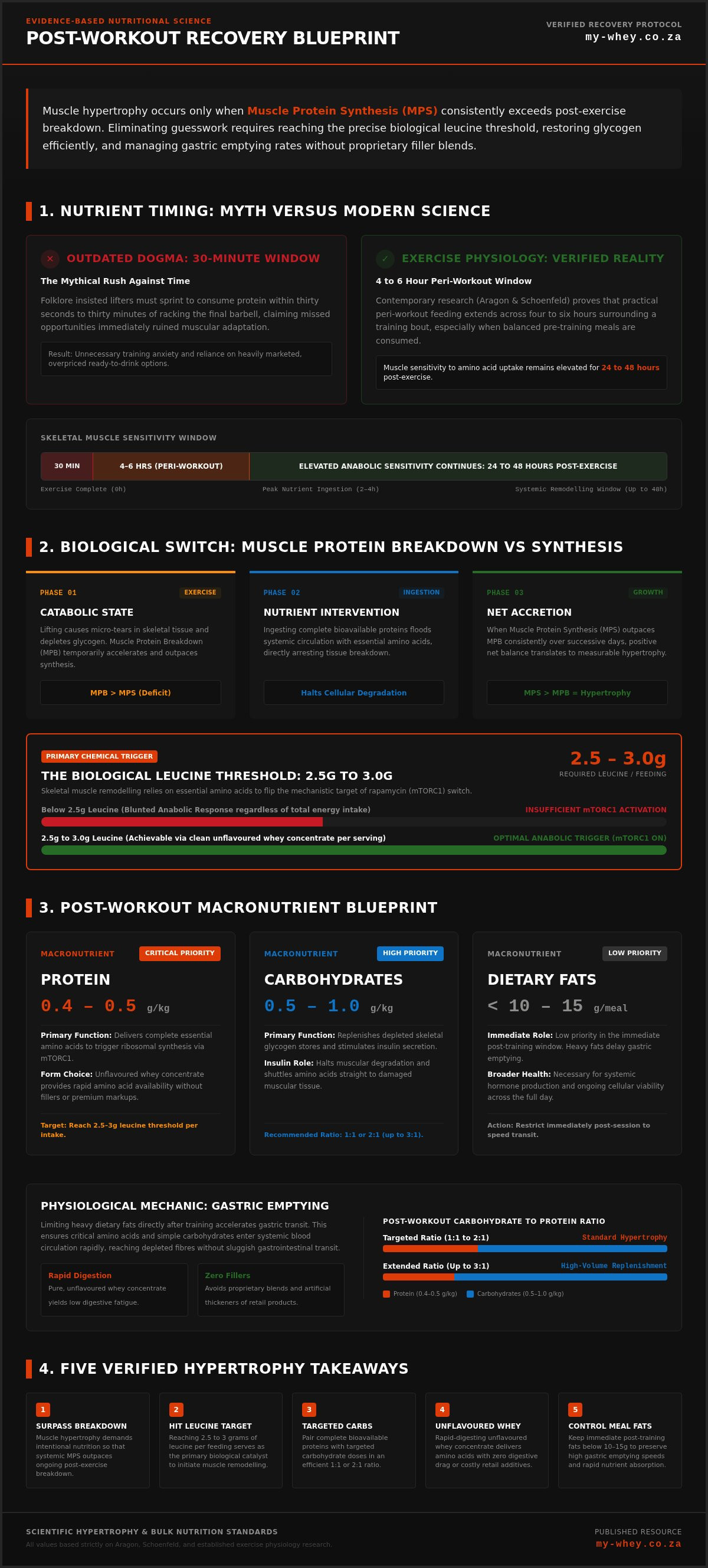
Knowing what to eat after a workout to build muscle requires understanding the precise mechanisms that flip your metabolic switch from tissue breakdown to net accumulation. While many lifters reach for any generic protein source, muscle remodelling relies heavily on essential amino acid availability. Specifically, triggering the mechanistic target of rapamycin (mTORC1) requires crossing the "leucine threshold", typically 2.5 to 3 grams of leucine per feeding. Falling short of this threshold blunts the anabolic response, regardless of total calories consumed.
Understanding Muscle Protein Breakdown versus Synthesis
Every intense training session places your body into a transiently catabolic state. Muscle protein breakdown (MPB) temporarily outpaces muscle protein synthesis (MPS). Net muscle accretion only happens when you reverse this deficit:
- Catabolic State: During exercise, MPB accelerates, breaking down muscle tissue for energy and cellular turnover.
- Nutrient Intervention: Ingesting complete proteins floods the bloodstream with essential amino acids, halting breakdown and driving MPS upward.
- Net Accretion: When MPS consistently exceeds MPB over successive days, the net positive balance translates into measurable muscle hypertrophy.
The Anabolic Window: Myth versus Modern Science
Old-school locker room dogma claimed you had barely thirty minutes to drink a shake before your efforts went to waste. Contemporary exercise physiology tells a different story. Aragon and Schoenfeld demonstrated that the practical peri-workout feeding window extends four to six hours around a training session, especially if you consumed a balanced meal beforehand.
Systemic skeletal muscle sensitivity to amino acids remains elevated for 24 to 48 hours post-exercise. Panicking about a 30-minute deadline is counterproductive. When planning what to eat after a workout to build muscle, prioritise hitting your total daily protein target and achieving adequate per-meal leucine dosing rather than rushing through an arbitrary countdown.
The Essential Macronutrient Blueprint for Post-Workout Hypertrophy
Dialling in what to eat after a workout to build muscle requires precise macronutrient calibration rather than vague guesswork. Your post-exercise feeding must supply the raw substrates necessary to restore glycogen, elevate systemic amino acid levels, and switch off catabolic signals.
| Macronutrient | Target Intake | Primary Function | Recovery Priority |
|---|---|---|---|
| Protein | 0.4 to 0.5 g/kg bodyweight | Supplies essential amino acids; triggers mTORC1 | Critical |
| Carbohydrates | 0.5 to 1.0 g/kg (up to 3:1 ratio) | Restores depleted glycogen; stimulates insulin | High |
| Dietary Fats | < 10 to 15 g per meal | Hormone production; long-term cellular health | Low (immediate post-workout) |
Protein Quantity and Quality: Achieving the Leucine Threshold
Quantity alone does not guarantee results. Leucine acts as the primary chemical switch initiating ribosomal protein synthesis. Complete proteins derived from dairy, poultry, or beef deliver high biological value and natural leucine density. Opting for a clean, unflavoured whey protein concentrate provides roughly 2.5 to 3 grams of bioavailable leucine per standard serving, satisfying the physiological threshold quickly without added digestive bulk.
Carbohydrates: Refuelling Glycogen and Managing Cortisol
Intense resistance exercise depletes intracellular glycogen stores. Pairing your protein with easily digested carbohydrates stimulates insulin release, which suppresses muscular breakdown and shuttles nutrients directly into depleted myocytes. Aligning your intake with established post-workout nutrition recommendations means choosing fast-absorbing starches, such as white rice, cream of rice, or dextrose, over high-fibre alternatives. Aim for a 2:1 or 3:1 carbohydrate-to-protein ratio following demanding, high-volume sessions.
The Role of Dietary Fats in Post-Workout Digestion
High-fat meals delay gastric emptying, slowing the rate at which essential amino acids enter the bloodstream. While dietary fat will not ruin your 24-hour muscular gains, heavy fats directly after lifting can cause gastrointestinal discomfort. Keep immediate post-workout fat low to moderate. Sourcing clean building blocks from transparent supplement suppliers allows you to separate your fast-digesting protein and carbohydrate intake from daily fat targets, giving you total control over your recovery digestion.
How to Build Your Post-Workout Meal: A Step-by-Step Practical Framework
Rigid, one-size-fits-all meal plans rarely work long term. Athletes have different body masses, training volumes, and digestive tolerances. Instead of copying static food lists, use a modular formula. Determining what to eat after a workout to build muscle becomes simple when you assemble four functional components in sequence.
- Step 1: Calculate baseline protein targets based on your exact body mass.
- Step 2: Choose a bioavailable, fast-digesting protein source rich in essential amino acids.
- Step 3: Layer in easily digested starches to match your glycogen expenditure.
- Step 4: Rehydrate with fluid and key electrolytes to restore cell volume.
Step 1 & 2: Calculating and Sourcing Your Core Protein
Start by multiplying your bodyweight in kilograms by 0.4. An 80-kilogram lifter requires roughly 32 grams of complete protein per feeding. This ensures you consistently land within the effective 25 to 40-gram threshold.
Select clean, high-yield sources like grilled chicken breast, liquid egg whites, or unflavoured whey concentrate. If you follow a plant-based diet, single sources often lack optimal amino acid concentrations. In that scenario, fortifying pea or rice isolates with free-form branched chain amino acids bridges the leucine gap efficiently without forcing you to overeat calories.
Step 3: Pairing Functional Carbohydrates for Rapid Uptake
Match your carbohydrate portion directly to the session's volume. A light upper-body day requires fewer carbohydrates than a gruelling squat session. Focus on low-fibre, high-glycaemic starches that digest smoothly and spare your gut unnecessary work:
- Jasmine or Basmati Rice: Breaks down rapidly into glucose, refilling glycogen stores with zero bloating.
- Cream of Rice or Ripe Bananas: Provides an effortlessly digestible base for sweet recovery bowls or purees.
- Dextrose or Maltodextrin: Soluble powders that mix instantly into shakes, offering high gastric clearance during busy workdays.
Step 4: Managing Fluid Balance and Electrolytes
Hydration directly dictates muscular recovery. Even mild dehydration of two percent impairs cellular protein synthesis and blunts systemic nutrient delivery. As you sweat, you lose critical minerals required for active muscular transport. Add a pinch of unrefined salt to replenish sodium, choose potassium-dense fruits, and drink at least 500 millilitres of clean water alongside your meal to speed up nutrient absorption.
Whole Foods versus Concentrated Supplements: Making the Right Nutritional Choice
Choosing what to eat after a workout to build muscle often comes down to a practical debate between solid meals and liquid nutrition. Whole foods deliver exceptional micronutrient density, zinc, iron, and sustained satiety. However, dense fibrous bulk can sit heavily in your stomach when blood flow is diverted away from your gastrointestinal tract post-exercise. Balancing nutrient-dense whole foods throughout the day with targeted, concentrated supplements around your training window offers the most sustainable path to recovery.
Digestive Speed and Nutrient Delivery Kinetics
Solid protein sources like steak or roasted chicken require several hours of mechanical and enzymatic breakdown before systemic amino acid levels peak. In contrast, soluble proteins pass through gastric emptying rapidly, elevating plasma aminoacidemia within sixty minutes.
Your rate of recovery depends on your digestive capacity. Trainees struggling with persistent bloating or poor nutrient partitioning often see diminishing returns from their post-workout meals. Optimising your gastrointestinal tract by exploring targeted gut health supplements improves digestive absorption, ensuring your digestive tract efficiently assimilates every gram of protein you consume.
Cost Efficiency: Bulk Pure Ingredients versus Retail Marketing Hype
Ready-to-drink commercial shakes and heavily marketed recovery powders come with steep retail markups driven by glossy packaging and middleman distribution. These commercial blends frequently disguise sub-therapeutic active doses behind proprietary blends, artificial colourings, and unnecessary maltodextrin bulking agents.
Sourcing pure, lab-tested raw ingredients direct to consumer delivers a superior alternative. Buying unflavoured Whey Protein Concentrate 80% in bulk provides total control over your nutritional density. You get complete transparency, zero unwanted additives, and substantially lower per-serving expenses over months of consistent training.
Strategic Synergy: Layering Creatine for Enhanced Muscular Adaptations
The post-exercise period presents an optimal metabolic environment for compounding recovery compounds. Elevated cellular insulin sensitivity allows your muscle cells to absorb ergogenic aids far more effectively:
- Phosphocreatine Restoration: Consuming 3 to 5 grams of pure Creatine Monohydrate alongside fast-digesting carbohydrates replenishes depleted intramuscular phosphocreatine stores.
- Cellular Hydration: Consistent creatine saturation increases intracellular fluid retention within myocytes, improving muscular leverage and protein synthesis signalling.
- Stack Simplicity: Adding unflavoured amino acids or creatine directly into your post-workout shake avoids the need for multiple expensive commercial blends.
Take control of your post-workout recovery stack without paying for filler additives. Shop pure, lab-tested bulk supplements directly from My Whey to fuel your muscle-building goals with complete transparency.
Five Common Post-Workout Nutrition Mistakes That Sabotage Muscle Growth
Even dedicated athletes frequently undermine their progress with avoidable nutritional errors. Hard training creates the stimulus for hypertrophy, but faulty recovery halts progression in its tracks. Sidestep these five common pitfalls when planning what to eat after a workout to build muscle:
- Relying on Incomplete Proteins: Snacking on collagen bars, nut butters, or single plant sources fails to supply the complete amino acid profile required to trigger ribosomal protein synthesis.
- Overloading on Post-Workout Fats: Pouring heavy oils, cream, or excessive nut butters into your shake delays gastric clearing, slowing down the delivery of amino acids to depleted tissue.
- Fixating on Shakes Whilst Ignoring Daily Totals: Drinking a shake within minutes means very little if your total daily protein and caloric targets fall short of your lean mass goals.
- Using Commercial Mass-Gainers: Pre-packaged gainers often rely on cheap corn syrup solids, added sugars, and proprietary fillers that cause energy crashes rather than lean muscular gains.
- Neglecting Systemic Joint Recovery: Treating post-workout nutrition purely as a muscle-protein equation ignores connective tissue repair and overall inflammation management.
Fixing Daily Consistency Over Peri-Workout Fixation
A single post-workout meal cannot compensate for an inconsistent daily diet. Hypertrophy requires sustained positive nitrogen balance. Spreading your protein across three to five meals, spaced roughly three to five hours apart, optimises the 24-hour synthetic response far better than overemphasising a single feeding.
Track your overall daily caloric surplus or maintenance targets methodically. Establish repeatable routines rather than relying on complicated culinary recipes that fall apart during busy work weeks.
Managing Systemic Inflammation and Joint Health
Intense lifting sparks acute muscular inflammation, a vital cellular signal for tissue remodelling. Unchecked, chronic inflammation delays recovery, reduces mobility, and strains connective joints. Balancing hard training requires dedicated dietary support. Supplementing with high-potency omega 3 fatty acids helps modulate systemic recovery cascades, maintaining joint mobility and cardiovascular function alongside your primary macronutrients.
Practical Routine Design: Streamlining Your Post-Workout Protocol
Eliminate decision fatigue by preparing your nutrition in advance. Pre-portion unflavoured whey concentrate and fast-digesting carbohydrates into a single shaker bottle each morning so you simply add water after training. Browse My Whey to source transparent, unadulterated bulk ingredients that allow you to construct an efficient, affordable post-workout stack without unnecessary retail fillers.
Take Control of Your Post-Workout Nutrition
Achieving consistent muscular hypertrophy doesn't require complicated food rules or stressful locker room countdowns. At its core, knowing what to eat after a workout to build muscle comes down to hitting your per-meal leucine threshold with complete proteins, pairing them with easily digested starches, and maintaining total daily caloric consistency.
You don't need proprietary retail blends packed with cheap bulking agents to see real progress. Sourcing independent lab-tested quality through direct-to-consumer bulk pricing allows you to invest purely in active nutrition without paying for retail markups. Pure Whey Protein Concentrate 80% delivers an exceptional amino acid profile with no unlisted fillers, giving your muscle fibres the exact building blocks required for optimal physiological performance.
Build your clean recovery stack with pure bulk nutrition from My Whey today. Keep your nutrition transparent, train with conviction, and let smart, repeatable habits fuel your long-term growth.
Frequently Asked Questions
How much protein should I consume right after a workout to build muscle?
Consume between 20 and 40 grams of high-quality, complete protein, or roughly 0.4 to 0.5 grams per kilogram of bodyweight. This quantity reliably supplies the crucial 2.5 to 3 grams of leucine required to trigger muscle protein synthesis. Larger doses are still utilised effectively by the body over extended digestion periods, but this baseline represents the optimal threshold for accelerating acute tissue repair after resistance training.
Do I really need to eat within 30 minutes of finishing my workout?
No, you don't need to eat within 30 minutes. Contemporary exercise physiology confirms that the anabolic feeding window extends four to six hours around your training session. If you consumed a balanced protein meal two to three hours before lifting, circulating amino acids remain elevated in your bloodstream. Prioritise your total daily protein intake and consistent per-meal spacing rather than stressing over an artificial locker room deadline.
Are carbohydrates strictly necessary after resistance training to build muscle?
Carbohydrates aren't strictly mandatory to initiate muscle protein synthesis, but they significantly improve recovery efficiency. Ingesting carbohydrates triggers an insulin response that blunts muscular breakdown and accelerates nutrient uptake into depleted myocytes. For high-volume lifting or sessions repeated within 24 hours, combining carbohydrates with protein at a 1:1 or 2:1 ratio speeds up glycogen restoration, ensuring you maintain strength and power output during subsequent workouts.
Can I just drink a standard protein shake instead of eating a full meal?
Yes, drinking a pure protein shake is completely acceptable and often advantageous directly after lifting. Liquid nutrition clears gastric transit quickly, elevating plasma amino acid concentrations without placing heavy demands on your digestive tract. Deciding what to eat after a workout to build muscle often comes down to convenience; an unflavoured whey shake paired with easily digested starches acts as an ideal bridge until your next solid meal.
What should I eat after an evening workout if I sleep soon afterwards?
Choose light, rapidly digestible proteins paired with low-glycaemic carbohydrates to prevent gastrointestinal discomfort while you sleep. A clean whey protein shake with oats, or low-fat cottage cheese with a small serving of fruit, works exceptionally well. Heavy, high-fat meals delay gastric clearing and can compromise sleep quality, whereas easily digested proteins sustain nocturnal tissue repair without causing sluggishness or indigestion before bed.
Does adding fat to a post-workout meal ruin my muscle-building results?
Adding moderate dietary fat won't ruin your muscle-building progress. While large amounts of dietary fat slow gastric emptying and slightly delay the absorption of carbohydrates and amino acids, total 24-hour macronutrient intake dictates overall hypertrophy. Keeping immediate post-workout fat under 10 to 15 grams simply prevents digestive fullness. You can comfortably consume the remainder of your daily healthy fats across your other daily meals.
Should I take creatine before or after my training session for better muscle growth?
Taking creatine immediately after your session is slightly more effective for muscle retention. Post-exercise insulin sensitivity and heightened muscular blood flow enhance creatine uptake into muscle cells, especially when consumed alongside protein and carbohydrates. When planning what to eat after a workout to build muscle, adding 3 to 5 grams of pure Creatine Monohydrate directly to your recovery shake ensures steady intramuscular saturation over time.