

Whey Protein Concentrate vs Isolate: The 2026 South African Buyer’s Guide
What if you could slash your monthly supplement spend without losing a single gram of muscle-building potential? In the current South African market, many athletes are overpaying for premium labels that don't actually match their physiological needs. Deciding between whey protein concentrate vs isolate south africa has become increasingly complex as marketing jargon often hides the simple science of purity and price.
You're likely tired of the bloating caused by low-quality fillers and the retail tax that makes basic nutrition feel like a luxury. We understand that you want a reliable, pure source of protein that respects both your budget and your gut health. This 2026 buyer's guide provides the definitive breakdown of these two protein powerhouses. You'll learn how to optimise your muscle recovery, navigate SAHPRA regulations, and ensure you're getting the highest protein intake for every Rand spent. We're moving past the hype to give you the facts you need to fuel your goals efficiently and transparently.
Key Takeaways
- Understand the filtration processes that define nutrient density. These methods directly impact your muscle recovery efficiency and the purity of your protein.
- Evaluate the macro differences between concentrate and isolate. Determine if the higher cost of isolate is a necessary investment or an unnecessary retail tax for your specific goals.
- Utilise our decision matrix for choosing whey protein concentrate vs isolate south africa. This helps you match your supplement choice with your specific digestive needs and fitness objectives.
- Discover how the bulk supply model provides a lab-tested, pure alternative to overpriced retail brands. You can maintain high standards without paying for unnecessary packaging and marketing.
- Learn to navigate South African labelling standards. Ensure your chosen supplement contains exactly what the package claims by identifying reputable, transparent sources.
Understanding Whey Protein: Why the Choice Matters in 2026
Whey protein remains the undisputed gold standard for bio-available amino acids. It's a fast-digesting protein source that provides the body with the essential building blocks needed for muscle repair. For a Comprehensive Guide to Whey Protein, one must look at how it has evolved from a simple dairy by-product into a sophisticated nutritional tool.
In South Africa, high-quality protein has historically been marketed as a luxury retail item. This has led to inflated prices that don't always reflect the actual value of the ingredients. As we move through 2026, the local market is maturing. Savvy consumers are looking past the marketing hype of "premium" labels. They now define quality through purity, lab-tested results, and raw value. Deciding between whey protein concentrate vs isolate south africa isn't just about fitness; it's about making a smart financial decision for your long-term wellness journey.
What is Whey Protein Concentrate (WPC 80%)?
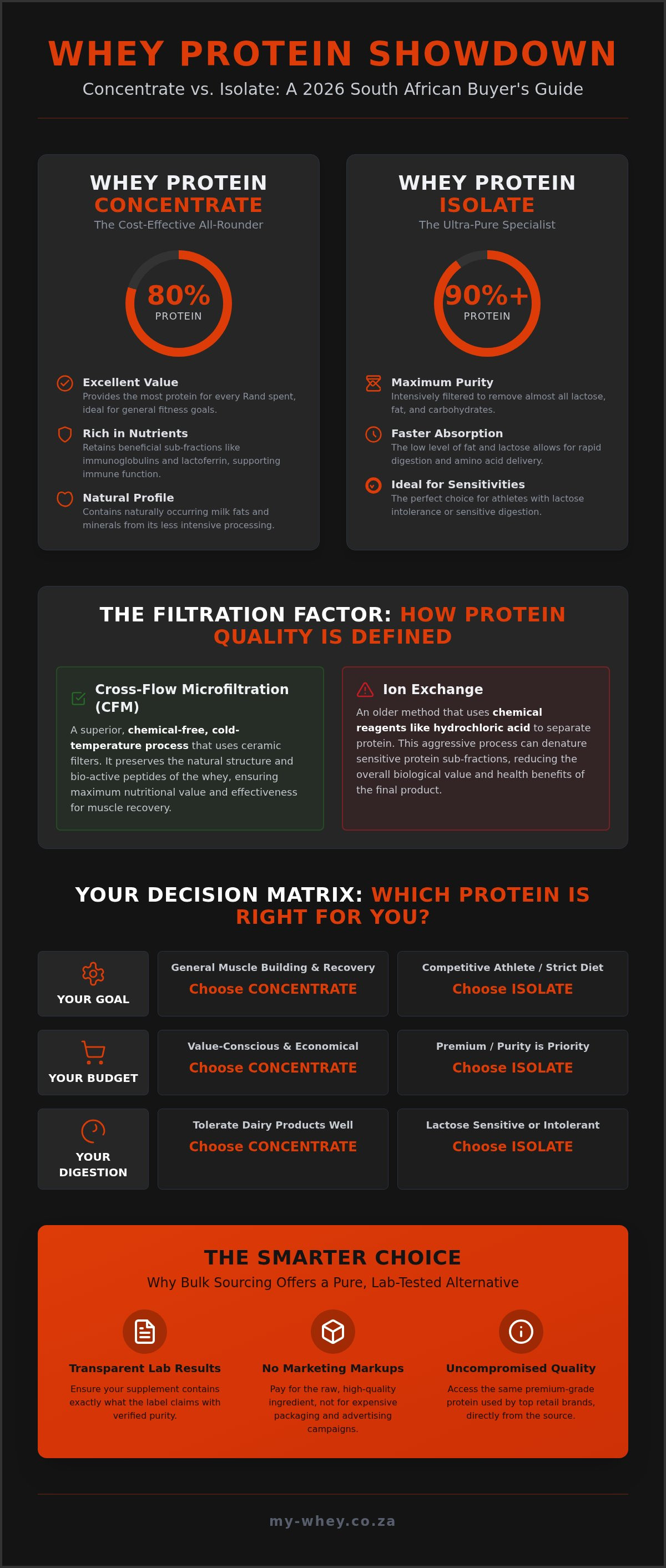
Whey Protein Concentrate 80% is the most common form of whey found in the kits of South African gym-goers. The "80%" refers to the protein concentration by weight. The remaining 20% consists of naturally occurring milk fats, minerals, and lactose.
While some view these non-protein components as extras, they serve a purpose. Concentrate retains higher levels of beneficial sub-fractions, such as immunoglobulins and lactoferrin, which support immune function. It's an efficient, cost-effective choice for general muscle building and recovery. Most people find that WPC 80% provides everything they need for daily supplementation without the steep price jump of more processed alternatives.
What is Whey Protein Isolate (WPI)?
Whey Protein Isolate is a more refined version of the product. It undergoes intensive filtration to reach a protein purity level of 90% or higher. This extra processing effectively strips away almost all the fat and lactose found in the original whey.
Isolate is specifically designed for two types of users. First, it's a necessity for individuals with severe lactose intolerance who experience digestive distress from concentrate. Second, it's a strategic tool for competitive athletes who need to hit precise macronutrient targets without any hidden calories from fats or carbs. You're paying for the removal of non-protein elements. If your digestion is fine and your macros aren't on a razor's edge, the added expense of isolate might not yield a proportional return on your investment.
The Filtration Factor: How Processing Shapes Your Protein
Filtration is the refining stage of protein production. It is the mechanical process that separates raw dairy components from the concentrated powder in your shaker. The specific method used determines the final nutrient density and the integrity of the protein itself. In the debate of whey protein concentrate vs isolate south africa, understanding these mechanical differences explains why price points vary so significantly across local retailers. High-quality filtration preserves the protein, while aggressive processing can compromise its value.
Cold-pressed filtration methods are superior to high-heat treatments. Heat can denature the protein, essentially damaging the delicate structures your body needs for repair. Cold-processed whey maintains its molecular structure, ensuring you get the full benefit of every gram. This level of processing directly influences the shelf price. Cold-filtration requires more sophisticated equipment and longer processing times, but it results in a product that your body can actually use. Integrity matters more than just the percentage on the label.
Cross-Flow Microfiltration (CFM) vs Ion Exchange
Cross-Flow Microfiltration (CFM) is a chemical-free, cold-temperature process. It uses ceramic filters to separate protein from fats and lactose without damaging the amino acid profile. Conversely, Ion Exchange uses chemical reagents like hydrochloric acid to isolate the protein. While Ion Exchange can achieve very high protein percentages, it often denatures sensitive sub-fractions. For maximum recovery benefits, always look for CFM-processed proteins. Understanding these Isolate vs. Concentrate Differences helps you choose a product that supports your body rather than just filling a macro gap.
Preserving Bio-active Peptides
Bio-active peptides are small protein fragments that provide significant health benefits beyond basic muscle repair. They play a vital role in supporting immune function and maintaining gut health. Because whey protein concentrate undergoes less intensive processing than isolate, it naturally retains more of these health-boosting components. If your goal is overall wellness alongside muscle growth, concentrate is often the superior choice. It offers a more "complete" nutritional profile compared to the heavily stripped-down nature of isolate.
Bio-available protein is the rate at which your body can actually utilise the nutrients for repair and growth. Choosing a product that prioritises this integrity ensures you aren't wasting your supplement budget. You can find high-quality, lab-tested whey protein concentrate 80% that utilises these superior filtration methods to deliver maximum results per Rand spent. Investing in better filtration means investing in better results.
Performance vs Price: Comparing Macros, Digestion, and Value
The macro-nutrient profile of concentrate often includes roughly 2 to 3 grams of fat and carbohydrates more than its isolate counterpart. For the average South African athlete, this difference is negligible in the context of a full day's diet. Unless you're preparing for a bodybuilding stage or have a very specific metabolic requirement, these trace amounts won't hinder your progress. You're essentially comparing a 90% purity level with an 80% level. The real question is whether that 10% gap justifies a significant price increase. When evaluating whey protein concentrate vs isolate south africa, the smartest choice usually balances these minor macro shifts against your monthly budget.
Understanding the difference between whey isolate and concentrate allows you to see that the extra processing for isolate is largely about removal, not addition. You pay more for what is taken out, not what is put in. This stripping process is what drives the cost upward on retail shelves, often without a proportional increase in muscle-building results for the everyday user.
The Digestive Reality of Lactose
Most individuals can comfortably digest the small amount of lactose present in a high-quality WPC 80%. Bloating often stems from low-quality fillers, artificial sweeteners, or thickeners rather than the whey itself. If you experience mild discomfort, you might find that gut health supplements South Africa provide the necessary enzyme support to improve protein absorption and gut comfort. However, if you have a medically diagnosed lactose intolerance, the switch to isolate becomes a necessary investment for your daily comfort and performance.
The "Retail Tax" Calculation
The "Retail Tax" is the hidden 40% to 60% markup that covers fancy tubs, glossy labels, and prime shelf space in shopping centres. To find the true value of your supplement, you must calculate the price per gram of actual protein. Divide the total cost of the tub by the total grams of protein it contains. You'll quickly see that bulk unflavoured protein provides the best return on investment. Sourcing in bulk eliminates the middleman, allowing you to secure pure nutrition without the aesthetic surcharge. This approach ensures you maximise your protein intake per Rand spent, which is vital in the current economic climate. Choosing purity over branding is the most effective way to optimise your supplement budget without compromising on quality.
The South African Buyer’s Decision Matrix: Which Should You Buy?
Navigating the whey protein concentrate vs isolate south africa debate requires a pragmatic approach to your specific fitness goals. For 90% of athletes, the choice comes down to lifestyle and budget rather than metabolic science. You don't need a complex plan; you need a strategy that ensures you hit your daily protein targets without overspending. Consistency in your total daily protein intake matters far more than the specific type of whey you consume. Focus on the big picture before worrying about the 10% difference in purity.
When to Stick with WPC 80%
Whey protein concentrate is the reliable workhorse of the supplement world. It's the ideal choice for most South Africans who are training for general health, muscle growth, or fat loss. You should choose WPC 80% if your goals include:
- Bulking or General Training: When you need a steady supply of high-quality amino acids to support recovery.
- Budget-Conscious Training: When you want to maximise the amount of protein you get for every Rand spent.
- Meal Replacements: When you want a protein that feels more substantial and satisfying.
Concentrate often provides a superior taste and a creamier texture because it retains a small amount of natural milk fat. This makes it much more versatile for use in smoothies or oats. If you're looking for a deeper dive into the recovery science behind these products, consult the definitive guide to whey protein. Most users find that WPC 80% offers the best balance of flavour and performance for daily use.
When to Invest in Isolate
Isolate is a precision tool designed for specific metabolic needs. While the price hike is significant, the investment is justified in certain scenarios. You should choose WPI if you fall into these categories:
- Severe Lactose Intolerance: When even the small amount of lactose in concentrate causes digestive distress.
- Pre-Competition Cutting: When you're on a strict calorie-controlled diet and every gram of fat or carbohydrate must be accounted for.
- Strict Macro Tracking: When your trainer has you on a razor-thin margin for daily intake.
For the average gym-goer, the performance difference between the two is often negligible. However, if you're pushing for those final percentage points of progress, isolate provides a stripped-down, pure protein source. To maximise your results while on a lean protein diet, you might also consider the role of branched chain amino acids to help protect muscle mass during intense training phases.
Some athletes choose to "stack" both. They use WPC for their daily breakfast or meal replacements and switch to WPI post-workout for faster absorption. This hybrid approach allows you to manage your budget while still getting the specific benefits of isolate when it matters most. Ready to optimise your nutrition? Shop our range of lab-tested bulk whey protein to get the best value for your Rand.
Sourcing Purity: Why Bulk Whey is the Smarter Choice
Choosing between whey protein concentrate vs isolate south africa requires more than just looking at a price tag; it requires an understanding of where that protein comes from. In the supplement industry, "bulk" is often misunderstood. It does not mean "cheap" in terms of nutritional quality. Instead, it represents an efficient supply chain that prioritises the raw ingredient over glossy marketing campaigns. By sourcing protein in its purest form, you're investing in the substance of the product rather than the overhead costs of a retail middleman.
Integrity in the South African market is built on transparency. Reputable suppliers provide Certificates of Analysis (COAs) and lab-testing results to verify that what is on the label is actually in the bag. This is particularly vital in a landscape where protein spiking and hidden fillers are common tactics used to lower production costs. Purity is a choice. When you opt for lab-tested bulk whey, you're choosing a steady, no-nonsense partner for your personal wellness journey. You gain the peace of mind that comes from knowing your recovery is fuelled by high-level industry standards.
Eliminating the Fillers
Many retail proteins use "amino spiking" to artificially inflate their protein readings. They add cheap amino acids like glycine or taurine, which show up as protein in nitrogen tests but don't contribute to muscle synthesis. Unflavoured bulk protein eliminates this risk. It provides a clean slate for your nutrition. You only pay for the protein you need, without the excessive thickeners or gums used to mask low-quality textures. This unflavoured base is also highly versatile for cooking, baking, or creating custom shakes. If you enjoy variety, you can use specialised flavour systems to customise your shakes without adding the hidden sugars found in pre-mixed retail tubs.
The Direct-to-Consumer Advantage
My Whey acts as the expert bridge between industrial quality and consumer affordability. We source premium ingredients to ensure that South African athletes have access to the same raw quality as top international brands. By removing the "Retail Tax" of expensive packaging and centre-aisle shelf space, we provide a product that is both pure and economical. This model empowers you to take full control of your nutrition programme. You can track your macros with absolute precision because there are no hidden ingredients to complicate your calculations. Ready to upgrade your supplement stack? Browse our Whey Protein Concentrate 80% for your next training block and experience the difference that transparent, bulk sourcing makes to your performance and your budget.
Take Command of Your Nutritional Strategy
Choosing between whey protein concentrate vs isolate south africa shouldn't be a matter of following marketing hype. It's a strategic decision based on your unique digestive needs and macronutrient targets. Isolate offers a stripped-down purity for specific competitive phases, but high-quality concentrate remains the most efficient choice for daily muscle maintenance and recovery. By focusing on filtration methods and lab-tested purity rather than flashy packaging, you ensure every gram of protein contributes directly to your progress.
My Whey serves as your trusted bulk supplier, providing premium WPC 80% that is sourced for maximum bio-availability and lab-tested for potency across South Africa. We've handled the complexities of quality control so you can focus on your training. Optimise your recovery and save on the "Retail Tax" with My Whey Bulk Protein. Take control of your nutrition with transparent, no-nonsense supplements designed for real results. Your fitness journey requires integrity and efficiency, and we're here to provide exactly that.
Frequently Asked Questions
Is whey protein concentrate or isolate better for weight loss in South Africa?
Whey protein isolate is technically superior for strict calorie deficits because it contains fewer fats and carbohydrates per serving. However, the difference is usually only 10 to 15 calories. For most South Africans, the cost-effectiveness of concentrate makes it easier to maintain a consistent diet over time. Consistency is the primary driver of fat loss, making concentrate a practical choice for long-term weight management goals without overspending.
Can I use whey protein concentrate if I am slightly lactose intolerant?
Most individuals with mild lactose sensitivity can tolerate whey protein concentrate 80% without issues. This high-quality concentrate contains very low levels of milk sugar compared to standard dairy products. If you experience significant bloating or distress, switching to isolate is the safer option. You might also consider using digestive enzymes or gut health supplements to assist with protein breakdown and improve overall comfort during your recovery phases.
Why is there such a large price difference between concentrate and isolate?
The price gap reflects the extensive filtration required to strip away fats and lactose to reach 90% purity. This mechanical refining process is more time-consuming and requires specialised equipment. When comparing whey protein concentrate vs isolate south africa, you're essentially paying for the removal of non-protein components. Isolate is a more processed product, which naturally increases the production cost and the final price you see on the retail shelf.
Does bulk whey protein contain the same amino acids as retail brands?
Pure bulk whey protein contains the same essential amino acid profile as expensive retail brands. Retail products often source the same raw ingredients from large-scale dairy processors before adding flavouring, thickeners, and branded packaging. By purchasing bulk, you're simply bypassing the marketing costs and retail tax. You receive the same muscle-building building blocks without the unnecessary additives found in many colourful, high-priced tubs found in local shopping centres.
How do I know if my whey protein has been "amino spiked"?
You can identify amino spiking by checking the ingredient label for added amino acids like glycine, taurine, or creatine that aren't part of the natural whey profile. If these are listed but the total protein count remains high, the manufacturer may be artificially inflating the nitrogen reading. Always look for lab-tested products with a clear Certificate of Analysis. This ensures you're paying for complete dairy protein rather than cheap, individual amino acid fillers.
What is the best way to flavour unflavoured bulk whey protein at home?
Unflavoured bulk whey is highly versatile and easy to customise using kitchen staples. You can add raw cocoa powder, cinnamon, or instant coffee for a quick flavour boost without extra sugar. For more variety, utilise dedicated flavour systems or blend the powder with frozen berries and a natural sweetener. This approach allows you to control the intensity and sweetness of your shakes while avoiding the artificial thickeners found in pre-mixed retail powders.
Is whey protein concentrate 80% suitable for beginners?
Whey protein concentrate 80% is the ideal starting point for anyone new to supplementation in South Africa. It provides a complete amino acid profile and supports muscle recovery effectively at a lower price point than isolate. Most beginners don't need the extreme purity of isolate unless they have a specific medical reason. Starting with a high-quality concentrate allows you to establish a consistent habit without a massive initial financial investment or complex macro tracking.
How should I store bulk whey protein to keep it fresh in the South African climate?
Proper storage is vital to maintain the potency of your protein in our warm, humid climate. Keep your bulk protein in a cool, dry place away from direct sunlight, such as a kitchen cupboard. Ensure the resealable bag is airtight or transfer the powder to a dedicated plastic container with a firm seal. Avoid storing your protein in high-moisture areas like the laundry room or near the stove to prevent clumping and spoilage.