

Whey Protein Concentrate vs Isolate: The 2026 South African Purity Guide
Spending more on your post-workout shake doesn't guarantee better results; in fact, the most expensive tub on the shelf might be the worst choice for your specific recovery goals. You've likely felt the frustration of comparing whey protein concentrate vs isolate south africa whilst trying to decode technical jargon like "cross-flow microfiltration." It's common to feel overwhelmed by the choice, especially when low-quality fillers lead to digestive discomfort and that familiar, heavy bloating that ruins your consistency.
We believe you deserve a transparent partner who prioritises substance over style. This guide provides the definitive scientific and financial breakdown to help you optimise your performance and your budget in the local market. You'll discover how to navigate the latest R3337 labelling regulations, avoid unnecessary additives, and calculate the exact protein value for every Rand spent. We're stripping away the marketing hype to give you a clear, no-nonsense framework for choosing the right fuel for your gut and your gains. It's time to stop overpaying for branding and start investing in purity.
Key Takeaways
- Decode the nutritional differences between concentrate and isolate to make an informed choice in the 2026 South African supplement market.
- Understand how advanced filtration methods impact protein purity and why preserving natural protein fractions is vital for your recovery.
- Optimise your budget by learning to compare whey protein concentrate vs isolate south africa based on the actual protein yield per Rand rather than marketing hype.
- Use our lifestyle decision matrix to determine whether your gut health and training intensity require a specific filtration grade.
- Learn how to bypass the "retail tax" by sourcing pure, lab-tested ingredients directly from bulk suppliers to customise your own nutrition.
Understanding the Whey Spectrum in the South African Market
Whey protein is a complete protein source, meaning it contains all nine essential amino acids your body cannot produce on its own. Derived from the liquid byproduct of cheese manufacturing, the science of whey protein shows it has an exceptionally high biological value and rapid absorption rate. In the South African market, where import costs and retail markups can inflate prices, understanding these differences is the first step toward smarter purchasing. For local athletes, choosing between different types isn't just about muscle growth; it's about matching a supplement to their digestive health and financial goals.
The core of the whey protein concentrate vs isolate south africa debate is protein density. This metric refers to the actual percentage of protein found in every 100 grams of powder. Whilst marketing often pushes the most expensive option as the "best," the reality depends on how much of the original milk's fats and sugars you want to keep. In 2026, transparency is more critical than ever. The South African Health Products Regulatory Authority (SAHPRA) and upcoming R3337 labelling regulations aim to ensure consumers aren't misled by vague purity claims on colourful retail tubs. Choosing the right spectrum of whey requires looking past the branding to the raw nutritional data.
What is Whey Protein Concentrate (WPC 80%)?
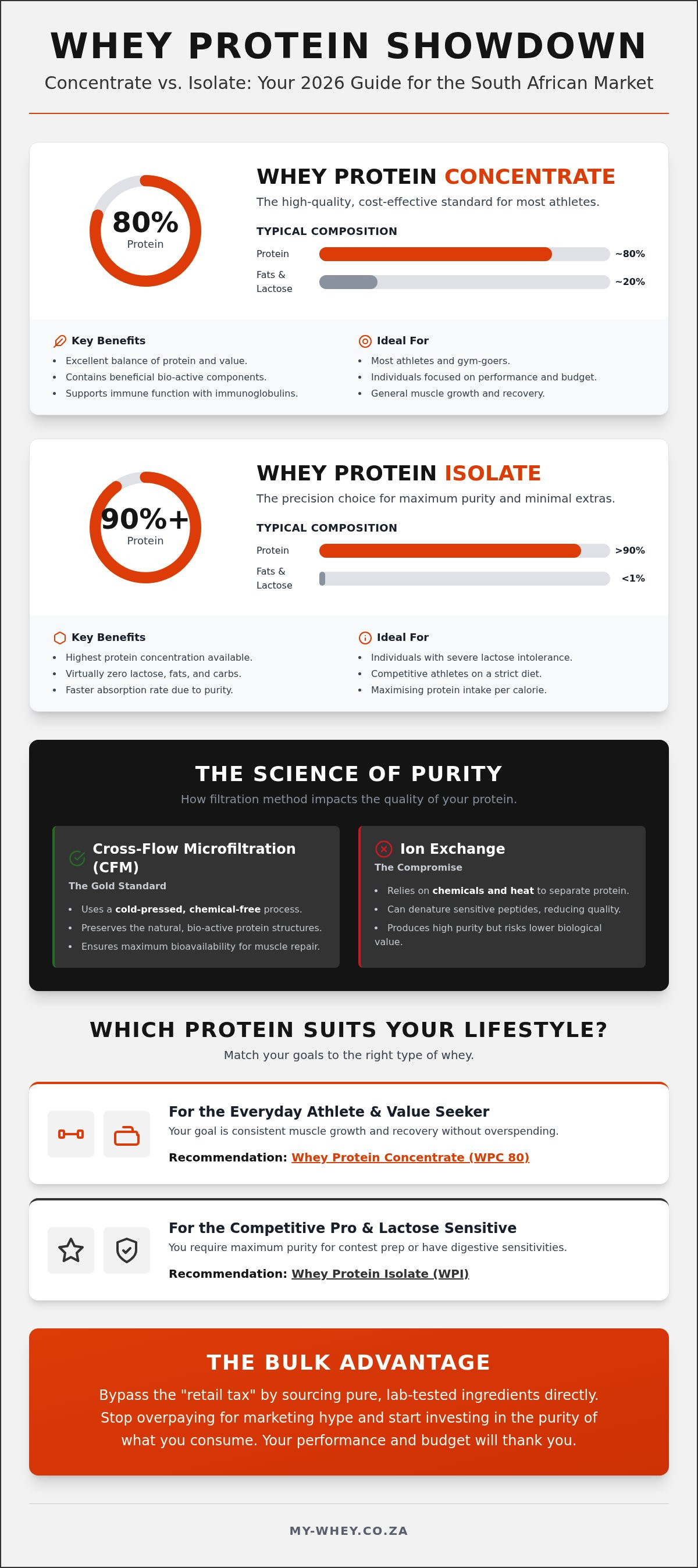
Whey Protein Concentrate 80%, or WPC 80%, is the industry standard for high-quality, cost-effective supplementation. As the name suggests, it contains 80 grams of protein per 100 grams of powder. The remaining 20% isn't just filler; it consists of naturally occurring milk fats, minerals, and lactose. These components often contain beneficial sub-fractions like immunoglobulins that support immune function. It's the core offering for those who value performance without the retail tax often found in shopping centre supplements. For most South Africans, WPC 80% offers the best balance between nutritional value and price.
What is Whey Protein Isolate (WPI)?
Whey Protein Isolate (WPI) is the result of additional filtration steps designed to push the protein content to 90% or higher. This process removes almost all the remaining fats and lactose found in concentrate. It's a precision tool rather than a general-purpose supplement. If you're managing severe lactose intolerance or following a strict contest prep diet where every gram of fat counts, WPI is the logical choice. However, this extra processing comes with a higher price tag that doesn't always translate to faster muscle growth for the average gym-goer. It's about paying for the absence of non-protein components.
The Science of Purity: How Filtration Defines Your Gains
The method a manufacturer uses to extract protein from milk determines the final quality of your shake. High-heat processing might reach impressive purity percentages on paper, but it often destroys the delicate structures your muscles need for optimal recovery. In the ongoing discussion regarding Whey Protein Isolate vs Concentrate, the filtration technology is the silent factor that dictates whether you're getting a functional superfood or just a processed industrial powder. For South African athletes, looking at the label for "purity" isn't enough; you need to understand the mechanical journey from dairy to tub.
Filtration integrity directly impacts Muscle Protein Synthesis (MPS). When protein is handled roughly, it can become denatured. This means the molecular shape changes, making it harder for your body to recognise and utilise the amino acids efficiently. True purity is about maintaining the biological power of the protein whilst removing the bits you don't want. When comparing whey protein concentrate vs isolate south africa, the goal should be to find a product that has been treated with care to ensure every gram you swallow actually contributes to your progress.
Cross-Flow Microfiltration (CFM) vs Ion Exchange
Cross-flow microfiltration (CFM) is the gold standard for South Africans seeking premium quality. It uses a cold-pressed, chemical-free membrane system to separate protein from fat and lactose. This physical separation preserves the protein’s natural structure. Contrast this with ion exchange, which relies on chemical reagents and heat to adjust pH levels. Whilst ion exchange can produce a higher protein percentage, the chemicals often denature sensitive peptides. CFM ensures that the amino acids remain bioavailable, providing a superior foundation for muscle repair and growth.
Preserving Bio-active Peptides
Purity shouldn't come at the expense of your health. Raw whey is naturally rich in bio-active peptides like Alpha-lactalbumin and Immunoglobulins. These compounds aren't just for muscle; they play vital roles in gut health and immune support. Because whey concentrate undergoes less intensive processing than isolate, it naturally retains a higher concentration of these health-boosting fractions. If your goal is holistic wellness alongside physical gains, a cold-filtered concentrate often provides more value than a heavily processed isolate. You can find lab-tested, cold-processed Whey Protein Concentrate 80% that maintains these critical nutrients without the retail markup.
Performance vs Price: Navigating the South African Retail Tax
Many South Africans pay a premium for supplements without realising they're primarily funding a marketing machine. When you buy a colourful tub from a major retailer, you aren't just paying for the powder. You're paying for the prime shelf space in a shopping centre, the celebrity athlete on the label, and the expensive imported packaging. This "retail tax" can double the price of your protein without adding a single gram of muscle-building value. To make a smart choice in the whey protein concentrate vs isolate south africa market, you must focus on the effective protein cost. Calculate this by dividing the total price of the bag by the total grams of protein inside. You'll often find that flashy retail brands are actually more expensive when you look at the protein-to-Rand ratio.
Macro Breakdown: Protein Density and Calories
The nutritional differences between concentrate and isolate are often exaggerated by marketing departments. A standard scoop of Whey Protein Concentrate 80% contains roughly 24 grams of protein and 120 calories. A scoop of isolate might offer 26 or 27 grams of protein for slightly fewer calories. Whilst there is a difference, it's rarely enough to change your physique. Most users will find that the calorie difference is negligible, often less than the amount found in a single almond. You have to ask if a 2-3 gram increase in protein justifies a 40-50% price hike. For the majority of athletes, the nutritional differences between whey isolate and concentrate don't warrant the extra spend. It's often more efficient to stick with a high-purity concentrate and spend the savings on better whole foods.
The Digestive Reality: Lactose and Bloating
Your gut health is the only area where the extra cost of isolate becomes a necessity rather than a luxury. Because concentrate retains more of the original milk's lactose, it can cause bloating or digestive discomfort in sensitive individuals. If you've experienced "protein bloat" in the past, the extra filtration of isolate, which removes nearly all lactose, is your solution. However, don't assume you're intolerant. Test your tolerance with a smaller batch of pure concentrate first. If your digestion remains calm, you can enjoy the cost savings of concentrate without any performance trade-offs. Choosing a product without unnecessary thickeners or artificial fillers also goes a long way in preventing gut issues. Sourcing your supplements from a direct-to-consumer bulk supplier allows you to skip the retail markup and focus entirely on purity.
The 2026 Decision Matrix: Which Protein Suits Your Lifestyle?
Selecting the right product when comparing whey protein concentrate vs isolate south africa depends on your specific lifestyle constraints. It isn't a simple matter of "better" or "worse," but rather "right for right now." Most people don't need the surgical precision of an isolate for general health and muscle maintenance. Consistency is the real driver of progress. If you're hitting your daily protein targets with a high-quality concentrate, you're already ahead of the curve. You can further refine your recovery by adding branched chain amino acids to your routine, which support protein synthesis during long workouts.
Use this decision matrix to simplify your shopping. Start by assessing your gut health; if you have no issues with dairy, concentrate is your baseline. Next, look at your current training phase. If you're in a "bulking" or maintenance phase, the extra trace macros in concentrate are actually a benefit. Only move toward isolate if your digestion demands it or if you're in a deep caloric deficit where every single gram of fat and sugar must be eliminated to reach your goals. The 2026 market for whey protein concentrate vs isolate south africa offers more transparency than ever before, allowing you to choose based on data rather than hype.
When to Choose Whey Protein Concentrate
Choose Whey Protein Concentrate if you want the best possible return on your investment. It's the ideal choice for budget-conscious athletes and those looking to build general muscle mass without overspending. Because it's less processed, it retains more of the bio-active peptides that support your immune system. This makes it a superior option for "hard gainers" who need every bit of nutrition they can get to stay in a caloric surplus. If you aren't struggling with severe lactose issues, concentrate is likely the only protein you'll ever need. You can explore the full spectrum of benefits in The Definitive Guide to Whey Protein to see why this remains the industry's most popular choice.
When to Invest in Whey Protein Isolate
Whey Protein Isolate is for the precision-focused athlete. Invest in this version if you're navigating a strict contest prep or a ketogenic diet where even a few grams of lactose could disrupt your macros. It’s a specialised tool for those with sensitive digestive systems who need to avoid bloating at all costs. While the absorption rate is faster, this usually only offers a tangible edge during intense, twice-a-day training cycles. For most, the decision to use isolate is a matter of digestive necessity or extreme caloric restriction. It's about paying for the absence of everything except the protein itself.
Ready to optimise your nutrition and skip the retail markups? Shop our range of pure, lab-tested supplements to get the highest quality protein delivered directly to your door.
Sourcing Pure Protein: The Bulk Advantage in South Africa
The retail supplement industry often relies on consumers not asking the right questions. By shifting to a bulk supply model, you bypass the unnecessary markups that define shopping centre shelves. This approach ensures that every Rand you spend contributes directly to your recovery rather than a corporate marketing budget. When evaluating whey protein concentrate vs isolate south africa, the source is just as important as the filtration method. Direct sourcing allows for smaller, fresher batches that haven't been sitting in a warehouse or on a retail shelf for months. You get lab-tested purity and the peace of mind that comes with a transparent, direct supply chain.
We position ourselves as your partner in results-oriented nutrition. This means providing the raw data you need to make an informed decision. Transparency isn't just a buzzword; it's a commitment to showing you exactly what's inside the bag. In a market flooded with imported brands and complex distribution networks, buying direct is the only way to guarantee the integrity of your supplements. It's time to move away from the "black box" of retail supplements and toward a model that values your performance as much as you do.
Eliminating Fillers and Artificial Additives
Many retail brands use maltodextrin, soy lecithin, or thickeners like xanthan gum to improve texture and extend shelf life. These additives often dilute the actual protein content and are a primary cause of the bloating and digestive distress discussed in previous sections. Another deceptive practice is amino spiking. This involves adding cheap amino acids like glycine or taurine to artificially inflate the nitrogen content on lab tests. This makes a product look higher in protein than it truly is. Avoiding these hidden fillers is essential for long-term health and progress. If you want to dive deeper into how these additives affect your digestion, read our guide on gut health supplements South Africa.
The Direct-to-Consumer Advantage
Skipping the middleman is the most effective way to secure high-purity protein at a realistic price. A direct-to-consumer model allows us to focus on the raw quality of our Whey Protein Concentrate 80% without compromising for retail margins. One of the greatest benefits of this model is the flexibility it offers. By choosing a pure, unflavoured base, you can use custom flavour systems to control the level of sweetness and avoid artificial colours entirely. This puts you in the driver's seat of your nutritional strategy. You're no longer a passive consumer; you're an informed athlete making strategic choices for your body. Take charge of your recovery by choosing purity over branding.
Take Control of Your Nutritional Strategy
Choosing between whey protein concentrate vs isolate south africa shouldn't be a gamble based on the brightest packaging or the loudest marketing claims. You've learned that the secret to real progress lies in the filtration method and the absence of digestive irritants. For the majority of local athletes, a high-purity concentrate offers the ideal balance of muscle-building peptides and financial efficiency. It's about prioritising substance over style and ensuring every gram you consume serves a purpose.
We've done the heavy lifting of vetting and quality control so you don't have to. Optimise your gains with pure Whey Protein Concentrate 80% from My Whey to experience transparent, lab-tested purity without the retail tax. We offer bulk pricing and reliable national delivery across South Africa to keep your recovery on track. Stop overpaying for branding and start investing in your performance. You have the framework; now it's time to fuel your journey with conviction.
Frequently Asked Questions
Is whey protein isolate better for weight loss than concentrate?
Isolate isn't inherently better for weight loss, although it contains slightly fewer calories and fats per serving. The difference is usually around 10 to 20 calories per scoop, which is negligible for most fat loss phases. Focus on your total daily caloric deficit and overall protein intake instead. If you enjoy the taste and cost-efficiency of concentrate, it won't hinder your progress. Consistency in your diet matters more than the specific filtration grade.
Can I use whey protein concentrate if I am lactose sensitive?
It depends on the severity of your sensitivity. Whey concentrate contains more lactose than isolate, which can cause bloating in some individuals. However, many people with mild sensitivity tolerate WPC 80% well because the lactose content is still relatively low compared to a glass of milk. Try a small batch first to test your digestive response before committing to a larger bag. If discomfort persists, isolate is the safer choice.
How much more expensive is whey isolate in South Africa?
Whey isolate is significantly more expensive than concentrate in the local market. This price gap is driven by the additional filtration stages required to reach 90% purity and the costs of imported raw materials. When comparing whey protein concentrate vs isolate south africa, you'll often find that isolate costs 40% to 50% more per kilogram. This premium may not be justified by the marginal protein increase for most casual athletes.
What are the signs of low-quality protein fillers to look out for?
Look for maltodextrin, thickeners, or "creamer" blends that dilute the protein density on the ingredient list. Another red flag is amino spiking, where manufacturers add cheap aminos like glycine to inflate protein readings on lab tests. Always search for a short, transparent ingredient list that clearly states the protein percentage. High-quality products should prioritise raw, lab-tested ingredients over artificial additives and unnecessary bulking agents that can cause gut issues.
Should I mix my protein with milk or water for better absorption?
Water is the best choice for rapid absorption, especially after an intense workout. Milk contains fats and casein that slow down digestion, which might be beneficial if you're using the shake as a meal replacement. If your goal is to maximise the speed of amino acid delivery to your muscles, stick with water. It also helps you avoid the extra calories and lactose found in dairy that can cause bloating.
Is it better to buy flavoured or unflavoured bulk protein?
Unflavoured protein offers the highest level of purity and versatility. It allows you to customise your shake using your own fruit or flavour systems without consuming artificial sweeteners every day. Whilst flavoured options are convenient, unflavoured bulk protein ensures you aren't paying for fillers or chemical additives. It gives you total control over your nutritional strategy and the sweetness of your recovery, making it the smarter choice for results-oriented athletes.
How does SAHPRA regulate protein powders in South Africa?
SAHPRA regulates supplements under the Category D Complementary Medicines framework. This ensures that products meet specific safety and quality standards before they reach the market. In 2026, stricter labelling regulations like R3337 also aim to prevent misleading claims about protein purity and sugar content. Always choose brands that comply with these guidelines and provide lab-tested results. This ensures you're getting exactly what the label promises without any hidden or banned ingredients.
Can I bake with whey concentrate and isolate?
You can bake with both, but they behave differently under heat. Whey concentrate is generally better for baking as the extra fat and lactose help maintain moisture in recipes like protein pancakes or muffins. Isolate can become very dry and rubbery if overcooked due to its low fat content. If you're experimenting with high-protein snacks, concentrate is the more forgiving and cost-effective choice for your kitchen. Just ensure you don't overbake the batter.