

Beginner's Bodybuilding Supplements for Protein, Strength, and Nutrient Needs
A beginner’s supplement plan should address a few clear needs, not fill a crowded cupboard. A beginner’s guide to bodybuilding supplements starts with food, training and recovery, then considers whey protein to help meet protein needs, creatine to support strength and exercise performance, and a multivitamin if your diet may leave nutrient gaps. Supplements add to your diet; they don’t replace it.
With so many formulas and promises on the shelves, it’s understandable to want a straightforward answer. This guide explains where whey protein, creatine and multivitamins may fit into a beginner’s routine, and how to give each choice a clear purpose. The right starting point depends on what your usual meals provide and what your training demands. Consistent eating and training remain the foundation, so keep your routine focused instead of adding products by default.
Key Takeaways
- Use whey protein as a convenient way to help meet your protein needs, rather than as a replacement for meals.
- Creatine may support strength and exercise performance when you take it regularly; choose a routine you can stick to.
- Consider whether your usual meals leave potential nutrient gaps before adding a multivitamin.
- Build consistent eating and training habits first, then choose supplements with a clear purpose.
1. Whey protein for meeting protein needs
Start with meals, then use protein powder to fill a practical gap. Protein from food supports muscle growth alongside suitable training and recovery. Whey protein is a fast-digesting option that can fit after a workout or between meals. For example, a shake can be convenient when a full meal isn’t available. It supplements a healthy diet; it doesn’t replace one.
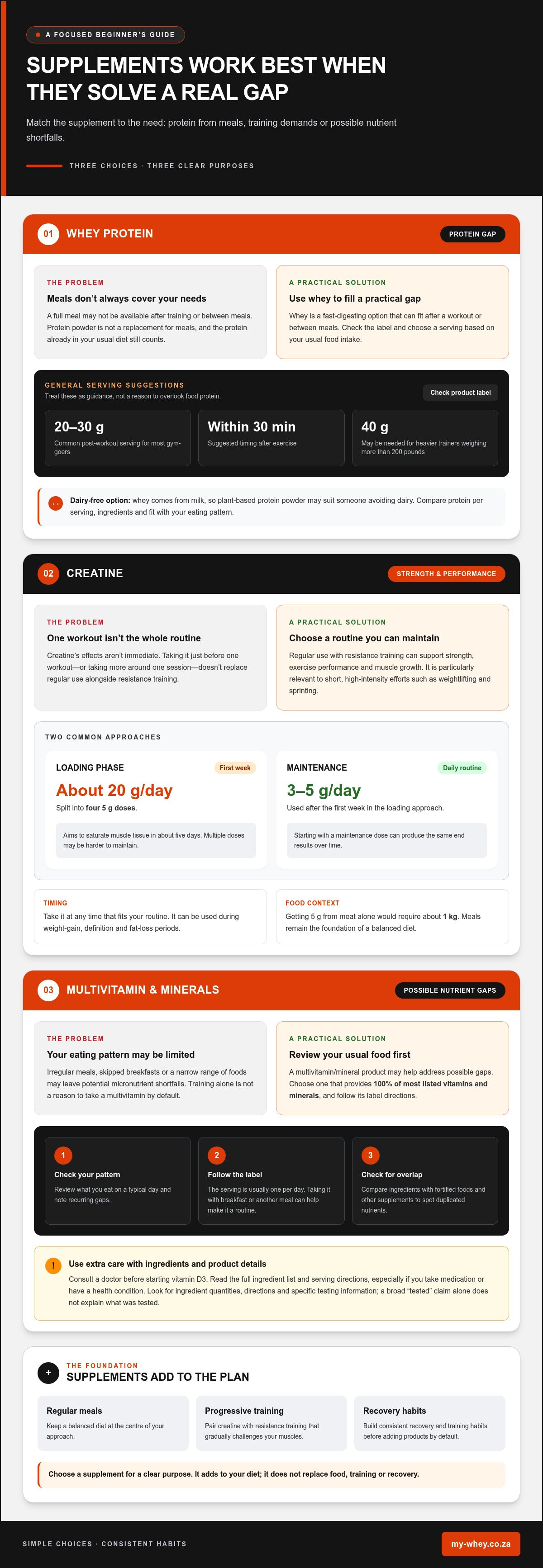
A common post-workout serving is 20 to 30 grams of whey protein for most gym-goers. The guidance also suggests taking it within 30 minutes after exercise. Heavier trainers weighing more than 200 pounds may need a 40-gram serving. Treat these as general serving suggestions, not a reason to ignore the protein already in your meals. Check the product label and account for your usual diet.
After training, a shake is a straightforward way to get protein that supports muscle recovery and development. Post-workout nutrition can support protein synthesis and glycogen resynthesis. Whey digests quickly, making it a practical option, but a shake is only one part of recovery. Pair it with regular meals and a training routine you can maintain, rather than expecting powder alone to build muscle.
Whey comes from milk, so plant-based protein powder may suit someone avoiding dairy better. Compare whey and plant options by checking the protein per serving, ingredients and fit with your eating pattern. For instance, someone who already gets protein from dairy foods might choose plant powder for variety; someone who tolerates milk may find whey convenient after training. The best choice is the one that helps you meet your needs consistently. Use a serving when meals fall short, not automatically after every workout.
2. Creatine for strength and performance
Creatine is found naturally in the body and in foods such as red meat and seafood. Regular use alongside resistance training can support strength, exercise performance and muscle growth. It is particularly relevant to short, high-intensity efforts, including weightlifting and sprinting, when muscles need rapid energy. Creatine isn’t a vitamin, and its effects aren’t immediate: consistency matters more than taking it just before one workout.
For beginners, there are two common approaches. A loading phase uses about 20 grams per day during the first week, split into four 5-gram doses. After the first week, the maintenance amount is 3-5 grams per day. Loading aims to saturate muscle tissue in about five days, but starting with a maintenance dose can produce the same end results over time. Choose the simpler daily routine if multiple doses feel difficult to maintain.
Creatine can be taken at any time that fits your routine. It can also be used throughout weight-gain, definition and fat-loss periods. Food provides some creatine, but obtaining 5 grams from meat alone would require about 1 kg. That makes a supplement a practical option for people seeking a consistent daily amount, while meals remain the foundation of a balanced diet.
Pair creatine with progressive resistance training, not as a substitute for it. For example, use it consistently alongside a programme that gradually challenges your muscles, then assess strength and training performance over time. A single serving won’t create an immediate change, and taking more around one session doesn’t replace regular use. If a straightforward routine suits your goals, explore creatine supplement options as one way to make daily use easier.
3. Multivitamins and potential nutrient deficiencies
A multivitamin and mineral supplement may help address potential micronutrient shortfalls, especially if your meals are irregular or your diet is limited. It won’t replace varied nutrition, protein or recovery habits that support muscle-building efforts. First, review what you eat on a typical day. For example, note whether busy mornings regularly mean skipping breakfast or whether your meals include only a narrow range of foods. This gives you a clearer reason to consider supplementation than taking a multivitamin simply because you train.
For a multivitamin/mineral product, guidance suggests choosing one that provides 100% of most listed vitamins and minerals. Follow the label for the serving, which is usually one per day, and take it with breakfast or another meal. Food can make a regular routine easier to remember. A supplement taken consistently according to its directions is more practical than changing the amount based on workout intensity.
Check for overlapping ingredients before combining products. A multivitamin, fortified foods and separate vitamin supplements can all contribute the same nutrients. Vitamin D3 needs particular care: consult a doctor before starting it, and consider your diet and individual needs. Don’t assume that adding more vitamins will improve recovery or help muscles digest nutrients better. A multivitamin addresses possible micronutrient gaps, not every part of training nutrition.
Use caution with stimulant ingredients, concentrated blends and products that duplicate nutrients already in your routine. Read the full ingredient list and serving directions, especially if you take medication or have a health condition. Keep the label available when discussing a supplement with a health professional, so the ingredients and amounts are clear.
To assess a product’s safety, testing and label detail, look for a complete ingredient list, quantities per serving, directions and specific testing information. Treat broad claims such as “tested” as incomplete unless they explain what was tested. Compare the label with your other supplements and follow its stated serving directions. Clear details make it easier to understand what you’re taking and spot duplicated ingredients before use.
4. Bodybuilding supplements
Supplements should add to a balanced diet, not replace meals or sound training. If you’ve just started lifting, first establish regular meals, recovery habits and progressive resistance training. This beginner’s guide to bodybuilding supplements helps you match a product to a real need, rather than expect supplements to make you stronger or faster by themselves. For example, amino acids are protein building blocks, while vitamins and minerals support normal body functions. Neither replaces varied nutrition.
Keep your first choices simple. Match each product to a clear purpose, then read its ingredient list and serving directions. If meals regularly fall short on protein, powder may be useful; if your usual food already meets that need, adding it automatically may not help. Avoid combining products with overlapping ingredients, especially if you already take a multivitamin.
Use care with pre-workout formulas containing stimulants such as caffeine. If you’re sensitive to stimulants, don’t start with a strong formula; build up gradually. BCAAs are three essential amino acids: leucine, isoleucine and valine. They don’t replace adequate protein intake. Before buying, write down the specific gap you want a product to address and compare that goal with its label.
There’s no single beginner bodybuilding supplement cost in South Africa. Your total depends on the products selected, serving sizes, frequency of use and how long each supply lasts. Choose priorities before comparing options. For local purchases, look for clear ingredient, serving and product-label information. Requirements depend on the product category, labelling and claims, so don’t treat a bodybuilding claim as proof of approval or suitability. This beginner’s guide to bodybuilding supplements points back to a simple rule: choose deliberately. If amino acids fit your plan, explore amino acid supplements alongside food and training.
My Whey: Creatine Monohydrate
My Whey offers Creatine Monohydrate for beginners who want to add creatine to a consistent resistance-training routine. Regular creatine use alongside training can support strength, exercise performance and muscle growth. It isn’t a substitute for structured workouts, balanced meals or recovery. Consider it when those foundations are in place and you want a practical way to include creatine regularly.
Choose supplements according to a clear need. If your priority is protein intake instead, Whey Protein Concentrate 80% may be relevant; Omega 3 Softgels and Amino Acids are also available for other dietary preferences. Keep your choices focused, follow product directions and avoid adding products without a purpose.
Visit my-whey.co.za to explore My Whey’s supplement offerings.
Build a routine you can sustain
Make your next step observation, not adding more products. Keep a simple record of meals, training sessions and recovery, then use it to spot a genuine need. This makes choices more deliberate: you can see whether a supplement supports your routine or merely adds complexity. A beginner’s guide to bodybuilding supplements is most useful when it helps you make decisions that fit your habits, rather than follow a rigid formula.
Choose one change at a time and give yourself room to establish consistency. If you want help considering which supplements suit your goals, contact My Whey for supplement advice. Bring a clear idea of your training priorities and current routine to guide the conversation. Start with a focused plan, stay consistent, and build from there.
Frequently Asked Questions
What are the Recommended Nutritional Supplements for Beginners?
A sensible shortlist includes whey protein, creatine and a multivitamin, each matched to a specific need. For example, consider protein powder if meals regularly fall short, rather than adding it automatically. Creatine may suit a routine that includes resistance training, while a multivitamin is relevant when eating patterns leave potential nutrient gaps. Start with one clear purpose, read the label and avoid buying several products simply because they’re popular.
What result will I get if I take them?
Supplements can support parts of a training plan, but they don’t determine results on their own. Creatine can support strength and exercise performance alongside resistance training; protein helps meet dietary needs that support muscle growth. Progress also depends on consistent workouts, suitable food intake and recovery. Track training performance and eating habits over time to judge whether a product serves a practical purpose.
When and How Much?
For whey, a common post-workout serving is 20 to 30 grams, taken within 30 minutes after training. Creatine can be taken at a convenient time: use 3-5 grams daily for maintenance, or choose a loading approach of 20 grams daily during the first week, split into four 5-gram doses. Follow the label and fit supplements around your established meals and training schedule.
When should I Start Taking Food Supplements?
Consider supplements after establishing sustainable eating habits and adapting to training. A practical first step is to review your usual meals and workout routine, then identify a specific gap. For example, if work regularly disrupts meals, a convenient protein option may help with planning. If your diet and routine are still changing, build consistency first; supplements add to your diet, not replace it.
Which bodybuilding supplements are most useful for beginners?
The most useful choice depends on what your routine lacks. Prioritise whey protein if getting enough protein from meals is difficult, and consider creatine if your resistance training is consistent. A multivitamin is a separate consideration for a limited or irregular diet. Keep the choice focused: write down the need each product addresses, then avoid adding another supplement unless it serves a distinct purpose.
How much protein should beginners consume daily for muscle growth?
Your daily protein needs depend on body weight, training demands, goals and how much protein your meals already provide. There isn’t one fixed figure for every beginner. Review a typical day of eating, including meals and snacks, and note where protein sources appear. Use that overview to identify gaps; a shake can contribute to your intake, while ordinary meals remain part of the total.