

Essential Supplements for Active Women: Key Nutrients and Needs
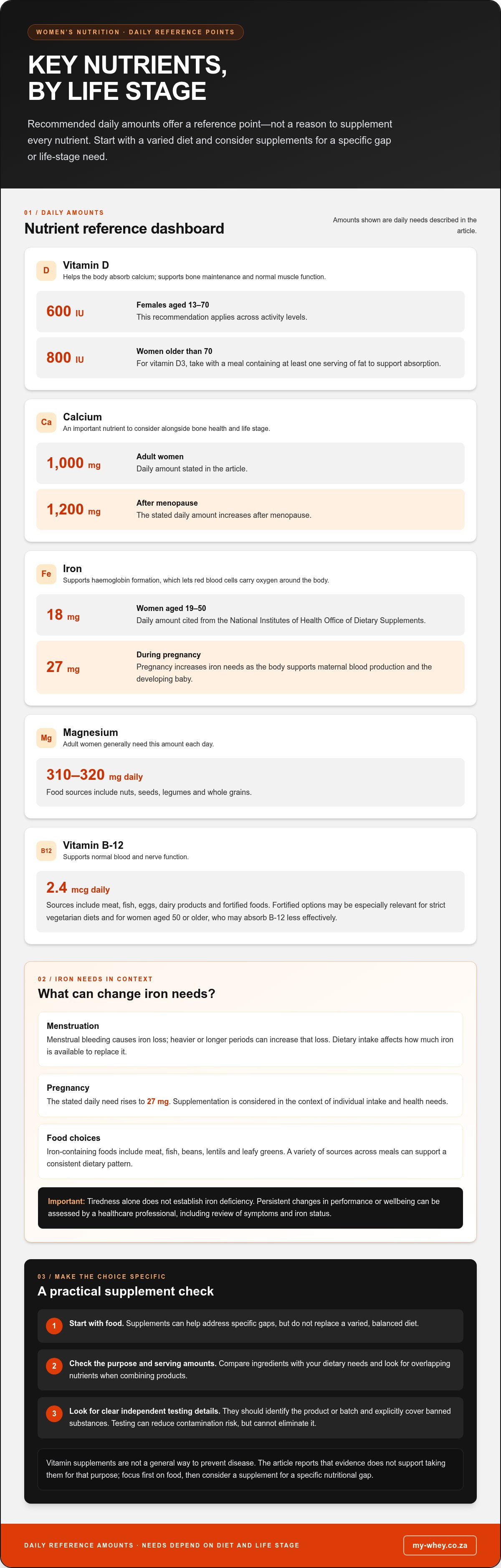
The most useful supplement plan may start with fewer products, not more. Essential supplements for active women depend on diet, life stage and training, but key nutrients include vitamin D, calcium, iron, magnesium and vitamin B12. Women aged 19 to 50 need 18 mg of iron each day, according to the National Institutes of Health Office of Dietary Supplements; adult women need 1,000 mg of calcium each day.
If you train regularly, it’s natural to ask whether your diet provides the nutrients that support health, performance and recovery. Supplements can help address specific gaps, but they don’t replace a varied, balanced diet.
This article explains how vitamins and minerals relate to women’s needs, when iron deserves particular attention, and how protein and omega-3s fit into training and recovery. You’ll also learn what multivitamins can and can’t do, so you can make a more informed choice rather than adding products without a clear reason.
Key Takeaways
- Prioritise nutrients such as vitamin D and calcium in the context of bone health, life stage and your overall diet.
- Understand why iron needs can change with menstruation and pregnancy, and what that means for supplement choices.
- Learn how protein supports muscle repair and recovery, and how to think about your intake alongside training.
- Use multivitamins to address potential nutritional gaps, not as a substitute for a varied diet.
- Explore how omega-3s relate to cardiovascular, cognitive and muscle health when considering your nutrition plan.
What vitamins and minerals are important for women’s health?
The most useful supplements address a dietary shortfall or a life-stage need, rather than activity alone. Vitamin D, calcium, iron and vitamin B-12 deserve attention, alongside a balanced diet that includes whole grains.
Vitamin D and bone health
Vitamin D helps the body absorb calcium, supporting bone maintenance and normal muscle function. Vitamin D3 supplements can be taken with a meal containing at least one serving of fat, which supports absorption. For women aged 13-70, the recommended dietary allowance is 600 IU per day; for women older than 70, it is 800 IU per day. These needs apply across activity levels. Menopause also matters because bone health needs attention as life stages change.
Vitamin B-12 needs and food sources
Vitamin B-12 supports normal blood and nerve function, and adult women generally need 2.4 mcg daily. Sources include meat, fish, eggs, dairy products and fortified foods. Women aged 50 or older may absorb B-12 less effectively, so fortified foods or supplements can help address a shortfall. A varied diet gives a useful starting point; strict vegetarian eating makes fortified options especially relevant.
Daily doses of key minerals and vitamins
Recommended daily amounts provide a reference point, not a reason to take every nutrient as a supplement. Women aged 19 to 50 need 18 mg of iron each day, according to the National Institutes of Health Office of Dietary Supplements. Adult women need 1,000 mg of calcium each day; after menopause, the amount is 1,200 mg each day. Adult women generally need 310 to 320 mg of magnesium daily. Vitamin D needs are 600 IU per day for females aged 13-70 and 800 IU per day for those older than 70.
Evidence does not support taking vitamin supplements as a general way to prevent disease. The Women’s Health Initiative found that postmenopausal women taking multivitamins did not have a lower death rate, or lower likelihood of cardiovascular disease or several cancers. Evidence also shows little or no protection against cardiovascular disease or cancer from supplements of vitamins E, C, B6, B12, folic acid or beta carotene. Focus first on food, then consider a supplement for a specific nutritional gap.
Magnesium is found in foods such as nuts, seeds, legumes and whole grains. Probiotic supplements are different: they contain live microorganisms, and their effects on gut health depend on the strains and the individual. They don’t replace vitamin D, calcium or magnesium. Consider a probiotic for a specific purpose, rather than treating it as a general solution for nutrient balance.
When choosing supplements for quality and banned-substance safety, look for independent testing details that identify the product or batch and explicitly cover banned substances. Review the ingredients and serving amounts, then compare them with your dietary needs. A clear label helps you spot overlapping nutrients when combining products. This is especially important for athletes subject to anti-doping rules: testing can reduce the risk of contamination, but cannot eliminate it.
Iron needs during menstruation and pregnancy
Iron supports haemoglobin formation, which allows red blood cells to carry oxygen around the body. Women aged 19 to 50 need 18 mg of iron each day, according to the National Institutes of Health Office of Dietary Supplements. Menstruation and pregnancy can change iron requirements, so an active woman’s needs depend on life stage, dietary intake and blood loss.
Menstrual bleeding is one way the body loses iron. Heavier or longer periods can increase that loss, while dietary intake affects how much iron is available to replace it. Iron-containing foods include meat, fish, beans, lentils and leafy greens. Including a variety of sources across meals can support a consistent dietary pattern, rather than relying on one food or taking a supplement without a clear reason.
Hormones fluctuate across the menstrual cycle, and these changes can affect how the body uses fuel during exercise. They don’t alter iron’s role in oxygen transport, but menstrual blood loss can affect how much iron needs replacing. Tracking cycle patterns alongside energy, training load and food choices may help identify recurring concerns worth discussing with a healthcare professional. A diary can make changes easier to describe at an appointment.
Pregnancy increases iron needs because the body supports maternal blood production and the developing baby. Women need 27 mg of iron each day during pregnancy. A regular pre-pregnancy diet may not provide enough for this higher requirement, so pregnancy nutrition plans give iron particular attention. Food sources remain relevant, while supplementation is considered in the context of individual intake and health needs.
Low iron can affect energy and exercise tolerance, but tiredness alone doesn’t establish iron deficiency. Sleep, food intake and training demands can also affect how a session feels. If changes in performance or wellbeing persist, a healthcare professional can assess your symptoms and iron status. This can help distinguish an iron issue from other causes before you add a supplement.
For practical meal planning, consider whether you regularly eat iron-rich foods, particularly during menstruation or pregnancy. Lentils and beans are plant-based sources of dietary iron; meat and fish are other options. How much iron the body absorbs varies by food source and the rest of the meal, so variety matters. Don’t treat iron as a general performance aid if no deficiency has been identified.
If iron isn’t the nutritional gap you’re addressing, explore other supplement options that may fit your wider nutrition plan. Keep the purpose clear: iron needs are shaped by menstruation, pregnancy, dietary intake and individual health, not simply by being physically active.
Protein and muscle repair and recovery
Protein provides amino acids that help maintain and repair muscle after training. If strength or recovery is your focus, meeting your protein needs is a practical priority. Supplements can help when meals don’t provide enough.
Protein and muscle protein synthesis
Muscle protein synthesis is the process of using amino acids to build and renew muscle proteins. Protein contains 20 amino acids, including nine essential amino acids the body must obtain through food. Eating protein across meals gives the body building blocks for this process. For example, include eggs, dairy, beans or fish in meals around regular training.
Adults who exercise place repeated demands on working muscles. The body uses dietary protein as part of repair and adaptation after those sessions. Women begin losing skeletal muscle around age 30, with reported declines of 3 to 5 percent per decade. That makes strength training and adequate nutrition relevant over time, not just during a short training block.
Protein for repair and recovery
Protein needs vary with body weight, training and goals. A suggested target for women is 1.2 to 1.6 grams per kilogram of body weight per day; physically active adults may need up to 2 g per kilogram of body weight to support repair and recovery. These are intake guides, not a reason to replace meals with shakes. Add up food sources first, then identify any gap.
For context, women typically consume 40 to 60 grams of protein per day, while 80 to 100 grams per day is described as a more optimal range for muscle maintenance and growth. Needs still depend on body size and activity. A meal with yoghurt and eggs, or lentils with whole grains, can contribute protein alongside other nutrients and minerals.
Evidence for performance and recovery supplements
Protein has a direct role in muscle repair, while supplements are most useful when they help meet an appropriate intake. Creatine is relevant to muscle energy stores: women tend to have 70 to 80 percent lower creatine stores than men. That difference alone doesn’t establish a performance result for every woman, so consider the intended outcome and the full evidence rather than assuming greater intake is always better.
Prioritise a consistent food pattern and a recommended protein intake before adding products. Whey protein can be a convenient source when meals fall short, but it doesn’t replace varied foods. Folic acid supports a different nutritional need and isn’t a muscle-recovery supplement. For women after menopause, some may lose up to 10 percent of skeletal muscle during the first postmenopausal decade, making adequate nutrition and resistance exercise useful parts of a longer-term plan.
Women’s multivitamins and nutritional gaps
A multivitamin may help address a specific dietary gap, but it can’t replace balanced nutrition. Electrolytes or sports drinks aren’t necessary for every workout. They may be useful during prolonged exercise or in hot conditions, when fluid and sweat losses are greater.
Start with food. Vegetables, fruit, beans, nuts, dairy, eggs, fish and whole grains provide a range of vitamins and minerals. Beans and leafy greens, for example, contribute folate, while dairy foods provide calcium. A varied diet supports everyday health and training without turning every meal into a supplement calculation.
Use a multivitamin to address a likely shortfall, not as a default route to strength or growth. Some products contain micronutrients in amounts greater than dietary recommendations. Compare the label with other supplements and fortified foods to identify overlapping ingredients. Harvard Health advises people who choose a multivitamin to take no more than one daily.
Pregnancy planning changes the folic acid picture. Adult women generally need 400 mcg daily, or 400 to 800 mcg each day if they could become pregnant. Women who are pregnant or might become pregnant should obtain 400-800 mcg each day from supplements or fortified foods. Folic acid supports a specific life-stage need, so it shouldn’t be treated as a general sports-performance ingredient.
Postmenopausal women may have different nutritional priorities from younger athletes. The Women’s Health Initiative found no lower death rate among postmenopausal women taking multivitamins. This is a reason to choose supplements for a defined need, rather than assume a broad formula prevents disease or supports every aspect of health.
Wellwoman Sport is one example of a sport-positioned multivitamin. Assess it as you would any multivitamin: read the nutrient panel, compare amounts with your dietary intake, and consider whether it addresses a genuine gap. A sports label alone doesn’t show that a formula is needed for exercise, recovery or strength.
For most routine training, water and regular meals can meet hydration needs. During prolonged exercise, particularly in heat, fluid loss and sweating may make electrolyte drinks more relevant. Sports drinks may also provide carbohydrates, which can matter during sustained activity. Choose based on the demands of your session, not simply because you’re an active woman.
Consider medicines and existing supplements when reviewing a multivitamin, as nutrients can overlap across products. Food remains the preferred foundation: Harvard Health says the best way to obtain needed nutrients is through food. Build meals around nutrient-dense choices, then use a supplement for a specific need rather than taking several formulas at once.
Omega-3s for cardiovascular, cognitive and muscle health
Omega-3s are often considered for several aspects of health, but their relevance depends on dietary intake and the goal you have in mind. When weighing up essential supplements for active women, consider the role of each nutrient rather than expecting one product to address every need.
Omega-3s and cardiovascular health
Omega-3s are considered in relation to cardiovascular health, but a supplement shouldn’t be treated as heart-disease prevention or medicine. Start by reviewing your usual food choices and whether they include omega-3 sources. A softgel can add to dietary intake, but it doesn’t replace an overall eating pattern that supports health.
For a practical comparison, read the label for the omega-3 content per serving, not just the total oil amount. Keep existing supplements in view, too. This helps you understand what you’re adding instead of assuming every product provides the same intake.
Omega-3s and cognitive health
Cognitive health is another reason people consider omega-3s, although taking a supplement shouldn’t be presented as a guaranteed way to improve memory or focus. Treat it as one part of a broader routine that includes adequate food and recovery. Note whether your diet regularly includes omega-3 sources before deciding whether a supplement is relevant.
Creatine is a separate supplement with findings related to cognitive performance in adults aged 45 to 64. That evidence doesn’t establish the same effect for omega-3s, so distinguish the nutrients instead of grouping them under a general “brain support” claim. Match the ingredient to the outcome you’re considering.
Omega-3s and muscle health
Muscle health involves training, recovery and adequate overall nutrition. Omega-3s are discussed in this context, but they aren’t a substitute for protein, resistance exercise or a suitable training plan. Calcium and vitamin D have different roles in bone health, so don’t assume one supplement covers every need.
To assess whether omega-3s fit your routine, consider your food intake, training demands and reason for taking them. A supplement label can help you compare serving information; it can’t promise a change in strength, recovery or body weight. Among essential supplements for active women, omega-3s are a consideration, not a shortcut around consistent meals and training.
The practical takeaway is to use omega-3s as a considered dietary choice, not as a cure or performance guarantee. If you want to add them to your nutrition routine, explore omega-3 softgels and compare the serving details with your existing diet.
My Whey: Creatine Monohydrate
My Whey offers Creatine Monohydrate for women considering creatine as part of a strength-training routine. Women tend to have 70 to 80 percent lower creatine stores than men, but this difference alone doesn’t mean every active woman needs a supplement. Consider your training goals and overall nutrition before adding it.
For other specific needs, Whey Protein Concentrate 80% can complement a diet when protein intake needs support, while Omega 3 Softgels offer another way to add omega-3s. Choose according to the gap you’re addressing, rather than stacking products without a clear purpose.
Explore My Whey’s supplement range, or visit my-whey.co.za to learn more.
Make your next nutrition choice with purpose
Turn what you’ve learnt into a simple decision: identify the need you want to address, then choose one relevant change to your routine. Essential supplements for active women aren’t a universal checklist. Your diet, training goals and life stage shape what belongs in your plan.
My Whey offers Creatine Monohydrate, Whey Protein Concentrate 80% and Omega 3 Softgels, giving you options to consider for different nutrition goals. Individual needs vary, so focus on a clear reason for each supplement rather than adding products by default. Keep your choices aligned with your food intake and the demands of your training.
Ready to take a considered next step? Contact My Whey with your questions and explore the options that suit your routine. Build your plan steadily, make informed choices and keep your training goals in view.
Frequently Asked Questions
Are dietary supplements safe?
Dietary supplements aren’t automatically safe for everyone. Safety depends on the ingredient, serving, product quality and what else you take. Combining a multivitamin with fortified foods or another supplement can cause unnecessary overlap. Pregnancy, breastfeeding, existing conditions and prescription medicines can also affect safety. Read the full label, including warnings, and use supplements for a defined purpose rather than assuming a sports product suits everyone.
How Much Calcium Do You Need?
Most adult women need 1,000 mg of calcium each day, rising to 1,200 mg each day after menopause. Count food and fortified products before adding a tablet: dairy foods, calcium-set tofu and fortified alternatives can all contribute. If using a supplement, divide doses so each is 500 mg or less and take them at mealtimes, when calcium supplements are best absorbed. Check totals across combined products.
What About Collagen Protein?
Collagen protein is one supplement option, but it isn’t interchangeable with every protein source. Before choosing it, identify your goal and compare the product’s ingredients and serving information with your overall diet. For muscle recovery, first assess your total protein intake from meals and familiar protein supplements. A clear purpose helps you avoid adding collagen simply because it appears in a sports nutrition range.
How much protein should active women consume daily, and are protein supplements necessary?
A useful daily target is 1.2 to 1.6 grams of protein per kilogram of body weight; physically active adults can require up to 2 g per kilogram to support repair and recovery. Multiply your body weight by the chosen target to estimate a daily total, then compare it with food intake. Protein supplements are convenient, not essential, when meals already provide enough. Spread protein across meals rather than relying on one large serving.
What are the risks and side effects of common sports supplements for women?
Side effects depend on the ingredient, serving and combination with other products. Taking several formulas can duplicate ingredients, while using a supplement beyond its label directions increases exposure. Creatine, protein powders and stimulant-containing sports products serve different purposes and aren’t interchangeable. Stop using a product if you have an unexpected reaction, and seek medical advice, especially if symptoms are severe or persist. Keep the packaging so you can identify its ingredients.
How do pregnancy, breastfeeding, menstrual cycles or menopause affect supplement needs for active women?
Needs change with life stage. During pregnancy, women need 27 mg of iron each day; folic acid is also a specific consideration for those pregnant or who could become pregnant. Breastfeeding changes vitamin B-12 needs, whilst menstrual blood loss affects iron replacement. After menopause, calcium requirements increase. These shifts mean a supplement plan suited to one stage may not suit another, even if training habits stay similar.
Which supplements interact with medicines or are unsuitable for people with medical conditions?
Interactions depend on the supplement, medicine and health condition, so there isn’t one safe combination for everyone. Pay particular attention to herbal products and concentrated nutrients if you take prescription medicines or are receiving ongoing treatment. Before adding a product, give your healthcare professional a complete list of the supplements, medicines and fortified products you use. Include serving information and ingredient labels to help them assess possible overlap or interactions in your circumstances.