

How Much Protein Do You Need Per Day for Weight Loss?
Protein targets don’t have to be guesswork. For a healthy adult, a useful starting point is 0.8 grams of protein per kilogram of body weight each day; your needs may differ with your activity level and circumstances. If you’re working out how much protein you need per day for weight loss, the aim is to find a practical amount that supports your routine, not simply to eat as much as possible.
It’s understandable to want one clear number, but a baseline recommendation isn’t automatically the right target for everyone who exercises or is losing weight. This article explains how to use the general guideline, what can affect your needs, and how everyday foods can help you meet them. You’ll also find examples of animal-based protein portions and other meal and snack ideas to show what your target might look like in practice.
Key Takeaways
- Use body weight and your activity level to think about a suitable daily protein target; HealthLink BC says healthy adults aged 19 years or older need about 0.8 grams per kilogram of body weight each day.
- Build your intake around protein-rich meals and snacks, and spread them across the day to make your target easier to meet.
- Consider how exercise affects your needs, especially if you regularly do strength or endurance training.
- Compare familiar animal-based foods and their serving sizes to see which options fit your meals and weight-loss routine.
How does protein intake support weight loss?
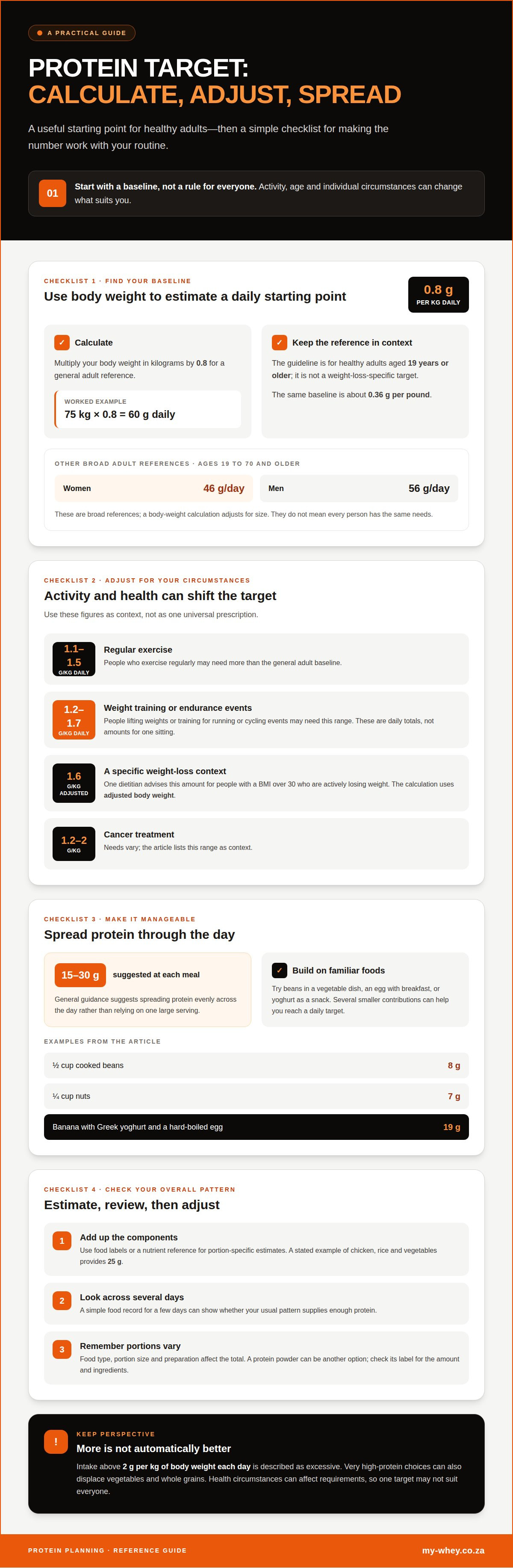
According to HealthLink BC, healthy adults aged 19 years or older need about 0.8 grams of protein per kilogram of body weight daily. Multiply your weight in kilograms by 0.8 for a baseline: at 75 kilograms, that equals 60 grams daily. It’s a general adult reference, not a weight-loss-specific target.
For women aged 19 to 70 and older, the listed protein RDA is 46 grams per day; for men in that age range, it is 56 grams per day. These figures offer a broad reference, while a body-weight calculation adjusts for size. The same baseline is about 0.36 grams per pound. For South African adults, these figures are useful intake references, not a claim that every person has the same needs.
Age and exercise can shift the amount that suits you. Protein needs can vary with age and individual circumstances, so a single target may not suit everyone. People who exercise regularly may need about 1.1 to 1.5 grams per kilogram. A complete protein food can contribute to a meal alongside vegetables, but the day’s total matters more than one food alone.
Pregnancy and breastfeeding also affect requirements. The cited guidance gives an overall pregnancy intake of 75 to 100 grams per day. Additional needs vary by trimester: 1 gram per day in the first, 10 in the second and 31 in the third. During lactation, the listed additions are 19 grams per day for the first six months and 13 grams per day afterwards.
Weight loss, muscle gain and illness don’t create one universal target. For people with a BMI over 30 who are actively losing weight, one dietitian advises 1.6 grams per kilogram of adjusted body weight. Regular strength or endurance training can also raise protein needs; cancer treatment needs vary, with a listed range of 1.2 to 2 grams per kilogram. Use these figures as context, since body weight, activity and health circumstances all influence the calculation.
Ways to meet protein needs through meals and snacks
Spread protein across meals and snacks instead of relying on one large serving. Familiar foods can help you build a steady intake while leaving room for other nutrients in your diet.
Spacing protein across meals and snacks
Distributing protein means including a source at several eating occasions instead of concentrating it in one meal. General guidance suggests 15 to 30 grams at each meal, with protein spread evenly across the day. This approach can make a daily target easier to reach and gives you a clear way to structure breakfast, lunch and dinner. A dietitian can help adapt that pattern when a disease or dietary restriction affects food choices.
Adding protein to meals and snacks
Add a protein food to meals you already enjoy: beans in a vegetable dish, an egg with breakfast, or yoghurt as a snack. Half a cup of cooked beans provides 8 grams, while a quarter cup of nuts provides 7 grams. A banana with Greek yoghurt and a hard-boiled egg supplies 19 grams daily. These combinations pair protein with other nutrients and offer practical alternatives to reshaping your entire diet.
If a meal or snack leaves a gap, a protein powder can be another option. A serving can contribute protein, but check its label for the amount and ingredients. For a powder-based option, Whey Protein Concentrate 80% can fit into a shake or be added to a suitable snack.
Estimating protein in meals and snacks
Estimate each meal by adding the protein from its components, using food labels or a nutrient reference for portion-specific values. For example, a meal with chicken, rice and vegetables provides 25 grams in the stated serving example. Protein amounts in lentils and snacks vary by food and portion size, so use labels or a nutrient reference to estimate them. Keep a simple food record for a few days to see whether your usual pattern supplies enough protein. Remember that foods vary, so portions and preparation affect the total.
Protein intake for muscle building and exercise
Exercise changes how much protein may support training and recovery. Your target also depends on the type and intensity of activity, not just calorie intake.
Protein needs for athletes and regular exercise
For regular exercise, a useful intake range is about 1.1 to 1.5 grams per kilogram of body weight. People who lift weights or train for running or cycling events may need 1.2 to 1.7 grams per kilogram. These are daily totals, not amounts to consume in one sitting. Spread protein through meals, using foods such as poultry, dairy, beans or grains alongside other nutrient-rich choices.
Effects of inadequate protein intake
Inadequate protein can make it harder to maintain muscle and recover from training. If your intake regularly falls short, exercise may feel more demanding and progress towards strength goals may be affected. Look at your usual meals as well as workout days: a small breakfast followed by a low-protein lunch may leave much of the day’s intake for dinner. A steady pattern makes gaps easier to spot.
Calculating needs from calorie intake
You can estimate protein as a share of daily calories: the suggested adult range is 10% to 35%. Each gram of protein provides 4 calories, so divide calories allocated to protein by four to find grams. For a 2,000-calorie diet, that range equals 50 to 175 grams of protein. This broad calculation differs from a body-weight estimate, so treat it as another way to understand your intake rather than a personalised prescription.
Potential benefits of higher intake
A higher intake can help meet the demands of muscle-building training when paired with consistent exercise and adequate food overall. It may also make meals more filling, especially when protein comes from satisfying foods such as eggs, poultry or beans. More is not automatically better: intake above 2 grams per kilogram of body weight each day is described as excessive. Very high-protein choices can also displace other foods, including vegetables and whole grains, from meals.
Animal-based protein sources and serving sizes
Animal foods are practical sources of dietary protein, but the amount varies by food and portion. Compare serving examples to find options that suit your preferences and help you build meals.
These foods contain all nine essential amino acids, which the body uses to build and repair proteins. Animal sources are therefore one way to get complete protein. That doesn’t mean every meal needs meat or dairy; focus on how a measured portion contributes to your total daily intake.
- One cup of milk contains 8 grams of protein, while one egg contains 6 grams.
- Half a cup of cottage cheese provides 14 grams, and 6 ounces of plain Greek yoghurt provides 17 grams.
- Cooked turkey and chicken can provide dietary protein, with amounts varying by cut and portion.
- Three ounces of tuna, salmon, haddock or trout contain 21 grams.
Portion details matter. A 3-ounce serving is approximately 85 grams, so a cooked chicken breast of that weight provides about 25 grams of protein. A cooked salmon portion of about 113 grams also provides approximately 25 grams. These examples differ from the 3-ounce fish estimate above, showing why species, serving weight and reference data can change the total. Use the portion and food type that match what you’re eating.
For a simple meal, pair an animal-based protein source with vegetables and another food group. Milk or Greek yoghurt can work at breakfast, while fish, chicken or turkey can anchor lunch or dinner. Cheese can add protein, but pay attention to the portion rather than assuming a small garnish provides a full serving. Variety makes a balanced eating pattern more practical.
If a food-based plan leaves a gap, explore protein options for your routine as another way to consider your intake.
My Whey: Whey Protein Concentrate 80%
My Whey’s Whey Protein Concentrate 80% can be a convenient option when food alone doesn’t fit your routine or leaves a gap in your daily protein intake. Use it as a supplement to meals, not a replacement for a varied diet. The amount it contributes depends on the serving you use, so follow the product label and include that protein in your daily total. A shake may suit a busy day or follow a training session, while ordinary foods remain useful sources of protein and other nutrients. Choose the approach that works with your meals and goals. For details about the product, contact My Whey.
Make your next choice practical
Make your protein target part of a routine that fits your appetite, training and everyday meals. Notice where protein is easiest to include, then choose foods or a supplement to help fill a genuine gap. Keeping a simple meal record can reveal patterns without turning eating into constant calculation.
If you’re still asking how much protein you need per day, use your target as a guide and adjust your choices around your activity and circumstances. My Whey offers Whey Protein Concentrate 80% alongside Creatine Monohydrate and Omega 3 Softgels, so you can explore products relevant to your wellness routine without treating supplements as a substitute for balanced meals.
Ask My Whey about protein and consider which option fits your approach. Keep your plan steady, practical and suited to your goals.
Frequently Asked Questions
How much protein do you need every day?
For a healthy adult, a starting estimate is based on body weight and daily activity. To make the question practical, ask yourself, “How much protein do I need per day?” Use the general adult guideline as a baseline, then consider whether training or a health circumstance affects your needs. Count protein from meals and snacks across the day, not from one meal alone.
Does a bigger steak equal bigger muscles?
No. A larger steak adds protein, but muscle growth also depends on suitable training, recovery and your overall diet. Eating more than 40 grams of protein in one sitting is not considered more beneficial than 15 to 30 grams at a time in the guidance cited for this article. A balanced plate with a sensible protein portion is more useful than simply increasing the steak serving.
What are the symptoms of not eating enough protein?
No single symptom proves that your protein intake is too low. Regularly eating few protein-rich foods may make it harder to maintain muscle or recover from exercise, but these effects can have other causes. Review what you eat over several days, including snacks, rather than judging by one meal. Seek assessment from a health professional if symptoms persist or concern you.
What does 15-30 grams of protein from whole foods look like?
One example is about 85 grams of cooked chicken breast, which provides approximately 25 grams of protein. A meal with an egg and beans can also contribute a substantial amount, while Greek yoghurt makes a convenient snack. Exact totals vary with the food and portion, so use these examples as meal-planning guides rather than assuming every product or serving has identical nutrition.
How much protein do children, teenagers, and older adults need daily?
Needs vary by age. Listed daily amounts are 13 grams for children aged 1 to 3 years, 19 grams for ages 4 to 8, and 34 grams for ages 9 to 13. For ages 14 to 18, the listed amounts are 46 grams for girls and 52 grams for boys. Healthy adults aged 65 and older are advised to aim for 1.0 to 1.2 grams per kilogram daily.
How do you calculate daily protein needs from body weight?
For a general adult estimate, multiply body weight in kilograms by 0.8. If you’re wondering, “How much protein do I need per day?”, for example, a person weighing 65 kilograms calculates 65 × 0.8, giving 52 grams daily. Convert pounds to kilograms before using this calculation. It’s a starting estimate, not a personal assessment of every training or health circumstance.