

How to prevent bloating from protein shakes by checking ingredients
The shake itself may not be the only culprit: drinking it quickly can mean swallowing extra air. The practical answer to how to prevent bloating from protein shakes is to start with a 15-20-gram serving, sip it over 10-15 minutes and check the label for potential triggers such as sugar alcohols, added inulin or chicory root, gums and extra fibre. If symptoms persist, the protein source may also matter.
Bloating after a protein shake can be frustrating, especially when you’re trying to make protein part of your routine. This guide explains how serving size, ingredients and drinking habits may contribute, and what to check when comparing powders. You’ll also learn how to mix and drink a shake with less swallowed air, helping you make a more informed choice for your digestion.
Key Takeaways
- Try a 15-20-gram serving first, then increase it gradually if you tolerate it well.
- Read the ingredient list for added fibre, inulin, chicory root, sugar alcohols and thickeners that may contribute to bloating.
- Consider whether lactose in whey or casein could be affecting your digestion.
- Sip your shake over 10-15 minutes to reduce swallowed air, and avoid over-blending it.
- Track how your symptoms relate to the powder, serving size and drinking speed to help identify likely triggers.
1. Can protein cause bloating?
Protein itself isn’t automatically the cause of bloating after a shake. Serving size, ingredients, drinking speed and swallowed air can all play a part. A sudden increase in protein may also take some adjustment, especially if you previously ate less of it. Note when symptoms begin and what the shake contained.
For a cautious starting point, try a serving containing 15-20 grams of protein. Check the nutrition panel to distinguish protein grams from the powder’s total serving weight. A serving providing 30-50 grams of protein at once may overwhelm digestion, particularly if you drink it quickly or aren’t used to a high-protein intake. If the smaller serving feels comfortable, increase it gradually rather than jumping straight to a large shake.
Drinking quickly can make you swallow more air, adding to gas and abdominal pressure. Slow down by taking small sips and pausing between them instead of finishing the shake in a few gulps. Eating slowly can also limit swallowed air. If you have your shake with a meal, take your time with both rather than rushing through them together.
Can drinking a protein shake slowly or with food prevent bloating? Slower drinking and eating may reduce swallowed air, so they can help. They won’t address every possible trigger, such as a large serving or an ingredient that doesn’t suit you. Change one habit at a time and note whether the pattern changes.
Use a simple check-in after each shake. Record the protein amount, whether you drank it quickly, and when discomfort started. Compare a 15-20-gram serving sipped slowly with your usual routine. Keep the powder and other ingredients the same during this comparison; otherwise, it’s harder to tell which change mattered. If you also eat, note whether it was a small snack or a full meal.
Can protein cause bloating? It can be associated with bloating, but serving size and drinking habits are useful first things to review. A shake isn’t the only possible source of gas, so consider what else you ate and drank that day.
When should bloating after protein shakes be checked by a doctor? Seek medical advice for severe stomach pain, persistent diarrhoea, blood in your stool or unintentional weight loss. Speak to a doctor if gas continues despite dietary changes or bloating doesn’t improve.
2. Added fibre and inulin in plant-based powders
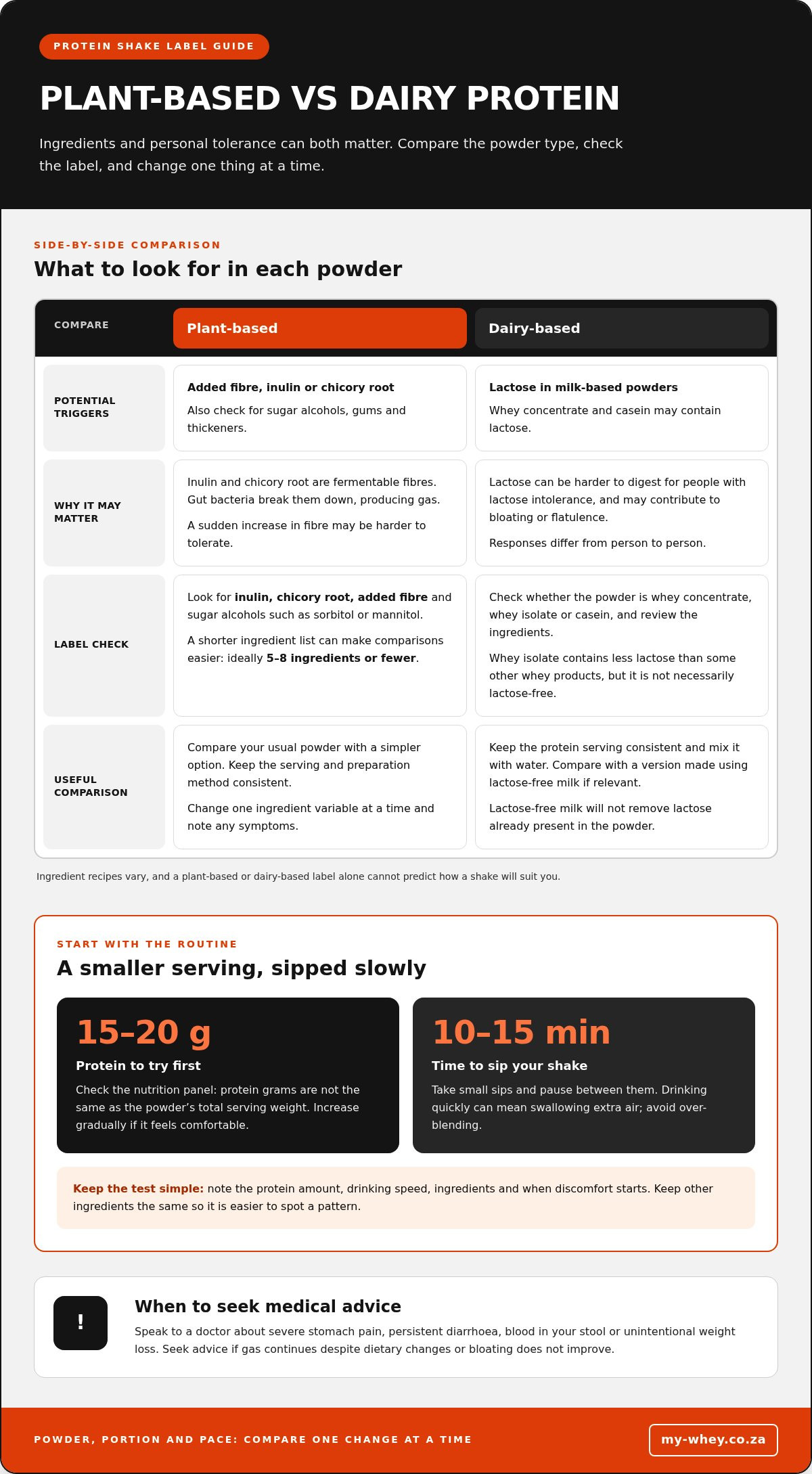
Plant-based protein powders can contain more than protein. Some include added fibre, inulin, chicory root, sweeteners, gums or thickeners. These ingredients can affect how a shake feels during digestion. Inulin and chicory root are fermentable fibres: gut bacteria break them down, producing gas. If your shake contains them, that fermentation may contribute to uncomfortable bloating.
Fibre supports digestive health, but the source and amount in a shake matter. A sudden increase in fibre can be harder to tolerate than a gradual change, especially if you’re new to plant protein. Beans, peas and lentils are examples of plant-based ingredients that can contribute to gas. Drink water regularly as you introduce plant protein, and give your body time to adjust rather than adding several new high-fibre foods at once.
Read the ingredient list, not just the flavour name or protein figure. Look for inulin, chicory root and added fibre, then check for sugar alcohols such as sorbitol or mannitol. Some powders also use gums and thickeners to alter texture. These ingredients don’t affect everyone in the same way, so checking the label helps you identify what your shake contains.
Try this practical comparison:
- Choose a powder with a short ingredient list, ideally 5-8 ingredients or fewer.
- Compare the ingredient lists of your usual powder and a simpler option.
- Keep the serving and preparation method consistent while you test a change.
- Record the ingredients and any symptoms, then change one ingredient variable at a time.
This approach makes patterns easier to spot. If symptoms ease after removing a powder with inulin, for example, that ingredient may be relevant. A longer ingredient list can also make it harder to identify which sweetener or thickener might be contributing. Don’t assume every plant-based shake will cause discomfort: recipes vary, and your response matters more than a broad label such as “vegan”.
Also check what you add yourself. A shake blended with extra fibre, sweetened with a sugar-alcohol product, or mixed into a high-fibre meal may create a different digestive load than the powder alone. Keep the recipe simple while assessing your tolerance. For a closer look at supplement ingredients, explore supplement options and compare what each formula contains.
3. Lactose in whey and casein protein powders
Lactose is a natural sugar in milk, so dairy-based powders may contain it. Whey protein concentrate can retain lactose, which may contribute to bloating or flatulence for people who have difficulty digesting it. Casein powders are also dairy-based and may contain substantial lactose. If symptoms follow a milk-based shake, check the ingredients and note whether other dairy foods cause similar discomfort.
Lactose intolerance can make lactose-containing foods harder to digest. In that case, a whey concentrate shake may trigger symptoms even when its ingredient list looks simple. Whey Protein Concentrate 80% is a concentrate, not a lactose-free label. The product type alone doesn’t show how your body will respond, so consider your known tolerance and the full ingredients list.
Is whey isolate less likely to cause bloating than whey concentrate? Whey isolate contains less lactose than some other whey products, so it may be easier to digest for some people. It still comes from dairy, and lower lactose doesn’t mean lactose-free.
For a useful comparison, keep the rest of your shake consistent. Mix the same protein serving with water, then compare your symptoms with a version made using lactose-free milk. If dairy itself seems to be the trigger, water avoids adding milk lactose. Lactose-free milk can be another option, but it won’t remove any lactose already present in the powder.
When comparing powders, check both the protein source and the ingredient list. Whey isolate may suit someone who tolerates some dairy but reacts to concentrate. People with lactose intolerance are generally advised to avoid dietary lactose, including most dairy-based protein supplements. A non-dairy powder may be worth considering, though its added ingredients can affect digestion in other ways.
- Check whether the powder is whey concentrate, whey isolate or casein.
- Look for lactose-free wording, rather than assuming all whey is low in lactose.
- Test the powder with water before adding milk or other ingredients.
- Record symptoms after the shake and after other dairy foods.
Change one factor at a time. For example, keep the powder and serving unchanged while switching from ordinary milk to water. If symptoms ease, the mixing liquid may have contributed; if they continue, the powder’s lactose or another ingredient could matter. This comparison is more useful than changing the powder, milk and serving together.
Persistent symptoms deserve attention beyond ingredient swaps. Speak to a doctor if bloating continues despite dietary changes, or if it comes with severe stomach pain, blood in your stool, ongoing diarrhoea or unintentional weight loss. These symptoms need medical advice, rather than repeated experiments with different dairy-based powders.
4. Possible causes of gas from protein supplements
A protein shake can coincide with gas without protein being the sole cause. The powder’s source, added ingredients, serving size and your wider diet can all play a part. Protein left undigested in the gut may contribute to indigestion, gas and bloating. But a high-protein diet itself isn’t shown to increase flatulence. Consider the whole shake and what you ate around it.
Plant-based supplements can contain proteins from beans, peas, grains or legumes. These foods may contribute to flatulence, particularly if they’re new to your routine. Pea, rice and oat proteins are often described as gentler options, but ingredients and individual responses differ. Check whether a particular powder repeatedly precedes symptoms, rather than assuming every plant-based shake will cause bloating.
Changes in routine can also matter. A recent change in diet or activity, or a changing gut microbiome, may mean your digestive system needs time to adapt to a new shake. Consider what else changed: perhaps you added a powder while increasing legumes, started exercising differently or altered meal timing. Record the shake and the surrounding routine to spot a pattern.
Other foods may contribute to gas on the same day. Common examples include:
- Beans, peas and lentils, which are legumes.
- Cruciferous vegetables, such as broccoli or cabbage.
- Garlic and onions, including those used in sauces.
- Dairy products containing lactose, such as milk.
A shake alongside lentil soup, onions or dairy may make it difficult to identify the trigger. Keep a food and symptom note for several occasions, recording the powder, mixing liquid, meal and when discomfort begins. Then change one factor at a time. For example, keep your usual meal but swap the powder, or keep the powder and simplify the meal. This helps distinguish a supplement-related pattern from other foods.
Also check the full ingredients panel. A powder may contain sweeteners, fibre, gums or thickeners alongside its protein source. If a shake causes symptoms, note each ingredient rather than focusing only on the protein type. A short, consistent trial with a simpler recipe can make comparisons clearer. Avoid changing several ingredients at once, as that makes it harder to identify the factor involved.
Use the pattern to guide your next step. If discomfort follows a particular shake but not similar meals, review its protein source and ingredients. If beans, dairy or garlic also bring symptoms, the shake may be only one part of the picture. These distinctions help you adjust supplements and meals more deliberately, rather than removing all protein foods without a clear reason.
5. Reducing air in protein shakes
A shake can feel frothy because mixing traps air in the liquid. Drinking that foam quickly may increase the air you swallow, adding to a bloated feeling in your stomach. A practical adjustment is simple: sip your shake over 10-15 minutes instead of gulping it. That gives you time to notice how your body responds, too.
Blender technique matters. Blending for longer whips more air into the mixture, so avoid running the blender beyond what’s needed to combine the powder and liquid. Start with a short blend, check for dry clumps, then blend briefly again only if needed. If the powder mixes easily in a shaker, try stirring it instead of using a high-speed blender.
Foam can settle before you drink. After blending, leave the shake undisturbed briefly, then pour or sip it gently. Avoid shaking it again just before drinking, since that can recreate the froth. If you use a shaker bottle, controlled movements can mix the powder without repeatedly whipping air into the liquid.
Try this preparation sequence:
- Add the liquid to your container first.
- Add the measured powder and close the lid securely.
- Shake only until the mixture looks combined.
- Let visible foam settle, then sip over 10-15 minutes.
Use the same powder and liquid during this test. That way, you’re changing the mixing method rather than several ingredients at once. Note whether less foam and slower drinking change your symptoms. If you still feel bloated, the shake’s ingredients, serving size or accompanying food may deserve attention instead.
Temperature and texture can affect how you prepare a shake, but don’t add ingredients just to hide foam. Adding fibre or a sweetener, for example, changes the recipe and makes it harder to isolate swallowed air. Keep the comparison straightforward: use your usual liquid, make a less-aerated shake and record the result. This gives you a clearer basis for your next adjustment.
Remember that reducing foam addresses one possible contributor, not every cause of bloating. If a shake made with water still causes discomfort after gentle mixing, review its ingredient list and protein source. A Whey Protein Concentrate 80% powder is a dairy-based option, so lactose may be relevant for someone who has difficulty digesting it.
To compare a whey option with your current shake, explore whey protein choices and use the ingredient information to guide your decision.
My Whey: Creatine Monohydrate
My Whey offers Creatine Monohydrate for people considering supplements beyond protein shakes. It isn’t a protein powder or a remedy for shake-related bloating, so it won’t replace checking serving size, ingredients or mixing habits. If you’re comparing options, keep your goals separate: review protein choices for your shake, and consider creatine as a distinct supplement.
My Whey also offers Whey Protein Concentrate 80%. As discussed, concentrate contains lactose, which may matter if you’re sensitive to it. Check the ingredients and choose according to your tolerance. A clear comparison helps you select what fits your routine without treating every supplement as interchangeable.
For information about My Whey’s offerings, contact My Whey at a time that suits you.
Make your next shake a measured test
Use your next shake as a simple experiment, not a reason to abandon protein altogether. Keep a brief note of what you used, how you prepared it and how you felt afterwards. That record can help you make a more informed choice if discomfort returns. A steady, one-change-at-a-time approach to how to prevent bloating from protein shakes makes it easier to identify what suits your routine.
My Whey offers Creatine Monohydrate, Whey Protein Concentrate 80% and Omega 3 Softgels. These are distinct supplements, so choose according to your needs rather than treating them as interchangeable or as remedies for bloating. If you’d like help considering shake options, contact My Whey about your shake.
Keep your observations practical and allow yourself time to adjust. Each thoughtful change can bring you closer to a routine that feels right for you.
Frequently Asked Questions
Can protein cause bloating?
Protein can be associated with bloating, but it isn’t always the only cause. A large shake, lactose, fermentable ingredients or swallowed air may contribute instead. For example, compare how you feel after a shake with how you feel after a similar meal without it. Consider the protein source, additions and timing together before deciding that protein itself is responsible.
What does bloating feel like?
Bloating commonly feels like pressure, fullness or tightness in your abdomen. Your stomach may feel stretched, and your abdomen may look more distended than usual. Some people also notice burping or passing wind. These sensations can follow a shake, a meal or both, so note when they begin and how long they last. Severe stomach pain or blood in your stool needs medical advice.
What about protein powder?
Protein powder is a concentrated ingredient, and the scoop doesn’t always match the protein amount shown on its nutrition panel. Compare the serving instructions with the protein figure, then account for anything else you add. Milk, fruit and a sweetener, for instance, all change the finished shake. Keep a note of your recipe so you can repeat or adjust it consistently.
Which proteins are easiest to digest?
There isn’t one protein that suits everyone. Pea, rice and oat-based proteins may feel gentler for some people, while whey isolate contains less lactose than some other whey products. If dairy causes symptoms, a plant-based option may be worth comparing, but check its added fibre and sweeteners too. Try one protein source at a time rather than changing several ingredients together.
Why does this happen?
Gas can build when gut bacteria ferment ingredients or when protein remains undigested in the gut. Drinking quickly can also mean swallowing air. A change in diet or activity may affect how your digestive system responds to a shake. For example, symptoms after adding a new powder alongside more beans may relate to the overall change, not just the supplement.
What causes bloating after drinking protein shakes?
Common contributors include lactose in dairy-based powders, added inulin or chicory root, sugar alcohols, gums, thickeners and extra fibre. The shake’s preparation and accompanying meal can also matter. If symptoms follow a shake mixed with milk, note whether you also react to other dairy foods. A simple record of ingredients, mixing liquid and symptoms can help reveal repeated patterns.
How can you prevent bloating from protein shakes?
To learn how to prevent bloating from protein shakes, test one change at a time. Use a smaller serving, simplify the recipe or alter the mixing method while keeping other factors steady. Check labels for lactose, inulin, chicory root and sugar alcohols. Note what changes your symptoms, rather than switching powders, liquids and meal ingredients all at once.
Can lactose intolerance cause bloating from whey protein shakes?
Yes. Whey concentrate and casein are dairy-based and may contain lactose, which can cause symptoms for someone who has difficulty digesting it. Whey isolate contains less lactose than some other whey products, but it is still made from dairy. Check the product label and consider whether other dairy foods also bring on symptoms. A doctor can advise on persistent or concerning symptoms.