

Natural ways to boost testosterone in men and what may help
Natural ways to boost testosterone in men are best treated as supportive habits, not a shortcut. Getting enough quality sleep, doing resistance training and eating a balanced diet support overall health, but evidence that herbal supplements raise testosterone is limited. No single meal or supplement is a proven fix for low testosterone.
It’s understandable to look for practical changes you can make yourself, especially if your energy, mood or sex drive feels different. The key is to distinguish habits that support general health from supplement claims that go beyond the evidence.
This guide explains which lifestyle changes may help, what foods and supplements are discussed, and what research suggests about their effects. You’ll also learn why zinc may matter when intake is low, why supplement safety matters, and when persistent symptoms call for a conversation with your GP and a testosterone blood test.
Key Takeaways
- Build the basics first: quality sleep, resistance training and balanced meals can support healthy hormone function.
- Choose foods such as fatty fish for vitamin D, while remembering that no single food is a guaranteed fix.
- Frequent heavy drinking can affect testosterone production, so consider how alcohol fits into your routine.
- Approach testosterone-boosting supplements cautiously: evidence varies, and zinc intake has an important upper limit.
1. Zinc and herbal supplements
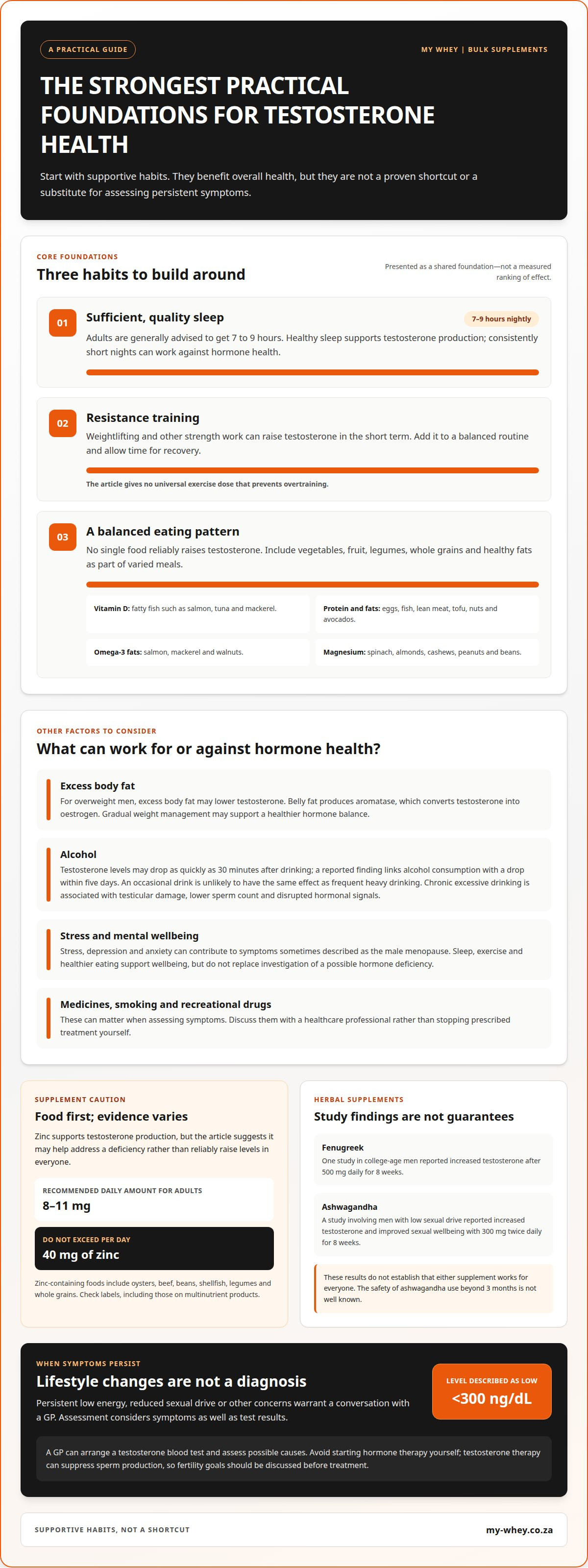
Zinc is important for testosterone production, healthy testicular function and fertility. A small study found that restricting zinc significantly reduced testosterone in young men. Supplementation restored levels to the normal range in older men who were zinc-deficient. This suggests zinc may help address a deficiency, rather than reliably increase testosterone levels in everyone. Adults should not take more than 40 mg of zinc per day, according to the National Institutes of Health Office of Dietary Supplements.
Start with zinc-containing foods, including oysters, beef, beans, shellfish, legumes and whole grains. These examples can help build zinc into meals without relying only on tablets. The recommended daily amount for adults is between 8 mg and 11 mg. Diet, existing deficiencies and other supplements all affect total intake. Read product labels carefully, especially if a multinutrient product contains zinc too.
In South Africa, unregulated testosterone boosters may contain unclear ingredients or doses, making their effects harder to assess. Avoid unlicensed anabolic steroids: excessive use can cause erectile dysfunction, shrunken testicles, infertility, baldness, acne and serious mood swings. If low energy, reduced sexual drive or other symptoms persist, speak with a healthcare professional about assessment and treatment rather than starting hormone therapy yourself.
Herbal ingredients have some study findings, but evidence is limited. One study in college-age men reported increased testosterone after 500 mg of fenugreek seed extract daily for 8 weeks. A study involving men with low sexual drive reported increased testosterone and improved sexual well-being with 300 mg of ashwagandha twice daily for 8 weeks. These results don’t establish that either supplement works for everyone. The safety of ashwagandha use beyond 3 months is not well known.
Magnesium is also linked with metabolic processes that regulate hormones. Spinach, almonds and beans are dietary sources. Before adding zinc, magnesium or herbs, discuss them with a healthcare professional, particularly if you have an underlying condition or take medication. This helps assess possible interactions and whether a supplement suits your needs.
2. What Foods Boost Testosterone?
Food supports hormone health, but no single ingredient reliably raises testosterone levels. Fatty fish such as salmon, tuna and mackerel provide vitamin D, which is involved in hormone synthesis. Include fish alongside vegetables, fruit, legumes, whole grains and healthy fats for a balanced eating pattern. A meal of salmon, spinach and brown rice is one practical example.
Vitamin D deficiency may affect hormone health, so focus on dietary sources and appropriate sun exposure. A healthcare professional can advise whether testing or a vitamin D3 supplement suits your circumstances. Protein and healthy fats also matter: eggs, fish, lean meat, tofu, nuts and avocados offer useful choices. If you’re considering a convenient protein option, explore Whey Protein Concentrate 80% as part of your broader nutrition plan.
Omega-3 fats are found in salmon, mackerel and walnuts, and help reduce inflammation. Spinach, almonds, cashews and peanuts provide magnesium. Vitamin B6 also has a role in normal body processes, but more isn’t automatically better. Consistently taking more than 250 mg per day can cause dizziness, nausea, numbness or tingling.
For sleep, adults are generally advised to get 7 to 9 hours nightly. Healthy sleep supports testosterone production, while consistently short nights can work against hormone health.
Resistance training, including weightlifting, can raise testosterone in the short term. Add strength work to a balanced routine and allow time for recovery. There is no supported universal exercise dose here that prevents overtraining.
For overweight men, excess body fat may lower testosterone. Belly fat produces aromatase, which converts testosterone into oestrogen, so gradual weight management may support healthier hormone balance.
A level below 300 ng/dL is described as low, but assessment also considers symptoms. If you have persistent concerns, a GP can arrange a testosterone blood test and assess whether further evaluation is appropriate.
3. Are there any natural ways to increase testosterone?
The strongest practical foundations are resistance exercise, sufficient sleep and a balanced diet. These habits support health and muscle function, but they don’t replace assessment for suspected hypogonadism. Excess body fat can contribute to lower testosterone, and gradual weight management may support hormone balance. Persistent symptoms still need attention, even when you’re making lifestyle changes.
Alcohol can affect testosterone production. Levels may drop as quickly as 30 minutes after drinking, and a reported finding links alcohol consumption with a drop within five days. An occasional drink is unlikely to have the same effect as frequent heavy drinking. Chronic excessive drinking is associated with testicular damage, lower sperm count and disrupted hormonal signals between the brain and testes.
Stress, depression and anxiety can contribute to symptoms sometimes described as the male menopause. Exercise, better sleep, healthier eating, cutting back on alcohol and quitting smoking are practical steps for physical and mental health. These changes support a healthier routine but don’t replace investigation of a possible hormone deficiency. Recreational drugs and prescribed medicines also matter: discuss their use with a healthcare professional rather than stopping prescribed treatment yourself.
Natural approaches may not be enough when low energy, reduced sexual drive or other symptoms persist. A GP can arrange testosterone testing and assess possible causes; confirmed deficiency may call for medical treatment. Options include testosterone tablets, patches, gels, implants or injections. Testosterone therapy can suppress sperm production, so discuss fertility goals before treatment.
Unregulated anabolic steroids are not a safe shortcut. Excessive use can cause erectile dysfunction, shrunken testicles, infertility, baldness, acne and serious mood swings. These effects can undermine sexual function and fertility, even when muscle gain is the aim. Avoid self-treatment with steroid products, particularly when symptoms could point to an underlying condition that needs diagnosis.
4. Evidence for testosterone-boosting supplements
Claims on supplement labels often sound stronger than the evidence. Studies of boron, ashwagandha and fenugreek report possible effects, but these findings don’t establish reliable results for everyone. A small study found higher testosterone after healthy men took 10 mg of boron daily for 1 week. That short trial cannot show whether the effect lasts or applies broadly.
A resistance-training study offers another example. Men taking 300 mg of ashwagandha twice daily for 8 weeks had a greater testosterone increase than those taking a placebo. A separate study reported increased testosterone and improved sexual well-being with the same ashwagandha dose and duration in men with low sexual drive. Different participants and study designs make direct comparisons difficult.
Fenugreek has also been studied: college-age men taking 500 mg of seed extract daily for 8 weeks showed a greater increase than a placebo group. These results don’t mean the extract improves strength, exercise performance or sexual function for every user. A supplement’s effect can depend on the ingredient, dose, health status and study design.
Vitamin D or zinc supplements may be useful when intake or status is low, but evidence rarely supports broad claims that natural or herbal remedies boost testosterone. Adults should not take more than 40 mg of zinc daily, according to the National Institutes of Health Office of Dietary Supplements. A healthcare professional can help assess deficiency, medication interactions and whether supplementation is appropriate. Don’t combine products without adding up their ingredients and doses.
For a practical decision, treat supplements as a possible addition to balanced eating, protein intake and regular strength exercise, not a replacement for them. If your goal is convenient protein alongside training, explore Whey Protein Concentrate 80%. It supports nutrition, not a promised testosterone increase. Persistent symptoms or suspected low testosterone need medical assessment rather than a supplement-led treatment plan.
My Whey
My Whey helps you support your training and nutrition routine with a selection of supplements. Creatine Monohydrate, Whey Protein Concentrate 80%, Omega 3 Softgels and Amino Acids can complement a balanced diet and regular exercise. They aren’t treatments for low testosterone, and they shouldn’t replace medical assessment when symptoms persist.
Use supplements as part of a consistent nutrition plan built around your fitness goals. Choose them for a practical role in that plan, rather than relying on claims that they will raise testosterone. If you suspect a hormone deficiency, speak with a healthcare professional about testing and suitable care.
For help choosing a supplement to fit your nutrition routine, contact My Whey.
Make your next step a considered one
Choosing natural ways to boost testosterone in men starts with a routine you can sustain. Set a realistic focus, such as keeping regular sleep times or planning balanced meals, then build from there. A manageable approach is easier to maintain and helps you notice how everyday habits affect your wellbeing and training.
The most useful natural ways to boost testosterone in men are consistent health habits, not quick fixes or an ever-growing stack of supplements. Keep your goals practical, and treat supplements as nutrition products rather than treatments for a hormone condition. If symptoms continue or affect daily life, speak with a healthcare professional about assessment and suitable care.
If you’re considering supplements to complement your nutrition goals, contact My Whey for support. Take a steady, informed approach and keep moving towards habits that work for you.
Frequently Asked Questions
Are there any natural ways to increase testosterone?
Yes. Regular strength exercise, restorative sleep and balanced eating can support healthy hormone function. Focus on habits you can maintain rather than stacking supplements or changing everything at once. If symptoms continue, seek medical assessment: diabetes and cardiovascular disease can also contribute to symptoms such as erectile dysfunction. A blood test helps distinguish a possible testosterone deficiency from other causes.
What Foods Boost Testosterone?
No single food reliably raises testosterone, but a varied diet can support general health and hormone function. For a practical meal, pair eggs or tofu with leafy greens and whole grains, and include fish or nuts in your meals. This provides protein, fats and micronutrients through food. Highly restrictive eating can undermine nutritional balance, so aim for variety rather than a supposed testosterone-boosting food.
What are the symptoms of low testosterone?
Possible symptoms include reduced sex drive, erectile dysfunction, infertility, lower muscle mass or bone density, and loss of facial or body hair. Breast tissue development can also occur. These signs don’t identify the cause on their own, and symptoms can overlap with other health problems. Note what has changed and how it affects daily life, then discuss persistent concerns with your GP.
Why is testosterone important?
Testosterone contributes to male sexual development and reproductive function, including sex drive and sperm production. It also supports muscle mass and bone density. These roles explain why a confirmed deficiency can affect more than one aspect of wellbeing. A change in one area, such as strength or sexual function, doesn’t by itself establish a hormone problem; assessment considers symptoms alongside blood-test results.
At what age does testosterone start to decline?
Testosterone levels generally begin declining around age 30, although the pattern varies between men. A gradual change with age doesn’t automatically mean a deficiency or require treatment. Pay attention to persistent symptoms and changes in sexual function, energy or muscle mass rather than relying on age alone. If concerns affect your wellbeing, discuss testing with your GP.
How Common Is Low Testosterone?
In the HIM study, 38.7% of 2,162 men aged 45 years or older had total testosterone below 300 ng/dL. That figure describes the men included in that study, not every man in South Africa. A low test result also needs clinical context: symptoms, repeat testing and possible underlying causes help distinguish a diagnosed deficiency from a single low reading.