

Signs of Protein Deficiency in Hair, Skin, and Nails
Brittle or thinning hair, dry and flaky skin, and deep ridges in fingernails can be signs of protein deficiency, but these changes can have other causes too. For most adults, the general protein guideline is 0.8 grams per kilogram of body weight each day.
Protein helps the body build and repair skin and hair, as well as muscles, and supports the production of enzymes and hormones. So it makes sense to look at your diet when changes appear, though appearance alone can’t confirm that you’re getting too little protein.
Learn what these changes may mean, how low protein intake can affect the body, and who may be more at risk. This guide also explains how to think about daily protein needs and when persistent or concerning symptoms call for medical attention.
Key Takeaways
- Look beyond hair, skin and nail changes: reduced strength, swelling or slow recovery may also signal that your diet needs attention.
- Use body weight as a starting point for understanding daily protein needs, then consider how age, activity and recovery may affect them.
- Pay closer attention to protein intake if you’re older or follow a vegetarian or vegan diet, and include a variety of protein sources.
- Learn how Whey Protein Concentrate 80% could fit into your approach to meeting protein needs.
What are the signs of insufficient protein intake?
Common signs can include reduced muscle strength, slower recovery from injuries, brittle or thinning hair, dry skin, and ridged nails. These changes can have other causes, so symptoms alone cannot confirm that your protein intake is too low.
Protein helps build and repair muscles and other tissues, and supports immune function. When dietary intake is insufficient, the body may draw on protein stored in muscles to meet other needs. Over time, this can reduce muscle mass and strength. Low intake may also affect neurotransmitter production, potentially contributing to changes in mood or behaviour.
For adults, the Recommended Dietary Allowance is 0.8 grams of protein per kilogram of body weight per day. A general daily guideline is 0.8 to 1 gram per kilogram. To estimate the lower guideline for yourself, multiply your weight in kilograms by 0.8. Protein should also provide at least 10% of daily calories.
Daily protein needs vary. Activity, health, and recovery can all influence how much a person needs. For example, adults recovering from illness or surgery may have different needs from adults with lower activity levels. Treat general guidelines as a starting point, not a personalised medical target, especially when illness affects appetite or eating.
Older adults may need closer attention to protein intake. A suggested range for this group is 1 to 1.2 grams per kilogram of body weight per day. Protein is used less efficiently to build muscle with age, making adequate intake relevant to maintaining strength. A healthcare professional can assess diet alongside health, activity and recovery needs.
Spread protein across meals instead of relying on one meal to meet your daily needs. Include a range of sources, such as eggs, fish, dairy, beans, lentils, or tofu. If symptoms persist or muscle strength declines, seek medical assessment. A clinician can consider your diet and other possible causes before identifying the reason.
Hair, skin, and nail changes
Protein helps build and repair tissues, including skin and hair. Inadequate intake may be associated with brittle or thinning hair, dry, flaky skin, and deep ridges across fingernails. These changes can occur alongside other nutrition concerns, but their appearance alone cannot identify the cause. Notice whether they appear together or alongside changes in appetite, strength, or weight.
Hair, skin, and nails are visible signs, but protein also supports less visible processes. The body uses it to make enzymes and hormones, and to produce antibodies that help white blood cells fight viruses, bacteria, and toxins. A shortage can affect several functions rather than cause one isolated change. Swelling, for example, has various possible causes and needs attention if it persists.
Mood changes may also occur. Low protein intake can affect neurotransmitter production, potentially contributing to changes in mood or behaviour. Some people describe difficulty concentrating as mental fog, but that experience alone does not show that protein is the cause. Consider it alongside eating patterns and other symptoms, rather than treating it as a standalone sign.
Weight changes can have different explanations. Not eating enough protein and calories may contribute to weight loss. Low protein intake may also contribute to weight gain if muscle loss slows metabolism. Body weight alone cannot distinguish between these possibilities. Changes in muscle strength, appetite, and overall food intake provide useful context.
Look for patterns, not a single nail ridge or dry patch. A varied diet that includes protein-containing foods supports tissue repair and other body functions. If changes to your hair, skin, or nails appear alongside persistent swelling, appetite changes, or unexpected weight shifts, seek medical assessment. A clinician can consider nutrition and other possible causes, then decide whether further assessment is needed.
Groups at risk of low protein intake
Age can make getting enough protein more challenging. Roughly one in three people over 50 fall short of daily needs, and protein becomes less efficient for building muscle with age. Older adults may also eat less when appetite changes or meals become difficult to manage. Falling intake can affect muscle mass and everyday functions, including strength and balance. Sarcopenia, the loss of muscle associated with ageing, affects 10-20% of older adults.
Vegetarians and vegans can meet their protein needs with plant foods, but variety matters. Include several sources, such as beans, lentils, tofu, and edamame, to obtain all essential amino acids. Relying on a narrow range of foods can make a balanced intake harder to achieve, particularly when appetite or overall calorie intake is low.
People with reduced appetite or limited food intake may also be at risk. Eating too little can reduce both calorie and protein intake, contributing to weight and muscle loss. Protein-containing foods can help you feel fuller throughout the day. During weight loss, adequate protein as part of an appropriate overall diet can help support muscle mass, rather than focusing on body weight alone.
Protein also matters for bone health. Collagen is the body’s most plentiful protein and the main protein in bones. However, protein alone does not determine bone strength; overall nutrition and health matter too. A dietitian can help assess your intake if appetite, weight, or food choices make a balanced diet difficult.
Notice patterns, not one isolated symptom. A sustained drop in appetite, unplanned weight loss, declining strength, or difficulty getting enough varied protein sources can justify a closer nutrition assessment. People over 65 should pay particular attention to protein sources and regular intake, especially when meals become smaller or less varied.
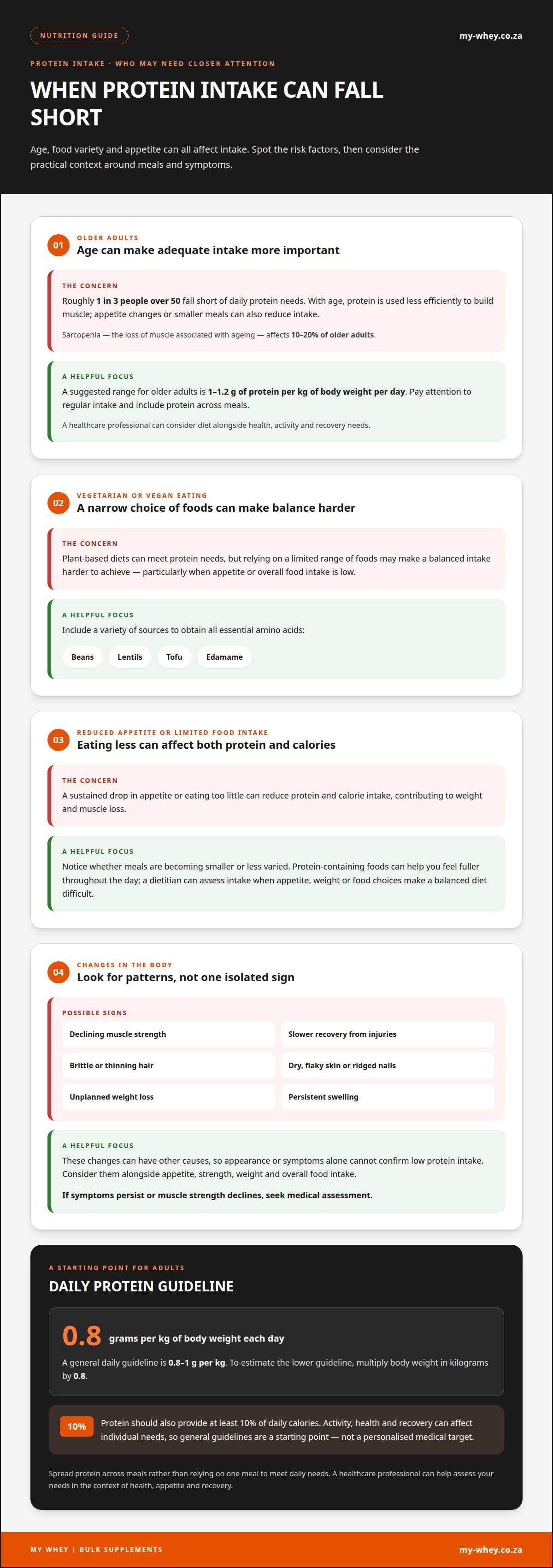
Signs of protein deficiency
Signs of protein deficiency can extend beyond hair, skin, and nails. Ongoing low intake can reduce muscle mass and strength, affect balance, and make everyday movements harder. Some people may also take longer to recover from cuts, scrapes, sprains, or exercise-related injuries. These changes are especially important when several occur alongside limited eating or unplanned weight loss.
In children, insufficient protein can delay or prevent normal growth and development. A child who is not growing as expected needs medical assessment that considers nutrition and other possible causes. Growth concerns need attention, not treatment with a protein supplement alone. Protein supports growth and repair, but is only one part of a child’s overall diet.
Swelling, known as oedema, can affect the abdomen, legs, feet, and hands. It can occur with inadequate protein intake, particularly alongside other signs of poor nutrition. Persistent swelling needs medical evaluation because it can have several causes. A clinician can assess the swelling, eating habits, weight changes, and other symptoms together.
Severe protein malnutrition is called kwashiorkor. It can involve marked swelling and differs from the subtler changes associated with low intake. Severe under-eating linked with anorexia can also lead to loss of heart muscle and potentially heart failure. These serious outcomes show why prolonged difficulty eating enough protein and calories requires prompt medical care.
One symptom alone cannot establish that a person isn’t getting enough protein. Look at the combination: reduced strength, slower injury recovery, swelling, or a child’s growth faltering alongside restricted eating. A healthcare professional can evaluate those signs and the person’s wider diet. If you’re working to increase protein in your routine, explore protein options as one possible addition to food-based meals.
My Whey: Whey Protein Concentrate 80%
My Whey offers Whey Protein Concentrate 80% as a convenient option for adding protein to your routine. It may suit adults whose usual meals don’t provide enough protein, or who want another option alongside food sources. It isn’t a way to diagnose or treat suspected deficiency.
Start by considering your overall eating pattern and protein needs. Eggs, dairy, fish, beans, and lentils can all contribute protein; a supplement may help fill a dietary gap when needed. If you have persistent symptoms, unexplained weight changes, or difficulty eating, seek medical advice rather than relying on a supplement alone. A healthcare professional can assess possible causes and guide your nutrition choices.
For information about Whey Protein Concentrate 80% or other suitable options, contact My Whey.
Choose a practical next step
Possible signs of protein deficiency are a reason to take a closer look at your usual eating pattern. Focus on a sustainable routine that meets your needs through meals and, where appropriate, a suitable supplement. If symptoms persist or affect daily life, seek medical advice to explore their cause before making supplements your main response.
My Whey offers Whey Protein Concentrate 80%, Creatine Monohydrate and Omega 3 Softgels. These are distinct products, so choose based on your nutrition goals rather than assuming they serve the same purpose. A healthcare professional can help you consider dietary needs alongside your health and any ongoing symptoms.
For information about the available options, Contact My Whey for support. Take the next step with a clear understanding of what your body needs and a plan that feels manageable.
Frequently Asked Questions
Why is protein important?
Protein supplies amino acids that the body uses to build and repair tissues and make enzymes and hormones. The body needs 20 amino acids, produces 11 itself, and must obtain the remaining nine from food. A complete protein contains all nine essential amino acids. Protein also contributes to making antibodies, which help the immune system respond to viruses, bacteria and toxins.
What happens if you don’t eat enough protein?
If protein intake stays too low, the body can use protein stored in muscle to support other functions. Over time, this can affect muscle mass and strength. Low intake can also affect immune function and recovery. The effects depend on overall food intake and health, so persistent weakness, swelling or difficulty eating calls for medical assessment rather than guesswork.
What might the 5 signs of a protein deficiency be?
Five possible signs include thinning or brittle hair, dry or flaky skin, ridged nails, reduced muscle strength, and slower recovery from injuries. These signs are not specific to protein intake; other causes can produce similar changes. Treat them as a reason to consider your overall diet and health, not as a self-diagnosis. Several changes together deserve more attention than one isolated symptom.
How can I get more protein into my diet?
Add protein foods to meals and spread intake across the day. For example, a cup of black beans provides about 15 grams, a serving of skinless chicken breast about 25 grams, and a 6-ounce pot of low-fat Greek yoghurt about 17 grams. Eggs, fish, tofu and lentils are other options. Choose foods that suit your usual meals and dietary preferences.
How do you fix low protein levels?
When low blood protein levels are caused by insufficient protein intake, they may improve within 2 to 4 weeks after adequate protein and calorie intake. Addressing the cause matters: simply adding protein won’t resolve every reason for low levels. A healthcare professional can assess your eating pattern, symptoms and health, then guide suitable dietary changes or further care.
What are the main causes of protein deficiency?
A common cause is consistently eating too little protein, often alongside too few calories. A restricted, limited diet can also make it harder to get enough essential amino acids, particularly if plant protein sources lack variety. Low appetite may reduce overall intake. Recovery from illness or surgery can increase protein needs, making an already limited diet more challenging.