

Stevia, Xylitol or Erythritol: Which Sweetener to Choose
The closest sugar substitute isn’t automatically the best for blood-sugar control: in a stevia-versus-xylitol-versus-erythritol comparison, stevia and erythritol have a glycaemic index of 0, while xylitol’s is approximately 7. Stevia also provides zero calories, so the best fit depends on more than sweetness alone.
It’s reasonable to ask whether stevia is a plant or a sweetener. It’s a plant-derived sweetener: its sweetness comes from compounds in stevia leaves. Xylitol and erythritol are different sugar substitutes, each with distinct effects and practical trade-offs.
This guide compares their effects on blood sugar, health considerations, sweetness and everyday uses. You’ll see why xylitol may suit someone seeking a sugar-like option, when erythritol’s lower glycaemic impact may matter, and what to consider when choosing stevia. Compare the differences against your priorities rather than assuming all sugar substitutes work alike.
Key Takeaways
- Match your sweetener to its job: the best option for a drink may not behave the same way in baking or chocolate.
- Consider digestive tolerance when choosing sugar alcohols, and use them in moderation.
- Look beyond the “sugar-free” label: the product’s carbohydrate content still matters when managing blood sugar.
- Keep xylitol-containing foods away from dogs, and weigh its practical benefits against this important safety concern.
Xylitol, Erythritol, Stevia, Maltitol and Isomalt - How Do They Affect Blood Sugar?
Glycaemic index (GI) compares how foods affect blood glucose: a lower score generally indicates less impact. Xylitol is toxic to dogs. If your dog is exposed, contact a veterinarian immediately, even if your dog seems well, and don’t induce vomiting unless instructed.
Erythritol’s Blood Sugar and Insulin Effects
Erythritol is a sugar alcohol sweetener with a GI of zero, so it doesn’t raise blood sugar or insulin secretion. It provides 0.2 calories per gram and around 60-80% of sugar’s sweetness. About 90% is absorbed in the small intestine and excreted unchanged. That absorption distinguishes it from sugar alcohols that pass further through digestion; use it in moderation.
Xylitol’s Calories and Blood Sugar Effects
Xylitol is a sugar alcohol that can be used as a sugar substitute. Its blood-sugar impact is therefore small, but not zero like erythritol’s or stevia’s. Xylitol is about as sweet as sugar, making it a practical substitute in drinks or recipes where a similar level of sweetness matters.
Glycaemic Index and Blood Sugar Effects
GI offers a useful comparison, not a complete account of a food’s effects. Stevia, from Stevia rebaudiana, has a GI of zero and provides zero calories; its concentrated sweetness means only a small amount is needed. Maltitol differs: powdered maltitol has a GI of 35, while maltitol syrup scores 52. Isomalt’s GI is approximately 9. Regular sugar scores 65.
| Option | GI | Calories or sweetness |
|---|---|---|
| Erythritol | Zero | 0.2 calories per gram; 60-80% as sweet as sugar |
| Xylitol | Approximately 7 | Approximately 2.4 calories per gram |
| Stevia | Zero | Zero calories; highly concentrated |
| Maltitol | 35 powdered; 52 syrup | Varies by form |
| Isomalt | Approximately 9 | Not stated here |
Choose based on blood-sugar impact, sweetness and recipe needs. Also consider stevia’s possible bitter finish and check each product’s ingredient list.
So… Which sweetener to choose?
Choose according to the recipe, taste and your priorities, not the words “natural” or “artificial” alone. Product ingredients and formats vary in South Africa, so compare labels, especially when choosing a sweetener blend.
Sweetness and Taste Comparisons
Stevia is a concentrated sweetener, though its sweetness can vary by product. Xylitol is approximately as sweet as sugar, while erythritol delivers about 60-80% of sugar’s sweetness. Stevia can leave an aftertaste; xylitol’s closer sweetness may suit beverages. Erythritol tastes less sweet, so recipes may need adjustment.
Calories and Carbohydrates
For calories, stevia provides zero, erythritol about 0.2 calories per gram, and xylitol approximately 2.4 calories per gram. Their carbohydrate content depends on the sweetener and any added ingredients in a blend. In South Africa, compare the nutrition panel, not only a “sugar-free” claim. Common presentations include sweetener sachets or tablets; maltitol also comes as powder or syrup. Prices vary by product and pack, so compare like with like.
Choosing Sweeteners for Cooking
For baking, xylitol’s sugar-like sweetness makes it a practical substitute, while erythritol can add bulk and texture. Stevia’s concentrated sweetness means a direct cup-for-cup swap may not work; use a recipe designed for that ingredient. In drinks, adjust to taste. For chocolate, consider sweetness and texture together. A blend may combine sweeteners, so read its ingredients before using it. Explore sweetener ingredients when comparing options.
Suitability for Different Health Goals
For diabetes, stevia and erythritol have a GI of zero, but check total carbohydrates in packaged foods. For weight management, stevia’s zero calories may suit a calorie-reduction plan, but it doesn’t guarantee weight loss. For dental health, xylitol may help reduce tooth-decay bacteria; erythritol doesn’t promote tooth decay. For keto, assess the full product’s carbohydrate content rather than relying on its sweetener alone. Steviol glycosides’ acceptable daily intake is 12 milligrams per kilogram of body weight.
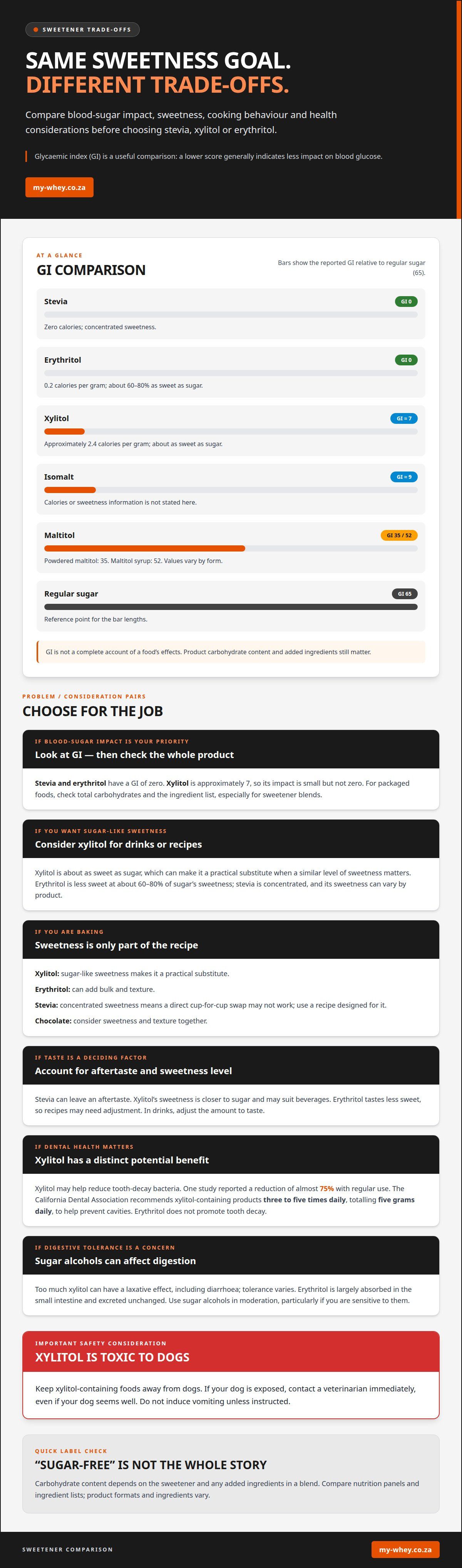
Comparing the health effects of stevia, xylitol and erythritol
These sweeteners differ in more than their glycaemic effects: xylitol may benefit teeth, while sugar alcohols can affect digestion. Stevia is another option for people looking to limit blood-glucose impact.
Xylitol’s Dental Benefits and Digestive Effects
Xylitol may help reduce tooth decay by lowering cavity-forming bacteria in the mouth. One study reported that regular xylitol use reduced these bacteria by almost 75%. The California Dental Association recommends xylitol-containing products three to five times daily, totalling five grams daily, to help prevent cavities. These potential dental benefits distinguish xylitol from stevia, which is not associated with the same oral effect in the supplied facts.
Digestive effects are another consideration. Too much xylitol can have a laxative effect, including diarrhoea. Tolerance varies, so a larger amount may cause discomfort without offering a practical advantage as a sweetener. Consider your intake across different foods, not just what you add to one drink.
Digestive and Gastric Effects
Erythritol is largely absorbed in the small intestine and excreted unchanged. Xylitol, by contrast, can have a laxative effect when intake is too high. Both are sugar alcohols, so moderation can help limit digestive discomfort. These effects are worth considering if you plan to use either regularly, particularly if you’re sensitive to these ingredients.
Reported intake levels associated with gastric side effects differ: the stated figures are more than 50g per day for children and more than 200g per day for adults consuming xylitol. These figures describe xylitol, not erythritol, and should not be treated as recommended amounts. Stevia offers a different comparison: it does not raise blood sugar, while xylitol has a small glycaemic impact. For diabetes meal planning, assess the whole food’s effect on blood glucose, including its other ingredients, rather than judging by sweetener alone.
Comparing xylitol and erythritol
Xylitol and erythritol are both sugar alcohols, but they differ in sweetness, digestion and practical risks. Compare their effects on blood sugar with how you plan to use them.
Xylitol is about as sweet as regular sugar, with a glycaemic index of approximately 7. Erythritol is around 70% as sweet, with a glycaemic index of zero. Neither is an artificial sweetener in the same sense as high-intensity extracts; both are sugar alcohols used as sugar substitutes. Their carbohydrate content and effect on blood sugar are not identical, so consider the full nutrition label, especially in packaged foods.
For dental health, xylitol may help reduce tooth decay by affecting cavity-forming bacteria. Erythritol also does not promote tooth decay. Xylitol has an important safety distinction: it is toxic to dogs, so keep foods containing it away from pets. Erythritol occurs naturally in fruits such as pears and watermelon; manufacturers also produce it through fermentation.
Digestive tolerance may influence your choice. Too much xylitol can have a laxative effect, including diarrhoea. Erythritol is largely absorbed in the small intestine and excreted unchanged, but moderation is still sensible. A study reported an association between erythritol and increased blood-clotting activity; more research is needed to understand this finding.
| Criterion | Xylitol | Erythritol |
|---|---|---|
| Sweetness | About as sweet as sugar | About 70% as sweet as sugar |
| Glycaemic index | Approximately 7 | Zero |
| Dental effect | May help reduce tooth decay | Does not promote tooth decay |
| Digestive consideration | Excess intake may cause laxative effects | Use in moderation |
| Pet safety | Toxic to dogs | No dog-toxicity claim stated here |
Choose xylitol for sugar-like sweetness, but prioritise erythritol when a zero-GI option matters. Compare carbohydrate and sweetener options to find a product suited to your use.
My Whey
My Whey can help you explore supplement options as part of your wider wellness routine. If you’re also considering how nutrition fits your goals, its range includes Creatine Monohydrate, Whey Protein Concentrate 80%, Omega 3 Softgels and Amino Acids. These products serve different purposes from choosing a sweetener, so focus on the option that matches your broader nutritional priorities rather than expecting a supplement to determine which sweetener suits you.
To choose a sweetener, weigh blood-sugar impact, taste, cooking needs and digestive tolerance using the comparisons above. If you’d like to explore My Whey’s supplement range in relation to your goals, contact My Whey.
Make your next choice with confidence
Let your everyday priorities guide your choice. Comparing stevia, xylitol and erythritol can help you find an option that fits your routine, rather than chasing one “best” sweetener. Decide what matters most, whether that’s taste, how you’ll use it or how it fits your wider nutrition goals. Then use that priority consistently when selecting products.
Keep the decision practical: consider where you’ll use the sweetener and whether you enjoy its taste in that setting. If your needs change, you can reassess your choice instead of treating it as permanent. For questions about My Whey and its offerings, contact My Whey with your questions. Take the next step at your own pace and choose what feels right for your goals.
Frequently Asked Questions
Stevia: Plant or Sweetener?
Stevia is a plant-derived sweetener made from the leaves of Stevia rebaudiana. The plant itself is not the same as the concentrated ingredient used to sweeten food or drinks. Sweetener products may contain stevia extract alone or combine it with other ingredients, so check the label to see exactly what you’re adding.
So, which one is healthier?
There isn’t one healthiest choice for everyone. The better fit depends on your priorities and how you tolerate each sweetener. For example, someone focused on reducing calories may weigh stevia differently from someone who values xylitol’s potential dental benefit. Consider taste, digestive comfort and the ingredients in the whole food, too. A sweetener can support a goal, but it doesn’t determine the overall quality of your diet.
What are sugar substitutes?
Sugar substitutes are ingredients used in place of some or all of the sugar in foods and drinks. The term covers different types, including plant-derived stevia compounds and sugar alcohols such as xylitol and erythritol. Some provide sweetness in concentrated amounts; others also add bulk. In packaged foods, a substitute may be part of a blend, so read the ingredients and nutrition information together.
What is erythritol?
Erythritol is a sugar alcohol used as a sweetening ingredient. It occurs naturally in foods such as pears, peaches, soy sauce and watermelon; manufacturers also produce it through fermentation. In packaged products, erythritol may be one ingredient in a sweetener blend. Check the ingredient list and nutrition panel together, particularly if you’re tracking the carbohydrate content of the whole food.
What is xylitol?
Xylitol is a sugar alcohol found in plants and mainly derived from birch trees. It’s used as a sweetening ingredient in foods, including some products intended to support dental health. Keep food containing xylitol away from dogs, as it is toxic to them. If a dog eats it, contact a veterinarian promptly and provide the product packaging or ingredient details.
How do stevia, xylitol and erythritol affect blood sugar and insulin?
Stevia and erythritol have a glycaemic index of zero, and erythritol doesn’t affect blood sugar or insulin secretion. Stevia doesn’t cause a blood-sugar spike. Xylitol has a small blood-sugar impact, with a glycaemic index of approximately 7. If you have diabetes, still check the carbohydrate content of foods labelled sugar-free, as the whole product can contain other carbohydrates.