

Supplements for endurance athletes in South Africa: running fuel
Endurance performance depends on more than a tub of powder. The most useful supplements for endurance athletes in South Africa are those matched to the demands of each session: hydration and electrolytes for fluid planning, carbohydrate blends for fuel during prolonged exercise, and selected training supplements alongside balanced eating and regular activity. Supplements can support a plan, but they don’t replace it.
If you run, you already know that what works for a short, easy outing may not suit a longer or harder effort. Choosing fuel is just as individual. This guide explains what different options do and how to consider them alongside your training, nutrition and goals.
We’ll cover hydration, electrolytes, carbohydrate blends and training supplements, then look at recovery and product selection. You’ll have a clearer way to assess your needs and make practical choices, without treating supplements as a shortcut to consistent training.
Key Takeaways
- Match carbohydrate blends to the duration and demands of your run, and practise using them during training.
- Build your nutrition around balanced meals and regular training; use supplements to support that foundation, not replace it.
- Choose electrolyte products with your hydration needs and exercise conditions in mind.
- Consider caffeine timing and your personal tolerance before using it to support endurance performance.
- Creatine Monohydrate may suit athletes whose training includes strength or high-intensity work, alongside endurance sessions.
Carbohydrate blends for long-lasting exercise
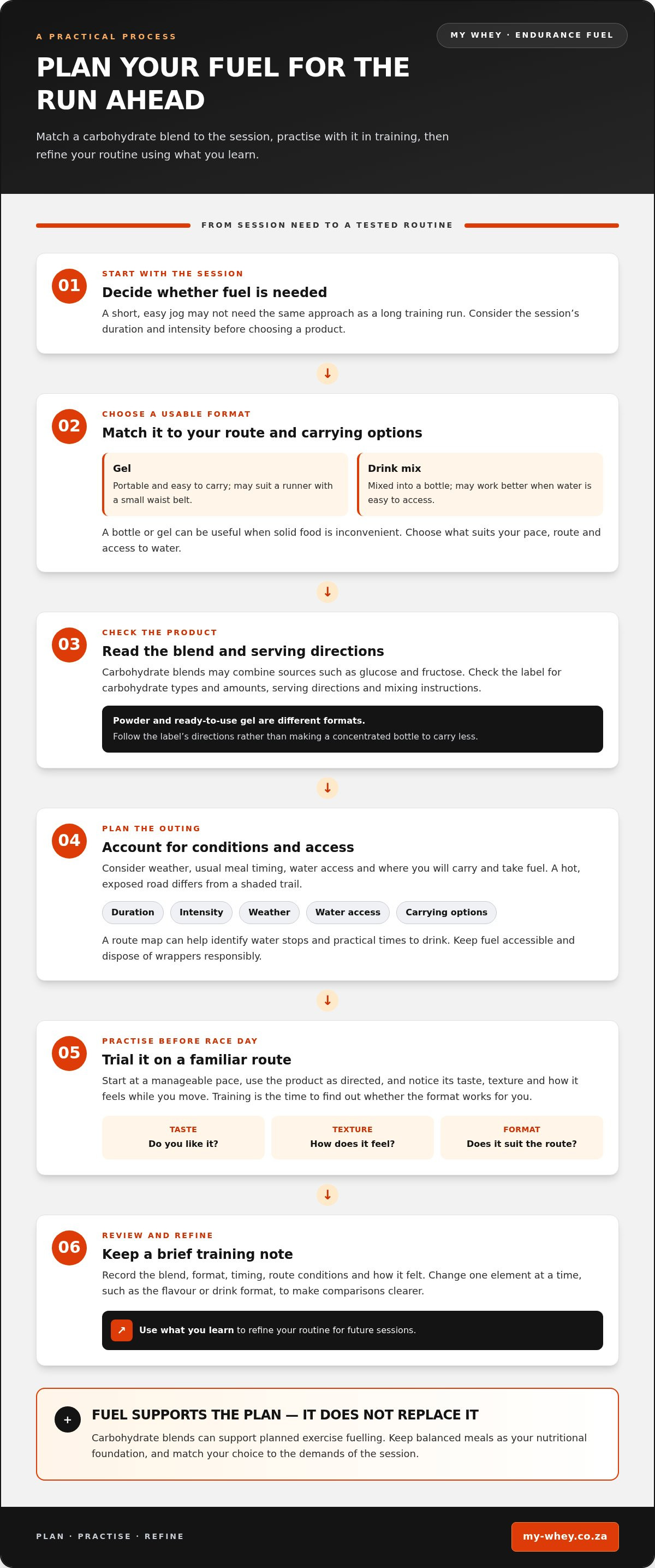
Long runs create a practical need for fuel. A carbohydrate blend offers portable energy during exercise and can be useful when solid food is inconvenient. A bottle or gel, for instance, is easy to carry. Choose a format that suits your pace, route and access to water. Treat it as part of your running plan, not a replacement for meals.
Blends may combine carbohydrate sources such as glucose and fructose. Check the label for the types and amount of carbohydrates, along with the serving directions, before planning a run. Powder mixed into a bottle differs from a ready-to-use gel, so match the format to your route and carrying options. When considering supplements for endurance athletes in South Africa, let the session’s demands guide your choice.
Practise with a product before race day, starting on a familiar route at a manageable pace. Use it as directed and note its taste, texture and how it feels while you move. A gel may suit a runner carrying a small waist belt, while a drink mix may work better when water is easy to access. Use your observations to refine your routine.
Plan fuel around the session rather than choosing at random. A short, easy jog may not need the same approach as a long training run. Consider duration, intensity, weather and your usual meal timing. Before a longer outing, decide where you’ll carry and take fuel. A route map can help you identify water stops and practical times to drink.
South Africa’s varied running conditions call for practical planning. A hot, exposed road differs from a shaded trail. Keep fuel accessible and carry a way to dispose of wrappers responsibly. If you use powder, follow the label’s mixing instructions rather than making a concentrated bottle to reduce what you carry. Taste and texture matter too, because they can affect whether you use a product consistently.
Keep a brief training note after each trial. Record the blend, format, timing, route conditions and how it felt. Change one element at a time, such as the flavour or drink format, to make comparisons clearer. A practical plan for supplements for endurance athletes in South Africa starts with a defined session need, not a product trend. Carbohydrate blends can support planned exercise fuelling, while balanced meals remain the foundation.
Combining supplements with balanced eating and regular exercise
Build your routine around meals, training and recovery. A supplement should address a specific need, not replace breakfast or regular exercise. For example, a runner might use a carbohydrate drink during a long session, while everyday meals provide the broader nutritional foundation. Start by identifying the session or dietary gap you want to address.
Which supplement certification programmes reduce the risk of banned substances? Independent, sport-specific batch-testing programmes can reduce contamination risk, but they cannot eliminate it. Look for current certification information for the exact product and batch, rather than relying on a general quality claim.
What are South African anti-doping rules for supplements and athlete strict liability? Athletes remain responsible for substances found in their samples, even if they took a supplement unknowingly. Supplement use does not remove that responsibility, so assess ingredients and contamination risks carefully.
Use a simple decision process before adding anything:
- Define the purpose. Link the product to a clear training or nutrition need.
- Read the label. Review ingredients, serving directions, and warnings.
- Assess testing. Check whether the exact product and batch have sport-specific certification.
- Introduce one change. Keep other parts of your routine stable, so you can judge its effect.
That final step matters. If you add a new supplement, change your meals and increase training all at once, you won’t know which change affected your routine. A training diary can track products, meals, sessions and how you felt. Include herbal supplements too: natural origin alone does not establish suitability for sport or freedom from prohibited substances.
Pair supplements with regular, progressive exercise. A runner preparing for a longer event can organise weekly sessions around easy runs, harder efforts and rest, while keeping meals consistent with that schedule. A supplement cannot make an abrupt training increase appropriate or compensate for missed meals. Review your routine when your event, training load or diet changes.
Where can athletes buy tested sports supplements in South Africa? Choose a South African supplier that provides clear product information and lab-testing details. Browse lab-tested wellness products as one local option, and assess each product against your needs and anti-doping responsibilities. A testing claim and a sport-specific certification are not interchangeable. Read both carefully before making a choice.
Electrolyte supplements
Electrolytes are minerals found in body fluids. Sports products commonly contain sodium, potassium or chloride, and some also include magnesium. The blend varies by product, so check the label to see which minerals it provides. Don’t assume every hydration powder contains the same ingredients. Compare serving directions, mixing instructions and intended use.
Sodium is often prominent in exercise hydration products, with potassium and chloride sometimes included too. These ingredients don’t make every product suitable for every run. A short, easy jog and a long, hot outing create different practical demands. Consider your route, expected conditions, water access and how much you typically sweat when choosing a product.
Try a product during training, not for the first time on race day. Choose a familiar route and follow the label’s mixing directions. Note the taste, how easy it is to carry and whether you’ll drink it consistently. Powder may suit a runner carrying a bottle; a tablet may be easier to pack, depending on its directions.
Use this simple selection process:
- Check the ingredients. Identify sodium and other listed minerals.
- Review the serving directions. Mix the product as instructed.
- Match the format to your route. Consider bottles, refill points, and carrying space.
- Practise in training. Record the product and conditions in your running notes.
Keep hydration separate from assumptions about performance. An electrolyte product supplies the ingredients listed on its label; it doesn’t replace a suitable running plan or balanced meals. A carbohydrate drink may also contain electrolytes, while a separate electrolyte product may focus on minerals. Compare labels before combining products so you know what your planned drink already provides.
South African runners encounter varied conditions, from exposed roads to shaded trails. Heat, humidity, pace, clothing and access to water can all affect a practical hydration plan. Plan a route with refill points if carrying enough fluid becomes difficult. On a familiar loop, place water somewhere you can reach safely. Choose a product format that suits the route rather than carrying an unsuitable mix.
Keep a short record after each test. Note the product, mixing method, route, weather and how much you drank. Compare similar runs before changing your approach. If a flavour puts you off, choose a format you can use consistently. If the label lists several minerals, review their amounts and serving instructions. Reading labels and practising your plan make electrolyte supplements easier to use purposefully.
Endurance-training supplements
Choose a supplement for a defined training purpose. Match its use to your event, session and personal routine.
Choosing by event duration and goals
How can athletes choose supplements based on event duration and training goals? Start with the event’s demands, then identify a specific need. A long run may call for portable fuel, while strength-focused training may prompt consideration of creatine. Review the ingredient, format and label directions. Trial one change during training, then record how it fits your routine.
A specialised training supplement may not be necessary for a short, easy run. For a longer event, consider how you’ll carry and use fuel. For repeated hard efforts, assess whether your goals include strength or power work. These examples help define a purpose; they don’t make one product suitable for every runner.
Keep your decisions tied to your training plan. If your goal is to improve consistency, prioritise regular sessions and recovery habits first. If you add a supplement, choose one that addresses a clear need. Record the product, session type and your response. Changing one factor at a time makes your notes easier to interpret.
Doses of creatine, beta-alanine and nitrate
What are safe creatine, beta-alanine and nitrate doses for endurance athletes? There isn’t one dose that applies safely to every product and athlete. Follow the exact product label, and assess the ingredient, formulation, health conditions and medicines before use.
Creatine Monohydrate, beta-alanine and nitrate are distinct ingredients. Don’t assume their directions or intended uses are interchangeable. Check the serving information for the specific product, and avoid combining products without accounting for overlapping ingredients. A label gives product-specific directions, not an individual assessment of suitability.
What are the risks, side effects and interactions of common endurance supplements? Possible concerns depend on the ingredient, serving, formulation, health conditions and medicines. Review warnings and ingredients, especially before combining a supplement with prescribed treatment. Keep a record of any change and stop using a product if you experience an unexpected reaction.
Practical checks help reduce avoidable mistakes:
- Read the full label. Check ingredients, serving directions and warnings.
- Keep products identifiable. Save the packaging and batch details.
- Introduce one product at a time. Note the training session and any reaction.
- Review the goal. Remove products that don’t serve a clear purpose.
A runner preparing for a road race may have different needs from a trail runner training for steep climbs. Event demands, session structure and personal tolerance all shape a sensible plan. Use those factors to guide your choices, rather than choosing a supplement because it is popular or labelled for endurance.
What are the recommended caffeine doses and timing for endurance performance?
Caffeine can be part of an endurance routine, but one dose won’t suit every runner. Product strength, habitual intake, event timing and individual response all matter. Check the label first, and count caffeine from coffee, tea, energy drinks and supplements together.
No specific dose or timing is provided here. Follow the product’s serving directions and consider your usual caffeine intake before adding another source. A concentrated product and a cup of coffee can contribute differently, so compare their labels rather than treating them as interchangeable.
Timing depends on the product format and your event plan. A runner using caffeine before a morning race should trial that routine during training. If you take it later, consider how it fits your sleep schedule. Don’t introduce caffeine for the first time on race day.
Use a structured trial:
- Record your baseline. Note your usual coffee, tea, or energy drink intake.
- Read the label. Check caffeine per serving and the recommended directions.
- Test during training. Choose a familiar session, not a key event.
- Track your response. Record timing, product, session and how you felt.
- Review the pattern. Avoid adding several caffeine sources at once.
Keep your trial consistent. For example, test the same product before comparable training sessions. If you change the product, timing and breakfast together, the result becomes harder to interpret. A training diary helps separate those variables. Include the session’s intensity and your usual caffeine intake.
Consider the whole day, not just the start line. Caffeine from morning coffee may overlap with a pre-run product, while a late training session may leave less time before bed. Check serving information and don’t exceed the product directions. More is not a reliable way to improve a race plan.
Individual response matters. A routine that feels manageable for one runner may not suit another. If caffeine affects your comfort or training, stop the trial and reassess your routine. Consider medicines and health conditions before use, as these can affect whether caffeine is appropriate.
Caffeine is optional, not a substitute for training, meals or planned hydration. Keep your core routine steady before testing it. For broader training nutrition options, explore supplement choices that fit your wider routine, and assess each product by its ingredients and purpose.
Follow the product’s serving directions and trial your planned timing during training, since the suitable approach varies by product and individual response.
My Whey: Creatine Monohydrate
My Whey’s Creatine Monohydrate may suit runners whose training also includes strength or high-intensity work. It complements a broader training plan rather than replacing running fuel, hydration or balanced meals. Consider whether it fits your specific goals and follow the product’s serving directions.
Creatine is not a substitute for event-specific preparation. Runners focused on fuelling long sessions should keep their attention on nutrition and hydration. If strength work forms part of your programme, Creatine Monohydrate may be relevant alongside that routine.
Explore My Whey’s Creatine Monohydrate, or contact My Whey to learn more.
Make your next training block more deliberate
Use your next training block to build a routine you can assess, not just a list of products to try. Set a clear goal, keep a brief record of your choices and review what fits your running and everyday eating. This measured approach helps you make practical decisions about supplements for endurance athletes in South Africa, rather than adding products without a defined purpose.
My Whey offers Creatine Monohydrate, Whey Protein Concentrate 80% and Omega 3 Softgels. Consider each in relation to your own goals and the rest of your routine. Keep your choices focused, and let consistent training remain central to your progress.
Contact My Whey about endurance supplements to explore your options. Take your next step with a plan that feels clear, considered and ready for your training.
Frequently Asked Questions
Which supplements have the strongest evidence for endurance athletes?
Carbohydrate products and caffeine have a direct role in supporting endurance performance. Their usefulness depends on the event and the athlete’s response, so assess them separately rather than combining several new products. For example, test one product during a representative training session and note how it fits your routine. Creatine serves a different purpose, particularly when training also includes strength or repeated high-intensity work.
Which supplements help prevent cramps or improve hydration during long events?
No supplement can be relied on to prevent every exercise-related cramp. An electrolyte drink can provide the minerals listed on its label, but it is not a guaranteed cramp remedy. Check the ingredients and directions, then consider how the product fits your planned fluid intake. If cramps recur or feel unusual, don’t treat them solely with supplements; seek appropriate medical advice.
Which supplement certification programs reduce the risk of banned substances?
Independent, sport-specific batch-testing programmes can reduce contamination risk, but cannot eliminate it. Check current certification for the exact product and batch.