

Supplements to Avoid Taking Together and When to Take Them
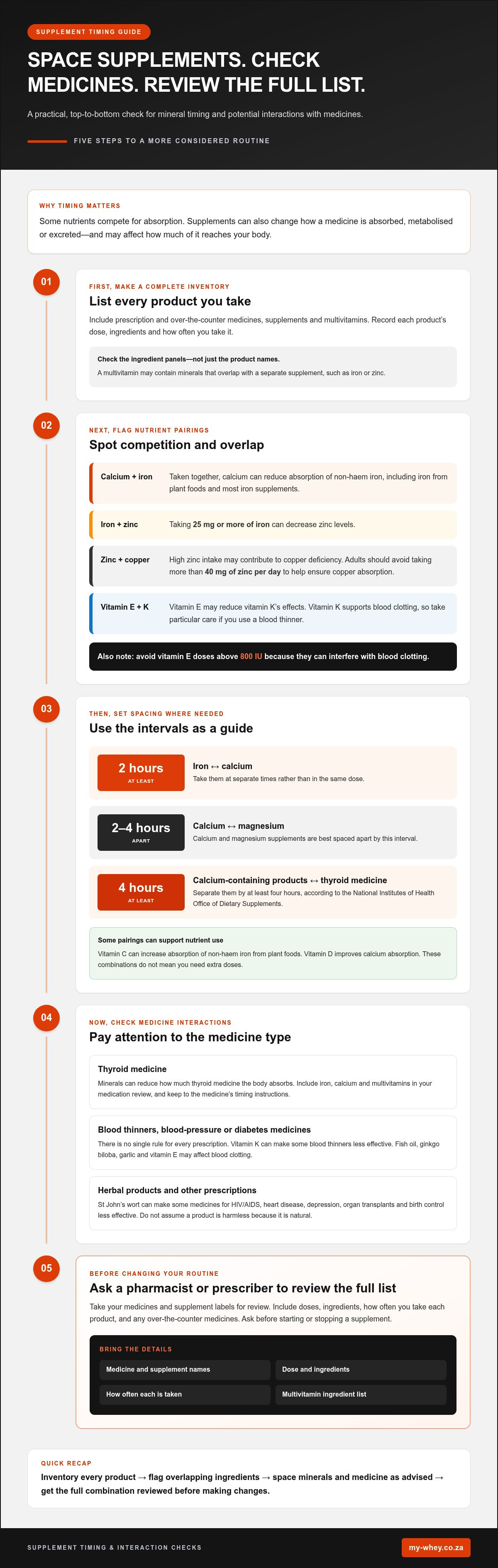
The combinations of supplements to avoid taking together include iron and calcium, which should be separated by at least two hours. Calcium-containing supplements should also be taken at least four hours apart from thyroid medication, according to the National Institutes of Health Office of Dietary Supplements. Supplements can affect how some medicines work, so timing matters beyond minerals alone.
It’s sensible to wonder whether a routine that feels healthy could work against you. The answer depends on what you take: some nutrients compete for absorption, while others can change a medicine’s effect.
This guide covers combinations that need attention, how to time iron and calcium, and what to consider if you take thyroid or blood-pressure medicine. You’ll find practical ways to review supplement timing and identify when a pharmacist or healthcare professional should check your full list.
Key Takeaways
- Plan iron and calcium at separate times, and learn which other minerals may compete for absorption.
- Review supplement timing alongside thyroid or blood-pressure medicines, especially when minerals or herbal products are involved.
- Understand why vitamin E and vitamin K can affect each other and what that may mean for blood clotting.
- See how iron’s daily upper limit can inform a safer routine, and when creatine may fit your supplement goals.
Can I take iron and calcium together?
Vitamin D, calcium and magnesium can be taken together, but timing may affect absorption. Vitamin D improves calcium absorption, while calcium and magnesium supplements are best spaced apart by 2 to 4 hours.
Calcium and iron can compete for absorption when taken together. Calcium can reduce absorption of non-haem iron, including iron from plant foods and most iron supplements. Separate the supplements rather than taking them in the same dose. Iron can also affect zinc: according to the National Institutes of Health Office of Dietary Supplements, taking 25 mg or more of iron can decrease zinc levels.
Zinc and copper supplements may affect each other’s absorption. High zinc intake may contribute to copper deficiency. Adults should avoid taking more than 40 mg of zinc per day to help ensure copper absorption, according to the National Institutes of Health Office of Dietary Supplements. Check the total zinc in a multivitamin and any separate zinc product before combining them.
Other combinations may need attention. Vitamin C can increase absorption of non-haem iron from plant foods, while high-dose vitamin C supplements may be better separated from vitamin B12. Calcium can also affect zinc, iron and magnesium absorption. Read the labels on each product, including multivitamins, to spot overlapping minerals and vitamins. Soluble vitamins and minerals can also interact differently with food and other nutrients.
Supplements may affect how a prescription medicine is absorbed, metabolised or excreted, changing how much reaches your body. For example, calcium and magnesium can bind to some medicines in the gut. Keep an up-to-date list of your supplements and medicines, and ask a pharmacist or prescriber to review them before changing what you take. This is particularly important when adding a mineral supplement alongside regular treatment.
Supplement interactions with thyroid and blood-pressure medicines
Minerals can interfere with thyroid medicine by reducing how much the body absorbs. Calcium-containing products should be taken at least 4 hours apart from thyroid medication, according to the National Institutes of Health Office of Dietary Supplements. Iron supplements can also affect medicine absorption, so include iron, calcium and multivitamins in your medication review.
With blood thinners, blood-pressure medicines or diabetes medicines, there is no single rule for every prescription. Vitamin K can make some blood thinners less effective, while fish oil, ginkgo biloba, garlic and vitamin E may affect blood clotting. Supplements can also alter how a medicine is absorbed, metabolised or excreted, potentially changing its effects. Tell your prescriber or pharmacist about every product you take, including minerals and multivitamins.
St John’s wort can make some medicines for HIV/AIDS, heart disease, depression, organ transplants and birth control less effective. This is important if you take several prescriptions, including heart or blood-pressure treatment. Herbal products can interact with medicines, so don’t assume a supplement is harmless because it is natural. Show the pharmacist the product label and provide the medicine’s name.
In South Africa, take your medicine list and supplement labels to a pharmacist or prescriber to discuss possible interactions. Include each product’s dose, ingredients and how often you take it. Mention over-the-counter medicines as well. A multivitamin may contain minerals that compete with a separate iron supplement, so list its full ingredients, not just its brand name.
Before starting or stopping a dietary supplement, ask a pharmacist or prescriber to review it alongside your medicines. For blood-pressure or diabetes treatment, relevant factors include the medicine’s active ingredient, the supplement’s ingredients and your current regimen. Keep to the timing instructions for thyroid medication, and note any changes to your supplement intake so you can discuss them at your next medicine review.
What Vitamins Should You Avoid Taking Together?
Vitamin E and vitamin K need particular care, while some other combinations can support nutrient absorption. Consider the dose, your diet and whether products contain overlapping ingredients.
Vitamin E and vitamin K
Vitamin E may reduce vitamin K’s effects, and high doses of vitamin E can lower vitamin K levels. This matters because vitamin K supports blood clotting, so combining supplements may affect bleeding risk. Separate vitamin E and vitamin K supplements rather than taking them together, and pay close attention if you use a blood thinner. Avoid vitamin E doses above 800 IU because they can interfere with blood clotting.
Vitamin A supplements and rich foods
Vitamin A supplements add to the vitamin A you get from foods such as liver and liver pâté. As vitamin A is fat-soluble, excess intake can build up in the body; very high amounts may cause liver damage, weaker bones and birth defects. If you take vitamin A supplements, or are pregnant, limit liver and liver pâté to no more than once a week. Include food sources when reviewing your total intake.
Not every vitamin combination needs to be separated. Vitamin C helps the body absorb non-haem iron from plant foods, so fruit or vegetables rich in vitamin C can complement beans, lentils or leafy greens. Vitamin D improves calcium absorption, and magnesium plays a role in vitamin D activation and metabolism. These combinations support nutrient use, but don’t mean you need extra doses.
Check the ingredient panels on a multivitamin and separate products before combining them. For example, taking a nutrient in both can push total intake too high over time. Vitamins A, D, E and K are fat-soluble and are absorbed more easily with food containing some fat. By contrast, high-dose vitamin C and vitamin B12 supplements may be better taken at different times. Balance combinations with your diet and medicines, not just the number of products.
Iron and calcium timing
Iron and calcium supplements can compete for absorption when taken together. Separate them by at least 2 hours to reduce this effect. This timing matters for iron supplements and calcium tablets, and for multivitamins containing either mineral. Check the labels before taking products together.
Calcium, magnesium and zinc also need thought. Calcium and magnesium supplements should be spaced 2 to 4 hours apart. Separate zinc from calcium by 2 to 4 hours, and keep zinc at least two hours from high-dose iron. These minerals can compete in the gut, so taking them at different times may support absorption.
Food affects iron timing too. Iron is best absorbed on an empty stomach, but taking it with food can help prevent stomach upset. One suggested schedule is at least 30 minutes before lunch or two hours after breakfast. Vitamin C in plant foods can increase non-haem iron absorption, whilst calcium-rich foods may reduce it. Consider the full meal, not just the supplement.
Keep total intake in view. The upper limit for iron is 45 mg daily for adults, according to the National Institutes of Health Office of Dietary Supplements. Adults should avoid taking more than 40 mg of zinc per day to help ensure copper absorption, according to the same organisation. These limits concern total daily intake, so add together minerals from multivitamins and separate supplements.
Plan timing around your prescribed routine, meals and any stomach effects. For example, take iron separately from a calcium supplement, then schedule magnesium at another time. If a medicine has timing instructions, include them in your plan rather than changing its schedule on your own.
Keep your supplement routine clear and organised. Explore herbal supplement options as part of your wider wellness choices.
My Whey: Creatine Monohydrate
My Whey offers Creatine Monohydrate for people considering creatine as part of their supplement routine. After reviewing possible interactions and medicine timing, you can explore it if creatine suits your goals. Keep supplement choices separate from treatment decisions: supplements do not replace prescribed medicine or personalised medical advice.
Build your routine around what you already take. Read product labels, note overlapping ingredients, and include every supplement when discussing your intake with a pharmacist or healthcare professional. My Whey also offers Whey Protein Concentrate 80%, Omega 3 Softgels and Amino Acids, giving you options across different supplement categories without needing to combine products automatically.
Visit my-whey.co.za to explore My Whey’s supplement range, or contact My Whey with your enquiry.
Build a routine that fits your goals
Start by clarifying what you want from your supplement routine. A written list can help you spot duplicate ingredients, make deliberate choices and discuss possible medicine interactions with a pharmacist. Use it to distinguish supplements to avoid taking together from products that may simply meet different needs.
My Whey offers Creatine Monohydrate, Whey Protein Concentrate 80% and Omega 3 Softgels. Consider these options in the context of your goals and existing routine, rather than adding products by default. A focused approach makes it easier to understand what you take and why.
For questions about My Whey’s supplement range, ask My Whey about your supplements. Take your time, make informed choices and build a routine that feels right for you.
Frequently Asked Questions
What Vitamins Shouldn’t Be Taken Together?
Vitamin E and vitamin K supplements need particular care, especially if you take a blood thinner. High-dose vitamin C may also affect vitamin B12 availability, so avoid doubling up without checking product labels. The combinations of supplements to avoid taking together depend on your full routine, including fortified foods and multivitamins. Record each product’s ingredients and discuss them with a pharmacist if you use regular medicine.
Can You Take All Your Vitamins At The Same Time?
Not always; some vitamins and minerals are better taken at different times. For a practical routine, take fat-soluble vitamins with a meal and separate supplements that compete for absorption. For example, don’t automatically take every tablet with breakfast if it includes calcium and you’re taking iron. Follow each product’s label and account for medicine instructions when choosing a time.
What About Multivitamins?
A multivitamin can simplify your routine, but it may not suit every combination or dose. Check its ingredients before adding separate products, particularly iron, calcium, zinc or vitamin A, to avoid unintentionally doubling up. A multivitamin does not prevent medicine interactions. Keep the label, or a clear photograph of it, with your medicine list for a pharmacist to review.
Can I take all my supplements at the same time to keep things simple?
Taking everything together may be convenient, but it can make interactions and duplicate ingredients harder to spot. List each supplement and medicine, then note the timing instructions on the labels. If a product contains several nutrients, include those ingredients too. A pharmacist can review your full routine and help identify which items need separate timing.
How long should I separate conflicting supplements?
There isn’t one interval that applies to every pair. A two-hour gap is commonly used for minerals that may compete for absorption, while calcium and magnesium are often spaced 2 to 4 hours apart. Use the specific interval relevant to the ingredients rather than applying one timetable to every supplement. Medicine instructions may require a different schedule, so include them in your plan.
How long should I wait between antagonistic supplements?
Use interaction guidance and product instructions to choose the right gap; “antagonistic” doesn’t mean every pair needs the same spacing. For example, separating calcium from iron is different from separating calcium and magnesium. Write down your supplements alongside your usual meal and medicine times, then check for conflicts. If you take prescription medicines, ask a pharmacist to review the schedule before changing their timing.