

Whey concentrate vs isolate: Compare protein and price
For beginners, whey concentrate can be a sensible starting point, whilst isolate offers more protein with fewer carbohydrates per calorie. In the whey concentrate vs isolate for beginners comparison, a 100-calorie serving provides 18 grams of protein from concentrate and 23 grams from isolate. Isolate generally costs more, so the higher protein content may matter less than your budget and how well you tolerate dairy.
It’s easy to assume that the powder with more protein is automatically the better choice. Both whey concentrate and isolate can support muscle building when paired with resistance training. The practical differences are protein density, lactose and other nutrients, and cost.
This guide explains those differences in plain terms. You’ll see how concentrate and isolate compare, what to consider if you’re sensitive to lactose, and how to choose an option that suits your nutrition goals and budget in South Africa.
Key Takeaways
- Compare protein per serving alongside carbohydrates, fat and lactose to see what each powder contributes to your diet.
- Use your tolerance for dairy as a key factor: extra filtration leaves isolate with less lactose than concentrate.
- Match your choice to your protein needs; both options can support muscle building when paired with resistance training.
- Weigh isolate’s higher protein density against its generally higher cost, rather than choosing by protein percentage alone.
- Keep protein powder and creatine in perspective: they are different supplement options, so choose according to the goal you want to support.
Whey Protein Isolate vs Concentrate: What's The Difference?
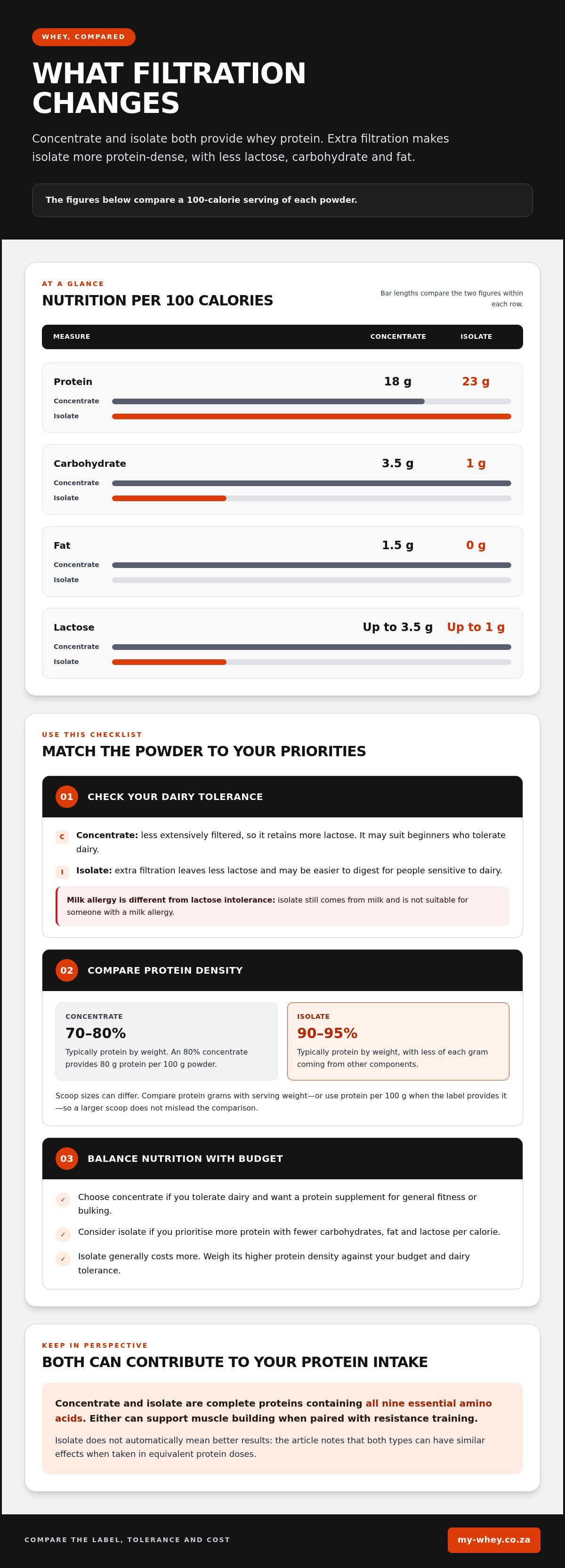
Filtration separates whey concentrate from isolate, changing protein density and the amounts of lactose, fat and carbohydrates. The comparison below uses a 100-calorie serving, so you can compare the nutritional differences on the same basis.
| Option | Protein per 100 calories | Carbohydrate per 100 calories | Fat per 100 calories | Lactose per 100 calories |
|---|---|---|---|---|
| Whey concentrate | 18 grams | 3.5 grams | 1.5 grams | Up to 3.5 grams |
| Whey isolate | 23 grams | 1 gram | 0 grams | Up to 1 gram |
These figures show why isolate may suit someone seeking more protein with less lactose, fat and carbohydrate per calorie. Choose according to your dietary needs, tolerance and budget, rather than protein content alone.
Concentrate: lactose and digestion
Whey concentrate is filtered less extensively than isolate, so it retains more lactose and other components. In the 100-calorie comparison, it contains up to 3.5 grams of lactose, alongside 3.5 grams of carbohydrate and 1.5 grams of fat. It can work for beginners who tolerate dairy, but lactose sensitivity may make it a less comfortable choice.
Isolate: lactose and digestion
Extra filtration removes most of isolate’s fat, carbohydrates and lactose. The comparison lists up to 1 gram of lactose per 100 calories, and isolate may be easier to digest for people sensitive to dairy. It still comes from milk, so lower lactose does not make it suitable for someone with a milk allergy.
How much whey protein should a beginner take per day? A beginner may take 1-2 scoops daily, depending on their protein needs. Treat that as a supplement to food, rather than a fixed amount that suits everyone.
When should beginners take whey protein, and does timing matter? Whey can fit in the morning, as a snack, before bed or after exercise. A serving within 30 minutes after exercise is one suggested approach, but consistent protein intake matters more than a narrow timing window.
What are the possible side effects and risks of whey protein? Lactose in concentrate may cause digestive discomfort for someone sensitive to dairy. Milk allergy is different from lactose intolerance, and isolate is still derived from milk.
Which whey protein brands in South Africa are reliable and third-party tested? Look for a South African brand that clearly identifies the protein type and provides accessible information about independent testing. A brand name alone doesn’t tell you what a serving contains.
How can you compare whey protein labels and spot misleading claims? Compare protein per serving with the serving weight, then check the carbohydrate, fat and ingredient details. For example, a larger scoop may appear to provide more protein simply because it weighs more.
Protein content
Processing affects how much protein each powder contains by weight. When comparing whey concentrate vs isolate for beginners, start with protein per serving, then consider what else the powder contains.
Concentrate processing and protein content
Whey protein concentrate is made by filtering liquid whey, with less processing than isolate. Its protein content typically falls between 70 and 80% by weight. A concentrate labelled 80% therefore provides 80 grams of protein per 100 grams of powder. The remaining weight comes from other components, including carbohydrates and fat, so concentrate is not pure protein.
Isolate processing and protein content
Whey protein isolate undergoes additional filtration to remove more fat, carbohydrates and lactose. It typically contains 90-95% protein by weight. This higher proportion means more of each gram of powder comes from protein. It can suit someone prioritising protein intake whilst limiting other macronutrients, though the percentage alone doesn’t establish which powder best fits a diet.
Both types are complete proteins containing all nine essential amino acids. These amino acids support muscle building and repair, so either powder can contribute to your protein intake. A whey concentrate vs isolate for beginners decision should therefore be based on the nutrition panel, not just the headline percentage. Check the protein listed for the serving you expect to use.
Serving sizes can differ between powders. A larger scoop may provide more protein simply because it contains more powder, not because its protein percentage is higher. Compare the serving weight with the protein grams, or use protein per 100 grams when the label provides it. This gives a clearer measure of protein density.
Processing also affects which components remain in the powder. Concentrate retains compounds such as immunoglobulins, which can be lost during isolate processing. Isolate’s extra filtration leaves less fat and carbohydrate. This doesn’t mean isolate automatically delivers better results: concentrate and isolate can have similar effects when taken in equivalent protein doses.
For a practical label check, note protein per serving, serving weight and carbohydrates. A front-of-pack “high protein” claim is less useful without those details. A whey concentrate 80% option gives a clear percentage to compare against other labels, but consider the full nutritional panel before choosing.
Choosing between concentrate and isolate for dietary sensitivities
Choose by weighing dairy tolerance against your nutrition priorities and training goals. Processing changes the lactose content and the proportion of protein, which accounts for the differences between whey options.
Choosing concentrate for dietary needs
Concentrate suits individuals who tolerate dairy and want a protein supplement for general fitness or bulking. An 80% concentrate provides about 80 grams of protein per 100 grams of powder, alongside other components. Its lactose content is higher than isolate’s, so it’s less suitable when lactose sensitivity is a concern. Review the label alongside your usual dietary intake.
Choosing isolate for dietary needs
Isolate’s extra processing removes most lactose, fat and carbohydrates, making it a practical option for people sensitive to dairy. It typically contains 90-95% protein by weight, so it offers higher protein density. That can help when you’re controlling calorie intake or prioritising lean muscle growth. Isolate still comes from milk, so distinguish lactose sensitivity from other dietary restrictions.
Set your priority before comparing products. If lactose is your concern, check the lactose information and choose the type with less. If your aim is general fitness or bulking, concentrate can be suitable when dairy causes no issues. These are different decision paths, not a rule that one powder works for every beginner.
Training goals also shape your choice, but neither powder replaces resistance training. Both whey concentrate and isolate provide complete protein with all nine essential amino acids, and both can support muscle building when paired with resistance training. At equivalent protein doses, their effects can be similar. Isolate’s higher protein percentage alone doesn’t make it automatically better for muscle.
Check the full nutrition panel, not just the front label. Compare protein, carbohydrates, fat and lactose for the serving you’ll actually use. A serving with more protein may also contain a different weight of powder, so compare like with like. This helps you match a supplement to your dietary needs without relying on broad claims.
Use this simple decision guide:
- Choose concentrate for general fitness or bulking if you tolerate dairy and want a less extensively filtered option.
- Choose isolate if reducing lactose, carbohydrates or fat is a priority, or you want more protein by weight.
- Compare both if your goal is muscle growth, since equivalent protein intake can come from either type alongside resistance training.
For beginners, the practical choice between whey concentrate and isolate is the one that fits your tolerance, nutrition priorities and training plan.
Cost and affordability
Whey isolate generally costs more than concentrate because it undergoes extra processing. To compare value in South Africa, look beyond the tub price and assess how much protein each serving provides.
Concentrate cost considerations
Whey protein concentrate is often a cost-effective starting option for beginners who tolerate dairy. Compare the package price in rand with the number of servings on the label, then check the protein per serving. A lower price alone doesn’t show value if serving sizes differ. Concentrate’s less extensive processing helps explain its relative affordability compared with isolate.
Isolate cost considerations
Whey isolate generally costs more because it undergoes additional filtration and contains a higher proportion of protein by weight. That premium may be worthwhile if you prioritise more protein with fewer carbohydrates or need less lactose. If these features don’t address a specific nutrition need, the extra cost may not offer practical value for your routine.
Use the nutrition panel to compare products like for like. First, divide the package price by the number of servings stated on the label. Then compare the cost per serving with the protein grams in that serving. This gives a clearer picture than comparing tubs with different weights or scoop sizes.
For a closer comparison, calculate the cost per gram of protein by dividing the serving cost by the protein grams listed for that serving. This is a comparison method, not a claim that the lowest figure is always best. Check carbohydrates, fat and lactose too, as these details affect whether the powder suits your dietary needs.
Your budget also depends on how well the powder fits your routine. Concentrate can be a sound choice for general fitness or bulking if you tolerate dairy. Isolate may make more sense if its lower lactose or higher protein density addresses a clear nutrition priority. Neither option guarantees muscle growth or strength gains: resistance training and your overall protein intake matter alongside a supplement.
Before buying, use this practical checklist:
- Compare package value: use the listed servings, not tub size alone.
- Compare protein value: calculate cost per gram from the label.
- Match the formula to your needs: weigh digestion and nutritional priorities against the added cost.
For beginners, the most affordable option is the one that fits both your budget and intended use. If concentrate provides the protein you need and suits your digestion, paying more for isolate may not be necessary. If isolate addresses a specific dietary priority, weigh its cost against that benefit rather than judging by the tub price alone.
Differences between whey isolate and concentrate
The distinction begins with cheesemaking: whey is the liquid left after milk proteins separate into curds. Filtration then produces concentrate or isolate, changing the powder’s composition and processing, as well as its cost. Both remain complete proteins.
Whey concentrate differences
Whey concentrate retains more of whey’s original components after filtration. An 80% concentrate supplies about 80 grams of protein per 100 grams of powder, alongside other nutritional components. It can also retain immunoglobulins, compounds that may be lost during isolate processing. Concentrate includes minerals such as calcium, magnesium, zinc, potassium and sodium.
Whey isolate differences
Whey isolate undergoes further filtration, which removes more fat, carbohydrates and lactose. It typically contains 90-95% protein by weight, so a greater share of the powder is protein. Its extra processing also means some components found in concentrate, including immunoglobulins, can be lost. Isolate generally costs more than concentrate.
Both options contain all nine essential amino acids. These amino acids support muscle building and repair, making either type a source of complete protein. The practical difference is the proportion of protein and other components in the powder, not a different set of essential amino acids.
Digestion is another point of comparison. Both concentrate and isolate digest rapidly, although isolate is often absorbed more quickly because it is more highly purified. That difference doesn’t make timing the only factor in recovery. Total protein intake and resistance training remain relevant to muscle building, whether your protein comes from concentrate or isolate.
For people considering lactose intolerance, isolate’s extra filtration reduces lactose and may make it easier to digest. However, lactose intolerance and milk allergy are not the same. Whey comes from milk, so lower lactose content doesn’t mean an isolate is dairy-free.
Neither processing type automatically produces better results. Whey isolate and concentrate can have similar effects when taken in equivalent protein doses. Compare the amount of protein you actually plan to consume rather than assuming a higher percentage guarantees more muscle growth or better recovery.
Use the distinction to guide your choice: concentrate retains more of whey’s components, whilst isolate prioritises protein density and removes more lactose, fat and carbohydrates. If you want to compare whey options based on these differences, explore whey protein choices.
My Whey: Creatine Monohydrate
My Whey’s Creatine Monohydrate is a separate supplement for readers considering options beyond protein powder. Whey helps add protein to your diet; creatine is a different type of supplement, not a substitute for choosing between concentrate and isolate. Consider it as part of a training and nutrition plan, rather than as a way to address a protein shortfall.
If protein is your priority, My Whey also offers Whey Protein Concentrate 80%. Choose based on the needs discussed above: protein content, dairy tolerance and budget. Keep each supplement’s role clear, and focus on the one that fits your current goal.
Visit My Whey to explore the available supplement options.
Make your next choice with confidence
Set a clear priority before adding anything to your routine. You might want to keep supplement choices simple, find a powder that suits your dietary preferences, or build a consistent approach to training nutrition. A specific goal makes it easier to decide what belongs in your plan and what can wait.
For the whey concentrate vs isolate for beginners decision, focus on what you’ll use consistently rather than chasing a perfect formula. Consider how each option fits your usual meals, training habits and budget. You can review your routine as your needs change. Practical choices are easier to maintain than plans built around every possible supplement.
If you’re ready to explore your options, ask My Whey about your options. Take the priorities you’ve identified into that conversation and choose your next step at your own pace. You’re in a stronger position to make a considered decision, and that’s a solid place to begin.
Frequently Asked Questions
Final Verdict: What’s the Best Whey Protein for Beginners?
Whey concentrate is a sensible starting choice for beginners who tolerate dairy and want a cost-effective protein powder. Isolate may suit you better if reducing lactose or increasing protein per weight matters more. For example, someone without dairy sensitivity and with a general fitness goal may prefer concentrate, while someone monitoring lactose may favour isolate. Choose according to your dietary needs and the product’s nutrition label.
Is Taste and Texture Different?
The two powders can differ in taste and texture, depending on the formulation, flavouring and how you mix them. For example, a powder mixed with water may taste and feel different from one blended with milk, oats or fruit. If taste affects whether you’ll use a supplement consistently, try it in a familiar drink and adjust the liquid to suit you.
What About Price and Value?
Concentrate generally costs less than isolate, but compare more than the tub price. Check the number of servings and the protein per serving, then consider how much powder you’ll use to meet your dietary needs. A lower-priced tub may not be better value if its serving size or protein content differs. Compare equivalent products and use the label figures to guide your decision.
What Are the Main Types of Whey Protein?
The two types covered here are whey protein concentrate and whey protein isolate. Both come from whey, the liquid left over during cheesemaking, but processing gives them different nutritional profiles. Concentrate retains more of whey’s other components, while isolate undergoes extra filtration. If you’re a beginner comparing products, identify the type on the label first, then assess its protein and other macronutrients.
Which One Is Right for You?
Choose according to your dairy tolerance, nutrition priorities and training routine. If lactose is a concern, isolate’s lower lactose content may make it more suitable. If you tolerate dairy and want an affordable protein source for general fitness, concentrate can be a practical fit. For either type, check the nutrition panel and consider how the serving fits into your usual meals.
Which One is Better for Beginners?
Concentrate is often a suitable first option for beginners who tolerate dairy, as it provides a cost-effective source of protein. Isolate may be a better fit if you’re sensitive to lactose or prioritising protein with fewer carbohydrates. Start by identifying whether dairy tolerance or budget is your main concern, then compare labels. Neither type is automatically best for everyone or every goal.
What is the difference between whey concentrate and whey isolate?
The key difference is the amount of filtration: isolate undergoes extra processing to remove more lactose, fat and carbohydrates. This changes its protein proportion and nutritional profile compared with concentrate. Both remain complete proteins containing all nine essential amino acids. When assessing a product, consider the type and nutrition panel together; the word “isolate” alone doesn’t tell you how a serving fits your diet.
How much protein, carbs, fat, and lactose are in whey concentrate vs isolate?
Per 100-calorie serving, concentrate provides 18 grams of protein, 3.5 grams of carbohydrates, 1.5 grams of fat and up to 3.5 grams of lactose. Isolate provides 23 grams of protein, 1 gram of carbohydrates, 0 grams of fat and up to 1 gram of lactose. These are comparison figures; the exact label for a powder may show its own serving profile.